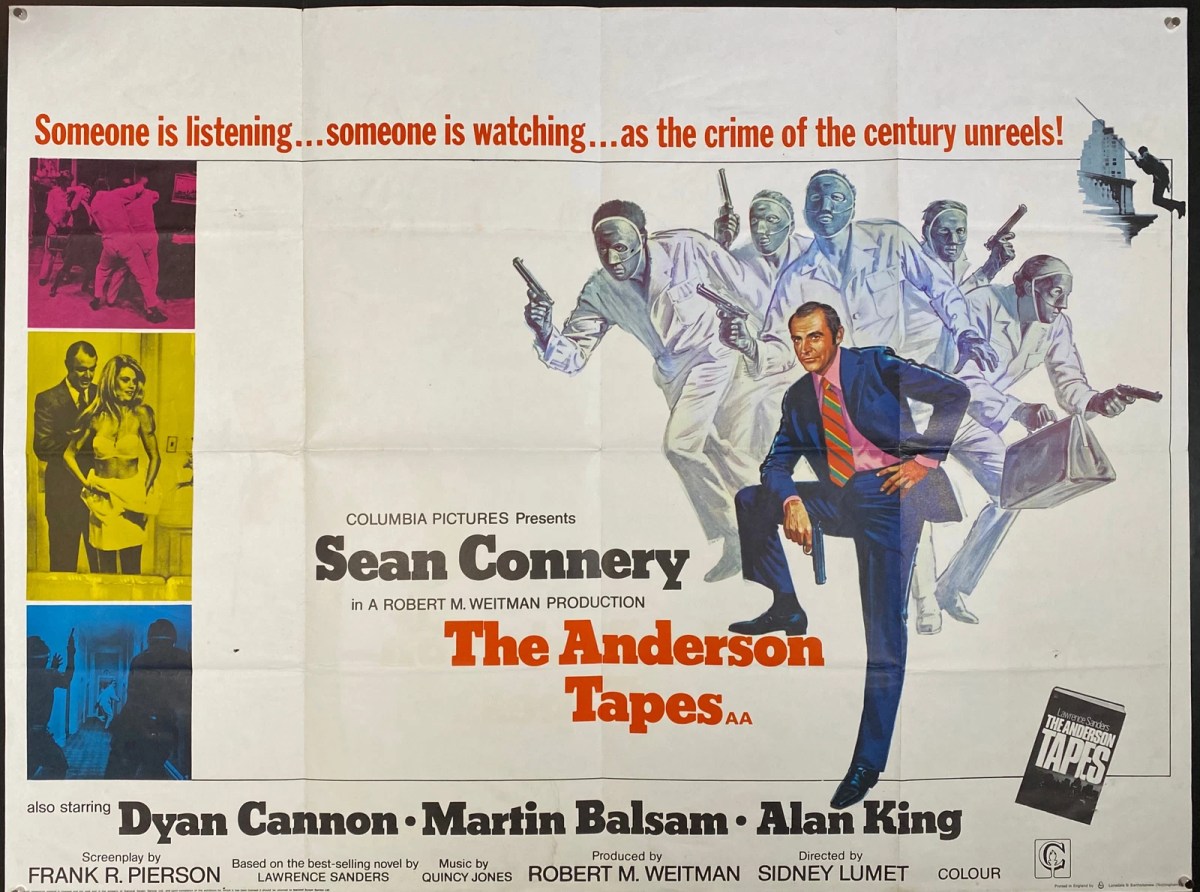
The Anderson Tapes (1971) ****

Director Sidney Lumet has made more critically acclaimed crime pictures – Serpico (1973) and Dog Day Afternoon (1975) earned eight Oscar nominations between them – but none have been as thrillingly entertaining as this mash-up of the heist and surveillance subgenres.  Francis Ford Coppola’s The Conversation (1974) has unfairly dominated the conversation regarding surveillance pictures, in large part down to Gene Hackman’s repressed performance, and because it made the ever-popular suggestion that Big Brother ruled the roost and there was nothing anyone could do about it.

These days The Anderson Tapes would hardly get out of the starting gate before everyone was whimpering about civil liberties and the fact that surveillance did the very job the public wanted it to do, which was to prevent crime and catch wrongdoers, would have been largely overlooked in the welter of lawsuits. A very clever device here prevents anyone getting trapped in that moral maze, so that what we’re left with is the inside gen on a superbly-organized and audacious robbery.
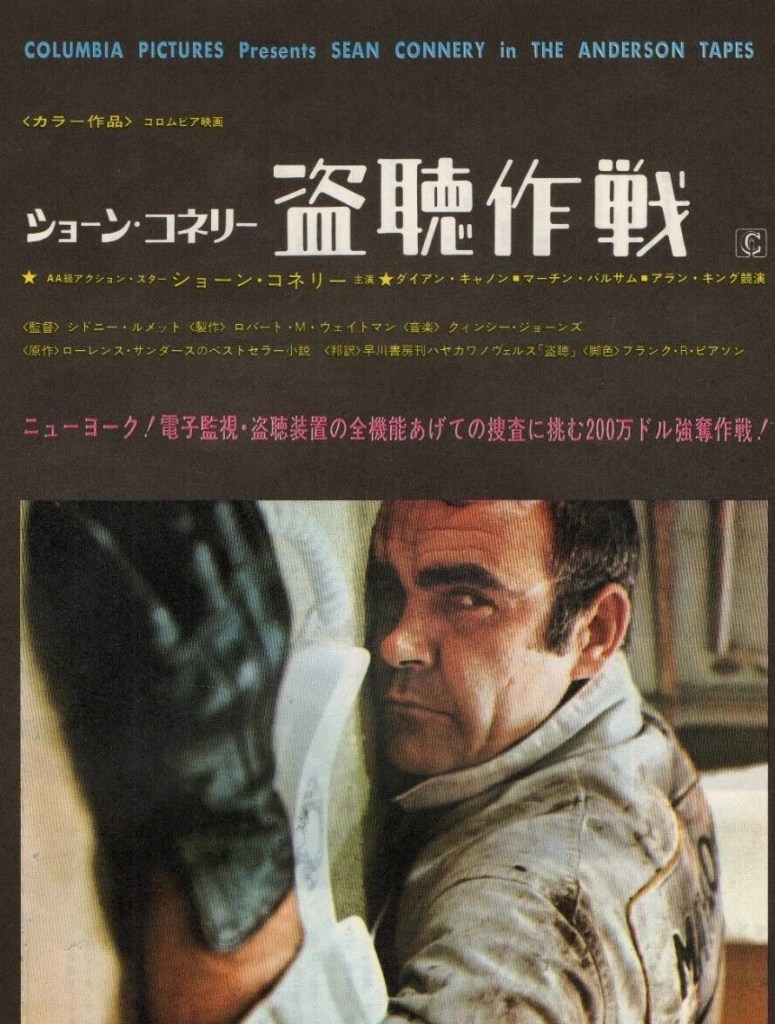
There’s a Thomas Crown Affair (1968) feel to this but where Norman Jewison employed split screen to get his various interlinked narratives across, here Lumet relies on speedy flash forwards intercutting the ongoing story.

The incipient danger of star Sean Connery was kept under wraps in the 007 outings, but here audiences get a blast of the full macho man, the take-charge kind of guy, and no bureaucratic buffoons getting in the way, and with no gadgets to rely upon it comes down to the sheer physicality of a magnetic screen personality.

Duke Anderson (Sean Connery) is no sooner out of prison after serving a ten-year stretch than he’s planning an audacious robbery, cleaning out an entire upmarket apartment block in the Manhattan Upper East Side, in which former girlfriend Ingrid (Dyan Cannon) lives in considerable luxury, over the Labor Day Holiday Weekend. After winning initial funding from the Mafia, he enrols, among others, camp antiques dealer Tommy (Martin Balsam), getaway driver Edward (Dick Williams), and “The Kid” (Christopher Walken), a young expert in alarms and electronics. As part of the deal he agrees to bump off another recruit, Rocco (Val Avery), who has fallen foul of the Mafia.

Everything that occurs is being recorded one way or another. Setting aside the building’s closed circuit television, Ingrid’s sugar daddy Werner (Richard B. Shull) has bugged her apartment and the cops have wiretaps on the Mafia and various others. This being a heist picture headed up by the world’s most popular star, as much as you want the criminals caught you want them to get away with it, Sean Connery having a self-justification scene at the outset to set liberal minds at rest.
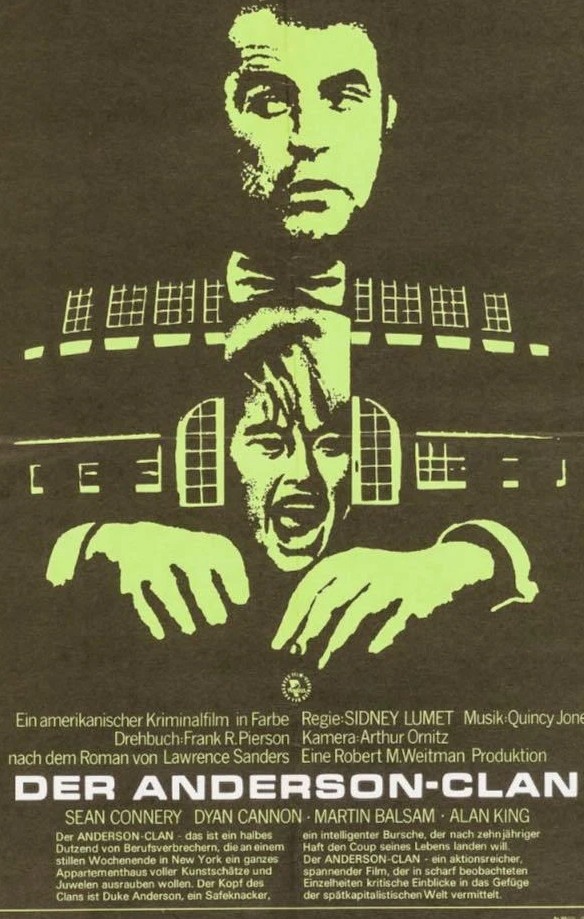
So this is part docu-drama and part a whole bunch of cameos from the victims of the robbery as their, often heinous, personalities come into sharp perspective: siblings who rat each other out, the husband willing to allow his wife to be abused rather than give up a single dollar of his vast fortune. Even wealthy Werner couldn’t care less about a robbery as long as Ingrid knows her place, she’s his “property,” and has to choose him rather than Duke Anderson because, as feisty as she is, she relies on his dough for the good things in life.

But it’s driven by the hardnosed Anderson who’s not going to let the fact he’s never killed a man before get in the way of doing so now as the alternative would be the loss of the gig. Despite his macho demeanor and being able to run his gang efficiently, he’s aware he’s a small cog in the organized crime wheel.  

When the cops get wind of the robbery, that triggers some superb stunt work as cops abseil across buildings.

After the disappointing box office of Shalako (1968), The Red Tent (1969) and The Molly Maguires (1970), Sean Connery roared back to form here, as the likeable hood while adding more edge to his screen persona. Martin Balsam (Hombre, 1967) is otherwise the pick of the supporting cast, though Christopher Walken, on his debut, makes his mark and you can’t ignore Dyan Cannon (Bob & Carol & Ted & Alice, 1969).

But this is just terrific stuff from Lumet, who was apt in his more critically-acclaimed pieces to drift into the overly serious, and while he makes a point – at a very early stage, please note – of the ubiquitous power of surveillance, he lets that speak for itself while he concentrates on the more thrilling and more human aspects of the story. Screenplay by Frank Pierson (Cool Hand Luke, 1967) from the best seller by Lawrence Sanders (The First Deadly Sin, 1980). As a bonus, a first class score from Quincy Jones (Bob & Carol & Ted & Alice).
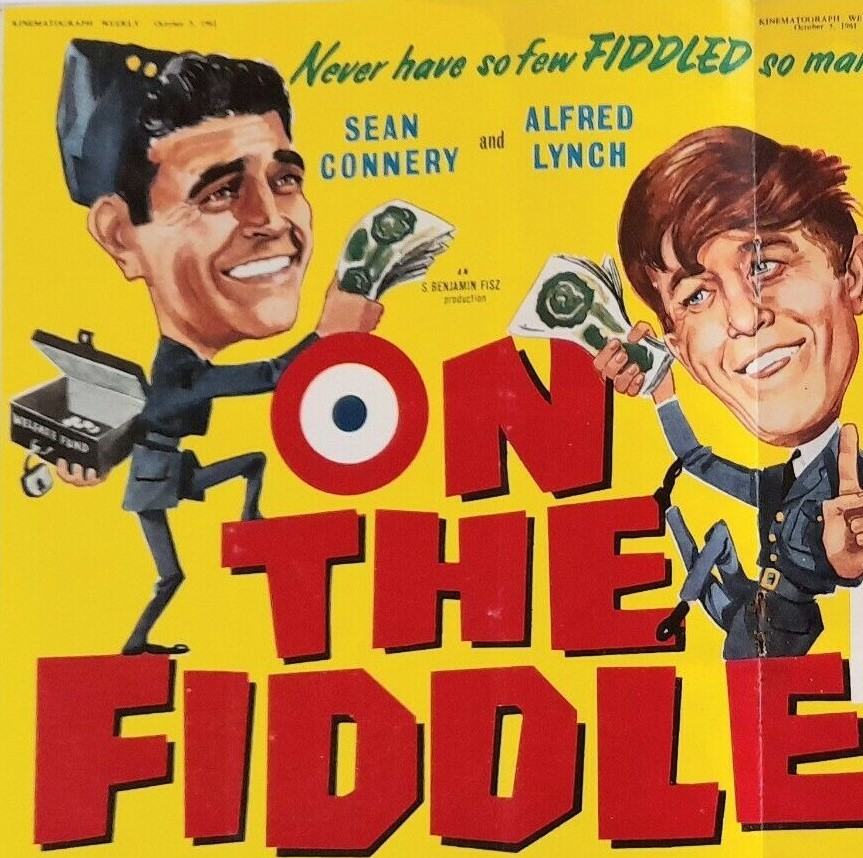
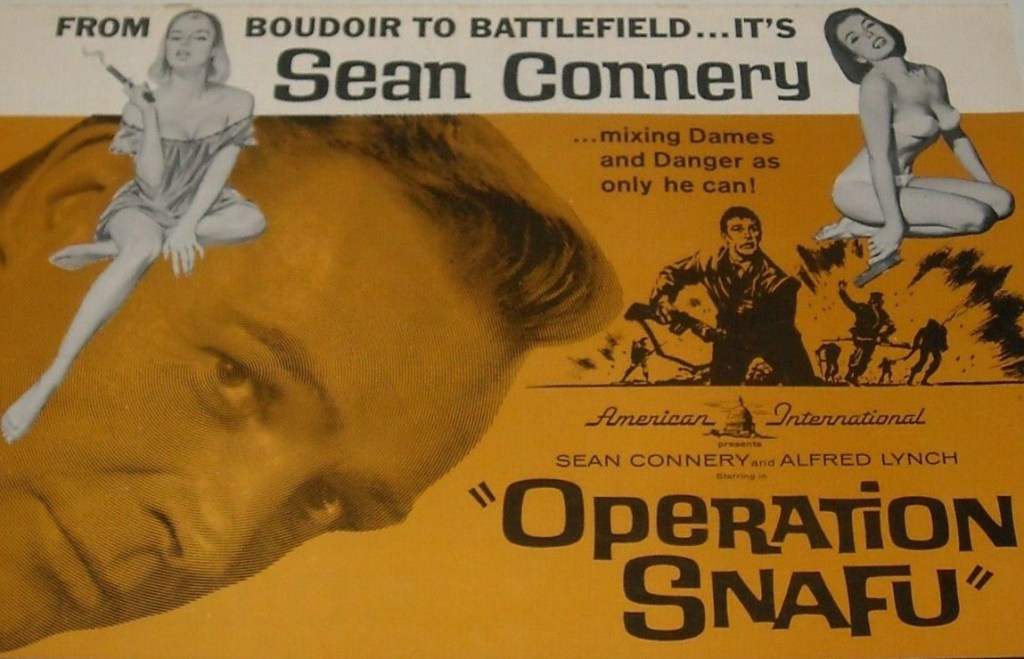
On the Fiddle / Operation Snafu (1961) ***

Unassuming but undeniably charming British World War Two comedy denied U.S. release until four years later when a savvy distributor jumped on the James Bond bandwagon. Primarily of interest these days for the opportunity to see a pre-Bond Sean Connery (Dr No, 1962) in action its merit chiefly lies in ploughing the same furrow, though with a great deal less pomposity and self-consciousness, as the later The Americanization of Emily (1964), of the coward backing into heroism.

Horace Pope (Alfred Lynch) is a scam merchant who only dodges prison by enlisting. Assigned to the RAF he teams up with Pedlar Pascoe (Sean Connery) and they embark on a series of schemes designed to keep them as far away from the front line as possible. It’s hardly an equal partnership, Pope dreams up the fiddles while Pascoe just falls in with them. It’s not dumb and dumber but a collaboration that goes no further back in the annals of movies than brain and brawn.

Needless to say, the movie lacks the the damsels in bikinis which were a prerequisite of the Bond pictures. Sean Connery takes top billing Stateside where he was originally behind Lynch.

It’s certainly a cynical number, reflecting the boredom experienced by many of the Armed Forces backroom staff, the administrators whose inefficiency turns them into easy dupes, and the determination of soldiers to take advantage of every opportunity to bend the rules. It takes the unusual position of presenting the ordinary soldier as smart and every officer as a numbskull, an approach that would only have been possible 15 years after the war ended and in marked contrast to the determined heroism of other British war films – such intrepid stiff-upper-lip behavior a hallmark of the British version of the genre.

First stop is to run an operation issuing leave passes – for a price – and the sheer effrontery exhibited by Pope is a joy to behold. Next up is selling stolen meat on the black market.

While Pedlar is the wide-eyed camp follower, and more likely to forever sit on the sidelines, cheerful but shy, and only a few pratfalls away from being a bumbling idiot, they do make a good team. Being sent to France is more of a heaven-sent opportunity to increase their bankrolls than a hazardous wartime mission as Pope sells rations to the French. Eventually, of course, their various scams are rumbled and they are forced into battle.

The only thing better than one pre-Bond Connery picture is two.

The movie switches a bit more deftly into serious mode than the aforementioned The Americanization of Emily mostly because these are actual soldiers trained to be soldiers rather than an officer who landed a cushy number and whose main effort is to avoid combat. War is presented as horrific rather than comedy and it must have been the same experience for an ordinary soldier at the time, after months of inactivity suddenly thrust into the cauldron.

The picture moves at a brisk pace and is continually amusing if not particularly laugh-out-loud. You’ve probably seen most of the set-ups before but they are reinvented with an appealing freshness and briskness  As a bonus there’s reams of British character actors and comedians – plus token American Alan King (who would appear in Connery starrer The Anderson Tapes, 1971) – along the way. The term “snafu” in case you’re interested, has a similar meaning to the “fubar” of Saving Private Ryan (1998).

Alfred Lynch (The Hill, 1965) doesn’t milk the Cockney patter overmuch and he’s got a greater international screen appeal than the likes of the more English Sid James (Carry On films) or Norman Wisdom. Think a shiftier Sgt Bilko, if the Phil Silvers creation could be any more untrustworthy.

Connery’s performance is well worth a watch as a prelude to what was to come once his roles were tailor-made. He is an effortless scene-stealer, gifted in expressing emotion through his eyes, and although verbally Lynch dominates it’s difficult to take your eyes off Connery.

The roll-call of character actors includes Cecil Parker (A Study in Terror, 1965), Stanley Holloway (My Fair Lady, 1964), John Le Mesurier (The Moon-Spinners, 1964), Graham Stark (The Wrong Box, 1966) and Victor Maddern (The Lost Continent, 1968).

Cyril Frankel (The Trygon Factor, 1966) comfortably cobbles this together from a screenplay by Harold Buchman (The Lawyer, 1970, and who had ironically enough penned the picture Snafu in 1945) based on the novel Stop at a Winner by R.F. Delderfield.

When the box office supremacy of the Bond pictures was underscored by the reissue of the Dr No/From Russia with Love double bill in 1965, distributors, as had been their wont, racked the vaults for anything featuring Connery that could be re-sold to a willing public.    

While there is a readily available DVD, this turns up on a regular basis, in Britain at least, on television.

Discover WordPress

A daily selection of the best content published on WordPress, collected for you by humans who love to read.

The Atavist Magazine

by Brian Hannan

WordPress.com News

The latest news on WordPress.com and the WordPress community.