Night of the Following Day (1969) ***

As his popularity in the 1960s faded, Marlon Brando was often called upon to save, or greenlight, a picture unworthy of his talent. Except that director Hubert Cornfield failed to extract enough tension from a kidnap thriller with an inbuilt deadline and a double-crossing sub-plot this might have been one to rise out of the mediocrity.

It’s not unknown for strangers working together on a robbery to adopt pseudonyms, colors in the case of Reservoir Dogs (1992) or cities as in Spanish television hit The Money Heist. Here they are known by their designated tasks, which seemed a nod towards artistic pretension at the time. Even so, the gang have too many frailties for taking on a caper like this, the pressure of a deadline and the publicity their crime attracts exacerbating the situation. So kidnapping a millionaire’s daughter (Pamela Franklin) are: Chauffeur (Marlon Brando), in on the job because he owes a favour to Friendly (Jess Hahn), whose sister Blonde (Rita Moreno) is also the chauffeur’s drug-addict girlfriend, the psychopathic Leer (Richard Boone) and a pilot (Al Lettieri).

All except the pilot are holed up in a remote beach house in France. The first signs of cracks show when Blonde is so drugged up she fails to collect her colleagues from a small local airport and, when suspecting the chauffeur of having sex with the girl, she explodes in a tantrum. And because she can’t get her story straight she attracts the attention of a local cop (Gerard Buhr). Despite making a good job of calming down the terrified girl, Leer has other plans for her which the Chauffeur is constantly trying to thwart. At various points various people try to quit. At various points romantic and family ties are pulled tight.

The details of the cash hand-over are well done as is the unexpected double-cross and the diversion allowing them to escape but about ten minutes of the running time is people driving around in cars, only at the later stages to any useful dramatic purpose, time that would been better spent filling us in on the characters. Most of the tension derives from a gang with two loose cannons and certainly the wait for the confrontation between Chauffeur and Leer is worthwhile.

The biggest plus point is Marlon Brando (The Chase, 1966) and even – perhaps because of – sporting a blonde wig and black tee-shirt remains a compelling screen presence. He might have been slumming it but he is certainly believable as the minor criminal way out of his depth. It’s a mistake to think of him as intended to exude menace along the line of Quint in The Nightcomers (1971) because this is actually a complicated role. On the one hand he clearly never wanted to be involved, participation triggered by a sense of honor, trying to keep his girlfriend and the kidnappee safe while at the same time happy to resort to considerable violence to achieve his ends.

The malevolent Boone (The Arrangement, 1969) almost steals the show, beginning as the voice of reason and gradually succumbing to his inner vices. The love interest benefits from Brando and Moreno (West Side Story, 1961), also in blonde wig, being ex-lovers in real life and it takes little to ignite the anger in Moreno. But her portrayal of the addict who cannot stay off her chosen poison long enough to carry out a simple task is excellent. Pamela Franklin (The Prime of Miss Jean Brodie, 1968) has little to do except look scared and she has one revealing scene when in attempting to seduce the Chauffeur sets up the prospect of a different kind of liaison with Leer.

Hubert Cornfield had not directed a picture since Pressure Point (1962) which acted as a decent calling-card and showed how good he was at creating tension between opposing individuals. Instead of focusing here on the characters, Cornfield seems more interested in the visuals, none of which as it turns out are particular arresting and in one instance virtually impossible to see what is going on.

Not so much a curiosity as a masterclass in how to blow a once-in-a-lifetime gig with Marlon Brando and what not to do with a thriller.
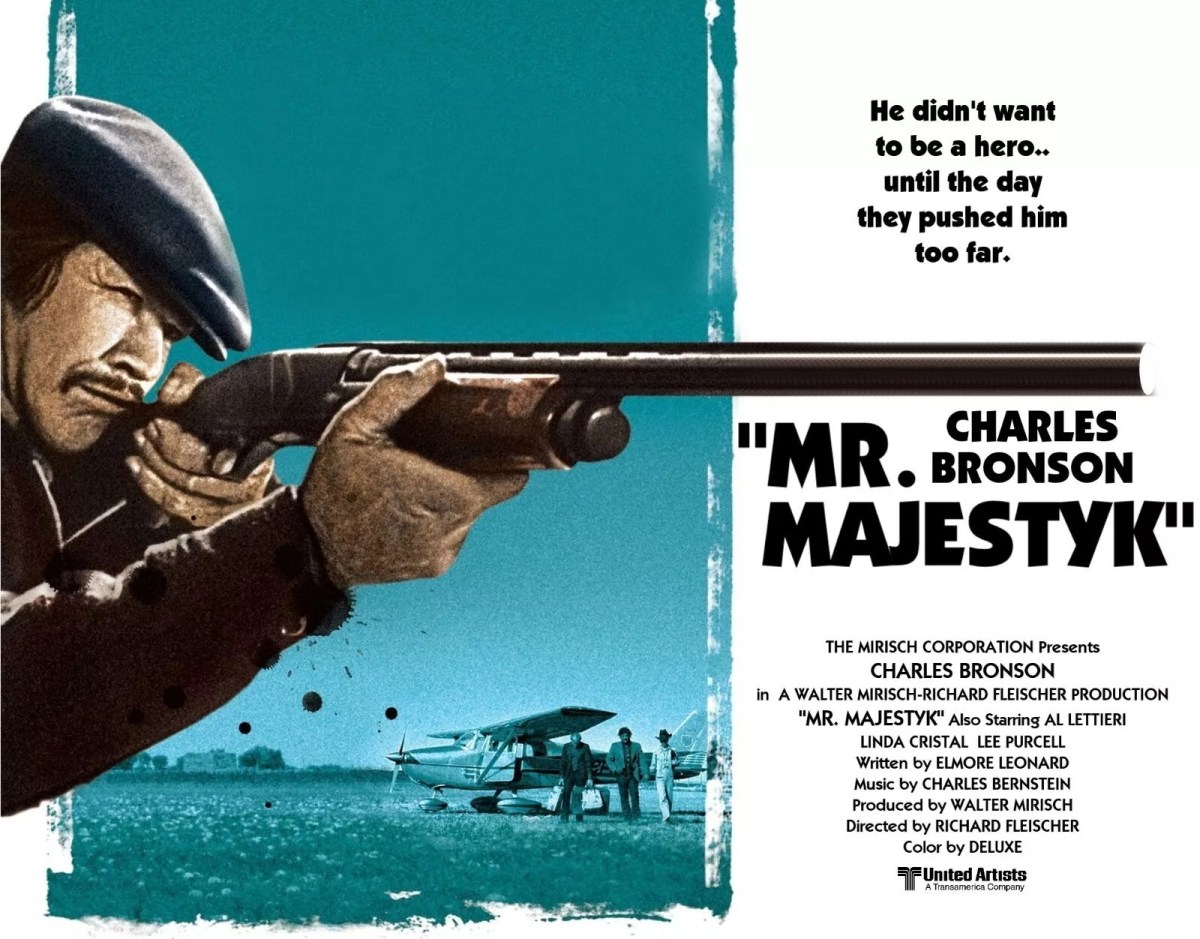
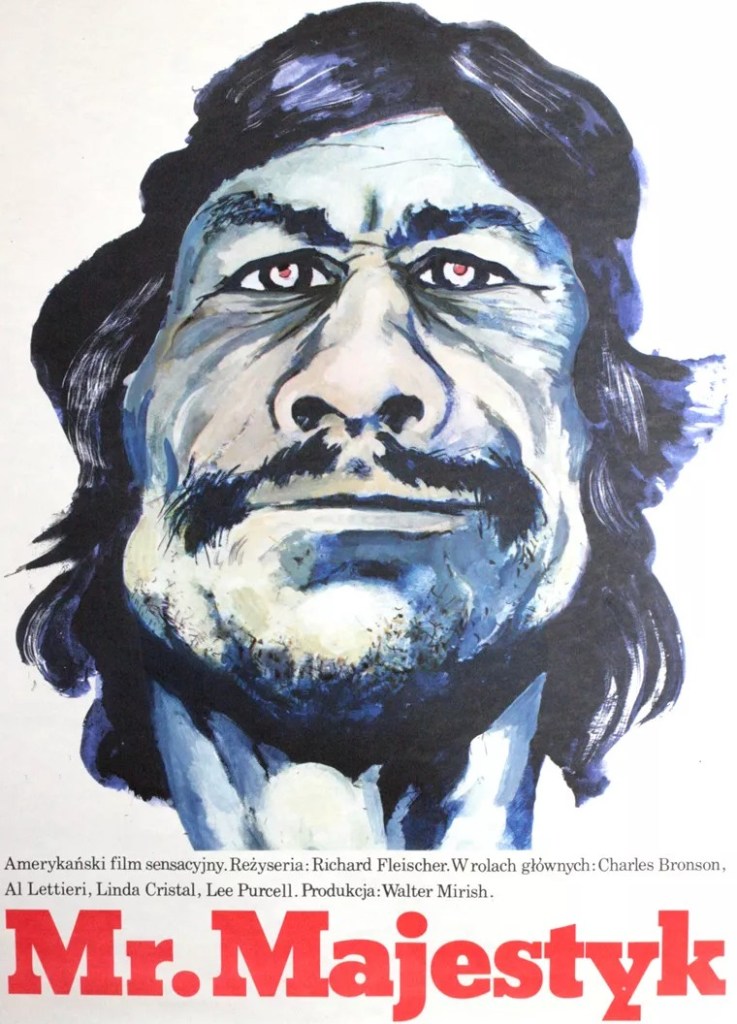
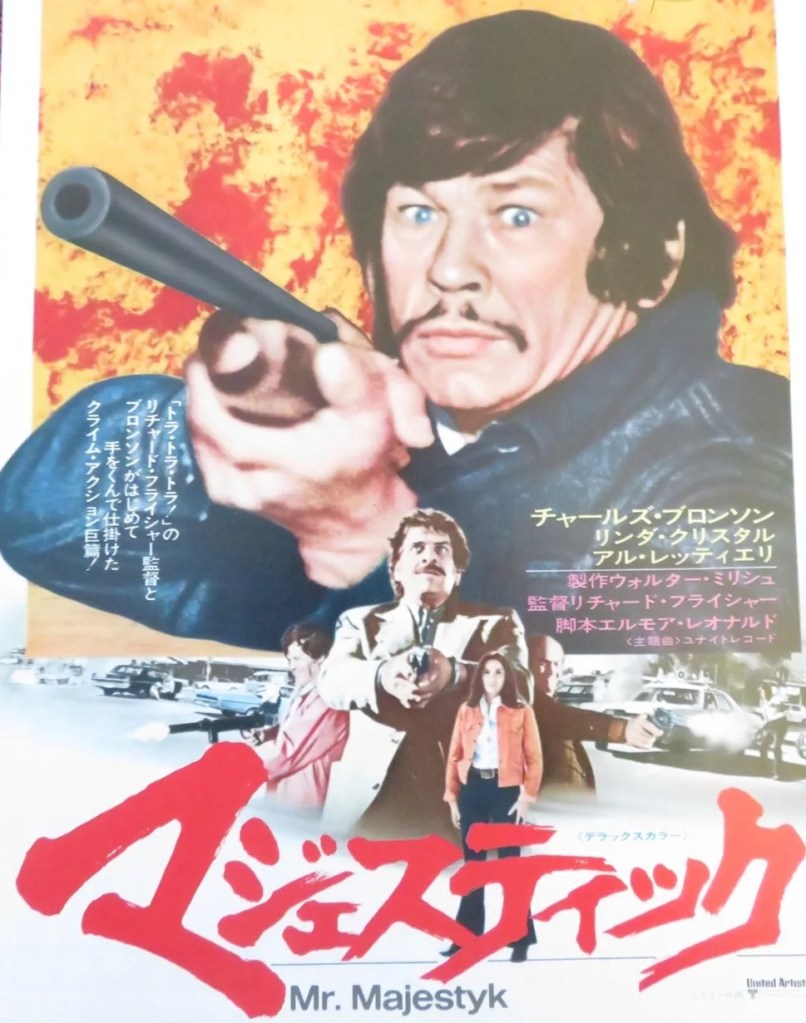
Mr Majestyk (1974) ****

I interrupt the current program to bring you the hugely under-rated Mr Majestyk, now showing on Amazon Prime.

You read any critical assessment of the 1970s and if they talk about male actors at all it’ll be the “new wave” of Al Pacino, Robert DeNiro, Dustin Hoffman, Jack Nicholson, Gene Hackman, Oscar nominees/winners all. There’ll be nary a mention of the actors who kept the box office straight on a consistent basis for most of the decade. Clint Eastwood would come into the equation, but it wouldn’t be for Dirty Harry (1971) or Every Which Way but Loose (1978) but only when he flexed his directorial muscles. Charles Bronson never harbored any ideas of picking up a megaphone so he wouldn’t even have that saving grace.

Yet Eastwood and Bronson saved Hollywood before the big blockbuster like Jaws (1975) or Star Wars (1977) took off and for one specific reason. They attracted a global audience. When foreign receipts started to matter more than ever, these two delivered. And while the critically-adored actors dithered over choices and could scarcely be guaranteed to put out a picture a year, Eastwood and Bronson were dependable, occasionally ramping up output to three a year (1971 and 1973 for Eastwood, 1972, 1974 and 1976 for Bronson). They were old-school reliable performers. .

Mr Majestyk has been somewhat overshadowed because it appeared just before what some ill-informed observers deemed to be Bronson’s breakout picture, Death Wish (1974), and because it was helmed by the under-rated Richard Fleischer (The Boston Strangler, 1968) who never seemed to generate critical traction.

In fact, it’s a cracker – a pair of stunning car chases, full-on blow-away street battle, and the actor is one of his best roles. If anyone could play a farmer convincingly it’s Bronson, who looks as if he knows exactly what it’s like to put in a mucky day’s work (he was a miner). Vince Majestyk (Charles Bronson), in the watermelon line, falls foul of small-time organized crime in the shape of one of the most hapless hoods you’ll come across, Bobby Kopas (Paul Koslo). When Majestyk doesn’t take too kindly to Kopas trying to muscle in on the employment market, the farmer ends up in jail.

During a routine transportation, gangsters try to hijack Mob hitman Frank Renda (Al Lettieri) but despite going in all guns blazing the racketeers haven’t counted on Majestyk, who steals the bus, sees of the pursuing cops and robbers and hides out in a shack in the hills. He trades the mobster for the cancellation of charges against him by Det Lt McAllen (Frank Maxwell). But he’s duped by Renda’s backgammon-playing fashionable moll Wiley (Lee Purcell). On the loose, Renda is determined to get his revenge. The cops are happy to use Majestyk as bait.

Mexican Nancy (Linda Christal), a crop picker and union organizer, also enters the frame, and despite Majestyk, having recognized imminent danger, trying to stifle burgeoning romance, she keeps coming back. She’s a straightforward gal. “You want to go to bed with me, why don’t you just ask?”

But bait becomes bait-and-switch and soon it’s the gangsters who are on a wild goose chase, car passengers driven off the road during a wild chase over dusty mountainous country, others picked off by rifle until it comes down to a showdown at an isolated house.

While Majestyk has the muscle to give Renda an occasional slapping, he’s also got the sucker punch, duping the hoodlum time and again.

One of the elements that distinguishes this is that, apart from Renda, all the characters, good or bad, male or female, are soft spoken. Even Lt McAllen isn’t always chewing someone out.

Although the car chases have been compared to Bullitt (1968) and The French Connection (1971) they have much more in common with Fear Is the Key (1972) where we are miles away from slick city roads. Plenty opportunity for vehicles to sail through the air. Nancy proves something of find behind the wheel, and Vince pretty game in the back of the truck being bounced six ways to Sunday by her driving.

Outside the action, several excellent scenes – the gangsters shooting up the watermelon crop, headlights ominous in the dark, a crop-picker being smashed by a car, Kopas being put in his place by Renda. Not only is the romance in a low register, but Bronson is in a low key, resigned to what he cannot change, but taking charge with blistering speed when he can.

This was a deliberate change of pace in terms of characterization from Bronson following the more action-oriented Chato’s Land (1972), The Mechanic (1972) and The Stone Killer (1973). There’s none of the usual brooding menace. He’s a farmer, not a killer.

Despite a long stretch in The High Chaparral (1967-1971), this was the first movie in six years for Argentinian Linda Cristal who’s effective rather than a scene-stealer which the cool Lee Purcell (Kid Blue, 1973) definitely is in non-showy fashion. By contrast Al Lettieri (The Godfather, 1972) eats the scenery, which is his job, as he turns from cat into mouse.

More than ably directed by Richard Fleischer from an original screenplay by Elmore Leonard (The Big Bounce, 1969).

A must see.

Discover WordPress

A daily selection of the best content published on WordPress, collected for you by humans who love to read.

The Atavist Magazine

by Brian Hannan

WordPress.com News

The latest news on WordPress.com and the WordPress community.