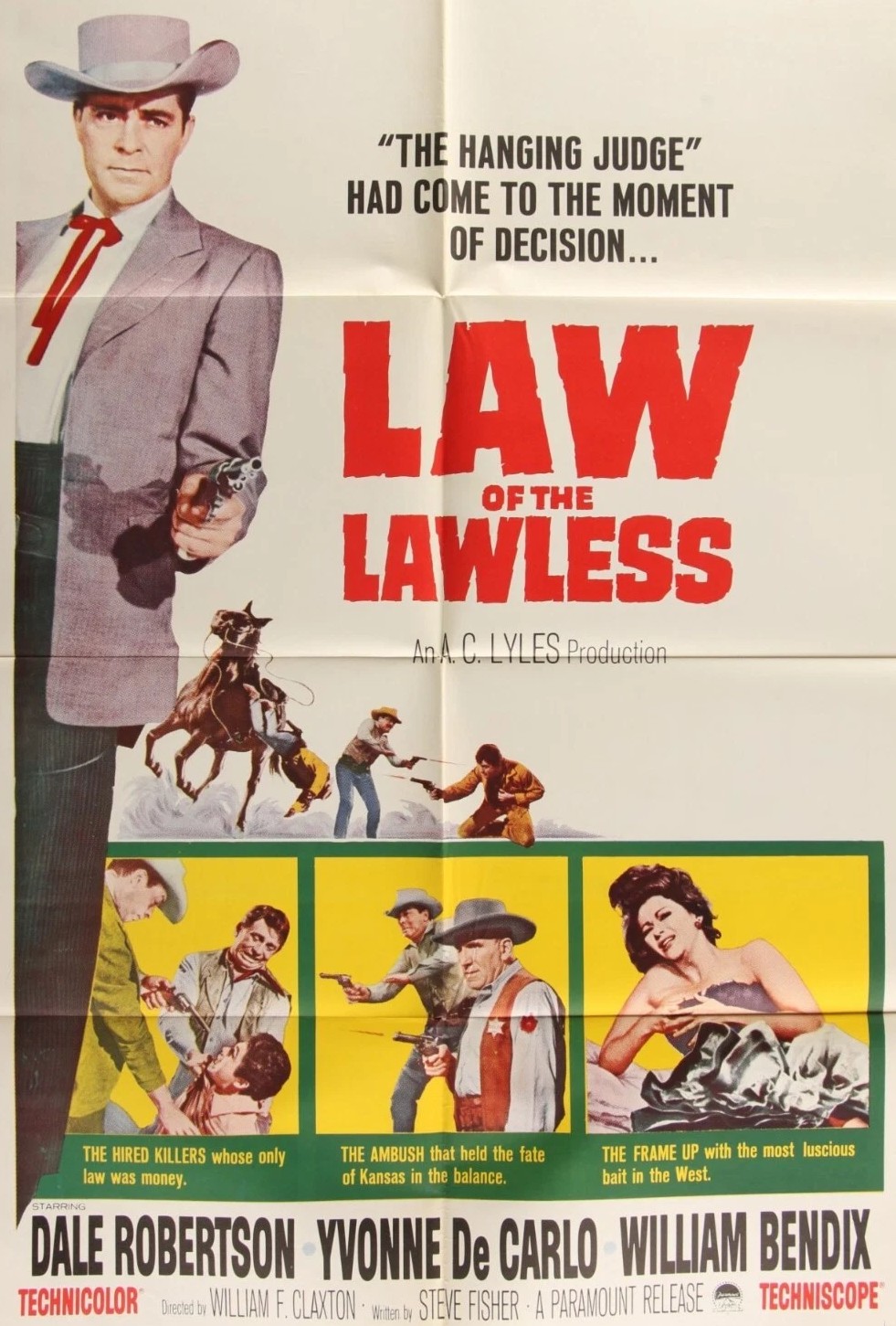
I’m rescuing another low-budget western from critical oblivion. While this can’t boast existentialism to boost its credentials or claim to belong to the cult fraternity and, technically, doesn’t belong to the revisionist sub-genre which was beginning to gather pace, and while you won’t go to this for visual style or striking composition, there is more than enough going on for it to be worthy of reassessment.
For a start it majors on remorse. You might come across a western hero who bitterly regrets the woman cast aside or the family abandoned (though more likely such actions will sit lightly), but you’ll virtually never find anyone who regrets using the gun, whether for righteous reasons or not. But here you’ve got the two main characters, one on the side of the law and the other of a criminal disposition, who both show remorse for their actions. And had the director been more disposed to the visual he would have made a great deal more of the scene where the black-garbed widows arrive in town, victims of both gunslingers who killed their husbands and of the judges who pronounced the death sentence on their gunslinging husbands.
And there’s considerable pause to imagine what happens to such widows. Unless they can find a benefactor, perhaps an older unmarried rancher or a widower, they are going to end up working in saloons and selling their bodies. On top of that we have a cracker of a courtroom drama where the exceptionally clever lawyer can twist the facts to suit his client.
This could also have been another kind of western altogether, the one where the hero is constantly beset by a variety of enemies, and the narrative therefore one of tension. But Judge Clem Rogers (Dale Robertson) has four separate outfits baying for his blood and still director William F. Claxton manages to also fit in all these ideas about remorse, the law, widows, conniving lawyers, the entitled of that era, and failed romance.
Rogers is in town for the trial of former friend Pete (John Agar), son of Tom (Barton McClane) the biggest rancher around, for killing someone in cold blood. Tom, a piece of work, has various plans to tilt the odds in his favor, first planning to blackmail Rogers over being caught in a honeytrap with Pete’s fiancée Ellie Irish (Yvonne DeCarlo) and whichever way the trial goes he has hired gunslinger Joe Rile (Bruce Cabot) at a fee of $10,000 to kill the judge. Rile and Clem have history, the gunslinger killed the judge’s father. And it’s Tom who hits on the scheme of embarrassing the judge by flooding the town with widows, many of whom are widows thanks to Rogers.
And there are four other dudes, three brothers and an outsider, also intent on killing Rogers. While Sheriff Ed Tanner (Wiliam Bendix) isn’t inept he lacks the force of personality to keep the bad guys in check and when he’s wounded his inexperienced deputy Tim (Rod Lauren) foolishly steps up to the plate.
You can’t help but feel sorry for Ellie, forced to play the part of the lure to dupe Rogers, especially when it’s clear she has more feelings for him than she does for Pete, whom she admits she doesn’t love but needs his security. There’s an interesting power struggle between Tom and Rile with the gunslinger refusing to kowtow to his employer. The court case is riveting because it turns on various twists. And climax is a knockout that you won’t see coming.
This isn’t one like The Shooting (1966), rescued from oblivion by critics and cultists – Paramount issued it as a second feature so it’s not unseen – and it’s not trying to rewrite the Hollywood history of Native Americans, and as I said it’s not distinguished visually, but it does pack an awfully thoughtful punch, tackling areas that the bulk of western film directors have ignored.
Dale Robertson (Coast of Skeletons, 1965) heads a good B-picture cast with veterans William Bendix (Oscar-nominated for Wake Island, 1943), Yvonne De Carlo (career revived by The Munsters, 1964-1966), Lon Chaney Jr (The Wolf Man, 1941) and Bruce Cabot (King Kong, 1933).
William F. Claxton (Desire in the Dust, 1960) is to be commended for cramming in so much interest. Script by Steve Fisher (Rogue’s Gallery, 1968).
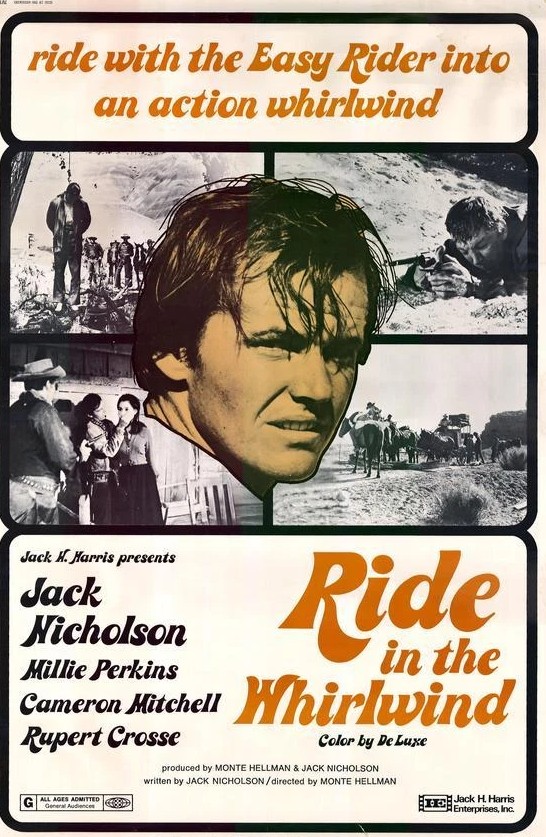
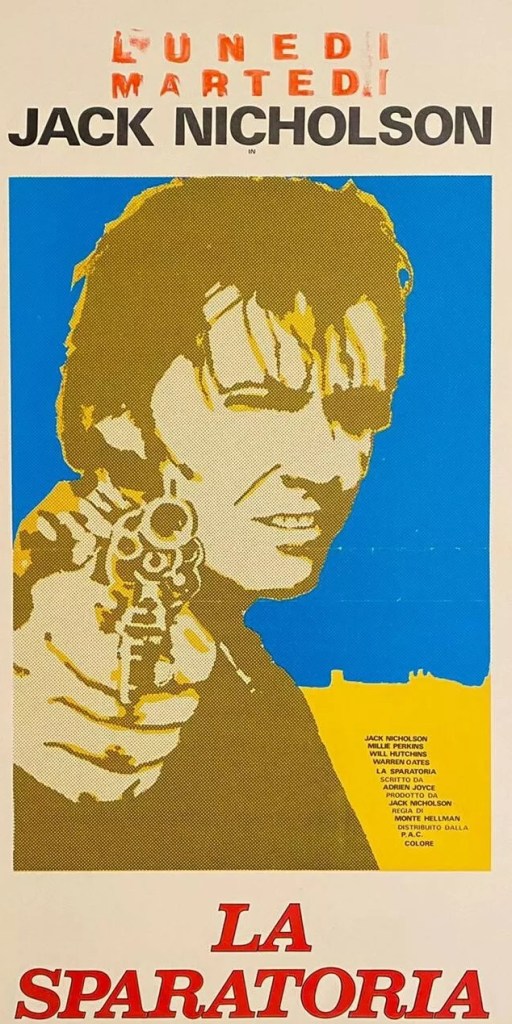
Lightning didn’t strike once never mind three times as with Monte Hellman’s predecessor The Shooting (1966) and all the flaws of that picture are multiplied without either the free pass of being classed as existential or a central performance such as that of Millie Perkins to give it an boost and, as importantly, to provide it with a contemporary edge.
All it proves is that Jack Nicholson should stick to acting rather than screenwriting. Most of the dialog in trying to be authentic just doesn’t ring true and the story is muddled with many too many characters. Calling this offbeat is doing it a favor.
And although, in any poster or copy of the picture you’re likely to see now, Jack Nicholson is top-billed, he’s far from the main act – though the movie dodges around so much it’s hard to find a central character to focus. And if you came to this expecting another acting tour de force from Millie Perkins, you had to wait a good hour before she appeared.
Theoretically, Monte Hellman was inheriting the Budd Boetticher mantle, but that only went as far as making do with a low budget. Though there’s the occasional striking visual, he can’t match Boetticher in terms of composition nor in clarity of narrative. But this was the era when the waters were being muddied between good guys and bad guys, so in a sense, taking Hellman as pre-empting that particular charge, he scores some points there.
Budget deficit led to the other element of authenticity to which this can lay claim. It’s noisy. I mean, noise of the wind – perhaps hence the title – constantly intrudes. Cinema verite perhaps but more likely lack of proper sound equipment.
A bunch of outlaws led by Blind Dick (Harry Dean Stanton) who’s only half-blind, patch over one eye, robs a stage and holes out in a cabin in the hills. A meandering trio of cowboys – Vern (Cameron Mitchell), Wes (Jack Nicholson) and Otis (Tom Filer) – looking for shelter encounter them. For a time it looks like the outlaws are just going to shoot them and be rid of the intruders. Instead, they feed them beans and biscuits and liquor.
Next morning a posse turns up and starts shooting at anyone in sight, including Vern and his buddies. They burn out the cabin and hang Blind Dick. Otis is shot but now, thanks to guilt by association, Vern and Wes are wanted fugitives. Requiring refuge, and although innocent they lean into guilt by commandeering the house of farmer Evan (George Mitchell), wife Catherine (Katherine Squire) and daughter Abigail (Millie Perkins) and hold them hostage.
Doesn’t take long for them to be rumbled by a member of the posse. They escape but Vern is wounded and Wes kills the farmer. Now they are reduced to one horse. The dying Vern does a self-sacrificial number and holds off the posse until Wes can escape on the horse.
Although I’m sure many an innocent person was killed in the Wild West, and it didn’t take much for people to cross over into criminality, especially when threatened (Wes would now be wanted for murder), and so it is interesting on that score, it’s just so muddled it lacks any real weight.
We are introduced to way too many characters as a result of lack of narrative cohesion. On this performance I doubt if you would have tagged Jack Nicholson as the breakthrough performer of Easy Rider (1969) and Millie Perkins is given nothing on which to build from what should have been her breakthrough turn in The Shooting.
In fact, most of the honors go to old-timer Cameron Mitchell (Blood and Black Lace, 1964) who’d had to head to Italy to get some decent top-billed work. If you were looking for the Jack Nicholson of the gleaming teeth and distinctive diction, then you’ll find him here but not much else. Monte Hellman would go on to find some mainstream credibility, though still erring on the offbeat, in the likes of Two-Lane Blacktop (1971) and Cockfighter (1974). But this is embryo work.
Director Monte Hellman struck lucky three times. In the first place French critics took such a shining to this disjointed elliptical western that they tabbed it a work of existential genius. Then Jack Nicholson, who only has a small part, became a global star and it picked up a second head of steam. And now, with grief porn the latest craze thanks to the likes of Hamnet (2025) and Wuthering Heights (2026) I reckon it’s worth reassessment. But not for that wallowing in grief aspect so popular these days, but for the way genuine grief works its way out in cantankerous maddening fashion.
You’d have thought the performance of Millie Perkins would have been highlighted long before now for its feminism. Her un-named woman runs contrary to the notion of the female star in a western. She doesn’t come on all sexy in a Raquel Welch fashion, nor does she fall victim to a predatory male. But she is a heck of a creation.
She doesn’t play by any of the man-made rules in this male-dominated world. She gets what she wants by foul means and she doesn’t give a hang about whose feelings she tramples underfoot. She’s not interested in seduction, nor in finding a man, so strike out any thoughts of sex or romance, and she’s domineering, rude and contrary.
Given the western is weighted down with enigma, you have to work hard to find out what it’s all about and what’s she’s after. And her introduction tells you she’s trouble. She kills her own horse so she can appear to two cowboys running a defunct mine as a woman needing help. The younger Coley (Will Hutchins) would be easily duped by any woman with an ounce of the smarts. The older Willett Gashade (Warren Oates) is less easily led, though when the woman offers $500 if they help her reach the nearest town, they’re ready to oblige.
But she wants to make haste, while Willett wants to ensure they are equipped for the journey, so saddling up an extra mule to carry their supplies. But a mule slows them down, so she finds a way to stampede it off. And every now and then she lets off a random shot, Willett working out she’s trying to attract someone’s attention. The someone turns out to be gunslinger Billy Spear (Jack Nicholson). When she insists on going off-trail Gashade works out she’s hunting for someone.
That’s another elliptical moment. She’s hunting the killer of her son. Even though it was an accident, she wants revenge.
And that’s the grief spelled out in a variety of ways but never with the usual emotional baggage, not even a tear. Eventually, we’re in Treasure of the Sierra Madre (1948) territory where men are going mad. Here, they keep going after their horses die and trek over desolate merciless country until they find their quarry, who turns out to be Gashade’s brother.
Turns out, too, she hardly needs her entourage. She finishes off her nemesis while Spear and Gashade struggle behind. She only needed the men for their tracking skills.
So what we have instead of the existential is something considerably more solid and worth far more than falling in with some arthouse accolade. This is both an exceptional study of grief and an exceptional study of a woman, possibly the first in the feminist line if you discount Barbara Stanwyck who still, generally, was better off with a man at her side.
All her deriding of the men, her mental cruelty, her whimsical actions, make every bit of sense when you realize these are all expressions of grief. Except for her murderous intent, she’s almost stoical in her grief, never allowing wanton emotion to get in the way, and even when turning tearful might work in winning men over she doesn’t give in to the temptation. She can twist Coley round her little finger anyways and she knows how to handle Gashade, teaching him in no uncertain terms who’s boss.
In some respects Monte Hellman (Ride the Wild Whirlwind, 1966) is the inheritor of the Budd Boetticher mantle, purveyor of lean westerns short on running time with a principled hero, here read heroine. But Hellman lacks Boetticher’s compositional artistry and could do with putting some more work into the storytelling department.
If you’ve come looking for the Jack Nicholson of Chinatown (1973) you’ll be disappointed. He’s hardly in it, though he is an exemplar of that mantra in The Housemaid (2025) of teeth being a privilege. Warren Oates (The Wild Bunch, 1969) is a better bet, providing a foretaste of his grizzly characters to come.
But Millie Perkins (Wild in the Streets, 1968) tears up the screen. From her bold introduction to the savage conclusion she presents a vivid characterization of a woman expunging her grief with violence. Written by Carole Eastman (Five Easy Pieces, 1970).
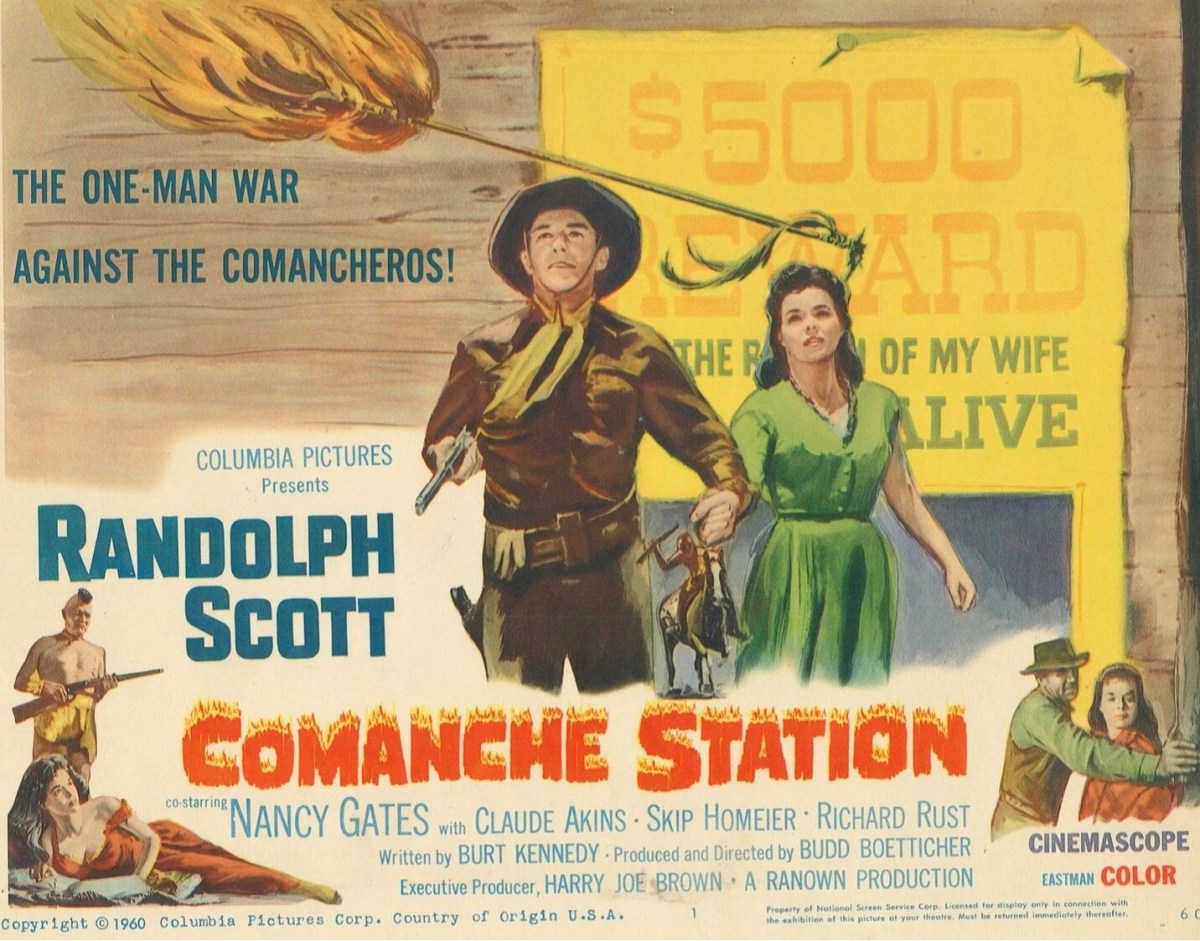
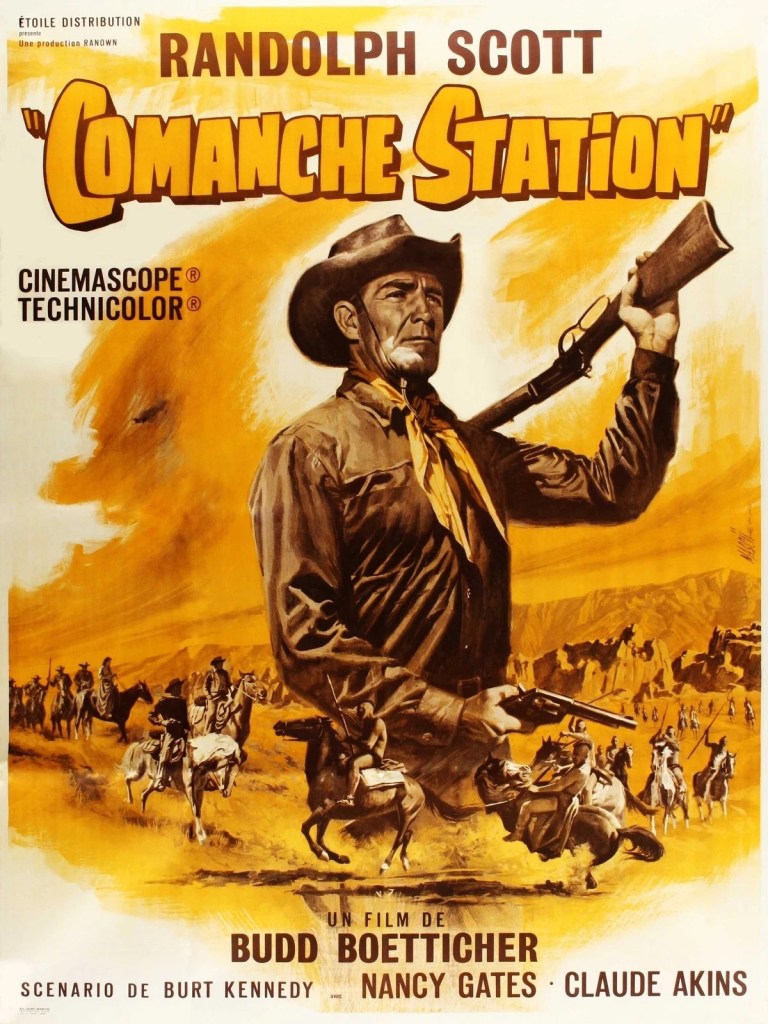
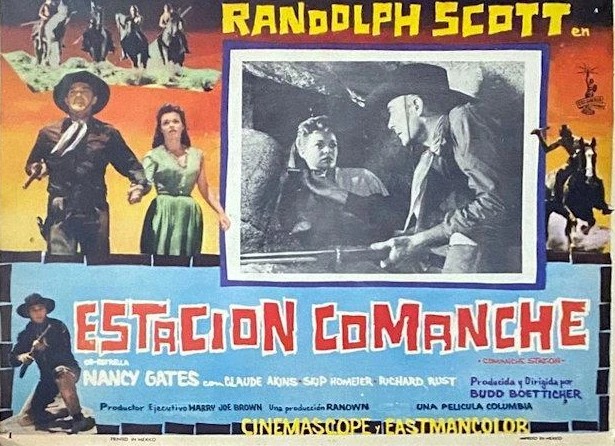
Randolph Scott went out on a high – or at least that was the plan, his intended retirement derailed when Sam Peckinpah made him an offer he couldn’t refuse for Ride the High Country / Guns in the Afternoon (1962). But if this was his planned final movie, he couldn’t have wished for a better last hurrah.
Director Budd Boetticher (A Time for Dying, 1969) became something of a cult item once the fashionista critics of the 1960s and 1970s got their hands on him, and pulled out the stops for low-budget pictures made with tight artistic vision in preference to an overload of bloated big budget efforts. This was the last of a western quintet starring Scott.
Boetticher exercises remarkable restraint throughout, very little in the way of emotion, or close-ups, and his use of widescreen follows the classic composition, relevant movement taking place to the side of the screen or in a corner or instead of left to right the action snakes top to bottom.
The story is exceptionally lean but in that simplicity carries enormous power. A man of principle Jefferson Cody (Randolph Scott) is up against the unscrupulous Ben Lane (Claude Akins), the situation complicated by the fact that the good guy isn’t going to make it out of Indian Territory without the help of the bad guy. At stake is a cool $5,000 (worth $125,000) today. Or put another way, a young woman’s life. There’s bad blood between Cody and Lane, the former court-martialing the latter while in the Army.
Cody has rescued kidnapped rancher’s wife Nancy (Nancy Gates), not by raiding the Comanche camp and pulling off the kind of action that used to take a well-practised team of experts (see The Professionals, 1966), but by hoving into view and offering to trade various goods, including a rifle, for the woman. She’s not as grateful as you might expect, fearing the reaction of her husband on her return (it’s unspoken but she would have been raped by her captors) and subsequent public humiliation.
When Comanches reappear, it looks like they’ve reneged on their deal. But they’ve not. They’ve been baited by Lane and his accomplices who, seeking the reward money, have gone in all guns blazing. Nancy turns against Cody because she imagines he, too, was after her for the money and not out of the goodness of his heart.
Lane fuels the fire by casting doubts on her husband not coming after her on his own, and pointing out that women thus rescued often rewarded their rescuer with sexual favors. Lane and his two younger buddies, Frank (Skip Homeier) and Dobie (Richard Rust), briefly discuss robbing Cody once he’s been handed the reward. But Lane has a better idea. Kill them both. The husband wants his wife back dead or alive.
Lane has the sense not to perve on the woman and the director resists the opportunity to pander to the audience by showing Nancy bathing naked in a river. Outside of the gunplay, the three outstanding scenes are smaller potatoes. One of the young lads proves he can read much to the amazement of his friend. When Frank is killed by an arrow he’s left to float down the river because nobody can afford the time to give him a proper burial. And when under attack, Cody dumps Nancy in a water trough to keep her hidden, from which she occasionally pops up sodden only to dive down again.
It’s pretty unusual for western to end on the kind of twist you’d find in film noir or a thriller. But this one is terrific. All the way through Nancy’s husband has been derided for not coming after her in person, but in the last scene we discover why. Her husband is, in fact, blind. Cody, who hasn’t been in it for the money anyway, turns away without taking a cent.
The running time is so lean – just 73 minutes – it would have been released as a supporting feature and it’s testament to the director’s principles that he didn’t try to puff out the length by sticking in some sub plots or encouraging romance.
Beautifully filmed and with a compact script by future director Burt Kennedy (The War Wagon, 1967). This was also the swansong for Nancy Gates. Claude Akins was cast by Kennedy for Return of the Seven (1966). Skip Homeier was the male lead in one of my low-budget faves Stark Fear (1962).
Compelling work and worth reassessment if you’ve not already climbed aboard the Boetticher/Scott bandwagon.
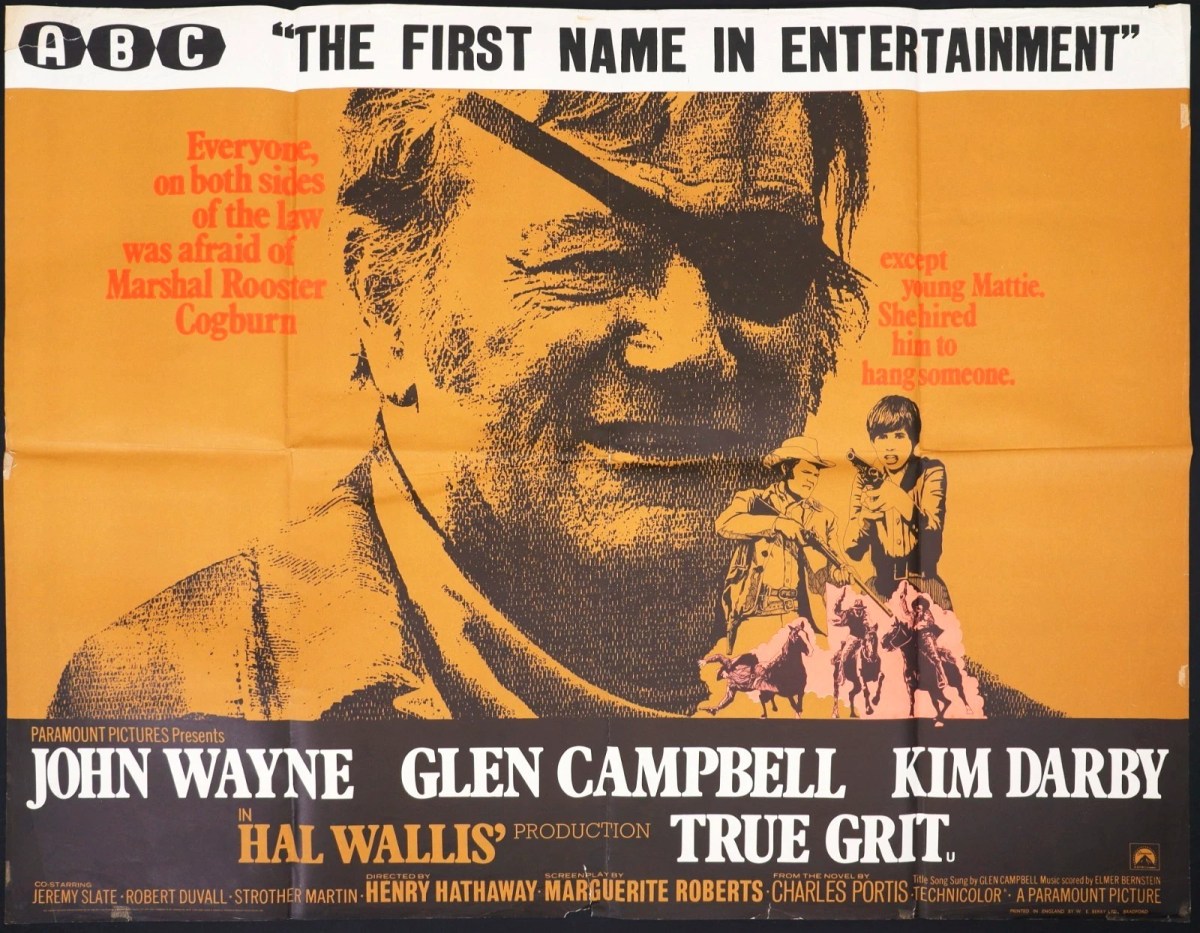
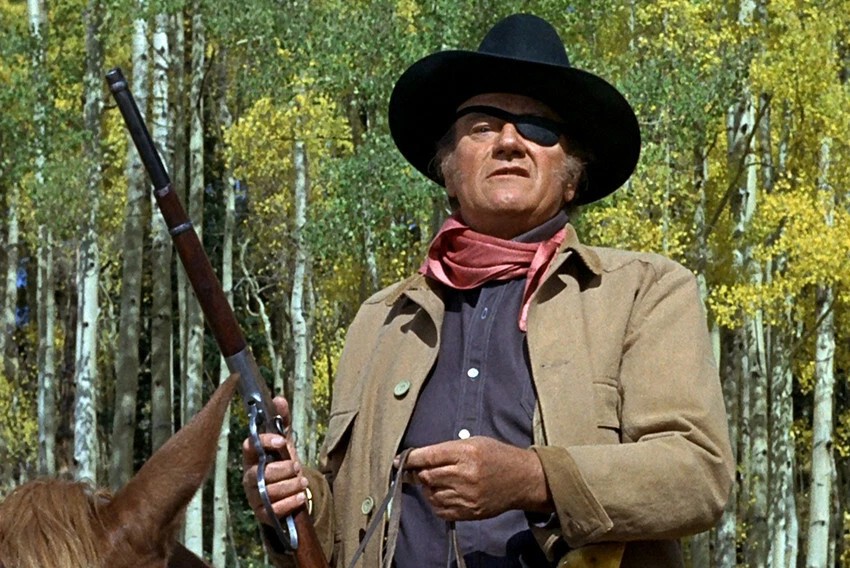
An old-style western with a modernized anti-hero in Rooster Cogburn (John Wayne), nearly as “rapaciously brutal” as the same year’s The Wild Bunch, a script with language that captured the period, a heroine Mattie Ross (Kim Darby) who falls into the robust Barbara Stanwyck/Maureen O’Hara mold, humor and action in equal measure, and an unfussy director (Henry Hathaway) who loved the panorama even more than John Ford.
Although still critically rated as not as good as The Wild Bunch, and still mostly disdained by academics, I would argue that it has been grossly under-rated and fully deserving of a re-evaluation. In the first place, despite direction very much in the old school, Hathaway exhibits many stylistic flourishes, not least the very long shot which has rarely been used to such effect. He also utilizes the shaky-camera point-of-view in a much more effective manner than Mackenna’s Gold (1969) to record Cogburn’s charge at the outlaws and there is even a zoom, to pick out the villain Tom Chaney.
Also, you know exactly where you are in a Hathaway picture, not just in the narrative sense, but in terms of how people lived and where the towns and farms were in relation to each other (the Ross farm is 70 miles from Fort Smith, the hamlet of McAllister 60 miles from the villains’ hideout). He liked to show many aspects of a town, so we see where the courthouse is in relation to the jail and the stable by the simple expedient of having the characters walk past them. And the movie is littered with sound effects of the most ordinary kind (blacksmith’s hammer, train whistle, footsteps). The film is as much about progress as Once Upon a Time in the West and The Wild Bunch, the name of the town, Fort Smith, where much of the initial action takes place, indicates it was once a frontier town.
Rooster Cogburn feels crowded out by a new generation of lawyers challenging swift justice, and Mattie Ross, hunting the killers of her father, is well schooled in argument, winning many a confrontation with apparently more experienced and wily men by being more adept at negotiation and like a chess player always one move ahead. The aftermath of the Civil War lingers in the background, demonstrated by Mattie’s weapon and Cogburn’s antipathy to Texas Ranger LaBeef (Glen Campbell). But the story strikes an even balance, no matter how assured Mattie Ross comes across in civilization she almost comes apart in the wilds and without the protection of Cogburn would have met the kind of fate at the hands of men undergone by female characters in The Stalking Moon (1969), Mackenna’s Gold and The Wild Bunch.
It should be said here that the movie is full of audience direction, we are always told where Mattie will go next or where Cogburn is intending to go, with accompanying plausible reason, especially when later Cogburn calls off the hunt for the outlaws. There is no exploration of mystery, the characters are always upfront, and where characters express regret is it minus the self-pitying of The Wild Bunch. Nobody is defined by something they should have done instead, so, in that respect, the narrative is as clear as the overall direction.
We hear Cogburn’s voice before we see him, as if the director is preparing us for a different John Wayne. This is the actor in a new timbre, the usual slow drawl replaced by a raucous bark. And it is a different Wayne, one eye covered in a black patch, giving him a piratical look. He hustles the prisoners out, kicking one straggler viciously in the butt. Wayne walks differently, too. Instead of the famous slow walk, Cogburn is a man in a hurry, pushing forward with purposeful stride, ignoring Mattie as she comes racing after him, slamming the basement door in her face.
LeBeef is another dreamer, “nobody yet” but aiming to “marry well”, in this case “a well-placed young lady in Waco” who would “look with favor” on him for bringing back Chaney who has also killed a senator. His charm fails to convince Mattie to join forces. She sees right through him: “I have no regard for you but I’m sure you have enough for yourself to go around.”
Then comes a four-minute Mattie tour de force as she confronts Col Stonehill (Strother Martin) and demands $300 in reparation for the loss of her father’s saddle and for selling him dodgy horses. She threatens him with the law in the shape of Daggett, her secret weapon, and she knows enough about legality to beat Stonehill at his own game. Even better, this is no meek woman. It is one thing to be able to score points off an old lawman like Cogburn, who would have been putty in the hands of any capable woman of the Stanwyck/O’Hara variety, but another to outwit a wily old horse-dealer like Stonehill (his title a hangover from the Civil War and one which ensures a measure of respect). Even better again, she knows she will win, so confident that she has already drawn up the papers to sign.
Now neither Cogburn nor LeBeef are witness to this demonstration of her capability, so they will, naturally, treat her as a young girl, “baby sister” in Cogburn’s dismissive term. But Hathaway is setting a trap for the audience. Having witnessed this display, we think she will be able to hold her own in the wilderness, mistaking her willfulness for sagacity, and so are on her side in her attempts to win over the two men, when, in fact, she will prove to be so out of her depth as to endanger herself and others.
The pursuit is dogged, and everyone at some point is found wanting. Cogburn smokes the villains out from their cabin and would kill the others without warning except LaBeef objects out of principle and Mattie wants Chaney alive.
At Mattie’s prompting, we hear Cogburn’s mostly unvarnished, but never maudlin, history, he lost his eye in the war, committed a robbery to fund the purchase of an eating place that had a billiard table, married a grass widow, until she left him for her first husband, taking their son, Horace, hiding his sorrow at the boy’s departure in a grumpy “he never liked me anyway” and berating him as “clumsy.” When she lies down to sleep, he gazes at her fondly for the first time, perhaps prompted by memory of his loss.
In the climactic shoot-out, in the most famous John Wayne image since his character’s introduction in Stagecoach (1969), first in long shot then from his point-of-view with a shaky camera, he grasps the reins in his teeth and fires two-handed. He kills two but Pepper shoots his horse from under him and Cogburn, in a sign of his age when otherwise traditionally cowboys leap free of a falling horse, is trapped on the ground under the weight of the animal, unable to reach his gun or to shift. The wounded Pepper advances. He towers over Cogburn until LaBeef, whose marksmanship had previously been in question, saves his life.
And that should pretty much have been the end of the picture, roll credits with Chaney being hung, but there is still nearly 15 minutes to go. Returning to collect Chaney, LaBeef is ambushed, cracked on the head by a rock. Mattie shoots Chaney but the recoil sends her into the snake pit. Cogburn arrives in time to kill the wanted man, also sending him into the pit. She has damaged her shoulder and cannot pull herself up on a rope so Cogburn has to descend. He shoots a rattlesnake but another bites her.
She still had enough presence of mind to demand he first collect her fallen gun and her father’s gold piece from Chaney’s corpse. As he hauls himself up, a dazed LaBeef, mounted on a horse, pulls on the tope to ease their ascent, but the effort is too much, and he keels over and dies.
Mattie strokes his head, the first sign of her changed feelings towards him. Alternatively, this could be guilt because it was her wrong-headedness that caused his death, but that seems unlikely, she is not one to covet regret. Cogburn slaps saliva on the wound (rather than, as we might expect from watching other westerns, sucking out the poison), puts her arm in a sling, and sticks her on Blackie, her horse, despite her protests about the little horse carrying such a weight. Cogburn is ruthless, riding the horse so hard it dies. Then he carries her and finally steals a buggy.
Where previously most of the journey had been rendered in long shot, now Hathaway reverts to medium shot and close up of the haggard Cogburn racing desperately to save the girl’s life. When we cut to Cogburn and Chen Lee instinctively we know she has been saved. The lawyer Daggett appears to pay Cogburn what he is owed plus $200 for saving her life, though, typically, she has prepared a receipt for him to sign.
Then she is home. It is winter. Snow lies on the ground. Cogburn explains there was no woman waiting for LaBeef, though the marshal has collected the reward. She shows him her father’s grave and wants Cogburn, the father she has adopted, to be buried in the same burial ground. She gives him her father’s gun and in a final triumphant moment the “fat old man” gloriously rides over a four-bar fence waving his hat in the air.
John Wayne received just reward with his Oscar, Glen Campbell (The Cool Ones, 1967) does better than we might expect from a singer. Kim Darby (Bus Riley’s Back in Town, 1965) was ignored by Oscar voters but she certainly holds her own. Terrific direction by Henry Hathaway (5 Card Stud, 1968) from a script by Marguerite Roberts (5 Card Stud) based on the bestseller by Charles Portis (Norwood, 1970).
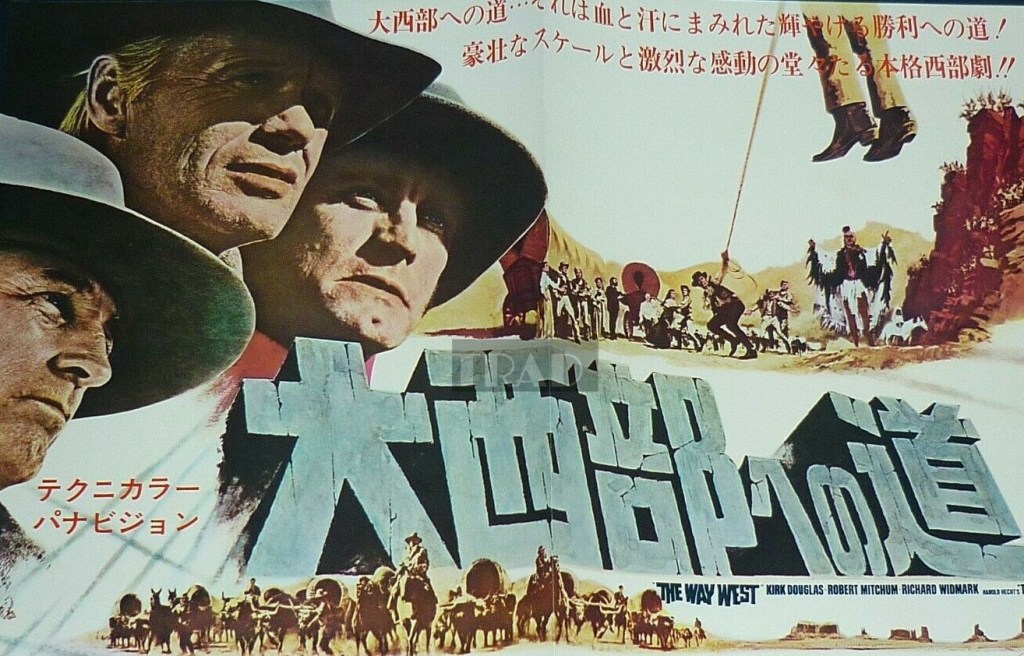
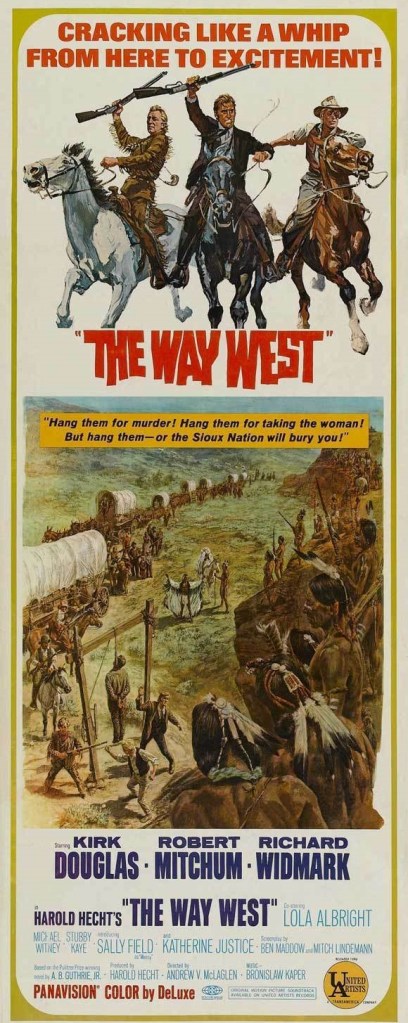
How this crispy-told beautifully-mounted character-driven western ever languished among the also-rans is beyond me. I suspect the specter of John Ford hung heavily over it in the eyes of critics at the time but it more correctly belongs to the cycle of Cecil B. DeMille westerns that told stories with a true historical bent. Often detrimentally compared to How the West Was Won (1963), which told a similar tale of endeavor, this movie deliberately lacks that movie’s inflated drama in which every incident was built up, not least influenced by the need for Cinerama effect, rather than seeking an authentic truth.
Plainly put, the difference is here there are no charges, no races, no fording of rivers in the wrong places. Native Americans are treated with respect. Above all, an epic crossing of the continent with fully-loaded wagons is necessarily going to be slow, risk avoided at all costs, and yet this is not without incident or character arc. In fact, the script is terrific, not just dialog that rings true, but among the elements brought into play are male rivalry, clash with authority, guilt, young love, revenge, vision, justice, America in embryo. That the movie maintains a stately pace, no fistfights descending into brawls, and a shock ending indicate a director in charge of his material.
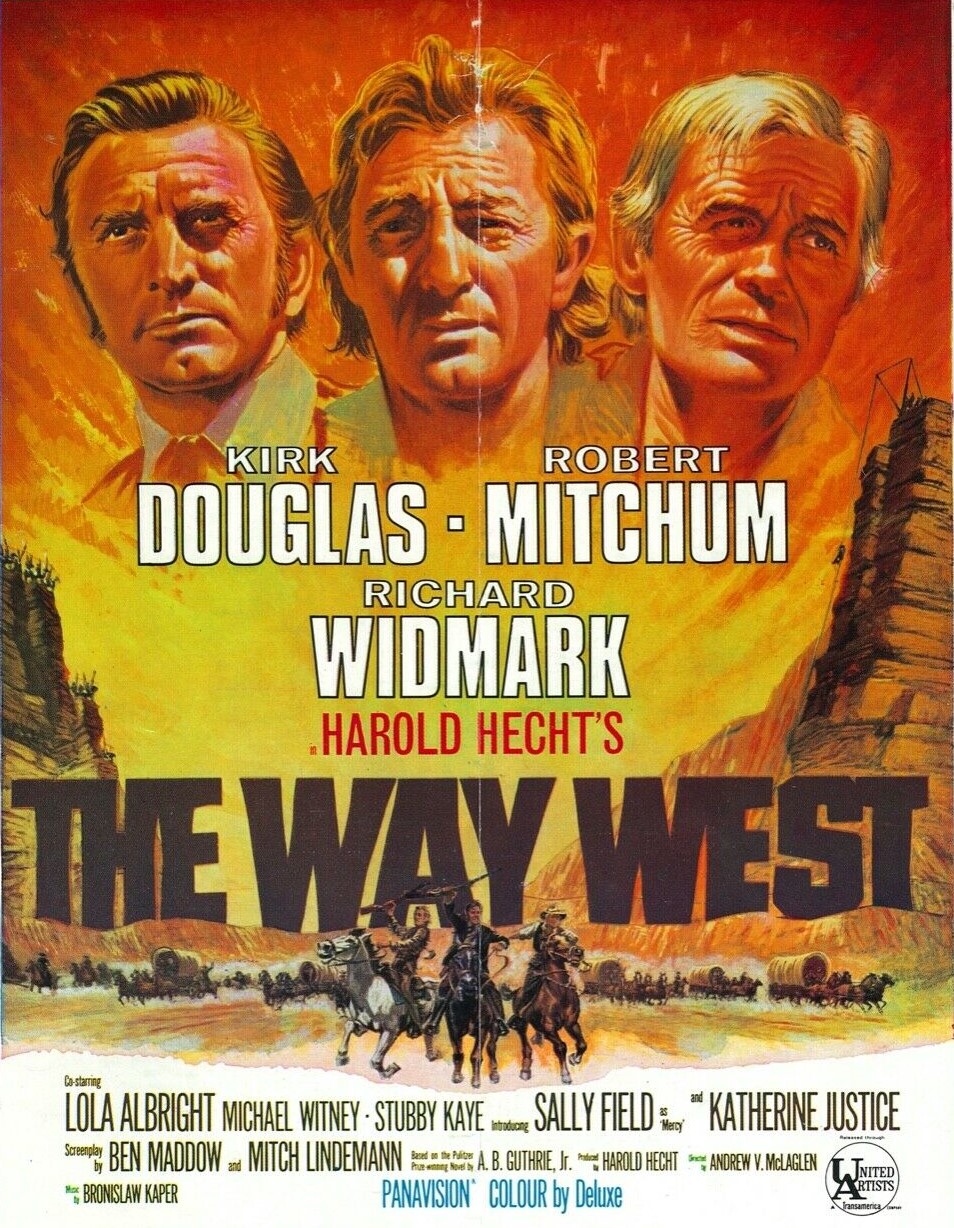
Based on A.B. Guthrie’s Pulitzer Prize-winning novel set in 1843, the first wagon train heads for Oregon under the iron rule of Senator William Tadlock (Kirk Douglas) and guided by a scout with failing eyesight in Dick Summers (Robert Mitchum), both men widowed and in emotional limbo, and in the cantankerous company of Lije Evans (Richard Widmark) and his glamorous wife Rebecca (Lola Albright). There’s a stowaway (Jack Elam), a preacher who can’t afford the price of transportation, an illicit love affair between the vibrant and lusty Mercy (Sally Field) who “hankers after any three-legged boy” but makes eyes at married man Johnnie Mack (Michael Witney), and enough obstacles to keep less determined settlers from reaching their promised land.
Tadlock is the visionary, a politician suffering from an overblown estimation of his self-worth, who “might have been President except for a woman,” ruthless, valuing only his own ideas. “Point the way,” he tells Summers, “don’t gall me with opinions.” For fear it might interfere with his role as commander, he hides his vulnerability. There’s a plaintive moment when he shares his vision of a city with Rebecca, on the one hand full of his own importance, on the other clearly needing the pat on the back. Later, an occasion of death sees him falling prostate with grief on a grave and on breaking his own laws demands to whipped. The over confident blustering individual is by the end almost suicidal. What is a leader if there is no one to lead?
Summers stoically accepts his infirmity, constantly dropping his head so his eyes are hidden from sight under his hat as if his ailment could be easily detected, mourning the loss of his Native American wife, and while full of Western lore as easily passing on gentle wisdom about love, and his “lucky necklace” to an unrequited lover, but still accused of unworldliness, “for a smart man you ain’t got a lick of sense.” Evans bristles at any authority, believing independence means he goes his own way, especially if that permits the freedom to get drunk at a time of his choosing, and especially once he realizes such lack of inhibition riles the repressed Tadlock. But his fondness for alcohol triggers an incident that almost costs his son his life.
Celebrations he started catch the attention of the nearby Sioux and in the communal drunkenness a Native American child is accidentally killed. In the best scene in the film battle Sioux seeking justice and intent on attack are thwarted only by the “sacrifice” of the killer.
The picture is packed full of incident, many characters coming alive in a single shot or with one line of dialog. A woman tramps on her husband’s foot to prevent him challenging Tadlock’s authority. A woman with a baby retorts that she is afraid when bolder settlers facing potential Native American attack assert the opposite. The bravest man in the camp, the first volunteer to be lowered down a canyon, dies when his rope snaps.
There are any number of reversals. Buffalo, instead of being a danger and prone to stampede, create a dust cloud to hide behind. Rivers are crossed at sensible points, rapids avoided. An African American whips a white man. A boy becomes a man through honor rather than violence. Stories, large and small, play out in a succinct script.
Kirk Douglas (The Arrangement, 1969) is superb as a man whose iron core deserts him. Robert Mitchum (Secret Ceremony, 1969), in almost a supporting role, excellent in full awareness that the sight on which his reputation and job depend will vanish, brings a subtlety to his performance that would be recognized as ideal for Ryan’s Daughter (1970). Richard Widmark (The Bedford Incident, 1965), who is generally simmering, gets to mix in a bit of fun in with the simmering.
Lola Albright (A Cold Wind in August, 1961) swaps seductiveness for sense. In her debut Sally Field (Smokey and the Bandit, 1977), filled with zip and zest, sparkles as the lusty young woman and it’s astonishing to realize she would not make another movie for nearly a decade while another debutante Katherine Justice (Five Card Stud, 1968) finds her inner fire when it’s too late. There’s supporting talent a plenty – Jack Elam (Once Upon a Time in the West, 1968), Stubby Kaye (Cat Ballou, 1965), Harry Carey Jr. (The Undefeated, 1969) and William Lundigan (The Underwater City, 1962) in only his second film of the decade.
Director Andrew V. McLaglen (The Rare Breed, 1966) captures the correct tone for the film, making up for the essential slow pace with brilliant use of widescreen, coaxing great performances from all concerned. Screenwriters Ben Maddow (The Chairman, 1969) and Mitch Lindemann (The Careless Years, 1957) compress Guthrie’s tome with considerable skill.
Woefully underrated at the time and since, this deserves reassessment. This is a truer version of how the west was won. And I surely can’t be alone in demanding that McLaglen’s talent be more properly recognized.
You might be interested to know there are two other articles on this film – a “Behind the Scenes” and a “Book into Film.”
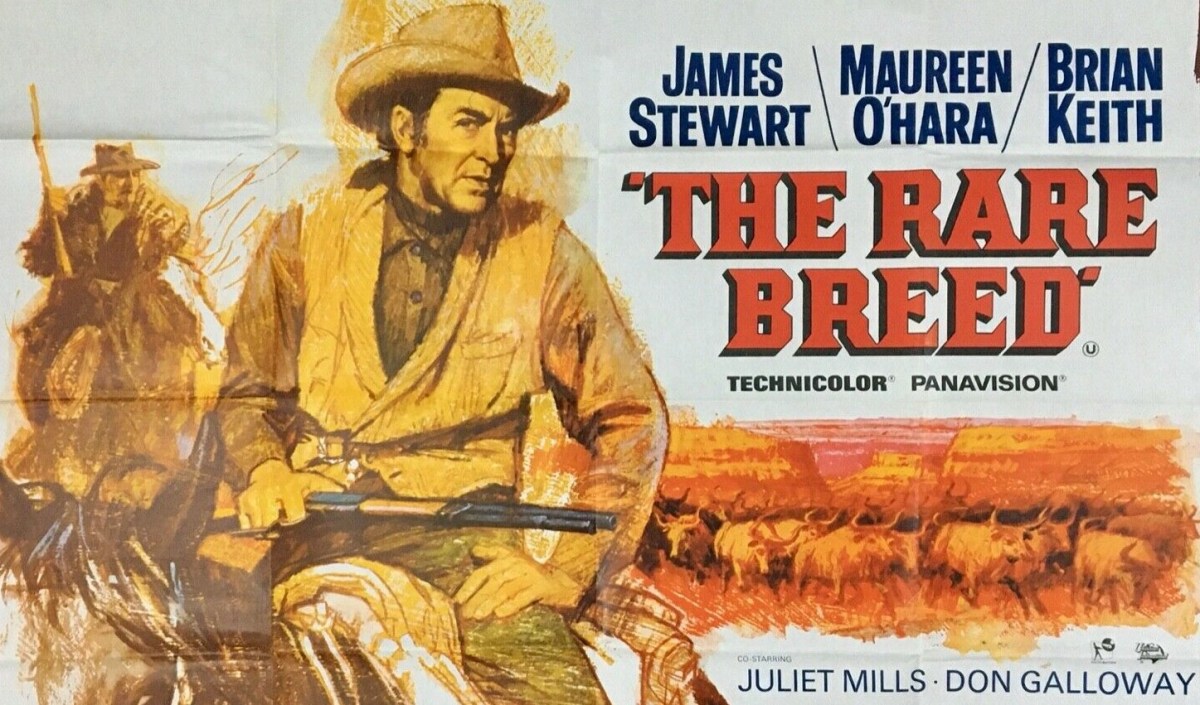
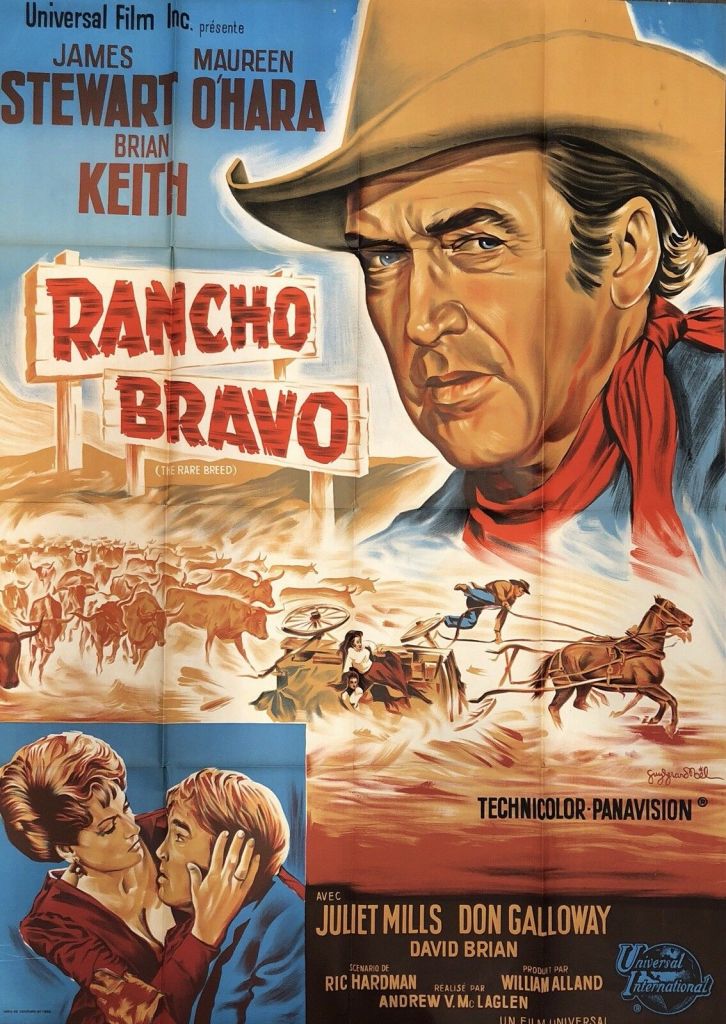
Classic themes of hope, resilience and redemption influence director Andrew V. McLaglen’s follow-up to Shenandoah (1965). Add in a battle against widespread misogyny, thieves falling out, a brilliant stampede and a forlorn hunt that has echoes in the decade-old The Searchers. But other more serious issues are explored. At the film’s core is the question of how a nation built on innovation refuses to countenance change, in other words a country where hierarchy (inevitably male) has begun to impose its preference and how those who suggest alternatives must not just buckle to that collective will but admit they are wrong, a problem that in the half century since the film was made has not gone away.
Widow Martha (Maureen O’Hara) and daughter Hilary (Juliet Mills) bring to auction her white-face Hereford bull, a British institution, the first of its kind to be imported (for breeding purposes, you understand) to America where hardy longhorn cattle are the dominant species. Despite being insulted for her temerity in challenging the existing order, Martha is astonished to receive a winning bid of $2,000, only to realize this comes with conditions attached, the buyer assuming his largesse will also win her, a sharp elbow to the ribs dissuading him of this notion.
Determined to see the bull delivered to the Texan ranch, Martha decides to accompany the animal on its journey. Wrangler Sam (James Stewart), hired to transport it instead plans to steal it and to keep the dupe sweet until the time is ripe encourages her to develop romantic ideas towards him. When another cowboy, Simons (Jack Elam), with eyes on the same four-legged prize causes confrontation the game is up, though Sam sees the trip through.
Rancher Bowen (Brian Keith) belittles the Hereford bull although viewing Martha as a better proposition, but the only way to discover whether the beast can survive in the territory is to let it loose on the open range where it was likely to encounter blizzards (not so rare in Texas as you might think). Once the bull is set free, the movie shifts onto a question of endurance, not just of the animal, but of the mindset of Martha and Sam. Her faith in her insane idea is tested to the limit and, almost in compensation, a woman needing security/protection et al, she comes to appreciate the attentions of a less wild Bowen.
Both central characters have much to lose and much to face up to. Martha, in accepting she was wrong and letting Bowen into her life, will almost certainly be surrendering her independence (she can still be feisty but that’s not the same thing). It’s a testament to her acting that you can see that faith wilting. Sam, a conniving thief whichever way you cut it (although the storyline gives him something of a free pass), has to face up to the fact that he was planning to con a woman out of the precious possession on which her precarious future was built.
The scenes between Martha and Sam are superb, especially when he is grooming what he thinks will be an easy dupe. Sam, in a purgatory of his own making, almost certainly an outcast were the truth more widely broadcast, attempts to expiate his guilt.
James Stewart and Maureen O’Hara had worked together in Mr Hobbs Takes a Vacation (1962) and there is no denying their screen chemistry. But there’s an innocence that O’Hara rarely displays, the woman in love suppressing those emotions not denying them as perhaps in The Quiet Man (1952). She’s both independent and, if the right man comes along, happy to accept his protection (from the male predators of the West), while at the same time keeping him on the right track and sorting out his world of misshapen priorities. There are some brilliant scenes where something else is going on story-wise and O’Hara is internalizing some deeper emotion entirely. It’s an acting coup for an actress like Maureen O’Hara who would never give up to convey so well a character on the verge of surrender.
This is one of James Stewart’s best roles, far removed from the principled hero of Shenandoah (1965) and returning him closer to the shifty character of Vertigo (1958) adept at self-justification. In the scene where he is found out by O’Hara he is outstanding. It’s not a given that the character will find a way to turn things round and his efforts to redeem himself make the latter part of the picture emotionally involving, especially as this is countered by O’Hara’s own internal battle.
It’s worth pointing out that although the narrative mainly concerns the two main characters, the background is filled with ruthlessness. Not only does Sam feel no compunction about stealing a bull worth $2,000, we first encounter Bowen’s son Jamie (Don Galloway) when he is making off with a herd of his father’s longhorns. The cattle barons use their wealth to “buy” a classy woman and cheat cowboys. And there is further murder along the way.
I was going to mark this picture down for the comedy which seems to amount to endless brawls but I wondered if modern audiences, reared on the never-ending fistfights and wanton destruction that usually indicated the finale of a superhero picture, would accept it quite happily, perhaps even welcome it. While Brian Keith (The Deadly Companions, 1961) stands accused not only of one of the worst Scottish accents committed to the screen – and these days of cultural appropriation – that does not take away from a character who, behind the beard, transitions from loathsome father to something more approaching humanity, in other words wild man who realizes the benefits of civilization.
In fact, the broad comedy serves to obscure a film full of brilliant, cutting, funny lines, generally delivered in scathing tones by the woman. O’Hara to Stewart: “You may bulldog a steer but you can’t bulldog me.” Stewart to O’Hara: “Can I help you with that” and her response “No, they’re clean and I’d like to keep them that way.” And that’s not forgetting the sight of the cowboys whistling British national anthem “God Save the Queen” in order to bring the bull to heel.
I forgot to mention the romantic subplot involving Hilary – in case you were wondering what role she had in all this – and Bowen’s estranged son, Jamie. Juliet Mills (Avanti!, 1970), older sister of child star Hayley, is excellent as the sassy daughter of a feisty woman, Don Galloway (Rough Night in Jericho, 1967) less of a stand-out in his debut, in part because he has to subsume his rage against his father.
Jack Elam (Once Upon a Time in the West, 1968) is good as always and you will spot in smaller parts Ben Johnson (The Undefeated, 1969), Harry Carey Jr. (The Undefeated), Barbara Werle (Krakatoa, East of Java, 1968) and David Brian (Castle of Evil, 1966). John Williams, masquerading as Johnny Williams, wrote the score.
Setting the comedy aside, this is a more intimate film from director Andrew V. McLaglen compared to the widescreen glory of The Undefeated and the intensity of Shenandoah and for that reason tends to be underrated. There are some wonderful images, not least Sam carrying the injured Jamie in the style of Michelangelo’s La Pieta – an idea stolen by Oliver Stone for Platoon (1986) – but mostly McLaglen concentrates on the actors.
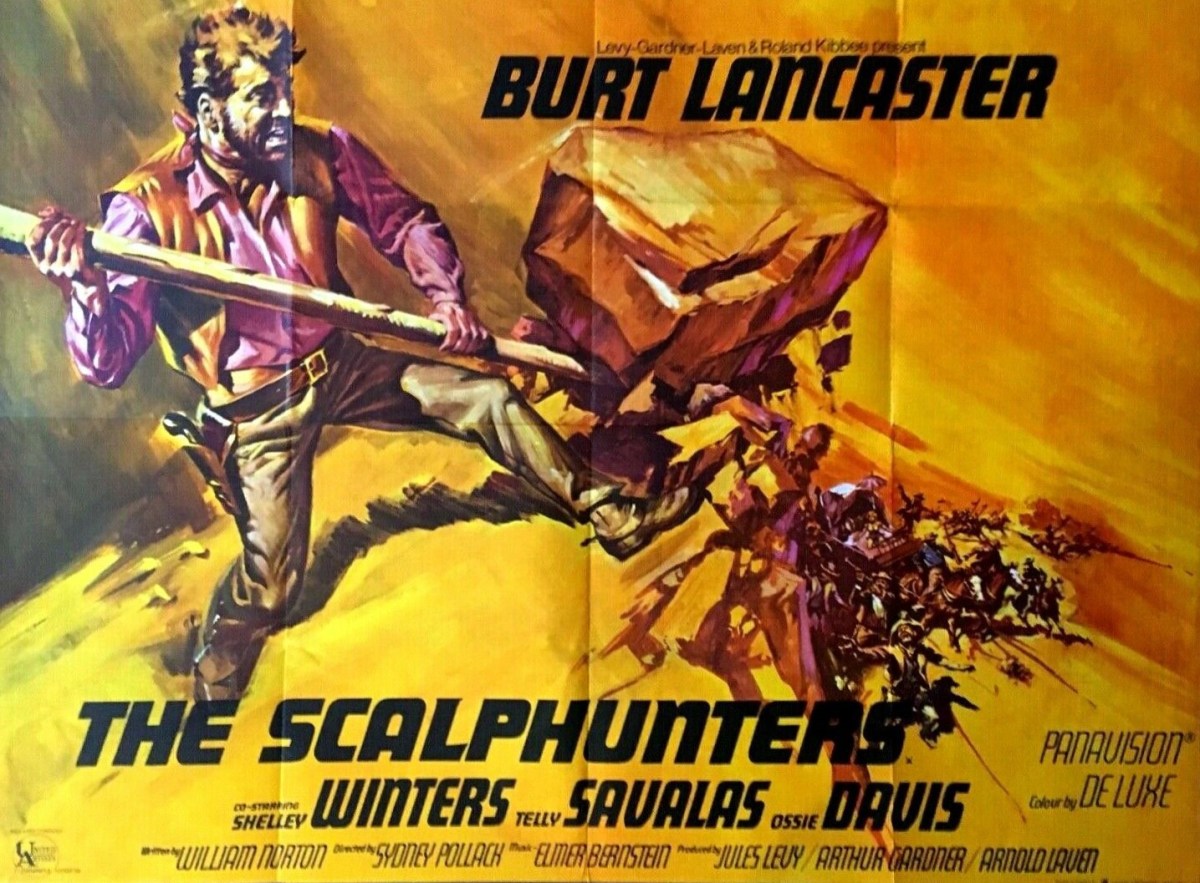
If ever a film deserves reassessment, this is it. This western, marketed as a vehicle for Burt Lancaster in the wake of hugely successful The Professionals (1966), sees the star playing cussed trapper Joe Bass trying to retrieve furs stolen first by Native Americans and then by outlaws. That the serious race issues tackled here were dressed up in very broad comedy and typical western action ensured it missed out on the kind of recognition that critics would assign a straightforward drama and lost its rightful place as a pivotal picture of the decade.
In theory, a somewhat unusual Burt Lancaster western. In reality something else entirely. For large chunks of the movie Lancaster is absent as the story follows the fortunes of Black slave Joseph Lee (Ossie Davis) as he achieves not just freedom but genuine equality. Joseph is introduced as a slave of the Kiowa, left behind when the Indians steal Joe Bass’s furs. In compensation for his loss, Bass plans to sell Lee in the slave market in St Louis and in the meantime enrols him to help recover his furs.
However, a band of outlaws, specializing in collecting Native American scalps (hence the title) and selling them at $25 a time, get to the furs first as a by-product of a raid on the Kiowas. In pursuit with Bass, Lee falls into a river at the outlaw encampment and becomes the slave of Jim Howie (Telly Savalas) who also aims to sell him. Lee plans to escape until discovering Howie’s large troop is headed for Mexico where the slave would automatically become free. With clever talk, beauty-treatment skills and knowledge of astrology and ecology, Lee insinuates himself into the wagon of Howie’s paramour Kate (Shelley Winters).
With Bass still in pursuit, there are several excellent action scenes as the outnumbered trapper seeks to outwit Howie who turns out to be just as devious. But the main question is not whether Bass will recover his stolen property but which side will Lee pick. Will he act as spy to help Bass get back his furs or will he disown Bass and remain with the murderous genocidal gang who could provide a prospct of freedom? Either in the company of Bass or Howie, he is constantly reminded of his status, taking a beating from one of Howie’s thugs, Bass refusing to share his whisky because he views him not just as a slave who “picked his master” but as a coward refusing to fight back when attacked and beaten up.
The film comes to a very surprising ending but by that time through his own actions Lee is accepted as an equal by Bass and the issue of slavery dissolved. In effect, it is a tale of self-determination. Lee effects liberty by taking advantage of situations and standing up for his own cause.
Lee is one of the most interesting characters to appear on the western scene for a long time. Exactly where he acquired his education is unclear and equally hazy are how – and from where – he escaped and how he ended up as slave of the Commanches before they traded him to the Kiowa. However he came to be in the thick of the story, his tale is by far the most original. But he’s not the only original. The fearless Bass was an early ecological warrior with an intimate understanding of living off the wild, not in normal genre fashion of killing anything that moves, but in knowing how to find sustenance from plants. That in itself would endear him to modern lovers of alternative lifestyles.
Normally the derogatory term “scalphunters” would be reference to Native Americans, but here it is American Americans who exploit this market. Despite being the leader of a vicious bunch, Howie turns out to be a bit of a romantic and Kate a bit more interested in the world than your average female sidekick.
Director Sydney Pollack (The Slender Thread, 1965) does a marvelous job not just in fulfilling action expectations and taking widescreen advantage of the locations but in allowing Lee to take center stage when, technically, according to the credits, Ossie Davis was only the fourth most important member of the cast. Burt Lancaster was approaching an acting peak, following this with The Swimmer (1968) and Castle Keep (1969), happy to take risks on all three pictures, especially here where for most of the movie he is outwitted and ends up in a mud bath.
Both Telly Savalas (Sol Madrid, 1968) and Shelley Winters (A House Is Not a Home, 1964) rein in their normal more exuberant personas. Savalas, in particular, cleaves closer to his straightforward work in The Slender Thread than the over-the-top performance of The Dirty Dozen (1967). Winters, usually feisty, is here more winsome and vulnerable, apt to be taken in by sweet-talking men.
But Ossie Davis (The Hill, 1965) is the standout, his repartee spot-on. It is a hugely rounded performance, one minute wheedling, the next sly, boldness and cowardice blood brothers, and while his brainpower gives him the advantage over all the others he is only too aware that such superiority counts for nothing while he remains a slave.
It’s dialog rich and it’s a shame it wasn’t a big hit for that would have surely triggered a sequel – especially in the wake of the following year’s buddy-movie Butch Cassidy and the Sundance Kid – because the banter between Lee and Bass is priceless. For the dialog thank the original screenplay by future convicted gun-runner William W. Norton (Brannigan, 1975), father of director Bill Norton (Cisco Pike, 1971).
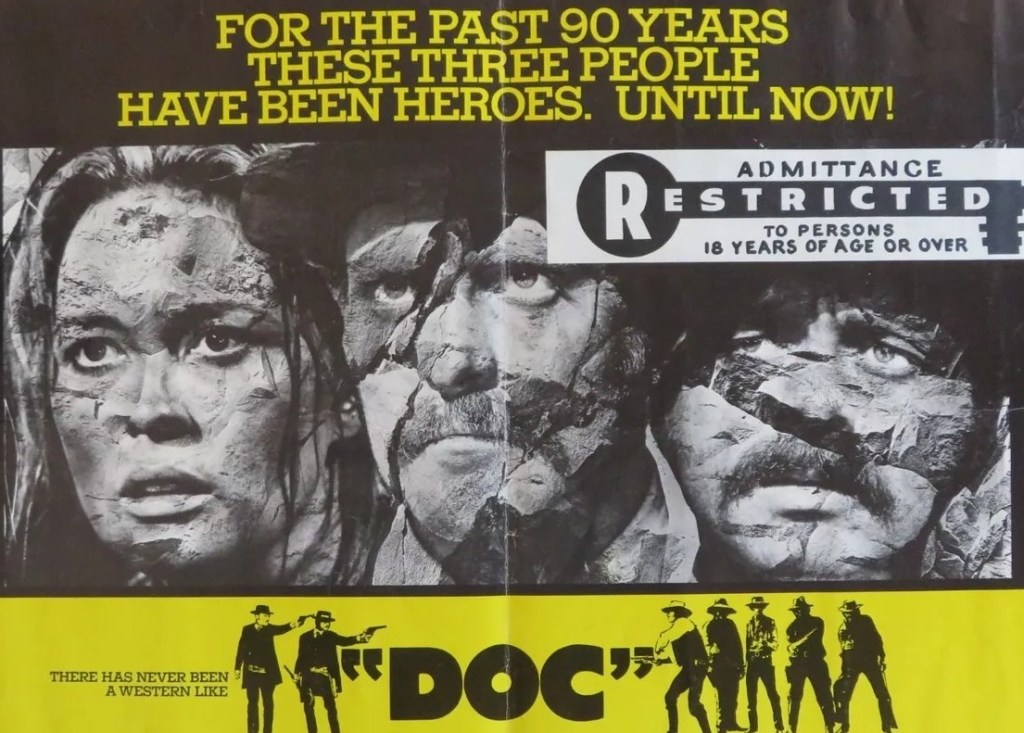
The second version of the Gunfight at the O.K. Corral follows on from the Burt Lancaster-Kirk Douglas 1957 version also directed by John Sturges and precedes Doc (1971) reviewed yesterday. Good chance to compare the differing approaches.
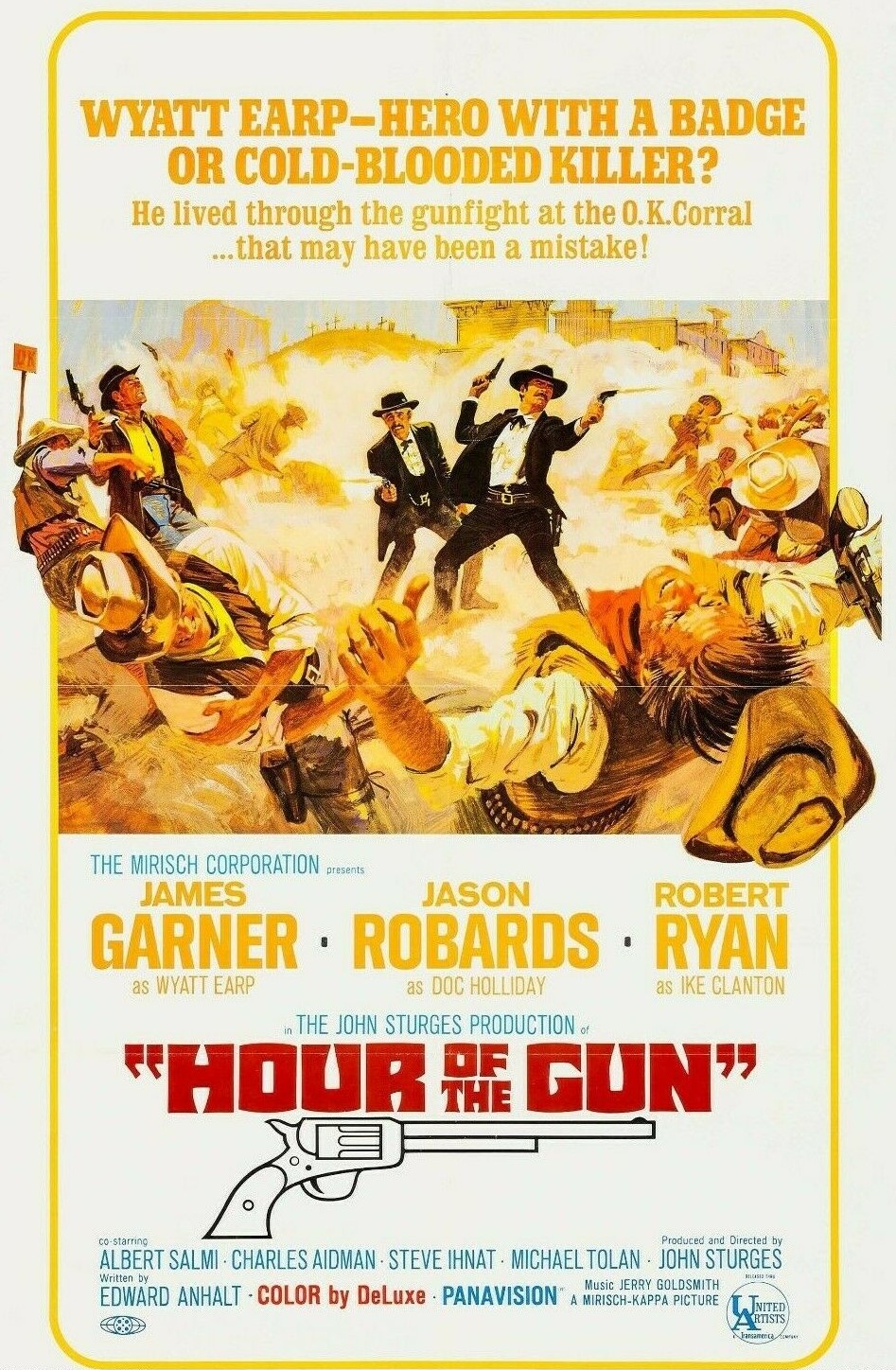
Destroy a legend at your peril. Mythic western hero Wyatt Earp (James Garner) goes down’n’dirty after the death of his brother, spurning law and order to turn bounty hunter, which is legitimate, and then vigilante, which is not, in pursuit of Ike Clanton (Robert Ryan). A revisionist western, then, with director John Sturges substantially reimagining the image of Earp he had been instrumental in creating through Gunfight at the O.K. Corral (1957), a box office smash starring Lancaster as Earp and Douglas as sidekick Doc Holliday.
The first change is to keep Clanton alive, having been a casualty in the previous picture. The opening sequence sets the record straight. But corruption and the law acting in conjunction pull Earp and Holliday (Jason Robards) up on criminal charges though they are found innocent. When corrupt law fails to work, Clanton resorts to ambush, killing Earp’s brother. Clanton organises a posse of twenty men to kill Earp while the lawman sets up his own, smaller, team of bounty hunters.
It soon transpires Earp’s warrants are little more than “hunting licenses” and although marginally he errs on the side of fairness the odds, courtesy of his superior gunplay, remain substantially stacked in his favour and he picks off the villains one by one, pursuing Clanton into Mexico.
This is the story of Wyatt Earp in transition, shifting into lawlessness, at a time – 1881 – when the West itself was undergoing dramatic change, big business from the East forcing greater acceptance of the law (and using it for their own purposes), the growth of the cattle barons and the gradual elimination of the gunslinger, gunfighter and criminal gangs. There’s no room for romance as there was in O.K. Corral and The Magnificent Seven (1960) just pitiless determination to revenge. But there’s little of the all-male camaraderie that informed The Great Escape (1963). Earp and Holliday remain tight but the others in their gang have been somewhat forcefully enlisted.
The poster is very misleading, giving the impression of an all-action gun-toting movie rather than one of somber reflection.
The best scenes are the result of Earp conniving, revealing a streak Machiavelli would have envied, even duping Holliday, until it’s clear the Earp of legend has been vanquished. Sturges congratulates himself on telling the “truth.” But that’s the problem. The truth involves a lot of background that slows the picture down. And presenting Earp as transitioning is pretty much a blatant lie. Earp was clearly as ruthless killer at the O.K. Corral as he is now and no amount of pointing to corrupt law can eliminate the fact that the lawman prefers to kill villains rather than see them face justice. So there’s really no transition. Earp is a more civilized version of The Man With No Name. But at least he accepts it. There’s no hypocrisy involved.
The two principals are superb, shucking off the mannerisms that previously defined their screen personas. Gone is the trademark James Garner cheeky chap, the grin and even the slicked-back hairstyle. He is your father in a continually bad mood now rather than your favorite uncle full of japes. How much Sturges pinned back Robards’ capacity for over-acting can be seen by comparing this with the actor’s performance in Once Upon a Time in the West (1968).
Full marks for Sturges in trying to tell a complex, morally ambivalent, story, and he avoids the more grandiose approach to changes in the West as instanced in Once Upon a Time in the West. The early courtoom scenes slow down the narrative when a couple of lines of dialog could have done the same job. But it is exceptionally true in its depiction of Earp. There is not a bone of redemption in his body. He is going on a killing spree and he doesn’t care who knows it or how it damages his reputation, still high enough before the final episode of the revenge hunt for him to be touted as a future lawman-in-chief for Arizona.
Nor does Doc Holliday offer anything in the way of consolation. This isn’t like The Wild Bunch where a ruthless band of robbers convince themselves they have a code of honor and provide rough camaraderie as a way of filling in the emotional gaps in their lives. Holliday mistakenly sees Earp as man who could not exist outside the law without destroying himself, but that would only concern an Earp who was still interested in rules. Holliday, a self-confessed killer, over 20 deaths to his name, seeks redemption by saving Earp from himself. But in keeping with the raw truth, he is wasting his time. “I’m through with the law,” proclaims Earp, somewhat redundantly, once he dispatches his final victim.
It was a different kind of western at a time when in mainstream Hollywood there was no such thing. Although elegiac in tone, it cuts to the mean. And it was the forerunner of other, more critically acclaimed, westerns like Will Penny (1968), The Wild Bunch (1969) and Pat Garrett and Billy the Kid (1973) and in a sense it was precursor to Dirty Harry (1971) where in order to obtain justice Harry Callahan has to throw away his badge.
Many reasons have been advanced for the film’s commercial failure, most erroneously assuming that the genre had fallen into disrepair and was not revived until the glory year of 1969, but as I point out in my book The Gunslingers of ’69, that was far from the case. The same year as Hour of the Gun, John Wayne had ridden high on the box office hog with The War Wagon to follow the previous year’s El Dorado and Paul Newman as Hombre had been a big hit. The first two spaghetti westerns, only released in the U.S. in 1967, were also given as instrumental in the failure of Hour of the Gun, but neither was a massive box office hit. Revisionism had not quite hit the target with the public either as witness Cheyenne Autumn (1964).
The most likely reason was the fact that Sturges set out to dispel a myth that the public were happy with, that the movie was slow moving, and the characters essentially unlikeable. John Ford averred that when the legend became fact you printed the legend, but the opposite was patently not true here. Edward Anhalt (The Satan Bug, 1965) wrote the screenplay based on the straight-shooting biography Tombstone’s Epitaph by Douglas D. Martin. who had previously written about the Earps.
It might be cold, and at times meandering, but it offers up a fascinating character study and although Earp’s transition could be construed as tragedy, the destruction of a good man, Sturges takes no refuge in such an idea. This is Sturges boldest, most courageous, picture and he does nothing to soften the killing. Where The Magnificent Seven, another bunch of killers, ride into Mexico on the back of a bombastic theme tune, this is a much leaner effort, and all the richer for it.
The revisionist western was often a get-out-of-jail-free card to cover various random exercises that purported to present the West as down’n’dirty, held to account white murderers and rapists and tilted the narrative balance in favour of the Native American. Other times, interpretation of the idea was more liberal. You make up whatever story you liked and hope to pass it off as closer to the truth than what went before.
Here, while Doc Holliday (Stacy Keach) is realistically portrayed as an alcoholic (though whisky was prescribed for medicinal purposes) and suffering severely from the tuberculosis that would bring him to a premature end, the narrative is buried in the realms of the unlikely. Notwithstanding that this is the third rendition in 14 years (and only four years after Hour of the Gun) of the famous Gunfight at the OK Corral, whose origins are probably best left to myth, this tries to undercut upholding of the law with corruption, and expects us to fall for a complicated tale that makes no sense. A version of Billy the Kid (Denver John Collins) enters the equation and Doc’s squeeze Kate (Faye Dunaway) veers uneasily between feisty sex worker and adoring partner.
Columnist Pete Hamill (Badge 373, 1973), in his screenwriting debut, ties himself in knots trying to explain how the famous gunfight occurred in the first place. It could as easily have been the consequence of Doc stealing one of the Clanton Brothers’ fiancée, Kate. But although that’s the opening sequence, little is made of it. Instead, we have Wyatt Earp (Harris Yulin) intending to make commercial hay in Tombstone. He’s already deputy marshal but that carries no jurisdiction in Tombstone where there’s money to be made by a corrupt lawman.
Earp is aiming to get elected sheriff and set up buddy Doc in a gambling operation which I guess would have to be illicit in some manner for them to profit. To win favor with the locals, he plans to bring to justice Johnny Ringo, a Clanton associate, who has robbed the stagecoach of $80,000. He bribes Ike Clanton (Michael Witney) with the $20,000 reward money to hand over Ringo. But when that deal goes south for reasons that are unclear the four Earp Brothers plus Doc go head-to-head with the seven-strong Clanton bunch in the corral.
The problem with the OK Corral scenario is that basically you are just filling in time before the shootout. So Doc uses this teaching the Kid to shoot properly, an action that has unforeseen consequences, and setting up house with Kate while coughing up blood and knocking back the whisky. Earp spends most of his time in one conspiracy or another. He tends to cut confrontation short with a quick punch or pistol whipping. But when he is bested in a fistfight with Ike his revenge is suggested as the trigger for the all-out confrontation.
The Clantons don’t know how to fight the Chicago way. They take pistols to the shoot-out whereas the opposition come armed with shotguns. Forgive me if I’m a bit short on weaponry intelligence but I’d always been told (from westerns, to be sure) that a shotgun was only effective over a short distance and here I would question their efficiency. And while I’m chucking spanners into the works I’m surprised that whoever’s stage got robbed left recovery of the stolen money ($2.5 million in today’s equivalent) and apprehending the crook to a deputy marshal.
So a bit of a hodge-podge and not a convincing one at that. I’m sure neither Earp nor Doc were knights in shining armor but neither were they as idiotic as they appear here.
Stacy Keach and Harris Yulin had been paired in The End of the Road (1970) and both were being touted as rising stars though ultimately only the former made the marquee leap. Both are dour and stoic more than anything else and it’s left to Faye Dunaway (The Happening, 1967) to bring some spark to the picture. Being the sassy one, she’s given the best lines, such as explaining to a religious-minded individual that the only time she would be getting on her knees would be for another purpose entirely.
Frank Perry (Lilith, 1962) directs with an eye towards the elegiac but all the artistic sepia-toned cleverness can’t conceal a movie sorely lacking in decent story.







 The Magnificent 60s