Kaleidoscope (1966) ***

Amazing the tension that emanates from the turn of a card. Or, more correctly, waiting for one. Only problem is we’re two-third through the movie before high-stakes poker begins – the pot nudging £250,00 (close on a cool £5 million now). Mostly, the earlier tension derives from not knowing what the hell is going on in this enjoyable thriller made at the height of the Swinging Sixties as playboy gambler Barney (Warren Beatty), a walking Carnaby St model driving an Aston Martin DB5, tilts the odds dramatically in his favor.

Barney is a gambler but the problem with gambling is the odds. They can be against you too much. So Barney decides to turn himself into a burglar, the kind that can clamber over rooftops, abseil between buildings, and break into – a printing business called Kaleidoscope. This just happens to print the playing cards supplied to all the major European casinos. So Barney does a little doctoring of the master printing plates. Bingo, the odds are a bit more even now that he knows what cards are coming out of the shoe – he plays chemin de fer (as it is known in posh casinos, pontoon or 21 to you and me).

While cleaning up he bumps again into fashion designer Angel (Susannah York) – their original meet-cute taking place in a traffic jam – who he dated once in London. Unbeknownst to him, she is on a scouting mission, looking to snare the kind of high-rolling gambler who can take on and completely fleece the drugs kingpin Harry (Eric Porter) being pursued by cop Manny (Clive Revill), her father who, rather than waste so much time collecting the required evidence to put the villain behind bars, decides it would easier done by making him broke. Unable to pay his debts, some other villain would put him out of business in the traditional cemented-boot fashion.

It takes a while for the movie to line up all its ducks in a row, mainly by holding on to the information the audience requires. But the audience is privy to details of the way Manny works that Barney is not. Even for ruthless villains, Manny has a peculiar calling card, one that would make any gambler think twice about entering his lair. Of course, it doesn’t take long for Manny to rumble Barney’s game so the stakes are much higher than the charming gambler imagines.

Throw in as much fashion as London was capable of generating at this time, the burgeoning romance, some exotic European locations, a castle with a moat, and the usual tourist guide stuff of red buses, Big Ben, Piccadilly Circus, pubs and Tower Bridge and you have all the ingredients of an easy on the eye thriller.

It’s a movie that relies on star power but Beatty and York deliver. That is, if you don’t need Beatty to do much more than be Beatty, all teeth and charm. At this point in his career Beatty looked as if his career was fast approaching its end. The box office success of Splendor in the Grass (1961) had been followed by a string of flops, romantic dramas and comedies that should have had audiences queuing up plus an occasional wild card like Arthur Penn’s Mickey One (1965), the biggest flop of all. He does make an engaging crook, and he never loses his screen charisma here, but there ain’t quite the right number of twists that moviegoers weaned on the likes of Topkapi (1964) had come to expect.

Hollywood had been doing its best to position Susannah York as a top box office attraction and she had snagged the female lead in The 7th Dawn (1964) opposite William Holden and Stanley Baker in Sands of the Kalahari (1965)  but she was recovering from the colossal flop of Scruggs (1965) by ‘poet of the cinema’ David Hart.  Kaleidoscope offered  the kind of role York could do with her eyes closed. So while the screen pair were not exactly sleep-walking it was not the kind of story that was going to create sparks.

Character actor Clive Revill (Fathom, 1967) and Eric Portman (The Pumpkin Eater, 1964) take more leeway with their roles, the latter almost chewing he scenery, the former content with just chewing his lips. Look out for Jane Birkin (Blow-Up, 1966) and British television stalwarts Yootha Joyce, George Sewell and John Junkin. 

The title would have been more enigmatic, original meaning of images twisted out of shape, had it not also applied, straightforwardly, to the card-making company. Giving Harry the surname of Dominion seems overkill.

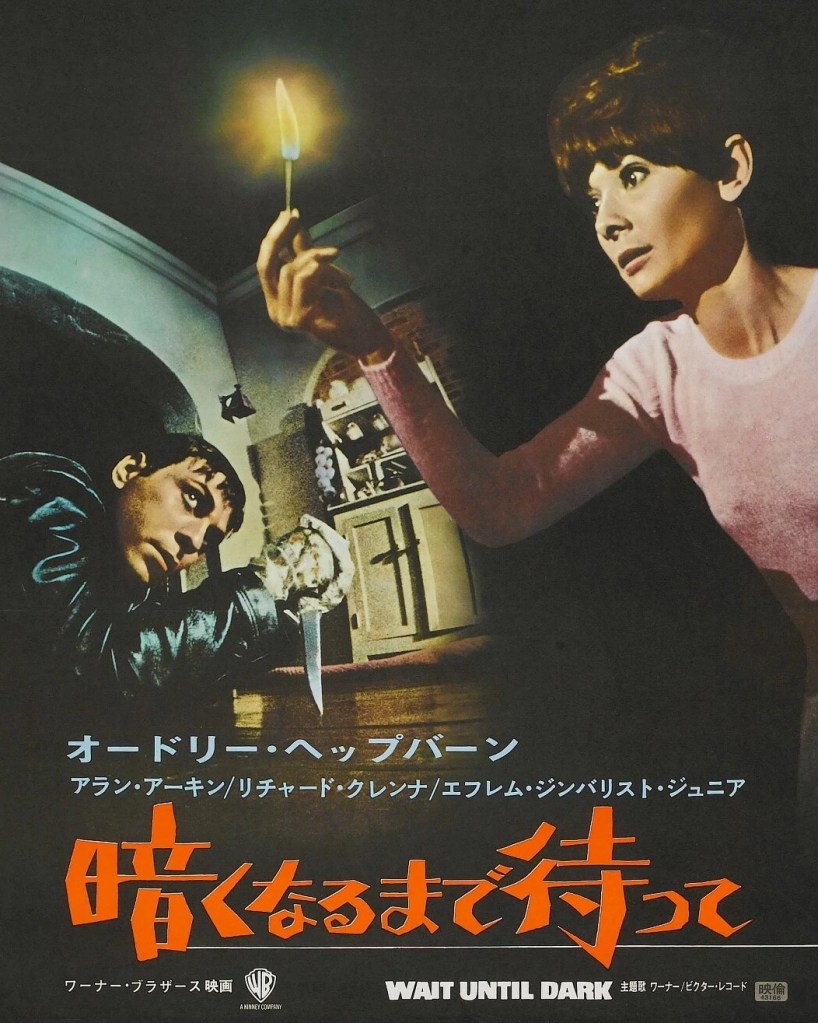
Director Jack Smight (No Way to Treat a Lady, 1969) came to this after twisty private eye picture Harper/The Moving Target (1966), a big hit starring Paul Newman. This is too lightweight a feature to command such interest, but he does keep the story rolling along and it’s an effortless watch and it has a certain offbeat quality. The screenplay was fashioned by Robert Harrington and Jane-Howard Harrington, making their movie debut, who also co-wrote Wait until Dark (1967). It was also the debut for Winkast Productions, the Jerry Gershwin-Elliott Kastner production team who went on to make Where Eagles Dare (1968).

One Battle after Another (2025) **

Sorry to be a party-pooper but I didn’t take to this critically-acclaimed shaggy dog story heavy on the satire. It’s partly redeemed by the performances – Sean Penn, in particular – but there’s not much to say that hasn’t already been said, and far more succinctly, about immigration and the rising right-wing influence in America. I’m sure Leonardo DiCaprio’s $20-$30 million standard remuneration fee might account for a good chunk of the $130 million budget but unless rates for extras have soared I can’t see where the rest of the money has gone.

Perhaps Warner Bros, having lost out on cult box office hotshot Christopher Oppenheimer, was hoping to replace him with Paul Thomas Anderson, who while generally a critical darling, has none of Oppenheimer’s box office clout. Though let’s not forget Anderson’s highly rated by his peers, otherwise how to explain his three Oscar nominations for direction and four for writing. He should be a good fit for the wild unwieldy sprawling works of Thomas Pynchon, another cult darling, and his previous effort Inherent Vice (2014) made a reasonable stab at capturing, albeit on a smaller scale, the author’s idiosyncrasy, though the writer as often took the blunderbuss approach to his subject.

The only element of directorial bravura that I detected here was the Cinerama effect of mounting and falling down hills in the car chase.

The tale is just lame. Revolutionaries grow old or turn snitch to save their skin. White old guys belong to some secret racist organisation going by the name of the Santa Claus Club or some such. Black gals get to kill people and rattle off machine guns. The nuns, as you might guess, are  another secret organisation. The main element of the narrative appears to be whether racist Col Slackjaw – I mean Lockjaw (Sean Penn) – but I mean, who cares, when you give the bad guy such an improbable name you’re stating from the outset that he’s a joke and not the threat he’s meant to be

Anyway, improbable as it sounds, the avowed racist has a thing for dominant Black women – check out his erection at first sight of gun-toting Perfidia (Teyana Taylor) and his predilection for being anally probed by her. She’s sometime revolutionary, sometime aforementioned snitch, sometime boyfriend of revolutionary-cum-hophead Bob (Leonardo DiCaprio), and definitely not maternal material given she walks out on new-born Deandra (Regina Hall) leaving the hophead to bring her up.

The Santa Claus Club gets wind of the fact that Lockjaw might not be as racist as he pretends so that sets it at odds with its very own top racist as he embarks on a scorched-earth quest to find out if he should have a paternal bone in his body.

All sorts of chases ensue, mostly revolving around one-dimensional characters though Benicio del Toro makes a fair stab at humanizing his revolutionary.

It just went on and on, like a latter-day Anora (2023), making same point over and over again, albeit that presumably it is aimed at the intelligent section of the cinematic audience who shouldn’t need to be battered over the head with the message. This is the kind of picture which complains about the treatment of people by the Santa Claus Club but then expects audiences to burst into a round of applause when the club meets out punishment to one of its own.

File under major disappointment.

Leonardo DiCaprio (Killers of the Flower Moon, 2023) is good, but there’s not much for him to get his teeth into, we’ve seen this deadbeat character so many times before, even ones that form emotional ties with their children.

Black Rabbit (2025) ***

I’ve never been a big fan of either Jude Law (Firebrand, 2023) or Jason Bateman (Game Night, 2018) so I admit I’m coming to this Netflix series with some hesitation. Despite his deuce of Oscar nominations I’ve never been convinced by Jude Law as an actor – he always seems to me one of the actors who “acts.” And sticking a beard on Jason Bateman and growing his hair long does not turn him into a badass. He’s directing himself here, at least for the two opening episodes, so I’m not sure he’s cracked that skill either.

And I can’t be the only one fed up with these movies or series that start at the end. You get some decent piece of action – here a robbery – and no sooner have you become interested than the action stops dead and up pops the legend “one month earlier” or “one week earlier” or “one day earlier” as if someone has got it into their heads that that automatically adds a hefty dose of tension.

So, basically, this looks like some sort of whodunit. Not revolving around murder as would normally be the case. But around the aforementioned robbery which has the hallmarks of an inside job. Possibly the finger won’t point at Jake Friedkin (Jude Law) who is after all the restaurant co-owner. More likely, you’d suspect his hustler brother Vince (Jason Bateman) who you learn in short order has stolen his father’s collection of rare coins, taken out loans against the family property, killed a guy and owes $140,000 to loan sharks.

But that last large debt brings Jake solidly into the frame. He’s had to, according to one of those unwritten laws that get trotted out at convenient times in gangster pictures, assume his brother’s debt. Worse, he’s not able to pay his own bills, a born hustler, has his eye on a bigger prize and just has to raise the presumably insignificant sum of $5 million to set up another more upmarket operation in a building built by Mies van der Rohe (famous architect in case you don’t know).

He’s planning to take his head chef Roxie (Amaka Okafur) with him so you’d think she wouldn’t bear a grudge. But, in fact, she’s pretty pissed off at her boss because he’s taken no action to prevent the sexual predatory activities of his partner Wes (Sope Dirisu), a successful recording artist who drinks the place dry (of high-priced champagne I should add). Wes has raped bartender Anna (Abbey Lee) and she’s been sacked and already taking revenge on TikTok.

Hey guys, I’d just like to point out that two guys running ain’t exactly poster material.

Jake has hired Wes’s interior designer girlfriend Estelle (Cleopatra Coleman) to give the new place a decent lick of paint, but Wes, who’s  not in on the deal, has discovered his partner is soon going to be his ex-partner.

So from there on, every possible attempt to jack up the stakes occurs. Vince wins enough ($150,000) at the gambling tables to pay off his debt, but that wouldn’t make much of a story nor be true to his character, and he loses it all. And when the sale of the family property falls through he’s back to square one and the digital accounting begins – as in digit accounting as a hot-headed gangster saws off his little finger. Oh, and promises that next on the hit list would be Vince’s estranged daughter Gen (Odessa Young) a tattoo artist.

There’s a big chunk of back story to be fitted in. Jake was originally Wes’s manager, Vince was responsible for coming up with the idea of turning a derelict dump into a trendy bar and restaurant. So emotional debt is owed all round never mind the $140,000 outstanding plus whatever else Jake has clocked up.

So part The Bear, part sub-Scorsese with psychopathic hoods, and part the double-dealing that comes with running any business  and soon enough I guess there will be a proper murder to deal with because glancing down the cast list I see a detective so that will be more suspects.

I’m not entirely sure there’s enough here to keep me pinned down in my seat for another six episodes. And part of the problem, I guess, is the all-action beginning which had me believing this wouldn’t just degenerate into a slow, draggy family saga (more family based than usual given the restaurant we are told is one big family). Created by Zach Beylin (Creed III, 2023).

I’m not optimistic.

The Sleeping Car Murder (1965) ****

Absolutely brilliant thriller. Even after a half a century, still a knock out. A maniac on the loose, baffled cops, glimpses into the tattered lives of witnesses, victims and relatives, told at break-neck speed by Greek director Costa-Gavras (Z, 1969) on his debut and concluding with an astonishing car chase through the streets of Paris.  Not just an all-star French cast – Yves Montand (Grand Prix, 1966), Oscar-winner Simone Signoret (Is Paris Burning?, 1966), Jean-Louis Trintignant (Les Biches, 1968) and Michel Piccoli (Topaz, 1969) – but directed with a Georges Simenon (creator of Maigret) sensibility to the frailties of humanity.

As well as the twists and turns of the narrative, what distinguishes this thriller are the parallel perspectives. Where most whodunits present an array of suspects, inviting the audience to work out the identity of the killer, here virtually all the characters are presented both objectively and subjectively. Some are delusional, others highly self-critical, occasionally both, and we are given glimpses into their lives through the characters’ internalized voice-over and dialog.

Tiny details open up worlds – the wife of a dead man bewailing that he would not be able to wear the fleecy shoes she had just bought him to keep out the cold during his night-time job, a policeman revealing he wanted to be a dancer, a vet who wants to create a new breed of animals, a witness whose parents committed suicide. But just as many, the flotsam and jetsam of the police life, irritate the hell out of the cops: Bob Valsky (Charles Denner) constantly berates their efforts, relatives bore the pants off their interviewer, not to mention self-important police chief Tarquin (Pierre Mondy) who has an answer for everything.

A young woman Georgette (Pascale Roberts) is discovered dead in the second-class sleeper compartment of a train after it has pulled into Paris. Initial suspicion falls on the other  occupants including aging actress Eliane (Simone Signoret) in the thrall of her much younger lover Eric (Jean Louis Trintignant), impulsive blonde bombshell Bambi (Catherine Allegret), low-level office worker Rene (Michel Piccoli) and Madame Rivolani (Monique Chaumette). Weary Inspector Grazziani (Yves Montand), suffering from a cold and wanting to spend more time with his family, is handed the case. But before he can interview the suspects, they start getting knocked off.

So convinced are the police of their own theories that they ignore the testimony of Eliane and instantly home in on fantasist Rene, treated with contempt, a dishevelled lecherer who on the one hand misinterprets signals from women and on the other realizes that no one in their right mind would ever date him. Eliane is tormented by the prospect of being abandoned by her controlling lover.

It’s a race against time to find the passengers before the killer. In the middle of all this there is burgeoning romance between Bambi and clumsy mummy’s boy Daniel (Jacques Perrin), who may well hold the key to the murders. Their meet-cute is when he ladders her stockings.

I won’t spoil it for you by listing all the red herrings, surprises, mishaps, tense situations and explorations of psyche, but the pace never abates and it keeps you guessing to the end. And while all that keeps the viewer on tenterhooks what really makes the movie stand out is the depiction of the inner lives of the characters.

So often cast as a lover Yves Montand is outstanding as the diligent cop. Signoret captures beautifully the life of a once-beautiful woman who now enjoys the “empty gaze of men,” Trintignant essays a sleazier character than previously while Michel Piccoli who often at this stage of his career played oddballs invites sympathy for an unsympathetic character. Catherine Allegret (Last Tango in Paris, 1972) and Jacques Perrin (Blanche, 1971) charm as the young lovers. In tiny roles look out for director Claude Berri (Jean de Florette, 1986), Marcel Bozzuffi (The French Connection, 1971) and Claude Dauphin (Hard Contract, 1969),  

Costa-Gavras constantly adds depth to the story and his innovative use of multiple voice-over, forensic detail, varying points-of-view, plus his masterful camerawork and a truly astonishing (for the time) car chase points to an early masterpiece. Sebastian Japrisot (Farewell, Friend / Adieu L’Ami, 1968) wrote the screenplay based on his novel.  

Can’t remember where I got my DVD, perhaps second-hand, but there is an excellent print, taken from the 2016 restoration, available on YouTube.

Harley Davidson and the Marlboro Man (1991) *****

I always approach cult with some unease. You never know why a film has fallen into the category. It could simply be awful and resurrected with glee because someone has cleverly constructed a sub-genre called So Bad It’s Good – check out Orgy of the Dead (1965) or Can Hieronymus Merkin Ever Forget Mercy Humpe and Find True Happiness? (1969). Or it’s been a surprising flop first time round and discovered an audience through VHS and DVD – The Shawshank Redemption (1994) the forerunner in that field. But the plusses – well-made, great characters, some standout scenes – in the Stephen King adaptation were so obvious and the studio put a lot of dough behind re-marketing it to the at-home audience that it was not so surprising that it found a better response second time around.

But Harley Davidson and the Marlboro Man did not, as with The Shawshank Redemption, come garlanded with seven Oscar nominations, and the stars had considerably less marquee appeal and peer acceptance than Tim Robbins (The Player, 1992) and Morgan Freeman (Driving Miss Daisy, 1990). Mickey Rourke (9½ Weeks, 1986) and Don Johnson (The Hot Spot, 1990) had not only mostly blown their status in the Hollywood hierarchy but only seemed one newspaper headline away from further notoriety.

That it works – and so well- relies on mix of several ingredients. In the first place it’s a throwback to the buddy movie, the easy camaraderie between Harley Davidson (Mickey Rourke) and the Marlboro Man (Don Johnson) has obvious precedents from Butch Cassidy and the Sundance Kid (1969) and clearly is some kind of homage to the Paul Newman-Robert Redford picture since it pinches three of the elements that made the western such a box office smash.

Secondly, our fellas do bad for a good – if somewhat lopsided – reason so aren’t true criminals and, in any case, earn a get-out-of-jail-free card because it turns out they’ve robbed from proper bad guys. Thirdly, there’s a terrific robbery and street shoot-out. Fourthly, it draws on the spaghetti western in the costume department, repurposing the top-to-toe dusters into black leather, an idea that would be snatched up by the likes of The Matrix and quintet of bad guys toting machine guns and dressed in black picked up not only by The Matrix but also by Men in Black (1997).

You could argue that a better director than Simon Wincer (Harlequin, 1980) would have done more visually with the leather-clad gangsters emerging from a vehicle and producing a solid wall of lead – perhaps through slo-mo or taking more time to concentrate on their sudden appearance – and made it a scene that might stand up to the ambulatory episodes in The Wild Bunch (1969) or Reservoir Dogs (1992). Even so, quite simply, it is a stunningly arresting piece of cinema.

But the real reason this works is that the two main characters are so human. Harley is given to philosophizing and wondering (in the manner, it might be said, of Butch Cassidy) and Marlboro loses out in love. While they fall into the category of endless drifters, an aversion to commitment, living easy, and more in love with their bikes than anything else, they are almost winsome in their innocence, as if everyone else will just fall into line with their world view.

Signed photo of Mickey Rourke in this piacture will set you back three hundred bucks.
That’s cult for you.

Anyways, we are duped into thinking this is going to be a John Wick-Die Hard wild ride from the opening scenes where both dudes prove mighty handy with their fists, Harley preventing a gas-station robbery, Marlboro taking on poolroom cheats in a bar. The plot only kicks in when they discover that the bank is planning to foreclose on their favorite bar. Needing to get their hands on a quick $2.5 million, the boys decide to do a bit of foreclosing themselves, taking the required sum from the bank in question, organizing a neat heist only to discover they’ve not stolen money but drugs.

Being smarter than your average hood, they swap the drugs for the dough but don’t take into account that the villains are smarter than the average thug and aren’t in the business of donating to good causes. The gangsters hunt them down. Harley and Marlboro could just disappear, especially once they dispose of the hidden tracking device, because they are A-grade students in the art of hiding away. Instead, honor is at stake so they set up an ambush in an airplane graveyard.

Since you’re asking, the Butch Cassidy the Sundance Kid grace notes are: Marlboro is the equal of The Sundance Kid is the shooting stakes and, in fact, like his predecessor, Marlboro manages the same trick of shooting off a character’s gunbelt; in the gunfighting stakes, Harley is the equivalent of Butch, never killed a man, absolutely useless with a pistol; and, the piece de resistance, when trapped they jump off an exceptionally high ledge into water.

Mickey Rourke and Don Johnson take the opportunity to shift well away from their existing screen personas and are thoroughly engaging. Simon Wincer keeps to a tidy pace. Written by Don Michael Paul (Half Past Dead, 2002) in his debut.

The action is top-notch, all the characters are well-drawn, the women not just bed fodder, usually brighter than the men. Terrific roster of supporting cast including Chelsea Field (The Last Boy Scout, 1991), Tom Sizemore (Saving Private Ryan, 1998), Robert Ginty (The Exterminator, 1980), Daniel Baldwin (Mulholland Falls, 1996), pop star Vanessa Williams (Eraser, 1996), Giancarlo Esposito (Megalopolis, 2024), Tia Carrere (Rising Sun, 1993) and Kelly Hu (X-Men 2, 2003).

The kind of movie where you wish they would do it all over again. Had the movie been a success a sequel would have been a shoo-in. As it is, we’ve only got this, so enjoy it while you can.

Catch it (for the moment) on Amazon Prime.

The Long Good Friday (1980) *****

Got two predictions correct – that the conversion of London Docklands into upmarket housing was a potential goldmine and that London would become the beating financial heart of Europe. Though I would have thought everyone, even as arrogant a character as gangster Harold Shand (Bob Hoskins), would have known not to tangle with the IRA. Of course, he hasn’t done this deliberately, that’s just the sting in the tail, unravelling the complex mystery of who’s got it in for him.

This would be a fitting addition to the 1970s trilogy of British gangster pictures par excellenceGet Carter (1971), Villain (1971) and Sitting Target (1972) –  except you could argue it’s better than the lot. Here we’re on The Godfather Part II territory, the big-time hood who’s gone legit. Harold already owns a casino, upmarket restaurant and pubs, and swans around in a luxury yacht but he’s got his eye on bigger game, investment in the Docklands, an ideal money-laundering concept, and he’s hooked a potential partner in American Mafia chief Charlie (Eddie Constantine).

Much as Harold would like to show off his svelte businessman side, his attempts to ooze class disappear at the first sign of trouble and soon he is working those teeth so hard he could be auditioning for Jaws. We’ve got an inkling of what’s going on but it takes a good while for everything to add up and even then Harold is convinced someone’s got their sums wrong since he’s ruled the London underworld for a decade and nobody with any sense would take him on.

The businessman façade falls away when his close aide and longtime buddy Colin (Paul Freeman) is murdered and his Rolls Royce and a pub are blown up. And it takes virtually the whole picture for Harold to discover just why a woman on her way to a funeral stopped the car long enough to spit in the face of one of Harold’s top henchmen, Jeff (Derek Thompson).

So mostly what we’ve got is Harold reverting to old-style violence, presumably using the methods that got him to the top in the first place, as he tortures and terrifies everyone in sight. Some of the brutality is inventive stuff as movie torture goes, one fellow having his naked backside sliced open by a machete, the rest of the top gang leaders rounded up in an abattoir as if they were sides of beef awaiting slaughter.

Meanwhile, wife Victoria (Helen Mirren), a version of what used to be known as “posh totty”, tries to keep the deal active by charming the pants off every male who comes within a sniff of her, some so driven by temptation they declare they “want to lick every inch of her.”

So, on the one hand, it’s big business and all the jiggery-pokery that goes in the legitimate world even among illegal contenders, and on the other hand it’s all the jiggery-pokery that goes on in the illegal world among all the illegal contenders.

Incredible score by Francis Monkman. Why he wrote so few is a mystery.

While there are many standout moments – and you’d be hard put to beat the climactic scene of Harold in the back of a taxi facing his demise – and director John MacKenzie wields his camera with considerable verve, his ace in the hole is always the expressive face of Harold. Whether he’s practising his bonhomie, or stiffening at the latest outrage, or letting loose physically and verbally it’s a fabulous acting tour de force as if James Cagney had met Al Pacino. And like Oliver Reed in Sitting Target, simmering rage is smoothed over by feminine companionship, the close bond between Harold and Victoria one of the key ingredients.

Turned Bob Hoskins (Zulu Dawn, 1979) into a star and had the British end of the industry been in better shape he had might made a smoother transition to the top echelons instead of waiting for Mona Lisa (1986) to polish his credentials.

Although we Brits like to think the acting of “national treasure” Helen Mirren was always being recognized on the domestic front, long before she achieved unquestionable credibility from pocketing an Oscar for The Queen (2006), in truth by this point her movie career was in limbo. Hardly any screen work since her breakthrough in Age of Consent (1969) and three of her last four pictures – Caligula (1979), S.O.S. Titanic (1979) and The Fiendish Plot of Fu Manchu (1980) – counting as calamities. This was a fresh take on an actress who, too often for her own good, had been seen as better naked than clothed.

It was almost a homage to cult to employ Eddie Constantine (S.O.S. Pacific, 1960) but it was surprising how many of the supporting cast came good including future James Bond Pierce Brosnan as a gay killer, Paul Freeman (Raiders of the Lost Ark, 1981), Derek Thompson (nearly 40 years on BBC series Casualty), and future director Dexter Fletcher (Rocketman, 2019).

Original screenplay by Barrie Keefe on his debut.

Still stands up as a gangster great.

Sitting Target (1972) ****

Forms a neat trilogy with British Noir New Wave gangster pictures Get Carter (1971) and Villain (1971) both with topline stars attached in the form of Michael Caine and Richard Burton. Laden with atmosphere and intrigue, this carries hefty emotional power as a very tough guy struggles to show his gentler side. The moral of the story is that brains always trump brawn. And it’s one of these movies where the truth only unravels when you hit the twist at the end and every character is shown in quite a different light.

Like Get Carter, this is a revenge picture. Discovering girlfriend Pat (Jill St John) is pregnant by another guy, imprisoned bankrobber Harry (Oliver Reed), serving a 15-year stretch for murder, is turned into a “lethal weapon” by the very thought and determines to break out and kill her. And at the same time collect the loot from his last bank robbery.

His escape, masterminded by the gentlemanly MacNeil (Freddie Jones) and accompanied by long-time buddy Birdy (Ian MacShane), is a tense, exciting sequence. First stop outside is to strongarm another gangster into supplying a Mauser that can be turned, a la Day of the Jackal, into a long-range rifle.

And while the movie brings into play the standard trope of villains seeking their share of the loot, it also hangs on another standard wheeze of the 1960s B-picture of the woman as bait. Anticipating that Harry will make a beeline for his loved one, but unaware of his nefarious intent, Inspector Milton (Edward Woodward) has her under police guard. But the likes of Harry always finds a way to sneak in, which triggers police pursuit, in the course of which Harry commits the unpardonable crime of shooting a cop – the villain world only too aware of the severe repercussions.

There’s a stop-off at the apartment of the moll (Jill Townsend) of Mr Big, Marty (Frank Finlay). That doesn’t go as planned, but still they manage to uncover a hidden sack of cash leaving Harry to knock off, sharpshooter style, the unfaithful girlfriend.

And then the pair make a getaway….Not quite. Birdy turns out to be greedy and wants all the robbery cash for himself and attempts to shoot Harry. That would be enough of a twist to be getting on with but there are a few stingers to come. Pat’s not dead – Harry (too far away to identify  her face) just shot a policewoman on protection duty standing in her window. Pat’s not  pregnant either, just stuffed a cushion down her jumper to complete the pretense. And she and Birdy are an item. And it’s clear that Birdy simply purloined Harry’s rage to get him to do the dirty work involved in the escape and dealing with the other gangsters.

Except in the case of being willing to knock off his longtime business partner, Birdy, you see has always been averse to violence, cowardly not to put too fine a point on it, though quite capable of pouring a bowl of urine down a captured guard’s throat, or rape.

Villains are as conflicted as anyone else, otherwise how to explain that Harry climbs into the burning car containing his dead girlfriend, gives Pat a gentle kiss and waits for the car to explode and take him to a fiery grave. We’ve seen the softer side of Harry in flashes. He turns down the chance to bed a sex worker in the getaway lorry, doesn’t take advantage of the moll, and buries his face in the moll’s fur coat. The furthest he gets to expressing his feelings is to explain to Birdy that he was very happy with Pat. He’s almost – perish the thought – got a feminist side. And presumably it takes a lot for a tough gangster like him to open up to a woman, which explains why he takes her betrayal so badly.

The fact that he still kills her is somehow beside the point. As I said, gangsters are complex, witness the gay Richard Burton in Villain.

This is Ian MacShane (The Wild and the Willing, 1962) still in matinee idol mode, minus the gravitas and husky tones of John Wick (2014). Once the twists kick in, you look back and realize he’s stolen the film, a weaselly charmer, able to bend Harry (not that hard, mind you) to his will, which was to help him escape, lead him to the money and send him off to live happily ever after with Pat. Where Harry clearly believes in true love, Birdy has no moral scruples. Even with a beauty like Pat waiting for him, he’s happy to indulge in sex with the sex worker and help himself to the helpless moll. (MacShane was equally dubious in Villain).

Oliver Reed’s Thug we’ve seen countless times before, Oliver Reed’s Softie less so. Jill St John (Tony Rome, 1967) manages a British accent and proves herself capable of a better  role than usual. Actors often say they build up a character from their walk. Watch Edward Woodward (The Wicker Man, 1973) for a classic example of it.

Douglas Hickox had essayed delicate romance via his debut Les Bicyclettes des Belsize (1968) and it’s to his credit that he touches on Harry’s sensitivity in such subtle fashion. Otherwise, some terrific standout sequences – Harry’s fist battering through the glass into the prisoner’s visiting room, the escape, the duel with motorcycle cops through a fog of washing strung out on lines, the final car chase.

Written by Alexander Jacobs (Point Blank, 1967) from the bestseller by Lawrence Henderson. Superb score by Stanley Myers.

Not quite in the league of Get Carter or Villain but not far short.

Return of a Stranger (1961) ***

Is going to ring a huge bell with contemporary audiences for its depiction of grooming. Rather a bold approach given those censorious times. But the experience of orphan Pam (Susan Stephen) in welcoming the attentions of the older Homer Trent (Cyril Shaps)  – he drives her around, buys her gifts, treats her as someone special – would chime with the vulnerable young women these days so desperate for attention that they overlook male intent.

Homer has been imprisoned for raping her. Now, several years later, he’s free, and still besotted by her. She’s a middle class mother with a young son. Homer’s reign of terror is of the usual clever kind. There’s a distinct lack of evidence to blame him for calls in the middle of the night and there was no restraining orders in those days so he’s free to bump into her in a supermarket and has legitimate reason for passing her house. The police are apt to dismiss her as a hysterical woman.

A different stranger without question but I’ve run out of other images.

The tension racks up not just through her, but her American husband John (John Ireland) whose chance of a big promotion at work is jeopardized by the ongoing action. Turns out Homer is planning to not just put the screws on John to wind up his wife, but he’s intending to get rid of him altogether to make the coast clear.

And when Homer kills the wrong person, suspicion falls on John because the victim is the one who beat him to the promotion. Luckily, John, being a Yank, has a gun in his possession, which comes into its own at the climax, though not quite how you’d expect.

For the most part we are restricted to the back of Homer’s balding head and although he’s far from a hulking brute he’s still capable of generating fear, especially when Pam has to come to terms with her earlier experiences where, though in innocent fashion, she encouraged his attention, while John is exposed to the tough world of business where employees have none of the rights they enjoy today and employers are not required to treat their staff with any sympathy.

Not all Renown productions are as tight as this one, which primarily concentrates on threat, and the underlying fear that having raped her once Homer intends to do it again. The bigger-budgeted Cape Fear the following year would take the similar route of revenge via sexual threat. While there’s some of the usual stuff such as phone lines being disconnected, the sabotage of a lift falls into the unusual category while the boardroom contretemps add another element.

Hard to say whether American John Ireland was slumming it or whether he hoped a transAtlantic crossing and the hook of top-billing would boost his career back in Hollywood. In some respects this was a considerable step up for a supporting actor and a big jump from third billing in a previous British thriller Faces in the Dark (1960).

Susan Stephen (The Court Martial of Major Keller, 1961) is the pick of the actors, treading carefully between the guilt of her past (naturally she blames herself), her present position as a middle-class housewife, and replaying her fears.  “You belong to me,” grunts Homer, and although Cyril Shaps (The Kremlin Letter, 1970) in person isn’t so threatening, he’s still more than enough for his victims.

Ably directed by Frenchman Max Varnel (Enter Inspector Duval, 1961) from a script by Brian Clemens (The Corrupt Ones / The Peking Medallion, 1967).

Catch it on Talking Pictures TV.

Warning Shot (1967) ****

So underrated it doesn’t even feature on Wikipedia’s chart of 1960s crime pictures, this tight little gem, with an early reflection on police brutality, dream cast, violence in slow motion  (prior to The Wild Bunch, 1969, mind you)  and stunning score from Jerry Goldsmith is definitely in need of resurrection.  Astonishing to realize that cop pictures had fallen so out of fashion, that this was the first Hollywood cop film of the decade – outside of a drama like The Chase (1966) – the entire previous output focusing on gangsters with a rare private eye (Harper, 1966) thrown in. With none of the vicious snarl of Madigan (1968) or the brutality of Coogan’s Bluff (1968), this was more in keeping with the later In the Heat of the Night (1967) in terms of the mental and physical barrage endured by the cop.

In thick fog on a stakeout for a serial killer at an apartment block Sgt Tom Valens (David Janssen) kills a potential suspect, wealthy Dr Ruston. Valens claims the suspect was reaching for his gun. Only problem – nobody can find the gun. Up on a potential manslaughter charge, Valens is pressured by boss (Ed Begley), lawyer (Walter Pidgeon) and wife (Joan Collins) to take the rap and plead guilty.  The public and media rage about police brutality. Putting Valens’ testimony in doubt is a recent shooting incident, which left Valens with a stomach wound, and which may have clouded his judgement.

Although suspended, Valens has no alternative but to investigate, interviewing elderly patient Alice (Lillian Gish) whom the doctor was visiting, patient’s neighbour playboy pilot Walt (George Grizzard), doctor’s assistant Liz (Stefanie Powers), doctor’s wife   Doris (Eleanor Parker), doctor’s stockbroker (George Sanders) with nothing to show for his efforts but a savage beating, filmed in slow motion, inflicted by the doctor’s son and pals, and an attempt on his life. He gets into further trouble for attempting to smear the doctor as an abortionist (a crime at the time).

The missing gun remains elusive though the direction at times suggests its existence is fiction. The detection is superb, red herrings aplenty, as Valens, the odds against him cheating conviction lengthening by the day, a trial deadline to beat, everyone turning against him, openly castigated as the killer cop, struggles to uncover the truth. And it’s clear he questions reality himself. He has none of the brittle snap of the standard cop and it’s almost as if he expects to be found guilty, that he has stepped over the line.

Along the way is some brilliant dialogue – the seductive drunk wife, “mourning with martinis” suggesting they “rub two losers together” and complaining she has to “lead him by the hand like every other man.”  Cinematography and music combine for a brilliant mournful scene of worn-down cop struggling home with a couple of pints of milk. The after-effects of the stomach injury present him as physically wounded, neither the tough physical specimen of later cop pictures nor the grizzled veteran of previous ones.

David Janssen (King of the Roaring 20s, 1960) had not made a picture in four years, his time consumed by the ultra-successful television show The Fugitive, but his quiet, brooding, internalized style and soft spoken manner is ideal for the tormented cop. This is also Joan Collins (Esther and the King, 1960) first Hollywood outing in half a decade.

Pick of the supporting cast is former Hollywood top star Eleanor Parker (Detective Story, 1951) more recently exposed to the wider public as the Baroness in The Sound of Music (1965) whose slinky demeanor almost turns the cop’s head. The cast is loaded with simialr sterling actors.

In the veteran department are aforementioned famed silent star Lillian Gish (The Birth of a Nation, 1915), veteran Brit  George Sanders (The Falcon series in the 1940s), Walter Pidgeon (Mrs Miniver, 1942) also in his first film in four years,  Ed Begley in only his second picture since Sweet Bird of Youth (1962) and Keenan Wynn (Stagecoach, 1966). Noted up-and-coming players include Stefanie Powers (also Stagecoach), Sam Wanamaker (The Spy Who Came in from the Cold, 1965), George Grizzard (Advise and Consent, 1962) and  Carroll O’Connor (A Fever in the Blood, 1961). American television star Steve Allen (College Confidential, 1960) plays a hypocritical pundit.

A sophomore movie for noted television director Buzz Kulik (Villa Rides, 1968), this is easily his best picture, concentrating on character with a great eye for mood. Screenwriter Mann Rubin (Brainstorm, 1965) adapted the Whit Masterson novel 711  – Officer Needs Help. The score is one of the best from Jerry Goldsmith (Seconds, 1966).

Has this emanated from France it would have been covered in critical glory, from the overall unfussy direction, from the presentation of the main character and so many memorable performances and from, to bring it up once again, the awesome music.

Honey, Don’t! (2025) ** – Seen at the Cinema

Had I still been in the magazine business I would have welcomed this with open arms because it would have provided an ideal headline – “Honey, Don’t Go.”

I’m not sure what Ethan Coen (True Grit, 2010) thought he was making and even if it was a shaggy dog story as often were the tales he concocted with his brother this has turned out more like a dog’s breakfast. Which is a shame because it’s about time Margaret Qualley (The Substance, 2024) was elevated from indie product to mainstream. She’s certainly got a screen presence and if someone could only fit a movie around what she has to offer she’d be on her way.

Excepting some salty dialog, this comes up short on every front. The narrative is so thin it’s disappeared down every convenient rabbit hole, the characters are equally lacking (though my guess is they’re meant to be slices of cliché, that’s the game) and there’s a deliberate emphasis on keeping emotion to the bare minimum.

The two main characters, private eye Honey Donohue (Margaret Qualley) and cop M G Falcone (Aubrey Plaza), congratulate themselves on being so completely self-centered that all dalliances are strictly confined to one-nighters, such restrictions imposed before the other person gets all weepy and emotional. Honey and MG, both being lesbians, are able to get away with such notions. Imagine a male attempting to classify all females as just too emotional.

I say Honey is a private eye but it’s kind of hard for her to keep clients because they keep on being bumped off before she can take any action. And when she does, she doesn’t prove much cop. In fact, she’s actually that old film noir fallback – the dupe. And she only realizes she’s been played for a patsy when she sees – another old fallback – two cups on a table (it’s an old-fashioned house hence the teacups).

It’s a strange construct. The audience knows what’s going on but poor Honey is kept in the dark and at the climax it looks very much like she’s setting herself up to be the dupe again.

So what the audience knows that Honey doesn’t is that a woman who died in a car accident has had a distinctive ring stolen by a woman on a moped, Chere (Lera Abova), who in another old-time fallback can’t pass a pool without skinny dipping. The ring has a logo that ties in with that of the religious scam being run by uber hunk preacher Rev Drew Devlin (Chris Evans).who uses the church as a cover for some drug-running for Chere and to provide him a harem of submissive females.

A sub-plot that then becomes a main plot sees Honey putting in some time helping out her aunt’s wayward daughter Corinne (Talia Ryder) though you suspect she’s there just to let Honey beat the bejasus out of her niece’s abusive boyfriend.

There’s also an old creepy homeless fella hanging around that starts out as a red herring, looks as though it could dovetail into an emotional scene, but then shies well clear of that because, well heck, Honey doesn’t do emotion.

I’ve got a sneaky feeling that the director wasn’t trying to make a Coen Bros movie so much as a Tarantino one. There’s a helluva lot riding on the word “Macaroni” for example. And the application of lipstick. And there’s a helluva lot of nudges towards the hardcore – in the way of sex not music – a dishwashing scene and a bar sequence come to mind.

Sure, Honey snaps off a few one-liners but mostly you’re going to remember her sashaying along in a tight skirt and clackety high heels – which may well have the director’s intention for all I know.

This feels like a clumsier retread of Drive-Away Dolls (2024), a similar dive into lesbian-led crime, also starring Qualley, directed by Coen and co-written by Tricia Cooke, who performs the same service here.

More a collection of mismatched sequences with a myriad of oddball characters none distinctive enough to make you sit up than anything in the way of a coherent plot.

Discover WordPress

A daily selection of the best content published on WordPress, collected for you by humans who love to read.

The Atavist Magazine

by Brian Hannan

WordPress.com News

The latest news on WordPress.com and the WordPress community.