The Seventh Commandment (1961) ****

Wow! Here’s a find. High octane noir. Smorgasbord of illicit sex, alcohol, blackmail and murder. Noir without the traditional shadow and shading, reeking of sin, heading straight down the road to Exploitation City. Even redemption is tainted. Some quite stunning scenes, what it lacks in style makes up with juddering twists, out-doing Elmer Gantry (1960) as it barrels through fifty shades of hypocrisy. The title’s a bit of misnomer because there’s hardly a commandment that doesn’t get broken.

Following a car accident involving girlfriend Terry (Lyn Statten), business graduate Ted Mathews  (Jonathan Kidd) loses his memory, hooks up with preacher Noah (Frank Arvidsen) and re-emerges as fire-and-brimstone evangelist Tad Morgan, a huge success on the circuit, especially when he calls upon (presumably fake) healing powers.

Seven years later Terry is close to Skid Row, her vicious tongue no match for the vicious punch of lover Pete (John Harmon) who rolls bums to keep them in booze. When by coincidence she happens upon Ted/Tad, she wants revenge. Because he ran away from the accident, she took the rap and served a prison spell for drunken driving. So she indulges in a spot of blackmail.

Ted/Tad, on rediscovering his identity, is hit by a shed-load of guilt because he believes he killed another man in the accident. Noah, with a major in hypocrisy, and not wanting to kill the golden goose, tells him to suck it up rather than confess, and soon the preacher is on his knees begging God for forgiveness.

Having struck gold herself, Terry wants more and to protect her investment, should Ted/Tad ever discover that nobody was killed in the accident, decides to marry him and rook him of all his money. That involves seducing the preacher, much to the annoyance of her lover, and getting him so drunk he can hardly stand when she hauls in a two-bit no-questions-asked celebrant to carry out the wedding.

Ted/Tad wakes up from a drunken stupor on his wedding night to find the lovers making out in the next room. After he uncovers the con, he chucks her off a bridge into the river. But she’s not dead and returning to her room and mistaking the sleeping Pete for her new husband shoots him dead. For good measure, she pumps two bullets into Ted/Tad, but in one of those tropes that seem to afflict any picture involving a preacher or religion, he is saved by his Bible. So he strangles her and buries her.

The picture ends with Ted/Tad on his knees begging forgiveness from God on the usual terms i.e. that he spends the rest of his life making sinners repent.

While spending too much time on the amnesia malarkey and the Elmer Gantry rip-off scenes, it fair picks up once Terry re-enters the scene. I said this has little style, but that’s only when you compare it to traditional film noir, which is full of contradictions and clever use of light and compositional highpoints.

But that’s not to say it doesn’t have several distinctive stylistic features, not least being light, played like a searchlight along every inch of Terry’s flesh in the opening scene. The wedding scene is a corker, Terry literally holding an unconscious Ted/Tad erect while the wedding is conducted. As greedy as he is, Pete is none too keen on his lover using sex as the lure to snap up Ted/Tad.

The murders and attempted murders are exceptionally well done, especially when the dupe doesn’t turn out to be the easy pickings Terry imagined. Under the guise of giving her a foot rub, he sits her on a bridge over a river, then yanks up the legs and sends her tumbling over.

So the last thing we expect is a bedraggled soaking wet Terry to reappear. At this point, Pete has snaffled Ted/Tad’s striped dressing gown and in, ironically, another drunken stupor, is sleeping it off, lying on his front in the bed, when the enraged Terry turns up, and kills him with his own gun.

And when Ted/Tad doesn’t drop dead after being pumped full of two bullets, Bible taking the hit instead, all we see is his hands reaching for her whiter-than-white throat.

We end with Ted/Tad on his knees.

Hollywood wasn’t in the habit of looking to B-picture directors to fill out the ranks of A-list movies, so whatever Irvin Berwick (Strange Compulsion, 1964) achieved here in his sophomore outing went unnoticed and he was as likely to pop up as dialog coach (Rough Night in Jericho, 1967), for example, as anything else.

But he does evince good performances from his cast. Lyn Stratten – in her only movie – has the easier task, she’s the standard hard-bitten blonde, but there are a couple of scenes where the vulnerable takes over from the nasty and she turns in a many-sided performance. I should point out that you’ll flinch at the brutality of the domestic abuse.

This, too, was the only leading role for Jonathan Kidd, who spent most of his career in bit parts, but he’s especially powerful when he snaps out of the drunken dream and goes hitman and invokes the God of Hypocrisy. Second and last screenplay for Jack Kevan, who co-wrote with Berwick.

As tough on faith and redemption as the more highly-praised Elmer Gantry, this seems to have slipped through the cracks.

Worth redeeming.

Where’s Jack (1969) ***

Prison escapees tend to conform to a certain type. Think Charles Bronson and Steve McQueen (The Great Escape, 1969), Paul Newman (Cool Hand Luke, 1967) and Clint Eastwood (Escape from Alcatraz, 1979). Admittedly, Tim Robbins (The Shawshank Redemption, 1994) doesn’t fit the bill, but he’s got brains instead of brawn. But he’s not twinkle-eyed or twinkle-toed or diminutive like British hoofer Tommy Steele (Half a Sixpence, 1967) who’s not helped here by being up against a distinctively tough screen character in the shape of Stanley Baker (Zulu, 1964).

Served up as an antidote to the tomfoolery and sexuality of Tom Jones (1963), more interested in the seamier side of Ye Olde England, it ignores the more interesting tale of criminal corruption and hypocrisy of Jonathan Wild (Stanley Baker), the Thief-Taker, in favor of young thief Jack Sheppard (Tommy Steele) who proves his nemesis.

Wild was the ultimate hypocrite, not just stewed in the corruption of the times but taking advantage of it, and not so much poacher-turned-gamekeeper but gamekeeper who had not entirely abandoned his previous profession. Wild, a notorious thief, managed to set himself up as London’s top lawman, keeping other thieves in line and handing over a certain number to the hangman. He had another sideline. He sold back stolen goods to burglarized owners. Most of this was condoned by the authorities who believed that it took a thief to catch a thief.

Wild enrages Sheppard, apprentice locksmith to trade, by reneging on a deal to free Sheppard’s criminal brother. Sheppard sets out to teach the antique godfather a lesson, breaking into his warehouse and stealing the contents.

Wild has him arrested on a variety of occasions, but each time Sheppard breaks out from prisons that had the reputation of the later Alcatraz, in one instance through a sewer, in another via a chimney, turning himself into a local hero in the process. Sheppard’s main trade is not so much burglary as highwayman and further annoying Wild by bringing such criminal solicitation to the streets of posh London, from which it had, by decree of Wild, been outlawed.

In so doing, Sheppard encounters Lady Darlington (Sue Lloyd), so taken with our scamp that had this been Tom Jones there would have been some rollicking in the hay (or the Mayfair equivalent). Instead, she bets her Scottish estate that he will escape from his latest incarceration.

Sheppard has the hots for barmaid Bess (Fiona Lewis) but this not being Tom Jones we don’t go much beyond cleavage. The sub-plot involving Lady Darlington, which I’m guessing forms part of the Jack Sheppard legend (since he was a real-life character), takes up valuable time which could have been spent either developing the romance or on the escapes, which don’t generate the necessary tension, or filling out the crook’s character.

Narrative-wise there’s more at stake for Wild, not just being led a merry dance by Sheppard and losing respect (the crime of crimes against a criminal mastermind) but also by potentially damaging his cosy relationship with the authorities, led by snippy Lord Chancellor (Alan Badel) who is on the other side of the Lady Darlington wager.

Fair amount of rubbish being tossed out of windows, unruly tavern occupants, poverty and homelessness abounding, and general but unspecified bawdiness, in fact a truer perspective of the times, doesn’t compensate for the lack of compelling narrative.

On paper, this should have amounted to a lot more. Mostly, it goes askew from miscasting. Tommy Steele is outshone without much difficulty by Stanley Baker and it’s asking a lot of an audience to accept that a cheeky chappie can outwit the exceptionally clever tough guy. It’s Baker who makes the most of his scenes, either lording it over his gangs, using cruelty to keep them in line, or fearing that he might be toppled from his lofty position and end up either back in the gutter or at the end of a noose.

There’s a bit of complicated jiggery-pokery relating to the effect your weight has on how long you can dangle on the end of a rope. Hangmen in those days did not follow scientific principles and provide some kind of weighting handicap as occurred later to prevent unnecessary suffering and make death as swift as possible.

Anyway, our Jack, being a skinny little runt (and this plot-point key to the climax ensuring the part required a skinny little runt rather than someone hewn from the normal tough guy runt) doesn’t die from the hanging, escaping the fury of Wild and (so legend has it) managing to escape to the colonies.

Put a Michael Caine (The Ipcress File, 1965) in the leading role or Richard Harris (Major Dundee, 1965) or even a Nicol Williamson (The Reckoning, 1970) and you would have quite a different movie, a more believable protagonist. Even Peter O’Toole (Night of the Generals, 1966), while devoid of muscle, would suggest the brains to outwit his opponent.

In the face of the mop-haired pop singers and raucous rock stars, Tommy Steele had reinvented himself from 1950s teen idol into Broadway musical star with Half a Sixpence and then viewed as a squeaky-clean alternative to the more louche movie star turned up in harmless offerings like Disney’s The Happiest Millionaire (1967) and Francis Ford Coppola’s non-grandiose Finian’s Rainbow (1968).

Oddly enough, it was to escape such typecasting that he took on what was perceived as a much tougher role only to discover he lacked the acting cojones to pull it off. Baker, Badel (Bitter Harvest, 1963) and Lloyd (Corruption, 1968) beat him hands down.

Director James Clavell was riding high after To Sir, with Love (1967) as was producer-star Stanley Baker after Robbery (1967) and screenwriters David and Rafe Newhouse following Point Blank (1967). This brought them down to earth.

More Artful Dodger than Get Carter.

Stark Fear (1962) ***

Unless you were unfortunate enough to get mix up in an international conspiracy, or your wealth induced a husband towards your murder – or a la Gaslight towards your insanity – or had taken a shower in strange motel, a wife in American movies was unlikely to live in fear of a sadistic spouse. Wife-beating aka wife-battering had never been high on the Hollywood agenda as an appropriate subject matter, so this picture not only stands out for the period but also strikes a contemporary spark. While many marital dramas of the 1960s have quickly become outdated, this has not.

Opening with an audacious cut from a woman’s eyes seen in a car’s rear-view mirror to her face in a photograph being pelted, being smashed to pieces. Ellen (Beverly Garland) has committed the grievous sin not just of going out to work but of taking up the post of secretary to oil executive Cliff Kane (Kenneth Tobey), a previous rival of husband Gerry (Skip Homeier). But Gerry’s income had unexpectedly tumbled and the couple, married just three years, need her money. He pours a drink over the terrified woman’s head, demands a divorce and promptly disappears.

Her search for him takes her to Quehada, pop. 976, a rundown town she had never heard of and whose existence her husband made no mention despite the fact it was where he grew up. Her husband’s sleazy friend Harvey takes her to the grave of Gerry’s mother (also called Ellen) where he rapes and beats her while, unbeknownst to her, her husband watches.   

Back at the office, she begins to fall for Cliff, but Gerry, even though he no longer wants her, sets out to destroy the budding romance.

Following the classic pattern of course Ellen blames herself for making Gerry unhappy and for getting raped. Her guilt fuels her husband’s sadistic streak. She is unsure whether the threat of divorce is just the most cruel taunt her husband can imagine or for real, which would be just as bad, given her low-self-esteem.

Once she realizes Gerry had an unhappy childhood and is mother-fixated, it makes it even harder for her to abandon him, regardless of the mental and physical torment he inflicts and despite the entreaties of social worker friend Ruth (Hannah Stone). Ruth, too, however, represents an alternative equally fearful future, the now-single woman who regrets separating too quickly from her husband and has no man  in her life or none who come up to scratch.

This is not a picture where men come out well. Gerry is a fiend in a suit. On the way to Quehada she is groped by other men who clearly feel it is their right. Harvey has a history of just taking what he wants. Even the relatively gentle Cliff appears to have an underlying reason for taking an interest in her.

In a world and a time where marriage meant not just financial security, but a safe haven from all the other men who would like as not press themselves upon the opposite sex at any opportunity, and not necessarily with any delicacy, director Ned Hockman presents life as a succession of traps for women. And we know now that not much has changed, and that for women fear is a constant.

Hockman directs with some singularity. He uses black-and-white not quite in the film noir manner of shadows and shafts of light but sets the subject of any night scene in a pool of light with darkness all around, which makes for some striking images. A couple of unusual backdrops include Commanche tribal dancing and a chase in a jukebox museum help place this a couple of notches above the usual B-picture.

Beverly Garland was a 1950s B-picture sci-fi and horror scream queen in movies such as It Conquered the World (1956), Curucu, Beast of the Amazon (1956) and Not of This Earth (1957) so fear was something of a default. Here, she adds something else, desolation at the position she finds herself in, confusion that her marriage is in tatters, hunting for a solution that never emerges, and unable to summon up the anger that might free herself. Hannah Stone has an intriguing role, encouraging her friend to leave her husband, knowing that being single again is not all it is cracked up to be. Unusually for a minor character in this kind of picture, primarily there to shore up the star, she enjoys a spot of lifestyle reversal.  

Heart-breaking.

Dangerous Charter (1962) *** – Widescreen Experiment

Strong contender for cult status especially when post-production murder and sexploitation are thrown into the pot. A vanity picture but one with serious underlying purpose. Sole venture from director Robert Gottschalk, who doubled up as writer and producer. So, all-out auteur. This popped out by pure coincidence while I was in the middle of my annual widescreen/ 70mm/ Cinerama binge and thus pricked my interest.

And if you know your widescreen, the name of Robert Gottschalk will not be far from your lips. Because he invented Panavision. It’s still in use but in the roadshow era it was one of the contributing factors to directors heading for the biggest widescreen they could get. MGM properly introduced it with the 65mm Raintree County (1957) and then more strikingly, in terms of box office, with Ultra Panavision 70 for Ben-Hur (1959).

Ultra Panavision was used for sections of How the West Was Won (1962) and completely on Mutiny on the Bounty (1962) and Battle of the Bulge (1965) and it was revived by Quentin Tarantino for The Hateful Eight (2015). Super Panavision 70 was more regularly employed as was 35mm Panavision

Dangerous Charter had two aims. Firstly, to showcase the advantages of Panavision, hence the lax pace, the striking images of a yacht moving in a variety of directions across the water, often with sunset behind, the kind of awesome shot that might be favored by the likes of David Lean. Secondly, Gottschalk wanted to get into the production business, aiming initially at six movies a year, including a 70mm effort called Owyhee to be filmed in Hawaii in the summer of 1959.

Ben-Hur did the job of showcasing the process for him, so the production unit fell by the wayside and Dangerous Charter, made over a few weeks in 1958,  sat on the shelf for four years after an initial attempt at distribution by Filmserve Distribution Corp fell apart, and as a result now conveniently falls into my purlieu.

So really, it’s a late 1950s movie masquerading as an early 1960s one, after it was picked up as a cheap support vehicle by the nascent Crown International.

It’s a shame Gottschalk didn’t quite have the same technical mastery of other elements of movie making as he did over camera and lenses. But in its favor, the movie is short, has a terrific villain, springs more twists than you might expect and certainly showcases his widescreen invention.

Three down-on-their-luck fishermen come across a deserted drifting yacht, the Medusa, with one corpse on board. The cops give it to them in lieu of a salvage fee, intending to use, in a cute sense of irony, the fishermen as “bait” to try and hook whoever was responsible for its abandonment.

The trio are only too happy to accept the gift. Aspiring skipper Marty McMahon (Chris Warfield) is in love with daughter June (Sally Fraser) of the captain, Kick (Chick Chandler), and there’s a chirpy deckhand Joe (Wright King). Pretty soon a money-no-object charter appears in the shape of Dick Kane (Richard Foote) and for $10,000 they agree to take him to La Paz on a 10-day return trip and pick up a passenger Monet (Peter Forster). June boards as cook.

Ongoing friction between Marty and June – he refuses to marry her until he can properly earn a living – spills over into some modest canoodling between the girl and the guitar-playing Dick, a stolen kiss as far as it gets before she warns him off.

Monet turns out to be quite a character. Plummy-voiced, white-suited, charming, friendly, think a slick Robert Wagner (Banning, 1967), accommodating and even entertaining. In short order, however, the Medusa is hijacked. And not for the valuable boat but for its even more valuable cargo of drugs.

The thugs threaten to hold June, by now decked out in a fetching pink swimsuit, hostage and there’s not much the boatmen can do to counter the threat. Their radio has been disabled by Dick who turns out to be a junkie. Marty tries a clever trick, flying the boat’s flag upside down, the nautical sign of distress, but that attempt to garner local attention is nipped in the bud. Monet has planted a bomb on board so there’s a ticking-clock countdown and a zinger of a climax when Dick, furious at being tortured via cold turkey by Monet, takes his revenge in a superb suicide by ramming their speedboat into the bigger boat, killing both.

Mostly, it’s juiced up by long shots of the boat on the water, which, while selling the process, rips the heart out of any tension. But towards the end it picks up the pace. The upside-down flag idea is scuppered when other fishermen assume they’ve just made a mistake and point this out within the hearing of Monet.

Marty has to scream at the other terrified screaming crewmen to shut up because the only way he can locate the bomb is by its give-away ticking. And when the bomb explodes harmlessly over the side and Monet decides to turn round and bump off the witnesses the old-fashioned way it’s Dick who twists the wheel towards doom.

There’s no great acting, but Peter Forster does a convncing job of an unusually civilized gangster and June Fraser attracts the eye.  Chris Warfield, with little claim to fame as a television and support actor in pictures, later turned to direction under the pseudonym Billy Thornberg  in the sexploitation vein, Teenage Seductress (1975) and Sheer Panties (1979) among his lurid portfolio. This proved a movie swansong for June Fraser, otherwise a bit player. You might remember Robert Forster from Escape from the Planet of the Apes (1971) but not much else.

Robert Gottschalk went back to turning Panavision into a hugely successful company before being murdered by his lover at aged 64.  

North by Northwest (1959) ***** – Seen at the Cinema in 70mm – Bradford Widescreen Weekend

Only thing better than seeing this on the big screen is seeing it on biggest screen possible, Some clever clog has blown it up to 70mm by scanning  the “original 6-perf 35mm Vistavision camera negative in 13k with all restoration work completed in 6.5k. The 70mm film print was created by filming out a new 65mm negative.” I don’t know what it means either – except that extra 5mm is the soundtrack and perfs refers to height – but I’m delighted with the result.

Not only does the crop spraying scene  bask in  greater glory but the pivotal scrambling on Mount Rushmore where Hitchcock used the wide screen at its widest takes on a vivid clarity that’s just impossible watching a DVD when characters are literally hanging off the furthest edges of the screen.

But setting aside the widest widescreen-ness what seeing it on the big screen more than anything restores is the audience experience and that allows the sly humor to reach its full potential. I hadn’t realized just how funny this darned picture is, not just the eye-rolling mother treating her grown-up son as a michievous scamp, and the zingers of lines but the interplay between the various characters.

And putting to one side Hitchcock’s wizardry it is a tour de force for screenwriter Ernest Lehman. I must have counted at least 20 narrative beats, not just thriller or action twists and turns but changes in our appreciation of the characters, plus the devilishly clever sexual banter. And while hero Roger Thornhill (Cary Grant) is a hero by accident, heroine Eve Kendall (Eva Marie Saint)  is heroine by design, and thanks to her exceptionally callous boss, The Professor (Leo G. Carroll),  likely to pay a heavy price for wanting to do something worthwhile in a life that from her looks seems as if aerated, gliding along with nary a care in the world, her beauty ensuring she would always garner easy attention.

There are some exceptionally clever moments that emanate from Lehman rather than Hitch. The elusive villain hiding behind a variety of identities is finally unmasked as Vandamm (James Mason) at an auction when the auctioneer calls out his name as he buys an artefact that contains stolen microfilm. And so a scene that appeared there for a different purpose – the emotional one of Van Dam realizing he has been cuckolded and Kendall realizing she is going to lose the only man she ever truly loved – turns out to play a vital role in the narrative, critical to the ending.

Given Hitch suffered from accusations of misogyny it’s astonishing how often he serves up exceptionally self-confident women who can string men along, in this case two men, Eve using Roger for mere sexual gratification while seducing Van Dam for the more serious business of snaring a traitor and giving her life meaning. And can there have been a more convincing femme fatale? That is, not the obvious kind as in film noir where a male dupe is easy pickings for a clever female and her seduction techniques over-obvious.

Here, the seduction is not only very gentle, and to some extent baffling, and achieving through language and screen dexterity a marvellous intimacy, but her femme fatale-ness only revealed when she secretly sends a note to Van Dam asking what does she do with her victim in the morning.

There are lot of elements more obviously coming to your attention on the big screen. The irony of a cab firm being called “Kind Taxis” especially in New York where their drivers err on the side of the irate. The train porter whose clothes we think Roger has stolen only for a quick cutaway to reveal him counting his bribe. The cleverness of that disguise. How many red-capped porters will you find in a train station?

A lot of the time Cary Grant (Walk, Don’t Walk, 1966) doesn’t have a great deal to do except react sometimes to very little at all. When he’s waiting to be collected at the crop field he makes his feelings known through shifting his gaze and jiggling with his trouser pockets.

There’s even a scene that might have given Sergio Leone the idea for his famous shootout in Once Upon a Time in the West (1969) where, on first meeting, Roger and Van Dam circle each other with the camera taking each’s POV. 

This is just overloaded with delights – the drunken Roger telling the cops to call the cops, using his only phone call in jail to call mother, escaping from thugs in an elevator by the “women first” device, the amazing innocence when he encounters locked doors, clearly expecting them still to be left open to facilitate his escape.

Hitchcock – and to a greater degree in The Birds (1963) – ushered in the random action explosion (gas tankers always seem to be convenient) that would become de rigeur in the genre and used with less finesse here when the crop plane crashes into the tanker and car passengers stop to gawk allowing our hero the chance to steal one and escape.

It generally passes unnoticed how Hitch sets up his main character. At the start of films, especially these day when viewers are in on the gimmick, most audience eyes are on spotting the directing putting in his trademark appearance, rather than assessing Roger as a workaholic advertising executive, dragging his secretary out of the office when she should be on her way home so he can dictate a few more lines to her in a taxi, and inadvertently setting himself up as the kind of man who tells lies for living who for once must stick to the truth.

Grant’s acting ability was rarely fully recognized. Here the more urgent question seems to be how many suits he got through in filming (16) rather than the way he holds the picture together. And only Hitch would keep the audience waiting 30 minutes before introducing the female lead and make it hard for the maternally-dominated Thornhill to exude any sexual attraction after being under the thumb of mother for the first section.

This was the British premiere of the 70mm version so look out for it turning up at your local arthouse. Perhaps someone will go the whole hog and accord Hitch the contemporary honor of re-tuning his pictures in Imax.

I am assuming that I saw the 70mm version of the new 4k that’s just being released.

Not to be missed on big screen or small.

The Notorious Landlady (1962) **

Botched job. Not an all-out stinker. Something that should easily have worked – and didn’t. Thanks to the principals involved. Biggest finger of blame points at Jack Lemmon (How To Murder Your Wife, 1965), who jitters and jabbers, arms waving, eyeballs swivelling, classic example of over-mugging the pudding.

But Kim Novak (Strangers When We Meet, 1960) is as bad for the opposite reason. She’s completely insipid. Sure, she’s meant to be playing someone frightened out of her wits but she could as easily be worrying about how to lay the table for all the energy we get.

Director Richard Quine (Strangers When We Meet)  hardly gets off scot-free for allowing this to happen as well as quite bizarre shifts in tone from a fog-wreathed London straight out of Sherlock Holmes, to a denouement with Novak naked in the bath – Lemmon averts his eyes but the camera and hence the audience doesn’t – and a climax straight out of the Keystone Cops. I know Quine had a fling with Novak but it looks like he’s trying to share her physical charms with all and sundry, scarcely a scene goes by where’s she’s not in her underwear, night-time apparel, soaking wet one way or another or wearing revealing outfits. The “Notorious Cleavage” might have been a better title.

As I say, this should have worked. The story is straightforward enough, a mystery, red herrings aplenty, mysterious lurking figures, enough twists to give it edge.

Diplomat William Gridley (Jack Lemmon), newly arrived from the States, comes to view an apartment to rent in Mayfair only to find landlady Mrs Hardwicke (Kim Novak) most unwelcoming. Unfortunately for her, it’s love at first sight for him, so she can do no wrong. Which is unfortunate for him, for she is suspected of murdering her husband. That doesn’t sit well with Gridley’s boss Ambruster (Fred Astaire) who feels staff should be completely above board and not risk the good name of the U.S. by consorting with film noir style damsels.

Ambruster is already in cahoots with Inspector Oliphant (Lionel Jeffries) and it’s not long before Gridley is enrolled to act in an undercover capacity, sneaking into her bedroom, finding a gun in a drawer and overhearing suspicious phone calls all the while continuing to romance her. Meanwhile, he’s woken up in the middle of the night with her playing an organ. He’s such a clumsy clot he manages to set fire to a garage, which attracts front page headlines and puts his career in jeopardy.

Anyway, various red herrings later and Ambruster somewhat mollified after falling for Hardwicke’s charms himself, we discover that her husband isn’t missing after all, but when he turns up, she shoots him dead and so ends up in court charged with his murder. His death, while convenient, is treated as accidental.

But the fun’s only just beginning. What could have been a shade close to film noir or the kind of romantic thriller Hitchcock turned out in his sleep, now takes a quite bizarre turn. It transpires that her husband, a thief, has hidden stolen jewels in a candelabra which, because she’s short of cash, she has sold to a pawnshop. This emerges in the aforementioned bathtub contretemps. But Hardwicke is being blackmailed by the witness whose evidence cleared her. Said witness has made off with the jewels and now plans to kill off the real witness. So they all end up at a retirement village in, where else, Penzance. Gridley has to save the real witness from being run off the edge of a cliff in a wheelchair while Hardwicke and the fake witness would have had a real old catfight if either of them could have managed to land a punch, instead of hitting the ground or falling backwards into bushes, so the entire climax suddenly takes a distinct comedic turn.

There’s not even a decent performance from Fred Astaire (The Midas Run, 1969) or Lionel Jeffries (First Men in the Moon, 1964) to lift proceedings. In fact, the best performance comes from villain Miles Hardwicke (Maxwell Reed) who rejoices in lines like, “ I like you better when you’re frightened.”   

Written by Larry Gelbart (The Wrong Box, 1966) and Blake Edwards (The Great Race, 1965), which would make you think comedy, and that this was a spoof in the wrong directorial hands, except that Edwards was responsible for Experiment in Terror / Grip of Fear (1962) so knew how to extract thrills.

Coulda been, shoulda been – wasn’t.

One on Top of the Other / Perversion Story (1969) ****

No idea how they thought they’d market this one. Neither of these titles would recommend it to first run, more likely sending it down the exploitation route. Which would be a pity because, although there is enough nudity and sex to satisfy those patrons, it is, almost to the very end, clever noir, femme fatales to the fore, and the kind of male patsy who would later decorate the likes of Body Heat  (1981). And if it played out as all instinct – except that of a happy ending – told you, it would have been an absolute cracker. As it is, it’s more Hitchcock than giallo, director Lucio Fulci’s, known at that time for comedies, first dabble in crime, and with excellent cinematography and plot twists.

As it is, said sucker has a hell of a time, turned inside, beset by paranoia and trickery until he’s all set for the electric chair and it boasts a classy cast. It’s set in San Francisco, though I found those hilly streets a distraction as any minute I expected to see Bullitt racing over the top or Sean Connery demolishing a streetcar before heading to The Rock.

Asthmatic sickly wife Susan of top surgeon George (Jean Sorel) dies from accidental overdose in the first few minutes. The good doctor isn’t so upset, he’s having an affair with fashion photographer Jane (Elsa Martinelli) and is astonished to discover he’s about to inherit a couple of million from her insurance. That’ll come in handy because his business is going down the tubes.

But an anonymous tip sends him into a topless bar where the star performer and sometime sex worker Monica (Marisa Mell) bears a startling resemblance to his wife, blonde where she was brunette, brown eyes rather than green, but otherwise almost a dead ringer. But he’s seen his wife’s stone-cold corpse so he gets the doppelganger heebie-jeebies. Still, it’s not long before he’s testing out his theory and in the most intimate fashion.

But there’s an insurance agent on his tail, taking note of the philandering, and his concerns force the cops to re-open the case and discover Susan was poisoned and with George the obvious beneficiary that makes him the obvious suspect. Meanwhile, Jane’s trying to find out what’s Monica’s game, to the extent of giving her a fashion gig that goes a few steps beyond the Blow-Up playbook.

Top cop (John Ireland) isn’t slow to put two and two together and reckon Monica and George are in it together and bumped off Susan. He finds evidence of Monica perfecting Susan’s signature. But while Monica skedaddles, George is on the hook and eliminating all that annoying courtroom guilty/not guilty objection sustained  palaver, the movie cuts to the chase and the surgeon is lined up for an appointment with the chair, knowing full well he’s innocent.

In a terrific twist I didn’t see coming turns out his brother Henry (Alberto de Mendoza), partner in the business, has been having an affair for years with Susan who – yep – is Monica after all, and takes delight in telling George what a sucker he’s been. Henry will inherit the dosh and take up where he left off with Monica/Susan. George hasn’t exactly elicited audience sympathy, although he’s occasionally staring moodily in the camera as his brain can’t compute what’s going on, and he’s a two-timing swine – no, make that three-timing – no, two-timing if Monica actually is his wife. Anyway, he doesn’t cover himself in glory whereas Monica is a class act, not just sexy as all-get-out but playing him beautifully, so you kind of want her to get away with it especially as you didn’t see the brother angle coming, and you just marvel at how cleverly George has been duped.

George is saved and the picture unaccountably suffers at the last minute when out of the blue a jealous client Benjamin (Riccardo Cucciolla) turns on the getting-away-with-it pair and blasts them to high heaven.

George is an unusual character, dominated by both women. When we first encounter Jane she’s on the point of dumping him, after a bout of sex first of course, and he’s the one who chases after her. But Susan clearly enjoys stringing George along, taking control in their lovemaking in a manner she clearly didn’t when being Susan, as if her new-found has freed her from her inhibitions.

My guess is this was heavily cut for U.S. and U.K. release and also that the moviegoers coming along expecting sexploitation might have been somewhat surprised to find themselves watching a Hitchcockian homage, but with the bad girl as the heroine.

A few plot flaws don’t hole this beneath the waterline. Great acting all round, Marisa Mell (Danger: Diabolik, 1968) the pick, but Elsa Martinelli (Hatari!, 1962) every bit as calculating and seductive. You feel sorry for Jean Sorel (Belle de Jour, 1967) caught between the two.

Lucio Fulci (A Lizard in a Woman’s Skin, 1971) makes the most of the locations and ensures the women, rather than the man, take center stage.

Take away the exploitation elements and you’ve still got a great thriller that turns on its head all expectations.

The Trygon Factor (1967) ****

Sublime climax but you need persistence to get through the fog of red herrings. Genre mash-up that flits precariously between whodunit and horror as we slip from a convent of nefarious nuns living in a vast stately home, where half-naked girls pose for photo sessions, and secret messages are smuggled out, to a pre-giallo masked killer with a drowning obsession liable to jump out. Luckily, there’s an equally impressive grand hotel nearby, thankfully minus nuns, but where killers still roam.

I had mistakenly assumed horror because “Trygon” is close to “Tygon,” the British horror outfit taking a more outré approach to the genre than staid old Hammer, and because of the random killings, and a man, Luke (James Culliford), son of the mansion owner Livia Emberday (Cathleen Nesbitt), in the habit of dressing up in weird garb and chopping the heads off flowers with a sword and inclined, in a fit of pique, to smash precious china heirlooms. And because there’s a fair bit of business with a coffin, this being the kind of movie where mourners lean into the casket and kiss the corpse.

If it is, indeed, a corpse. Zombies, anyone? I wouldn’t have been surprised. This is jam-packed with sumptuous misleading incident. Especially, as, for most of the proceedings, it seems like we’re stuck in a detective tale with an inspector who’s clearly never lived a minute in Britain judging from his glowing tan. He’s investigating a missing colleague (Allan Cuthbertson) seen in the opening sequence snooping around the mansion before being passed furtive notes through the gates by a young nun, later rigorously stripped of her habit.

The tan’s probably the giveaway since the immaculately turned-out Supt Cooper-Smith (Stewart Granger) fancies himself as a ladies’ man, first with French receptionist Sophie (Sophie Hardy) who expects a bit of coaxing seduction, and then with Livia’s daughter Trudy (Susan Hampshire), the photographer,  who doesn’t, keener on a speedier route into a man’s affections.

By the time the dust begins to settle, and the top cop harbors suspicions about a dockside warehouse owned by swivel-eyed Hubert (Robert Morley) – although Cooper-Smith’s  investigation technique revolves around plying young women with brandy – we’re drifting between the notion of some mad cult operating in the convent and Luke as the most likely serial killer given his determination to “play” with young women.

But, in fact, just as we’re being lulled into a sense of false security and the idea that we’ve seen this all before, director Cyril Frankel (On the Fiddle, 1961) springs the first of several audacious twists. The idea that the stately home is a front for a gang of thieves might, on the face of it, appear ludicrous except for the skill with which they carry out the heist and that the criminal mastermind is Livia, assisted by equally cunning daughter.

They have imported – in a coffin – a top French safecracker whose tool of choice is the kind of weapon that Thunderbolt and Lightfoot would have envied, if not a villain of James Bond proportions, and although the armament doesn’t spew out laser beams, it has sufficient firepower to render vulnerable the toughest safe. Naturally, Livia organises the break-in to coincide with nearby building works where the thunder of pneumatic drills will drown out any gun fire.

The thieves turn up outside the appointed bank in what appears an official security van, but from the boxes they carry into the target they produce gas masks and proceed to immobilize anyone inside. They’re after gold bullion because, under the guise of manufacturing large candlestick holders for sale to tourists at the stately home, Livia has set up a gold-smelting operation, pouring liquified gold into the base of the candlestick, trademark Trygon. Having re-disguised the French safecracker as a corpse and placed him in a coffin ready for the surreptitious trip home, ruthless Livia instead dumps him into the Thames to drown.

It’s pure luck that our police lothario happens upon the truth and discovers the smelting basement whereupon – twist number two – the delectable Trudy reveals herself to be the serial killer. She kills for “fun” and relishes the prospect of knocking off an “arrogant” male and one too susceptible to her charms to recognize her femme fatale sensibilities

The giallo-esque killings are highlights, one victim drowned in a baptismal font, another in a bathtub. That female’s kicking and screaming isn’t enough, what with the radio turned up loud, to attract the attention of the nubile Sophie next door luxuriating in a bubble bath. But death by piping hot liquid gold takes some beating. And that’s not the sole reason for the X-certificate since the movie taunts the censor in Blow-Up (1966) – minus the attendant hullabaloo – fashion with a brief glimpse of naked female breast.

The prospective audience might have expected a supernatural outcome given director Frankel’s previous outing The Witches (1966) and had they been alerted to the fact that the source material (uncredited) was written Edgar Wallace might have come prepared for some of the twists.   

This is the kind of movie that needs to be viewed backwards because it’s only at the end that you work out what it’s all about and how skilfully the audience has been duped. An object lesson and one that, for example, Zoe Kravitz (Blink Twice, 2024) should have watched to learn how to suck an audience in.

When you consider the movie in reverse, you realize this is really about an exceptionally clever heist and two women who are more than a match for any man. The males here are definitely disposable.

If you wondered why I gave this is a four-star rating rather than the more obvious three stars, it’s because of what’s mostly unsaid, the iceberg of psychology floating beneath the surface, the one that says that British audiences would not tolerate a top-class female criminal gang capable of pulling off a fantastic heist and without compunction killing off any man, including co-workers, who gets in their way. Had it begun from the POV of Lydia and Trudy planning the robbery, and dealt with Cooper-Smith et al as simply hazards of the profession, it might have made a terrific heist picture but then all the fun of the twists and the pulling the wool over audience eyes would be missed.

Susan Hampshire (The Three Lives of Thomasina, 1963) belies her Disney persona with a chilling portrait of an exceptionally smart femme fatale. Stewart Granger (The Last Safari, 1967) looks as if he views the whole boring process of detection as nothing more than the opportunity to try out some chat-up lines.

Cyril Frankel makes no pretence at being a great stylist, but he more than makes up for it by the teasing structure, some of the costumes, the atmosphere and the twists. Derry Quinn (Operation Crossbow, 1965) and Stanley Munro, in his movie debut, devised the screenplay based on a book by Edgar Wallace

Watch – and marvel.

Trap (2024) * – Seen at the Cinema

The nepo is in – resulting in an all-time calamitous vanity project. Not only has director M. Night Shyamalan chosen to devote a good 30 minutes of the running time to showcasing his daughter Saleka’s talents as a singer (and for I know she may be the next big thing) but has also decided that this movie would provide an ideal opportunity for her movie debut. On top of that, star Josh Hartnett has opted for a cartoonish portrayal of his character, all goggle eyes, wiggling eyebrows and over-the-top facial expression.

Having bored us to death for well over an hour, the director then opts to let fly with twist after nonsensical twist. Virtually every law enforcement person has uniform emblazoned with FBI, POLICE, or SWAT, but you might as well have branded them all as DUMBASS for all the sense they show. Despite theoretically having some kind of description of the serial killer known as The Butcher (top marks for originality), the cops proceed to pull out of a concert any number of people who bear no resemblance at all to each other.

The set-up, should you be remotely interested, sees Cooper (Josh Hartnett) taking teenage daughter Riley (Ariel Donoghue) to a sold-out concert by latest pop sensation Lady Raven (Saleka Night Shyamalen) only to discover the venue is crawling with cops and FBI hoping to ensnare said killer by the simple device of stopping all of the 3,000 male attendees as they leave unless in one of their random audience selections they happen upon the villain. Cooper is soon alert to the problem and finds clever ways to avoid detection, including convincing Saleka’s uncle (M. Night Shyamalen) whom he couldn’t know from Adam that his daughter has recovered from leukemia, the kind of sob story that will result in Riley being selected to join the singer on stage for one number.

Cooper then manages to nip out the back door by taking Lady Raven hostage. Though, wait for it, it turns out that the FBI have trained her about what to do in the event of such an occurrence, which is some psychobabble about behaving like his mother and telling him to stop being effectively (shades of Life of Brian) such a naughty boy. Turns out, too, his wife Rachel (Alison Pill) has harbored sufficient doubts about her husband that she’s alerted the police that the killer is going to be attending the concert, hence the manhunt, but not done the sensible thing of fully identifying him which, of course, would stop him killing anyone else and save the police the cost of putting a couple of hundred cops on duty at the concert hall (some people!). Nor with a kettle boiling has she the gumption to pour the boiling water over him.

Just when it looks as if clever Lady Raven has outwitted our thug and called on her social media cohort to track down his latest victim, we’re treated to a whole spree of idiotic twists, mostly of the catch-and-escape-catch-and-escape variety.

Mostly, I felt insulted. I’ve been loyal to M. Night Shyamalen over the past quarter of a century, even recently popping back to the cinema to view (and review) his classic The Sixth Sense (1999). After Unbreakable (2000) and Signs (2002), his output became variable, disastrous ventures like The Last Airbender (2010) and After Earth (2013) partly redeemed by Split (2016) and Glass (2019). He’s kept hmself in the game by independent production and low-budgets, his name retaining enough marquee pull to keep his pictures in profit.

But with Trap he’s just showing contempt for his audience.  Will Smith I remember going down a similar route, demanding his offspring have major roles in some of his projects, but the whole nepo business is getting out of hand. Sure, you can’t blame kids for being born to parents who are global superstars nor for believing they are entitled tofollow suit. But Hollywood is littered with kids who were showered with praise or given unfair advantage only to find audiences held their efforts in little regard.

This might well have worked if we’d got to the twists quicker, lopped off a good 20 minutes of concert footage and stuck to the narrative. As it was, by the time we get to anything that could remotely be deemed thrilling, the audience has fallen asleep.  

Josh Hartnett’s all-time worst performance. M. Night Shyamalan’s worst film. Hopefully, all this effort to build up his daughter’s singing career is worth it because I can’t be the only one who feels duped.

Avoid.

The Thief Who Came to Dinner (1973) ****

Very unusual entry into the cat burglar subgenre since it plays like a bromantic version of The Thomas Crown Affair (1968), investigator and investigated striking up some sort of relationship, though with an elegant dame on the sidelines to take care of the jewel thief’s sexual needs. Might be surprised to see Bud Yorkin – better known at the time for comedy – helming this classy thriller and Walter Hill, not yet known for tough thrillers, relegated to screenplay duties.

Webster (Ryan O’Neal) quits his job as a computer geek to go into the thieving business. He’s pretty business-like about it, too, setting up a deal with fence Deams (Ned Beatty) before he gets started, and none of this no honor among thieves nonsense. The first break-in, to the house of politician Henderling (Charles Cioffi),  delivers a handy bonus of uncovering documents relating to corruption so Webster’s able to blackmail the victim into providing him with an entrée into high society where he can scope the jewellery on show at various parties, and where he meets Laura (Jacqueline Bisset) who appears to be in the same line of work, if at a much lower level.

We never see Laura at work and mostly she hovers in the background, there’s no angst in this relationship, she’s the kind of thief who steals because she’s the bored kind of rich gal looking for kicks. Most of the thieving is interesting one way or another. On his first gig, though Webster had invested in one of those devices that hold onto the glass once you’ve nefariously released it from the frame, he’s so inexperienced the glass breaks.

Instead of quieting guard dogs with doped meat, he sends in a bitch to distract them. He has to deal with illicit lovers turning up in the middle of a robbery. And, of course, with an amazing diamond on show, he just has to organize a way of stealing it.

So with Laura not providing any of the tension, not the usual refusal to become entangled with a criminal, not just the normal lovers’ tiffs, it’s left to insurance investigator Dave (Warren Oates) to provide the friction. He’s not the confident, cocky, kind of detective and it’s diligence that leads him to consider Webster his main suspect. And so begins the cat-and-mouse element, the cat often subverted since Webster knows when he’s being tailed and can lead Dave a merry dance. But, mostly, Webster seems to enjoy the battle of minds.

Webster, and a psychiatrist would have a field day here, leaves a calling card at every robbery in the shape of a chess move, guaranteed to get him the headlines he presumably craves of “The Chess Burglar Strikes Again” variety, which only serves to ratchet up the pressure on the supposed incompetence of his pursuers.

Dave has the bright idea of getting a chess expert Zukovsky (Austin Pendleton) to take the thief up on the game, thus introducing a splendid subsidiary character primarily for comic effect, Zukovsky unaware that Webster’s moves are plotted by computer.

Dave and Webster do spend a lot of time together one way or another, Webster even visiting the detective when he’s hospitalized, and an element of mutual respect evolves. Once their relationship is established, Laura has less to do than be an accomplice, arranging ingenious escapes and so forth, so she’s not entirely out of the picture.

But the most interesting relationship is certainly between thief and ersatz cop. There are some excellent individual scenes, most of the thefts contain some unique element, the confrontations between the two principals play out like a low-key chess game, while the originally cocky Zukovsky, initially relishing the publicity, is reduced to fury at being beaten by an amateur. Webster’s ex-wife (Jill Clayburgh) relishes the change in his personality.

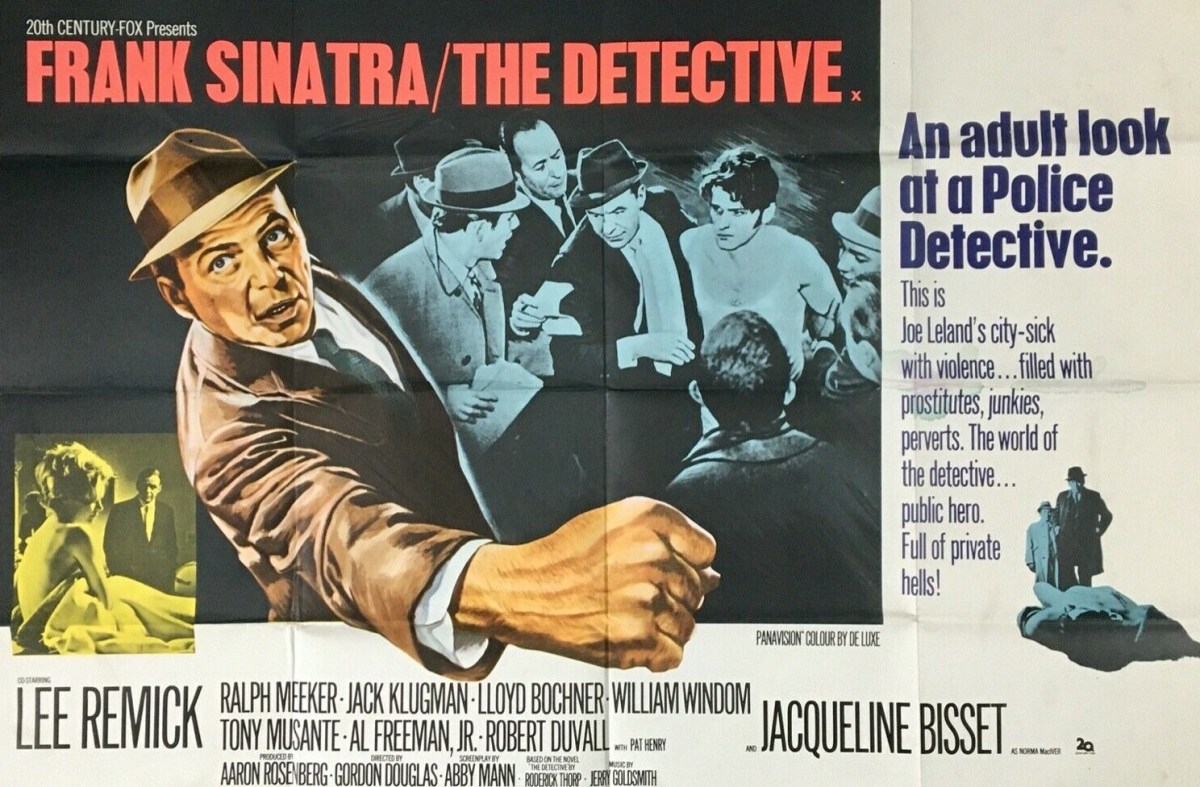
But mostly this is Ryan O’Neal (The Big Bounce, 1969) at the top of his game. No smirking and no screwball comedy. He’s given a well-developed character to play – physically fit, able to hold his own in the boxing gym, capable of cutting a deal with underworld figures – and the screenplay cleverly withholds the one element that all crime movies fall down on, the explanation of why anyone would turn to crime, so Webster weaves a sense of mystery. Jacqueline Bisset (The Detective, 1968) makes an excellent partner. And this is a stripped-down Warren Oates (The Wild Bunch, 1969), eliminating the meanness or exuberance that were his screen trademarks. Jill Clayburgh (An Unmarried Woman, 1978) has a cameo.

Bud Yorkin, who at the time was producer of the top three television comedies on U.S. television, foregoes comedy for tension and thrills. Walter Hill (48 Hrs, 1982) sneaks in some of the elements that would later become trademarks.

Great watch.

Discover WordPress

A daily selection of the best content published on WordPress, collected for you by humans who love to read.

The Atavist Magazine

by Brian Hannan

WordPress.com News

The latest news on WordPress.com and the WordPress community.