A Tale of Two Duds – The Northman (2022) ** / Fantastic Beasts: The Secret of Dumbledore (2022) ** – Seen at the Cinema

Hamlet goes Viking is basically as much of a story as “visionary director” Robert Eggers (The Witch, 2015) can be bothered with. Yes, there some Viking lore and for all I know this has been exceptionally well-researched but what it amounts to is the same kind of gobbledy-gook that makes no more sense than your average horror picture, with a ton of underdeveloped occult elements. Once our hero is freed from being hung from the rafters by crows beckoned, I presume, by some unexplained mystical power, pecking at the rope – and with a sword handily discarded in the vicinity – I was even more convinced this was a load of old cobblers.

So, basically a revenge saga. Amleth (Alexander Skarsgard) – pronounced Amlet for punters too stupid to get it – manages to escape when his uncle Fjolnir (Claes Bang) murders his brother King Aurvandil (Ethan Hawke). Vowing revenge, he is next seen “years later” as part of a raiding party slaughtering a village. He discovers that his uncle has been dethroned by a bigger king and sent into exile in Iceland. So he hauls himself off there, pretending to be part of a chain gang. He has every opportunity in the world to kill his uncle – and save his mother (Nicole Kidman) who has been carried off – but there is always a really dumb reason why he can’t.

Revenge delay seems a pretty odd way of stringing out a movie. Of course, when he gets round to saving his mother it turns out she doesn’t want to be saved and – a la Hamlet – was in on the plan to kill her husband. He falls in love with fellow prisoner Olga (Anya Taylor-Joy) who spouts a lot of witch-type stuff that is no less convincing than any of the other spiritual malarkey.

There’s a lot of bloody violence, but the sexual violence is kept to a minimum on screen though Olga has clearly been abused by Fjolnir. And there’s a game that seems close to the Irish game of hurling and whole bunch of oddities thrown in there wholesale as if such a joblot will add depth to the movie. A misconceived art picture that looks more like a top-of-the-range direct-to-DVD movie that might have cost around $40 million rather than the $90 million quoted.  

There’s a smorgasbord of dodgy accents and everybody speaks in stilted English, not far short of the “thee” and “thou” dialogue that critics used to make fun of. Alexander Skarsgard (Godzilla vs Kong, 2021) and Claes Bang (Locked Down, 2021) look rugged enough but neither has the screen presence of Schwarzenegger or even Stallone and it ends up Conan-lite. Anya Taylor-Joy (Last Night in Soho, 2021) looks as if she wondered how she managed to get talked into this. Nicole Kidman (Being the Ricardos, 2021) who has a plum scene towards the end offers the only acting of any distinction.
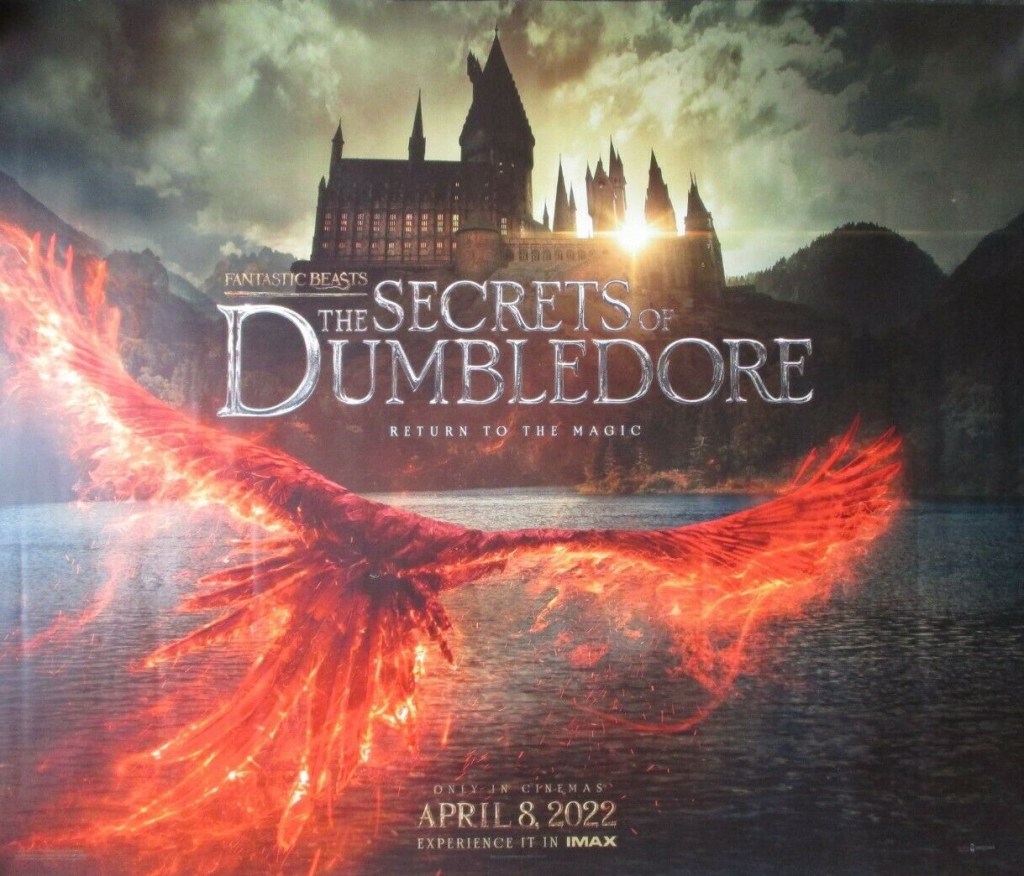
Fantastic Beasts: The Secret of Dumbledore

I kid you not, this is about an election. Yep, someone’s greenlit a $200 million fantasy picture about an election. Whatever delightful element the original entry to this series possessed has been destroyed not just by a preposterous storyline – this is for kids, remember – but a very somber tone. Everyone talks in a low voice, it is very darkly lit and there are those awful meaningful pauses.

The story they pretend is about to occur never happens. Something about “counter-sight” if I got that bit correct and how our heroes had to act together to “confuse” the bad guy because he could see into the future. There’s never any sign of him seeing in the future and most of the confusion arises because there are just way many characters.  With a piece of Hollywood wizardry Grindelwald has completely changed his appearance, no longer Johnny Depp but Mads Mikkelson. You will be aware of the reason for this but Mads has taken on an impossible task. There already was an over-large contingent of players – Newt Scamanger (Eddie Redmayne) and his brother Theseus (Callum Turner), Albus Dumbledore (Jude Law) and his brother Abeforth (Richard Coyle), Credence Barebone (Ezra Miller), Jacob (Dan Fogler) and assorted characters who have a romantic interest in the principals.

But basically – hold your breath – Grindelwald is trying to crash an election party. Two candidates are already in contention to be, I presume, Chief Wizard. He kidnaps something that might be called a “chillin” – a mythical creature that looks like a gryphon – which like the wands in Harry Potter has a way of choosing the best person for the job. There’s very little CGI for a fantasy picture. One monster, a bunch of dancing lobsters (maybe scorpions, I couldn’t work it out) and the usual contents of Newt’s suitcase is just about it. The wands are now used more like light sabers or pistols. You won’t be surprised to learn there’s not much in the secrets department either.

There’s not enough Newt and he’s not as delightful as he once was and there’s far too much of boring electioneering, huge crowds gathered for rallies in favor of their candidates. This one cost $200 million and I have no idea what that was spent on. Certainly not the script. A franchise-killer if ever I saw one.

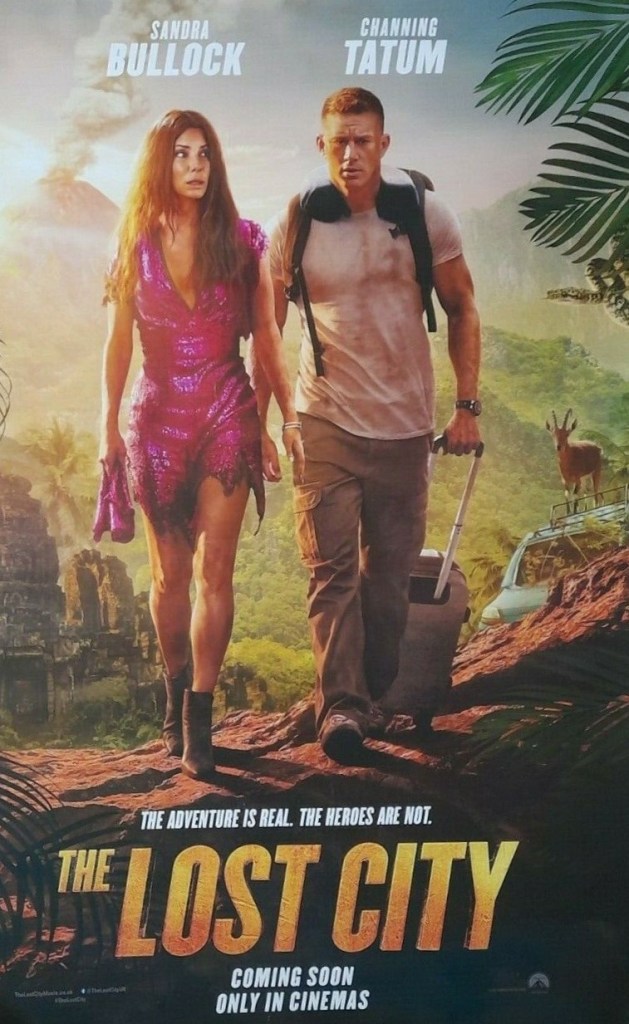
The Lost City (2022) *** – Seen at the Cinema

I was wondering when Brad Pitt would show up. Judging from the trailer it would be close to the end when he leaps, long hair blowing wild, to save the day. I didn’t expect him to show up almost right from the start. Nor, I have to say, that before the halfway mark – SPOILER ALERT – his brains would be splattered all over Channing Taum’s face. For me, in that one scene, the film never recovered, despite a bizarre post-credit sequence where it transpired that Pitt had in fact survived having his brains blown out all over Tatum’s face.

But let’s recap. Grieving widow romantic novelist Loretta (Sandra Bullock) whose fans prefer muscular cover model Alan Chaning Tatum) is kidnapped by over-the-top nutjob Abigail (yep!) Fairfax (Daniel Ratcliffe) to recover lost treasure from an island in the middle of nowhere. Alan, assuming that he must act like her fictional hero Dash, enlists Jack Trainer (Brad Pitt) to rescue her. Pitt, having lost none of the athleticism he displayed in Troy (2004), does just that but in the course of the escape – SPOILER ALERT AGAIN – he gets his brains splattered out.

Neither Loretta and Alan are really cut out for escapist adventure and spend most of the time making a hash of it, which is a nice twist on the genre. There’s not really enough chemistry between Bullock and Tatum, both playing personas we’ve seen before. There’s some cute stuff, snuggling up in a hammock, Alan discovering some survival skills and eventually she stops her endless whining and springs into proper heroine mode and the climax includes a romantic surprise when she finally decodes the meaning of the archaeological mystery. But the idea of him being allergic to water seems extreme and it makes even less sense – except as an excuse to show his bum and make a lame joke about the size of his manhood – for him to be only one covered in leeches.

But we hardly need a volcano simmering in the background especially as those special effects are poor. The idea of a deadline for this lackadaisical pair is a joke and reeks of writers struggling for a third act. Without the impending explosion Pitt could just have suffered a broken leg and been left behind; if he miraculously appeared for the coda in crutches that would have been perfectly acceptable, his superhuman skills already demonstrated. And there’s only so much humor you can stretch out of stretching a flimsy dress. And especially idiotic is that they require pushy agent Beth (Da’Vine Joy Randolph) to come to the rescue – the ending is singularly poorly worked-out unlike Uncharted where it all made logical sense. The problem is that everyone in his picture is just dumb without enough of the dumb and dumber-ness to make it an effective comedy.

The surprising part is that with all these misfiring elements and setting aside the brain-splatter the movie works well enough. There’s none of the personality clash – both irritate the other rather than hate them – that marked out Romancing the Stone (1984) and there’s not really enough derring-do but generally it jigs along and both Tatum and Bullock have strong enough fan bases. There’s a determinedly feel-good factor at play.

In particular it’s a welcome return to the big screen for Sandra Bullock (The Heat, 2013) who has somewhat ill-advisedly become the Netflix Queen. A movie star for nearly 30 years she has been very adept at choosing roles and switching her screen persona and her brand of awkward/prickly geek still works. Channing Tatum (Dog, 2022) always plays against his physique, strong but vulnerable and here he adds caring to the formula. Daniel Ratcliffe (Escape from Pretoria, 2020) doesn’t do much more than rant and look manic – Harry Potter in a hissy fit.

Could easily be renamed Search for a Lost Genre as the rom-com struggles to provide partnerships to match Richard Gere-Julia Roberts and Tom Hanks-Meg Ryan and no one has come close to repeating the legendary Tracy-Hepburn dynamic. And while we’re at it, I’m not sure by what authority Loretta concludes that (beyond a swipe at Indiana Jones) snakes have no logical place in ancient tombs.

Despite my nitpicking, they do make a good team and it’s enjoyable enough.

Phantom of the Open (2021) ** – Seen at the Cinema

A sentimental ending and Oscar winner Mark Rylance (The Bridge of Spies, 2015) can’t save this latest tribute to that particularly British phenomenon – the loser. While no doubt this is in essence the true story of golfing wannabe Maurice Flitcroft who gained some kind of notoriety – and latterly some celebrity – as the world’s worst golfer after posting, on live television, by a long way the worst score in British Open history, it’s plagued with a woeful attempt at no-hoper charm that just doesn’t work.

Rylance (Maurice Flitcroft) is part of the problem. He could be a cousin to Jim Broadbent’s dour character in The Duke, but where Broadbent comes to life in the second half, Rylance does not, a one-note performance that fails to elicit any sympathy for the character. Where do I start with what is wrong with the picture?

Well, for a start, the idea that a crane driver is an awful job. My grandfather was a crane driver in the shipyards in Clydebank and it was a skilled and highly-prized job and earned him a little bit more than the other workers down below and instead of moaning about his job he drove on his children to become educated – my mother among three of the family to go to university in World War Two Glasgow. Clearly, also, “poor” Maurice earned enough to put down a deposit on a house, a big achievement in the 1960s.

And the idea that Maurice had never heard of golf until the mid-1970s seemed preposterous when hardly 80 miles away Tony Jacklin, the son of a steel worker, won the British Open at Royal Lytham St Annes in 1969. The whole of Britain was electrified. I remember with my brother peering through the window of a television shop to watch it live on television. Equally preposterous is the notion that golf was a middle-class hobby. I remember as a teenager just after Jacklin’s famous win caddying for my father at a public golf course, which required no payment of annual fees nor wearing of fancy golfing ensembles. Golf was far from a hobby restricted to the well-off.

The closest loser-hero to Flitcroft is British ski jumper Eddie the Eagle (also filmed) but Eddie was at least a recognized and official contender in his sport. He did not try to sneak in the back door without doing any of the endless training necessary for anyone who wants to compete at a high level. It’s just crazy to set Flitcroft up as some kind of official-tweaking hero, when he simply managed to gain entry to the Open by cheating. The closest comparison in golf in the winner-from-nowhere category was John Daly who won a major in the U.S. in 1991, only qualifying after one of the contenders dropped out, but he had been a professional golfer for four years by that time.

And I hate this grim mud-tainted view of the 1960s and 1970s. I grew up in that period and certainly don’t recognize the picture painted. Flitcroft’s children, luckily, didn’t inherit the delusional gene, his twins becoming world champion disco dancers and his other son becoming a successful businessman.

Flitcroft just wanted glory without any of the hard work and it’s hard to find any sympathy for such a delusional man. Anyone who pointed out to Flitcroft just how delusional he was received short shrift in the film. Woe betide any official who thought this character was going to bring derision to golf, at a time when the sport was going through a revival, thanks to Jacklin who would inspire a generation of even better golfers like Nick Faldo and Ian Woosnam.

It’s almost a cosmic joke that everyday golfers looked upon Flitcroft as their idol simply because he played the game as badly as they did and that he received some kind of celebrity as a result. Odd, too, that nobody’s ever thought to make a film about a true winner like Tony Jacklin.

Ambulance (2022) **** – Seen at the Cinema

High-octane non-stop adrenalin rush that crams in a heist, car chase, street shoot-outs, high-risk surgical procedures, some neat characterisations, helicopters (of course) and slam-bang technical wizardry. Director Michael Bay (The Rock, 1996) is back on form with this pulverising pedal-to-the-metal thriller through the streets – and river – of Los Angeles and even finds time for a couple of sly jokes, including a reference to one of his own pictures, a paint job and a dog that (literally) stops the astonishing action.

Bank robber Danny Sharp (Jake Gyllenhaal) organising the heist of a lifetime – $32 million – ropes in brother Will (Yahya Abdul-Mateen II) sorely in need of a mere $300,000 for a life-saving operation. Not only does lovesick cop Zack (Jackson White) jeopardise the operation but an elite cop division headed by Captain Monroe (Garret Dillahunt) is lying in wait. Cue shoot-out carnage forcing the siblings to hijack an ambulance containing paramedic Cam (Eiza Gonzalez). Her passenger, a wounded cop, ensures the pursuing flotilla of cop vehicles and fleet of helicopters remains at bay.

But only for a time because Monroe is a master of drawing his victims into a trap. But that will only work with lesser villains because Sharp has not one, but two, plans up his sleeve. To rack up the tension, FBI Agent Clark (Keir O’Donnell) joins the hunt while in the ambulance, tearing along at top speed, causing more carnage during rush hour, Cam is called upon to dig out a bullet in her patient’s spleen and Will realizes he needs to be a good bad-guy.

While the action is buckled up and buckled down, there is excellent savvy background as we learn just how top cops go about snaring their victims and for all that Monroe is pumped up with arrogance Clark is there to take him down by filling us in on just what a rapacious opponent he is dealing with. Despite the film’s pace, without slowing the picture down, Bay manages to seed the characters well. Sharp’s iconic gangster – cousin to Heat’s Neil Macauley in the ruthless stakes – still takes family seriously. Will brings his military training to bear to assist Cam, a closed-off loner who blew a promising medical career on drug addiction and is easily one of the toughest females recently seen on screen.

Characters are established in a few lines – the gay Clark in couples therapy, the tougher-than-tough Monroe still a sap unwilling to sacrifice his dog, Danny not quite as psychotic as his father. And there are some great supporting characters, sassy helicopter pilot Dzazhig (Olivia Stambouliah), a stressed-out gangster and another thug who wears the wrong shoes to a robbery.

Although it’s virtually all a set-piece, the action hardly straying from the ambulance, there are still some awesome sequences, the automated attack on the cops for a start, two surgeons whisked off the golf course to guide Cam through a tricky op. The camera races around with abandon, up and down skyscrapers like a hyperactive drone.

A remake of a Danish thriller of the same name, Bay has pumped up the action, brought believable characters to the fore, and hopefully given audiences something to whoop for outside of the comic book hero. In his movie debut Chris Fedak, best known for television work like Prodigal Son (2019-2021), sticks in the occasional zingy one-liner and treats the characters as human beings.

Only Jake Gyllenhaal’s second starring role in three years, his first action film in nearly a decade should thrust him back on top of the box office after a series of more arty pictures. He’s been creepy before, most notably in Nightcrawler (2014), but Danny is more a straight line gangster. Eiza Gonzalez (Godzilla vs. Kong, 2021) is the pick of the actors, in a difficult role confined for the most part to the ambulance. Yahya Abdul-Mateen II (Candyman, 2021) does well in what in other hands could have been a thankless role. Garret Dillahunt (Army of the Dead, 2021) and Keir O’Donnell (The Dry, 2020) are names you might hear more of in the future.

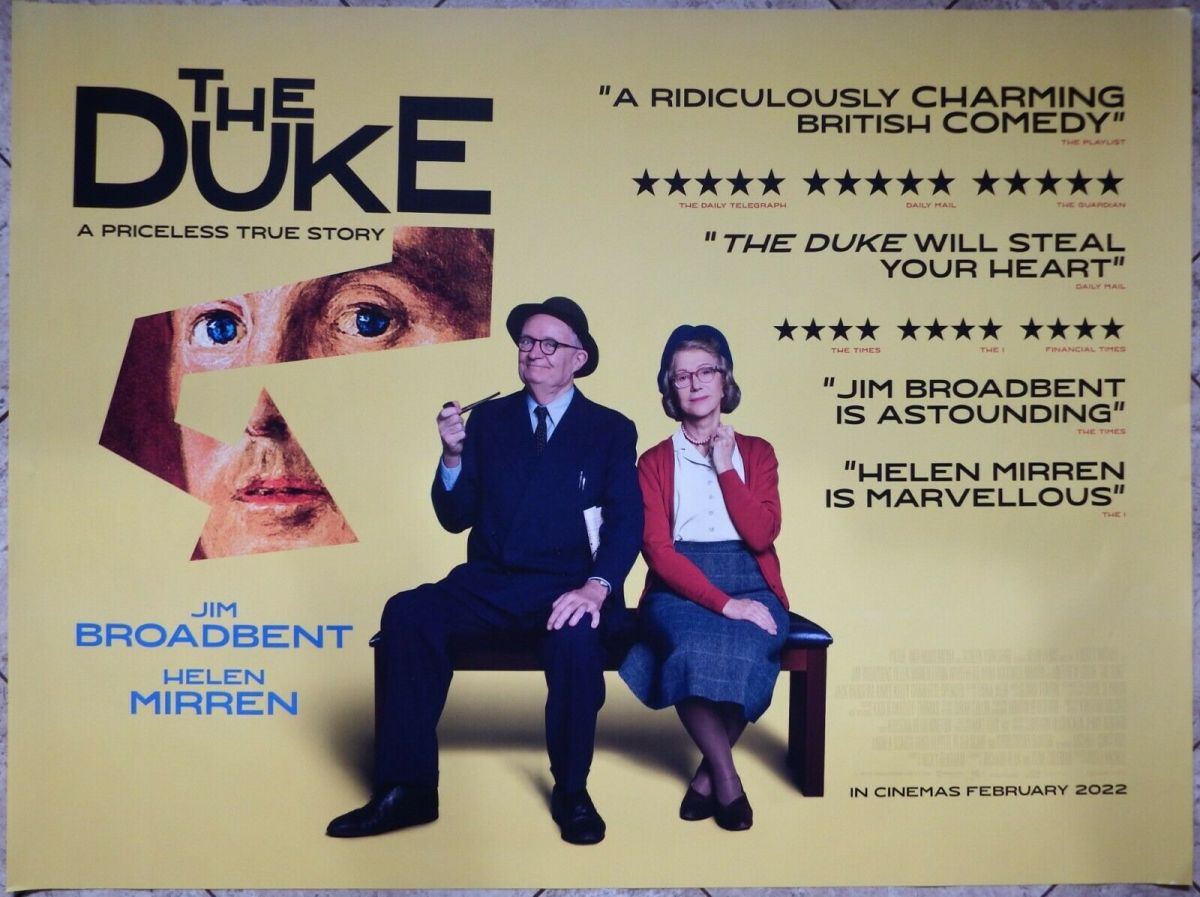
The Duke (2020) *** – Seen at the Cinema

The most stunning twist since Keyser Soze shucked off his disguise in The Usual Suspects (1995). But where Soze’s trick was a cinematic triumph, here moviegoers are duped by unfair sleight-of-hand. 

If ever there was a movie of two halves, this is it. For the first half we are presented with  Kempton Bunton (Jim Broadbent) as a dour working-class liberal devoted to fighting every cause. In the second half he’s a stand-up comic with the legal profession eating out of his hand, as if the character that turned up in court bore no relation to the one in the initial section. And if his defense for stealing from the National Gallery a Goya painting of the Duke of Wellington seemed rather far-fetched even for someone as cause-addicted as him that is because, as we discover in the trick ending, it was just that, entirely made up.

You may also have wondered how a 60-year-man was quite so nimble as to scale a high fence and climb up a couple of floors by ladder, then the trick at the end reveals that this too is part of the audience deception.

Which leaves you wondering just why the core of the story – that a father volunteers to take the place of his guilty son and face the prospect of years in prison – does not even merit a scene. If it wasn’t for the performance of Broadbent and Helen Mirren as his wife, as tour de force an acting partnership as you could hope for, you would wonder what on earth was the point of making the film.

Who outside Britain has ever heard of the license fee? Everyone knows about the BBC, of course, but I would doubt very much if anyone has any idea that what appears to be a free public service broadcasting body (akin to PBS in the U.S.) actually has to be paid for on an annual basis by every single person in the country who owns a television set. Since Bunton claims he stole the painting in protest against certain members of the public being forced to pay this fee, you might wonder how this is going to go down in foreign parts. Setting Bunton up as a working-class rebel on the basis of this preposterous idea is one of the barmiest notions ever to afflict a screenwriter.

This movie has been receiving rave reviews – and picked up £3 million at the box office – because it is charming, pokes fun at the BBC and the Police and the Government and feels like a latter-day Ealing comedy with Broadbent and Mirren in top form. I was duped by the reviews and by the trailer which showed all the funny bits but was bored for a first half that seemed like a very out-of-date attack on too many targets, without providing any real measure of the man who turned into a supreme entertainer in the second half. Some of the issues he raised such as racism were worthy of his defence, but others were simply ignored. The fact that workers could be dismissed in the 1960s for any reason whatsoever with no recourse to tribunals was glossed over. The fact that he was sacked for allowing his taxi passengers to travel for free – the taxi owners not Kempton thus footing the bill – or possibly for boring is passengers to death with his strident views is equally ignored.

I have to say that initially I did enjoy the film. But afterwards I began to have a niggling feeling that somewhere along the way I had been cheated. If Bunton knew he was innocent and was simply taking the fall for his guilty son, his idealistic crusade was pointless. You would have to ask why did he not just return the painting? I can’t believe there was no confrontation with his son. Are we expected to imagine that Bunton just congratulated his son on providing him with a perfect opportunity to embarrass the BBC and thought to himself it was well worth a jail sentence regardless of the fact it would put his wife through hell.

It feels like the director was expecting after the revelation at the end that the audience would just say “oh now it all makes sense” rather than the opposite, that it made no sense at all unless we were shown collusion between father and son, and the son especially accepting the burden of the sacrifice his father was making.

In The Usual Suspects, audiences went back over the film to marvel at just how clever Soze had been. Here, though, when you try to do the same, it doesn’t work. The Bunton we are shown in the first half was not a deliberate fiction dreamt up by the character, but simply a directorial device to misdirect the audience. The big reveal appears without any reference to the father and no sign of guilt on the part of the son.

This was not one of those legal pictures where there would be a last-minute reprieve or a lawyer in the Perry Mason mold saving the day. It was a contrivance so Bunton would have his day in court and deliver his philosophy on life to a wider audience. For all I know he may well have thought such an opportunity was worth the imprisonment. But for all this sleight-of-hand to work the director had to just completely ignore the core relationship between father and son and between innocence and guilt. It would say a lot for a son that he carried out the theft out of love for his deluded father, but such a scene would have to be left to our imagination.

Dog (2022) **** – Seen at the Cinema

Army vet with PTSD learns how to deal with his trauma by transporting cross-country a  dog with PTSD. In one of the few Covid box office winners, this has found an audience by the old-fashioned method of word-of-mouth. The trailer pitched this as a kind of Chevy Chase comedy, hapless man with unruly dog, and alternatively as a feel-good picture, but once audiences saw it and realized what it was really about nobody seemed to care they had in equally old-fashioned manner been duped by the marketing and just settled in to watch the best film yet about Army veterans. Eschewing the heavy melodramatic approach of so many other pictures addressing much the same issue, this simple tale outscores them all by sticking to the knitting, a tale with, sure, plenty laughs, but again equally old-fashioned, a movie about friendship and redemption.

Channing Tatum has built a career on playing against his physical attributes, generally excelling at a character but more brawn than brain, often lost in the modern world and this is almost an ode to that screen persona. We have witnessed so many arrogance-driven pet (no pun intended) projects by actors that fall apart under the weight of their own hubris and lack of understanding of cinema, that it is astonishing to realize that not only was Tatum a producer on this movie (and possibly giving up his salary in return for a back-end to keep the budget low enough – just $15 million – to make it low-risk) but he is also the co-director.

If I wanted to be more high-falutin’ and appeal to the arthouse crown I would say this is a cross between Ulysses and Easy Rider (1969), a man on a long journey through a land he scarcely recognizes where his military heroism earns him no points, and the values he espouses are generally derided. It’s also close at times to Rain Man (1988) in that the protagonist just wants to get a job done until he discovers a deeper emotion at work. But even closer to the opposites unwillingly paired together that made movies like 48 Hours (1982) zing and by the end it is playing like a buddy comedy with a darker, emotional core.

Anyway, after all that rambling, let’s cut to the chase. Former Army Ranger Briggs (Channing Tatum) agrees to take former Army Ranger dog Lulu on a road trip down the Pacific coast to the funeral of the dog’s former handler. Briggs, on a whole load of meds to cope with his condition, is convinced that if he completes the task he will be re-enlisted in the Army. This self-delusion is obvious from the start. His short-term memory is so shot he can’t even take an order straight at the deli joint where he is employed. This is only a sample of the general chaos of his daily life. Lulu, a breed known as Belgian Malinois (no, I had never heard of it either), looks cute but, equally distraught by her wartime experiences and missing her master, is hell to handle.

Apart from what you might expect of the comedy that ensues from a half-crazy dog left with a disenfranchised handler, the odyssey element conjures up  a variety of contemporary attitudes to the military. A soldier with the medals to prove his valor is treated royally in one city but the fact of his employment cuts no ice with the women he tries to chat up in bars. He also runs into racists, psychics and a variety of oddments.

Critics didn’t like this much, audiences (and not just dog-lovers) took a different attitude. As far as I can see critics objected to the fact that the movie did not dig deeper into the human ramifications of war and make a more pointed and I would guess  more anti-military statement while I felt that exactly by ignoring such an obvious trap the movie scored more highly on an emotional level since Briggs is not the kind of character who would be able to process his experiences in any manner that could bring him closure.

If you like dogs, you’ll love this, if you like Tatum – who hasn’t been on the screen in four years – you’ll love this, but even if you thought like I did that this was far too mawkish to be of the slightest interest you will be in for a hell of a surprise in how quietly effective this picture is in getting the emotional job done.

This is far more worthy of plaudits than the arthouse-seeking mess of Power of the Dog (2021) which was so boring that I left the cinema halfway through.

This also marks the directing (or co-directing) debut of Reid Carolin, best known for his screenplay of Magic Mike (2012) and its sequel. If ever a little movie punched above its weight, taking on difficult subject through a clever audience-appealing stratagem, this is it.

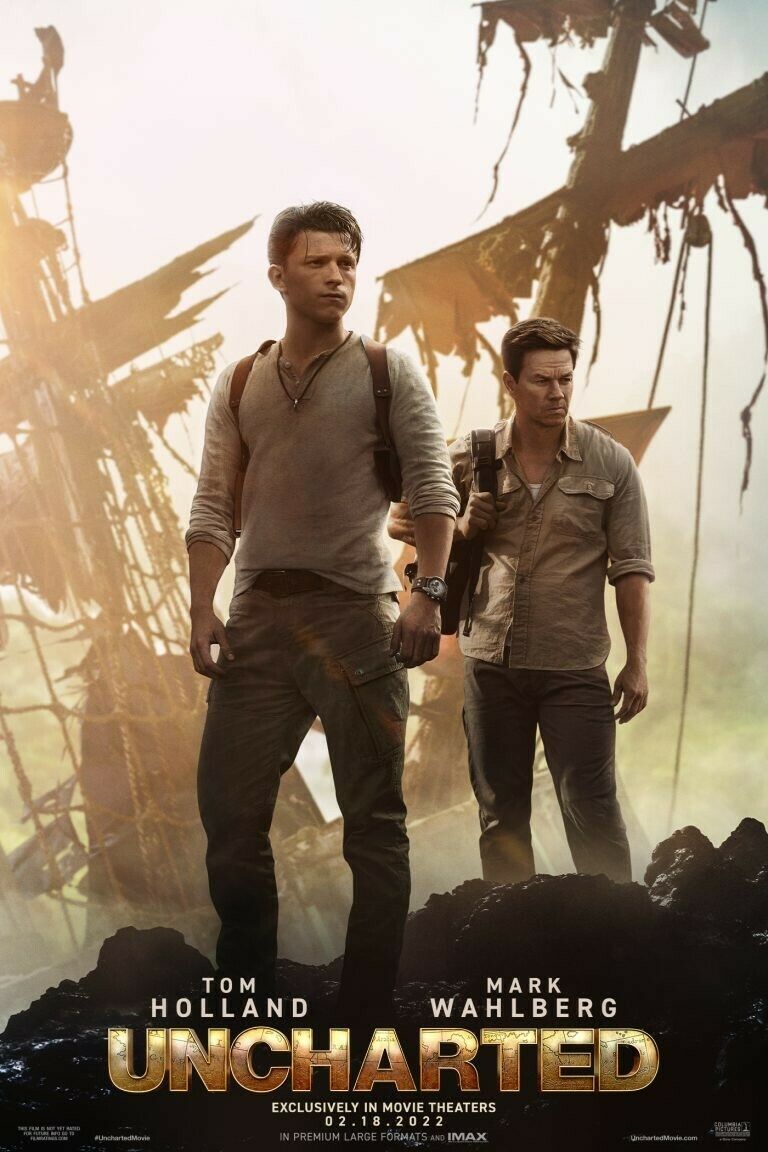
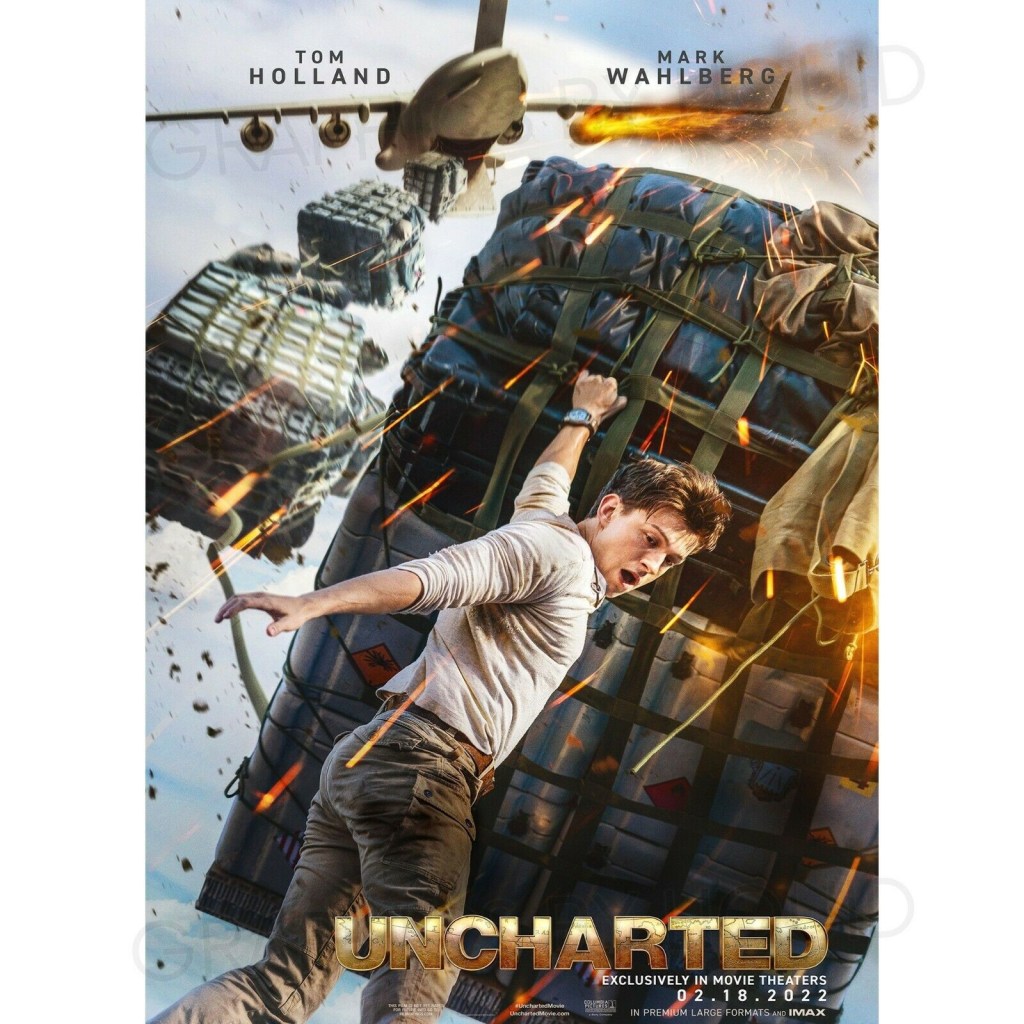
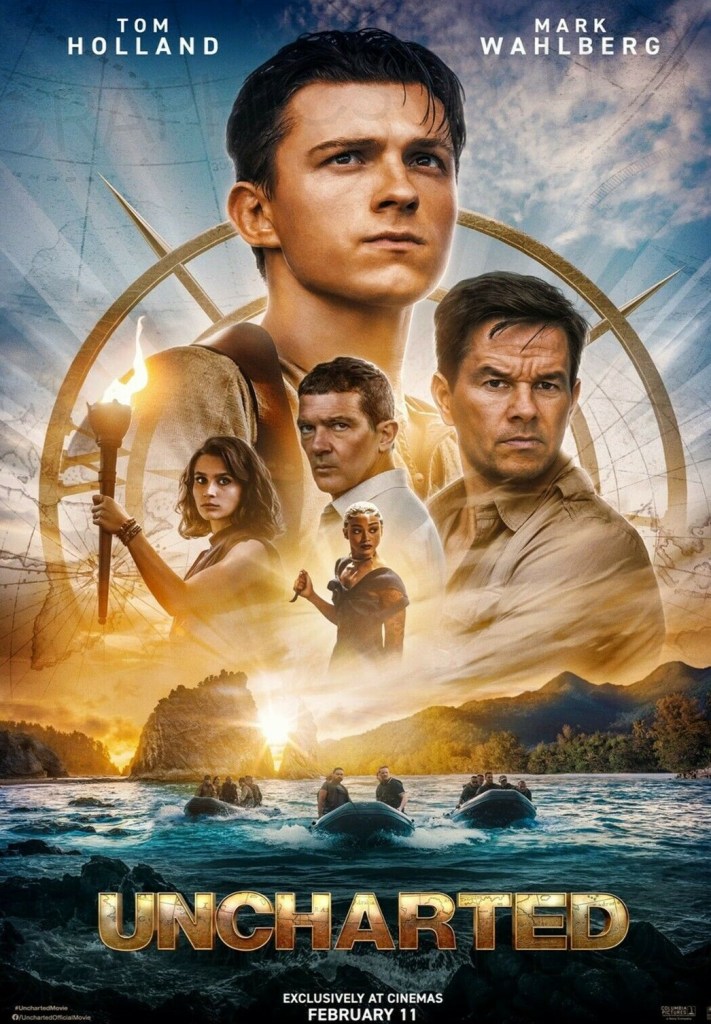
Uncharted (2022) **** – Seen at the Cinema

Hugely enjoyable fast-paced romp with clues, ancient maps, sunken treasure, double-cross upon double-cross, action and twists all the way in what could be the next major franchise. Barman Nathan Drake (Tom Holland) teams up somewhat unwillingly with  unscrupulous Victor Sullivan (Mark Wahlberg) and Chloe Frazer (Sophie Ali) to find $5 billion in gold. In their way: the ruthless Santiago Moncado (Antonio Banderas), henchperson Braddock (Tati Gabrielle) and assorted roughnecks.

Confession: I’ve no idea what computer game sparked this movie so come with no preconceptions. History lesson: the gold was lost by Portuguese Ferdinand Magellan, the first guy to sail round the world, while Sir Francis Drake was the first Englishman to do the same.

Two outstanding action sequences top and tail the movie, the first a battle in a cargo plane that is dumping its cargo, the second, just astonishing in its virtuosity, a duel between airborne shipwrecks. In between are a scramble in an art gallery and a roofotop chase. And to keep the audience on its toes all kinds of relics are brought into play as well as hidden tunnels, churches and chambers complete with the usual Indiana Jones-style booby traps, never mind a ton of bullets, and a bunch of clues to be deciphered from maps and walls not to mention postcards and trees. Part of the fun is that the gang don’t get it right all the time with alarming consequences.

It’s all done with such verve and although it’s certainly a close relative to the Indiana Jones series it’s minus their mystical nonsense while the characters certainly are not called upon to do good for their country or save the world from any dictatorships. The guys just want to make money. And what’s wrong with that? It lends the movie a certain solidity. And the fact that none of the characters trusts the others ensures that the status quo never remains quo for long and that swift change is going to be the order of the day.

Tom Holland (Spider-Man: No Way Home, 2021) bulks up and seizes the opportunity to become a major star outside the comic book hero. Too often franchise pictures have produced wallpaper stars, attracting audiences in the tight confines of their multiverses but failing to add any box office muscle to other projects. This character proves an inspired choice. Holland gets to be athletic, as well as the young guy making his bones in a cut-throat (pardon the pun) world, holds up his side in the edgy banter with Wahlberg, and rounds out his personality by being a prize thief and vulnerable guy who misses his lost older brother.  

Mark Wahlberg (Infinite, 2021) hasn’t had this good a role since Patriot’s Day (2016) and since he’s not relied upon to carry the picture can get up to all sorts of shenanigans, which he’s usually knee-deep in, much to his apparent enjoyment. Antonio Banderas (Hitman’s Wife’s Bodyguard, 2021) for once has a legitimate reason to use his Spanish in a Hollywood movie.

Sophie Ali (Truth or Dare, 2018) and Tati Gabrielle in her movie debut rock as female actioners, extremely convincing as mean gals, and should have been shuttled into any number of female-led action movies of the last few years that failed to bring the requisite bite. Both muscle their way into the game and refuse to be muscled out or, by dint of romantic entanglement, lose their edge. There’s a nice cameo – and a running joke – by Steven Waddington (The Imitation Game, 2014) as an incomprehensible Scotsman.

Reuben Fleischer has taken the directorial cojones he displayed in Gangster Squad (2013) and Venom (2018) and squeezed the life out of them to keep this little number zipping along, scarcely stopping to take a breath, never finding itself in a dead end, and holding enough marvel back to pull off  the audacious ending of the flying shipwrecks, on a par with any image Steven Spielberg ever pulled out of his locker. Rafe Judkins, another movie debutante, and the partnership of Art Marcum and Matt Holloway (Iron Man, 2008)  assembled the screenplay from the Playstation game.

As I said I’ve no idea what were the ingredients in the original game and whether the writers have played fast and loose with the concept but all I can say is it’s a helluva movie.

Moonfall (2022) ***- Seen at the Cinema

Whether you enjoy the latest offering of Roland Emmerich (Independence Day, 1996) depends very much on how you liked your sci-fi served up. If you require your characters to wear long robes, spout cod philosophy, use superpowers and exist in empires with deposed heirs and family conflict, and whose story cannot be told in one sitting, this may not be for you. Emmerich protagonists tend to be ordinary people, albeit of the planet-saving variety if push comes to shove, and in this case not only does he prioritize diversity but the two most courageous are the wrong shape for heroes.

Where his previous films have enjoyed a longer build-up before catastrophe or invasion, here we are almost straight into the action. The moon is out of orbit, the government wants to hush it up against the advice of senior scientist Jo Fowler (Halle Berry), but conspiracy theory geek K.C. Houseman (John Bradley) activates social media to send the world into panic. Into the mix comes disgraced astronaut Brian Harper (Patrick Wilson) and it falls to these three not to just save the world, but first save the moon in order to prevent Earth’s destruction. They are certainly not quick enough off the mark to stop tidal waves swamping Manhattan, a bombardment of moon debris, and assorted earthquakes and tectonic activity, and in a piece of sfx bravura a gigantic gravity wave.

The trio leave behind loved ones, who are basically left to their own devices to combat the onslaught of destruction. And that is in stark contrast to officials in high office who abandon their positions in order to head for the hills (literally). In one spicy exchange two generals who hold the keys to a nuclear weapon are divided over who to save. In the various sub-plots which all coalesce, the theme is character transition.

The trailer doesn’t give away the movie’s big secret and I’m not about to either but it’s a whopper as Emmerich tracks back to favored ruminations about Earth’s origins. You can chuck away Genesis and the Big Bang as he settles on a different explanation. There are nods to Ridley Scott and even Stanley Kubrick’s 2001: A Space Odyssey, but in the end Emmerich ploughs his own path of originality. The second half is amazing and really lifts the picture.

One of the problems of science fiction movies is that virtually every one falls apart under micro examination. They are filled with plot holes and make up for lack of genuine characterization by having heroes plagued by preposterous villains and back stories that lack any sense. But who the hell cares?

Emmerich films tend to take a hammering because the hero is a close relative of Tom Hanks, the dependable guy whose life has gone a little awry but wants to make amends. Here, both Brian and Jo have family issues and make wrong decisions, both, in effect, abandoning their children for the greater good, and while that might seem to set up a series of sub plots it’s no different to any superhero picture where a beloved relative is put in harm’s way because  said superhero unleashes devastation in order to rein in the villain.

Emmerich could easily have anchored this with younger talent. Will Smith was in his late 20s when he starred in Independence Day. But going for older actors allows Emmerich more leeway with the family issues he brings to the fore. Nor do his disaster movies tend to top-bill a female star. That changes here with Oscar-winning Halle Berry (Bruised, 2020), who hasn’t had a hit in years, receiving a well-deserved career boost for a thoughtful role. Patrick Wilson, usually relegated to horror, also steps up.

John Bradley (Game of Thrones) is the wide-eyed geek who sees disaster as another name for adventure and as far removed from the clever-clogs Jeff Goldblum of Independence Day as you can get. Michael Pena (Fantasy Island, 2020) is the pick of the supporting roles. Donald Sutherland (The Hunger Games) has a cameo. Younger players worth a mention are Charlie Plummer (All the Money in the World, 2017) and Wenwen Yu (Forever Passion, 2021) and

Admittedly, the dialogue is cheesy in places, occasionally overburdened with scientific gibberish, but that’s par for the course.

A good old-fashioned fun ride.  

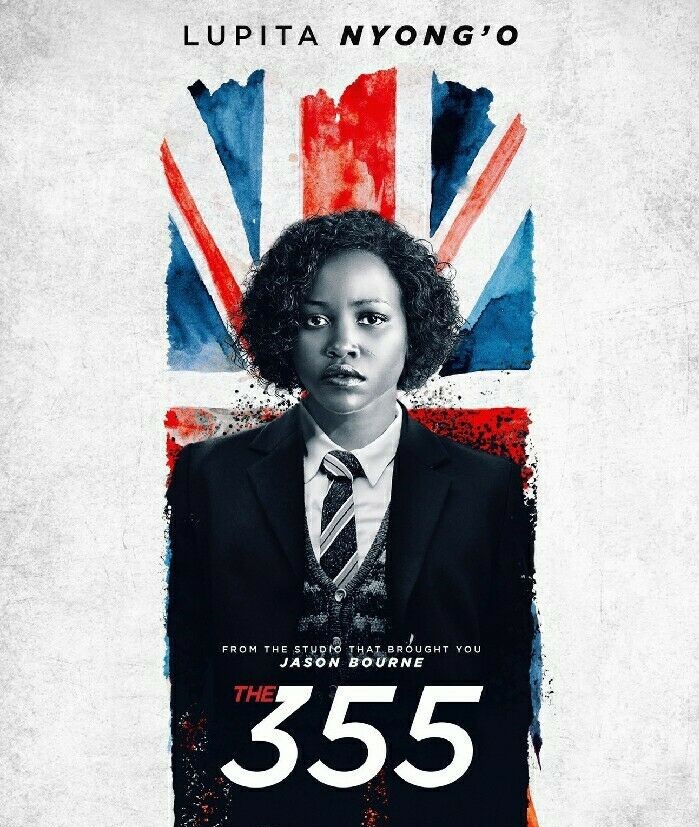
The 355 (2022) *** – Seen at the Cinema

Serviceable actioner but proof that if you don’t have a star big enough to front  a shoot-‘em-up then sticking in another three – or four – actresses of equal, middling, or up-and-coming, status won’t do the trick, not if the characters lack the originality of a Bourne or Bryan Mills (Taken, 2008). There’s plenty of bang for your buck, but the story hangs on the old trope of an electronic device that can blackout the world.

I am not sure why Jessica Chastain has never become a bigger box office star. She certainly has the kudos – two Oscar nominationss – and is not shy of taking on difficult subjects (Miss Sloane, 2016) and she’s certainly enjoyed the occasionally leg-up from a series (The Huntsman: Winter’s War, 2015; It Chapter Two, 2019) to boost her box office credentials. But her last venture into the action arena (Ava, 2020) was a box office flop, though possibly you could put the blame on the pandemic. By my count she has been the top-billed star (excluding her X-Men appearance) in her last eight pictures and none have been a hit.

Her presence in the credits would encourage me to stump up my money at the box office but apparently I am in the minority. I could say the same about Penelope Cruz (Parallel Mothers, 2021), the second biggest star here, and while she certainly retains top-billed status in her native Spain, otherwise she is occasionally a female lead but more likely a supporting player.

If I had been putting my money on anyone to take the action box office by storm it would be Diane Kruger who has the meanest stare this side of Lee Van Cleef. But she’s gone down this route to no commercial response before in The Operative (2019) and The Infiltrator (2016), neither fulfilling the promise she showed in Liam Neeson crackerjack Unknown (2011). Bingbing Fan, (Cell Phone 2, 2019) another X-Men alumni, has only recently achieved box office success, but in limited markets. Mexican Oscar-winner Lupita Nyong’o – here billed fourth and sporting a British accent – may well have the biggest fan base of the lot having clocked up appearances in three Star Wars pictures, taken top billing in Us (209) and third billing in Black Panther (2018).

But back to our story. On the run from the C.I.A. Mace (Jessica Chastain) teams up with Marie (Diane Kruger), a loner working for the German secret service, and Khadjiah (Lupito Nyong-o), a digital wizard formerly of the British secret service. Bing, who turns up later, represents the Chinese good guys. Graciela (Penelope Cruz) is the rank outsider, a therapist just caught up in the shenanigans. The action rattles through Paris en route to Marrakesh before a final stop in Shanghai. As you might expect, traitors lurk in various corners.

There are plenty shootouts and opportunities for the team to show off their hand-to-hand skills, but the action is slowed down by soap opera, having to spell out all the backstories of the principals, only one of whom, Marie, has anything worth listening to. Far be it for me to complain about too much emotion, but it took us over a dozen movies to learn anything significant about James Bond’s past, Bourne had no idea who he was, and at the other end of the scale Bryan Mills was so emotionally driven from the outset it formed the film’s core. Here, emotional quandary pops up when convenient. A bit of mystery would have helped more and cut a good 15 minutes off an overlong playing time.

As to the title, that is the only thing that is kept hidden to the end and when the revelation is made you realize it won’t mean a damn thing to the vast majority of the audience. As an origin story, I doubt the current box office receipts are sufficient to spawn future episodes. Which is a shame because having dumped all the emotional baggage in this picture, the characters could have focused more straightforwardly on action and story in the next.

Discover WordPress

A daily selection of the best content published on WordPress, collected for you by humans who love to read.

The Atavist Magazine

by Brian Hannan

WordPress.com News

The latest news on WordPress.com and the WordPress community.