It’s become something of a Xmas tradition that I puff up the books I have written in the hope you will stick them in your (or someone else’s) Xmas stocking. I’ve authored over a dozen publications – from “Behind the Scenes” books (known as “Making of” titles in the publishing business) and compilations of my daily reviews to histories of aspects of the Hollywood business machine, as well as those concentrating on my favorite era (the 1960s in case you can’t guess), and a few relating to my home-town of Paisley in Scotland.
The most popular has been, without doubt, The Making of the Magnificent Seven. Telling the “Behind the Scenes” tale of how one of the most popular westerns ever made wasn’t so initially popular (it flopped in the U.S.). Given the various problems it needed to overcome – loss of three directors, umpteen screenwriters involved, Actor’s Strike. Writer’s Strike, censorship by the Mexican government, the threat of severe editing – it was a wonder it ever saw the light of day.
If you’re keen on this line of Hollywood history you might also be interested in a couple of other “Behind the Scenes” volumes – The Making of The Guns of Navarone (Revised Edition) and The Making of Lawrence of Arabia. For that matter, there is ample “behind the scenes” material in two other books: The Magnificent 60s – looking at the top 100 movies of the decade and which could be retitled “how the decade was born” – and The Gunslingers of ’69 which examines the western in a pivotal year that saw the release of The Wild Bunch, True Grit, Once Upon a Time in the West and Butch Cassidy and the Sundance Kid.
I’ve possibly had an unusual writing career in that one idea has usually led to another. While researching The Magnificent Seven, two aspects of that film fascinated me. The first, as mentioned above, is that it was a flop but that it became very successful as a reissue. So that sent me looking at the whole issue of reissue/revival. That took me way back to the Silent Era. And given no one else has written so extensively on the subject I guess I can fairly claim to be the leading expert. The result was my biggest book – 250,000 words including Notes – Coming Back to a Theater Near You, A History of Hollywood Reissues 1914-2014.
The Magnificent Seven was also given an unusual kind of release – what was called a “saturation” release with about 750 prints racing from state to state in a staggered release around the country. Eyebrows were raised because that was the way dodgy films were distributed, exploitation and horror films, whipped out of cinemas before word of mouth could kill them off. Because prints already had another pre-designated destination, The Magnificent Seven, no matter how well it played, could not be retained at any cinema, so word-of-mouth was killed stone dead.
But when I did a bit of digging I discovered that the wide release had been in sporadic use since the Silent Era and I told that story in In Theaters Everywhere: A History of the Hollywood Wide Release 1913-2017.
Oddly enough, doing the research for both those books led me to my most unusual enterprise. When you go so far back in time doing research, and digging through the daily and weekly issues week-by-week of the Hollywood trade papers as was my wont, you tend to turn up other interesting facts. One of these was a report that in 1935 Mae West was the highest-paid actor (male or female).
Like everyone else I had assumed that female stars were underpaid compared to their male counterparts. But in digging deeper I came across another article that showed in the Silent Era that Mary Pickford, at the height of her box office powers, substantially out-earned a Charlie Chaplin at the height of his box office powers.
The result of that was When Women Ruled Hollywood – between 1910 and 1948 the top female stars often out-earned the top male stars – which examines the so-called gender pay divide.
Another movie-related hobby led me to a separate string of books. I have a collection of Pressbooks/Campaign Manuals dating from the 1950s. As well as providing, literally, cinemas with adverts in various sizes for a forthcoming movie, these publications (anything from double-sided A5 to 32-page full-color A3) came up with dozens of publicity wheezes. I got to wondering how many of these clever ideas a cinema manager put into practice. So I went down to the museum in Paisley, where I was living, and starting looking through five years’ worth (1950-1954) of the local newspaper the Paisley Daily Express.
In those days, local newspapers in Britian had adverts on the front page not news stories. And the biggest advert here was a block advert listing what was showing every day at the town’s eight cinemas. I didn’t find any examples at all of cinema managers using the ideas suggested in the Pressbooks but I did, as a matter of course, write down what was showing every day at every cinema. So at the end of the process I had five years’ worth of interesting data.
What to do? What else but turn the material into a book, relating the movie-going patterns of this town, what movies and stars were most popular, distribution patterns, B-movies, serials and reissues. That turned into Paisley at the Pictures 1950 (and there have been two sequels so far).
But since I’m not from Paisley, and as ever, in order to write this book, I started digging backwards into the town’s history of cinemas, I discovered that a horrific disaster had occurred in a cinema in 1929 where over 70 children attending a matinee perished. That became The Glen Cinema Disaster.
As a result of researching The Magnificent 60s book I came across so many interesting movies that didn’t fit into the remit, which was to analyze the 100 most popular films of the decade. In fact, I soon became aware, that thanks to academics, I had quite a distorted view of the 1960s cinema. And that nobody had really done any consistent work on popular rather than Oscar- or arthouse-worthy movies. And also, except for critics writing for monthly magazines, newspapers only allocated few hundred words to cover an entire week’s output. So most movies really only got potted reviews of less than 100 words. So I thought I would dig.
The initial result was this blog. But after receiving so many requests to make the material more easily available for consumption, I have started to turn the reviews and “Behind the Scenes” articles into books. Ambitious though this seems, I’m aiming to put into book form, one way or another, reviews on 1,000 films from the decade – and at the standard length I use for the blog, not reduced into capsule reviews like you get in so many other compendiums.
I’m going to have two types of books, splitting the actual reviews into one series of volumes (I’ve reached Volume Two so far) and the Behind the Scenes into another. Eventually, all will be available on both print and e-book formats.
So everything I’ve written is available on Amazon. I’m assuming the link below will take you to my Amazon page (you might find some items cheaper on Ebay) but if not then just put my name into Amazon and my page should pop up.
Even if you’re disinclined to purchase any books, you could do me a good favor by passing on details of my Blog to other interested parties. Currently, I’m approaching 90,000 views a year and I need 100,000 to be welcomed into the holy grail of Rotten Tomatoes.
My discovery that Hayley Mills’ career could have taken an entirely different turn had either Deep Freeze Girls or When I Grow Rich entered production in 1965/1966 and therefore prevented the star returning to Britain for The Family Way (1966) – and, as it transpired, love and marriage – made me look again at the huge volume of movies that were either never made at the time initially announced or never made at all.
I’d covered a couple of classic examples previously, 40 Days of Musa Dagh for example taking nearly half a century from initial proposal to some kind of fruition. And, of course, the financial collapse of studios at the end of the 1960s put an end to the prospects of such big budget movies as Man’s Fate, to be directed by Fred Zinnemann.
But sometimes as many as half the movies announced by a studio or independent for their forthcoming schedule never made it to the big screen. Others such as This Property Is Condemned (1966), initially to star Elizabeth Taylor and directed by John Huston, still got over the line but with new players, Natalie Wood as star and Robert Mulligan in the hot seat. On the other hand, of the quartet of movies – Lie Down in Darkness, Guardians, Grass Lovers, and Linda – that producer William Frye (The Trouble with Angels) thought would make his name, none were made.
Everyone knows moviemaking is a dicey business, but you don’t realize just how tricky it is unless you count up just how many pictures, often trumpeted with big stars signed up, just don’t make it to the cinema screen. Not that Hollywood was unwilling to gamble. Studios snapped up anything – novel, Broadway play – that appeared a decent prospect.
In the early 1960s talent agency Famous Artists earned for its clients a grand total of $850,000 (equivalent to $8.5 million now) for a disparate bunch of properties. King Rat by James Clavell went for $160,000 plus a percentage and was made in double quick time. As was Lilith by J.R. Salamaca, costing $100,000, and Sylvia ($20,000 purchase price) by E.V. Cunningham (aka Howard Fast). Ken Kesey’s One Flew Over the Cuckoo’s Nest went for $85,000 to Kirk Douglas’s Bryna outfit, which explained why, a decade later, it ended up being produced by his son, Michael.
But Broadway play The Perfect Set-Up by Jack Sher, sold to Hollywood for $400,000 and with Angie Dickinson signed up for the lead, was never made. You might recall George Peppard in a TV movie Guilty or Innocent: The Sam Sheppard Murder Case (1975) but that wasn’t based on The Sheppard Murder Case by Paul Holmes that someone shelled out $25,000 for in 1962.
Director Paul Wendkos had planned to follow up Gidget Goes to Rome (1963) with Native Stone, an architectural drama in the vein of The Fountainhead based on the Edwin Gilbert book that cost him $10,000 but that hit the buffers. Two novels by thriller writer John D. MacDonald, hot after Cape Fear (1962) – the aforementioned Linda costing $15,000 and A Child Is Crying $5,000 – were not made either. Nor, out of this batch, were Indian Paint by Glenn Balch or Fish Story by Robert Carson.
Even as powerful a producer as Ross Hunter (Midnight Lace, 1960), couldn’t get onto the starting grid The Public Eye as a vehicle for Julie Andrews, Laurence Olivier and director Mike Nichols (it would have been his movie debut) – when made in 1972 starring Mia Farrow and Topol it was under the aegis of Hal Wallis. Hunter also spent $350,000 on Dark Angel to star Rock Hudson but that fell at the first hurdle as did Broadway play A Very Rich Woman to star Katharine Hepburn.
Tony Curtis was down for a remake of Casablanca (1942) called The Fifth Coin and relocated in Hong Kong and to co-star Nancy Kwan. Shooting on the Seven Arts production had a start date: November 15, 1965. But never went in front of the cameras. Kwan was particularly unlucky. The aforementioned Deep Freeze Girls also had a budget ($1.5 million) and a start date (October 1965) but it didn’t get off the ground either.
And of course Seven Arts had become enmeshed in the long-running John Huston saga of The Man Who Would Be King. This version, to star Richard Burton, had been set a $4 million budget and was due to start in April 1966. No go. At least The Owl and the Pussycat, budgeted then at $1.6 million and due to start on Dec 1965, was worth waiting five years for – when it was eventually filmed, though by Rastar not Seven Arts, it starred Barbra Streisand and George Segal.
In 1964 Columbia had 77 movies on the stocks. Richard Brooks was setting up Catch 22, Peter Sellers was being lined up for the musical Oliver!, and Carl Foreman was prepping Young Churchill. All these projects dropped off the roster, only to pop back up several years later with different stars (Ron Moody in Oliver!) or directors (Mike Nichols for Catch 22) or even studios (Paramount for Catch 22).
But others were simply shunted aside. Whatever happened to The Gay Place to team James Garner and Jean Seberg? Or The Fabulous Showman to be directed by Blake Edwards? Or another long-running saga, Andersonville with Stanley Kramer at the helm? Or Stephen Boyd as Richard the Lionheart? Even though The Ipcress File (1965) proved a big hit the same author’s Horse Under Water stalled at the starting gate, as did Robert Rossen’s Cocoa Beach and Ann-Margret in Strange Story.
When Robert Evans ushered in a new era at Paramount he placed his faith in writers. He doubled production and had over 40 writers working on projects. Some had little or no experience of movies but were big literary names. John Fowles, the adaptation of whose The Magus (1968) was an expensive flop, was hired to write Dr Cook’s Garden, but it was never made. Edna O’Brien had Three into Two Won’t Go on the stocks at Universal so she was set to write Homo Faber. Another casualty.
Oscar-winning screenwriter Edward Anhalt (Becket, 1964) was to make his directorial debut with We Only Kill Each Other. It didn’t happen. Nobody had ever managed to film Thomas Wolfe’s epic novel Look, Homeward Angel, so Paramount took a tilt at that without success. Escape from Colditz went into cold storage and an adaptation of Harold Robbins bestseller 79 Park Avenue ended up as a television mini series in 1977 and at a rival company, Universal.
It’s still standard operating procedure for Hollywood to snap up any big bestseller or Broadway hit without ever knowing whether it will ever see the light of day but willing to take the risk.
SOURCES: “Famous Artists,” Variety, August 8, 1962, p5; “Sanford and Frye of TV To Make Theatrical Films,” Box Office, January 7, 1963, p10; “Col-Frye TV Pact,” Box Office, August 19, 1963, p10; “Columbia Policy,” Variety, May 6, 1964, p13; “Seven Arts Pix Multiply,” Variety, March 31, 1965, p4; “Ross Hunter’s Crowded Future,” Variety, May 12, 1965, p7; “Bob Evans Pays Chip Service To Writer As Star,” Variety, May 1, 1968, p19.
Miracle this was made at all with so many neophyte producers involved. First up were Kenn Donellen and Jacqueline Babbin. No Hollywood experience. He was the television rep for Ford Motors, she worked for David Susskind’s talent agency. But like everyone else in the business in the early 1960s, when major studios were on the point of collapse, they thought they could do better. Especially after they nabbed the property, Life with Mother Superior by Jane Trahey, from under the noses of Disney and Universal.
The pair picked it up pre-publication, three months before it was launched by Farrar Strauss in September 1962 after serialization in McCall’s magazine and turned into a speedy bestseller. They got preference because they struck the kind of deal with the author that only newcomers desperate to get into the business would make. As well as paying a hefty fee upfront they guaranteed the author a percentage, plus, unheard-of for a first-time writer, a “say-so on production.” That clause alone would have alarmed any other studio.
Donellen and Babbin were prepared to put up half the $750,000 budget if the remainder was met by a major studio or independent. Production was scheduled for Spring 1963.
Not surprisingly, it suffered from lack of partners. Briefly, it shifted to the bulging portfolio of Ross Hunter. He envisaged an all-star cast older cast in the style of Disney’s Pollyanna (1960): Barbara Stanwyck (The Night Walker, 1964), Loretta Young (whose last movie It Happens Every Thursday was in 1953) and Jane Wyman (Pollyanna) as nuns, which removed the onus from youngsters Patty Duke (The Miracle Worker, 1962) and Mary Badham (To Kill a Mockingbird, 1962). Interestingly, his production of The Chalk Garden (1964) with Hayley Mills was so successful in its New York run it earned back its negative cost.
But that didn’t float Universal’s boat and Columbia stepped in in 1964, handing the production to another neophyte, William Frye. He belonged to a new breed of producers who had cut their teeth in television as writers before moving into overseeing small-screen programs, and attempting the jump to features. Frye had been more successful than most. He had a production deal with Columbia.
But initial attempts to film Guardians from the novel by Helen Tucker, Grass Lovers, thriller Linda by John D. MacDonald and Lie Down in Darkness by William Styron to be directed by John Frankenheimer came to nothing. In the end, Columbia handed him Mother Superior, as the movie was now known.
But this was his first production and either through naiveté, ambition or publicity-seeking genius, Frye had the sensational idea of fielding a million-dollar offer to Greta Garbo to play Mother Superior, in what would have been the comeback to end all comebacks, given she had not made a movie in three decades. That would have made a heck of a dent in a movie budgeted at $2 million. Needless to say, the offer was declined. Eventually, he settled on four-time Oscar nominee Rosalind Russell, for whom this was also something of a comeback, her first picture since Gypsy (1962).
Hayley Mills had parted company with Walt Disney after a run of six films that had turned her into the biggest child star (admittedly, a small pool) in the world. But she was trying to break out from that persona. She was 19 and couldn’t keep playing kids forever. In an attempt to spread her wings, she and her father, actor John Mills (Tunes of Glory, 1960) set up production outfit The Company of Six along with fellow actors Richard Attenborough, Herbert Lom and Curt Jurgens and writer-director Bryan Forbes.
And she faced another dilemma. Her Disney pictures were big box office, but other movies made out-with that brand were less successful. In some respects, this was an ideal halfway house. In this picture she wasn’t saddled with being a tomboy and there was no romance and she was able to infuse the role with more emotional maturity while still developing her comedy chops.
It wasn’t her only choice. She was set for Deep Freeze Girls along with Nancy Kwan and Sue Lyon for Seven Arts. Production was scheduled to begin in October 1965, following on from The Trouble with Angels, but it never got off the ground.
As importantly, Mills fitted the new Columbia talent development strategy. The studio had signed up seven young stars but aimed to have 40-50 on board within a year, partly as a way to reduce costs and partly as a method of courting the younger audience. So, you couldn’t have a better poster girl for that particular scheme than Hayley Mills.
By this point, Ida Lupino, once a big movie star (High Sierra, 1940) and an accomplished director after a string of B-film thrillers in the early 1950s such as Outrage (1950) – one of the first X-certificate films in Britain – and The Bigamist (1953), was now a television gun for hire, reduced to directing episodes of Bewitched, The Twilight Zone, Dr Kildare and The Fugitive. But she had worked for Frye in television when he was in charge of the General Electric Theater and Thriller series Still, it was a brave move to hire a director, never mind a female director, who had been out of the movies for 13 years.
In Hollywood, Lupino was now in a majority of one, the only female director working in the mainstream. Up till then, in the whole of the decade, only two other women had found a directing gig and that was in the independent sector, Shirley Clarke with The Connection (1961) and Joleen Compton with Stranded (1965), though that had been shot in Greece. Although Variety ran a front-page splash in 1964 entitled “Women Directors Multiply,” the situation overseas was little better. Belgian Agnes Varda (Cleo from 5 to 7, 1962), Swede Mai Zetterling (Loving Couples, 1964) and Lina Wertmuller (Lizards, 1963) were the only examples the trade magazine could find.
It was Lupino’s decision to limit the use of color, mainlining on “stark black and white and charcoal grey.” When color did appear it was in a “sudden splash” such as a swimming pool or a green meadow or the red of the marching band outfits. “The possibilities of color are fantastic,” opined Lupino.
Columbia was on such a production spree, 77 pictures on its slate, space so tight on its sound stages, that some scenes on The Trouble with Angels were farmed out to Goldwyn Studios. Most of the train scenes were shot at the Santa Fe depot, though the opening train sequence took place at Merion train station in Pennsylvania.
The movie title was changed to The Trouble with Angels due to a surfeit of movies about nuns. Of course, nuns had periodically hit pay dirt at the box office. Look to Heaven Knows Mr Allison (1958) and The Nun’s Story (1959). But their box office had hardly prepared anyone for The Sound of Music (1965). And coming up on the outside was The Singing Nun (1966) starring Debbie Reynolds, though a foreign effort La Religieuse (1965) had been banned in France.
Lupino’s picture and The Singing Nun were soon on collision course, vying to become the Easter 1966 attraction at the prestigious Radio City Music Hall in New York (the largest auditorium in the country with over 6,000 seats). The Trouble with Angels lost out and settled for the first run Victoria and the arthouse Beekman (not such an unusual mix as, due to a dearth of screens thanks to roadshow long-runners, arthouses were often drafted in to make up the numbers).
William Frye planned to team up again with Mills and The Trouble with Angels screenwriter Blanche Hanalis for When I Grow Rich, a $3 million romantic drama to be filmed in Turkey for Columbia, but that fell through and after falling in love with her director Roy Boulting on The Family Way (1966), Mills career headed in another direction.
The Trouble with Angels was so successful it spawned a sequel, Where Angels Go Trouble Follows! (1968). Mills spurned an offer to reprise her role. Rosalind Russell returned, her young nemesis played by Stella Stevens (Sol Madrid/The Heroin Gang, 1968).
SOURCES: “Young Producers Not Arty At All,” Variety, June 20, 1962, p4; “Frye Buys Grass Lovers,” Variety, September 12, 1962, p11; “Sanford and Frye of TV To Make Theatrical Films,” Box Office, January 7, 1963, p10; “Col-Frye TV Pact,” Box Office, August 19, 1963, p10; “Women Directors Multiply,” Variety, March 11, 1964, p1; “Columbia Policy,” Variety, May 6, 1964, p13; “Ida Lupino To Direct Col’s Mother Superior,” Variety, February 10, 1965, p15; “Seven Arts Pix Multiply,” Variety, March 31, 1965, p4; “Form Company of Six,” Variety, April 21, 1965, p28; “Ross Hunter’s Crowded Future,” Variety, May 12, 1965, p7; “Production Spills Over,” Variety, September 15, 1965, p22; “One Nun or Another for Music Hall,” Variety, January 12, 1966, p17; Robert B. Frederick, “Sister Act,” Variety, April 20, 1966, p22; “Istanbul Rides Location Boom,” Variety, May 4, 1966, p150.
The global release is a relatively recent phenomenon. Back in the 1960s nobody would dream of letting loose a film on 7,000 screens worldwide all at once. In those days release patterns were a moveable feast. You could guarantee that a big new movie would open on a scheduled date in first run in a major city like New York, London or Paris, but after that it was anybody’s guess how long it might take to arrive at your local neighbourhood cinema. Especially, if a movie was part of the roadshow equation, it could occupy one cinema for months, maybe even years, and as long as it was screening there could go no further afield.
But even I was astonished, once I dug around in the files, to see just how long it took a movie to shift from world premiere to turning up at the last booking stations on the route, those tiny cinemas that appeared to litter small-town America. Towns with populations under 2,000 could still support a cinema. And it fell to the exhibitor to ensure a movie did not outstay its welcome. In Britain, cinemas in the 1960s screened films six days a week (Sunday films were subject to different regulations and were often one-off showings of old horror pictures hired on a fixed rental basis). Films ran for six days or the week was split into two, one program running Mon-Wed, the other Thu-Sat, the latter being allocated the movies with the better box office prospects.
It seemed, from an objective perspective, a fairly straightforward system. But in Britain a cinema with a catchment area of just a couple of thousand people would have gone to the wall a good time previously. All cinemas, even independent ones, fitted into some kind of release pattern, and might get the fifth or sixth or seven run of a movie after its big city first appearance, but, excepting roadshow, once it had made that vital first appearance you could rest assured it would take no more than six months or so to travel down the pipeline.
That did not hold true for small-town America. In 1967, for example, a picture could 18 months or more to reach towns such as St Leonard (pop 1900) in New Brunswick; Pittsfield (pop 2300) in New Hampshire; New Town (pop 1200) and Washburn (pop 968) in North Dakota; Lansing (pop 1328) in Iowa; St Johnsbury (pop 6000) in Vermont; England (pop 2136) in Arkansas; Flomaton (pop 1480) in Alabama; Oshkosh (pop 1100) in Nebraska; Grace (pop 775) in Idaho and Miltonvale (pop 911) in Kansas.
Weeks here appeared to be divided into three: Sun-Mon (or Sun-Tues); Tues-Wed (or Tue-Thu); and Wed-Sat (or Thu-Sat or Fri-Sat); and possibly into four if the exhibitor reckoned he had a bunch of stiffs. Certainly, minimal population counted against a small town being favored with a release ahead of a larger town. In addition, this type of exhibitor might well hold back until the rental terms were lower.
Tobruk was the fastest movie out of the blocks as far as these towns were concerned, just four months passed from its launch in February 1967 until showing up in one of these aforementioned towns. Murderers Row was not far behind, six months after its December 1966 release. But these were rarities. It took nearly two years for The Great Race, a roadshow release in1965, to gain a booking while The Sound of Music, another 1965 roadshow, was only available on condition it was hired for two weeks rather than the usual maximum four days.
And it was nine or ten months from first run to last run for Raquel Welch vehicle Fantastic Voyage, Jack Lemmon-Walter Matthau comedy The Fortune Cookie and Rock Hudson sci-fi Seconds. It took a full year for World War One epic The Blue Max, Cary Grant comedy Walk, Don’t Run and the Oscar-laden Who’s Afraid of Virginia Woolf to show. There was an even longer wait for Marlon Brando drama The Chase (sixteen months) and Sophia Loren starrer Judith (eighteen months).
Assuming that any movie showing on a Saturday was considered the best risk, the following films were perceived by exhibitors to offer the best prospects: Disney family comedy That Darn Cat (booked for two days), western spoof Cat Ballou (three), British spy picture Deadlier than the Male (three), William Holden Civil War western Alvarez Kelly (three), a revival of Hammer horror The Brides of Dracula (two), Lee Marvin-Burt Lancaster western The Professionals (three), Glenn Ford in Rage (three), British epic Khartoum (two), The War Wagon (four days in once cinema, only two in another), El Dorado (four days, running Fri-Mon), The Blue Max (four), Tobruk (two) and crime thriller Warning Shot (three).
Programs beginning on a Sunday I would reckon to have the next best chance of collaring an audience. Among these bookings were: The Great Race (three days), The Fortune Cookie (three), Fantastic Voyage (three), Paul Newman private eye thriller Harper (two), The Russians Are Coming, The Russians Are Coming (two), In Like Flint (two), Paul Newman western Hombre (two), Night of the Generals (three), Walk, Don’t Run (just one), The Quiller Memorandum (two), western remake Stagecoach (three) and Lost Command (two).
That sometimes left a two-day program in the middle of the week as a bonus in a good week or make-and-break in a bad one. Clearly, exhibitors took greater risks on pictures slotted in then. Sometimes the gamble paid off. Raquel Welch in Swingin’ Summer (two days), booked on the back of expectations for Fantastic Voyage, did surprisingly well. So did Wild Angels and a revival of Tom Jones.
Exhibitors were not slow in venting anger at a poor performer. Box Office magazine’s fortnightly feature “The Exhibitor Has His Say” – from which all this information is drawn – allowed the cinema owner to mouth off and warn fellow exhibitors. Terry Axley of the New Theatre in England was among the most vociferous. “Never been able to do much business on Ann-Margret,” was his view on Made in Paris. There was “no dice” for The Russians Are Coming, The Russians Are Coming. Despite Sean Connery, A Fine Madness did only “average business.” Fantastic Voyage “flopped here entirely.”
The Quiller Memorandum provided an all-time low for S.T. Jackson of the Jackson Theater in Flomaton. Walk, Don’t Run was a “real disappointment” at the Arcadia Theater in St Leonard. A Man Could Get Killed was pulled “after the poorest Sunday ever” at the Roxy in Washburn. Arabesque held “no appeal” for the audiences at the Scenic Theater in Pittsfield, where Stagecoach “didn’t seem to have much draw.”
But exhibitors were equally good at pointing to pictures that had exceeded expectations: Laurel and Hardy’s Laugh In, Born Free, Henry Fonda western A Big Hand for a Little Lady, Tony Curtis comedy Not with My Wife You Don’t, Dean Martin comedy western Texas Across the River, espionage spoof Bang! Bang! You’re Dead and a revival of Ma and Pa Kettle Back on the Farm from 1951.
What it showed was that one man’s turkey could prove another man’s golden goose. And while on the lowest rung of the distribution ladder that there was an inbuilt camaraderie that attempted to prevent fellow exhibitors from picking the wrong horse while hoping to pin their faith on an outsider romping home.
SOURCE: “The Exhibitor Has His Day,” Box Office, various issues, 1967.
At the height of his power after the tremendous critical and commercial success of 2001: A Space Odyssey (1968) you wouldn’t have wagered on Stanley Kubrick being outfoxed by Italian uber-producer Dino De Laurentiis. But the latter’s Waterloo (1970) was the prime reason why MGM shuttered Kubrick’s ambitious project. It’s not the reason it was never eventually made – money was.
At one point, it looked as if the movie would shift over to Columbia, which had funded the director’s previous hit, Dr Strangelove (1964), and thence to United Artists – production scheduled to start in September 1970 – before ending up in the lap of Warner Brothers, which would prove Kubrick’s home for the next few decades.
One of the reasons WB was so keen was that it had greenlit a movie by British director Bryan Forbes called Napoleon and Josephine. This was to follow The Madwoman of Chaillot (1970), a project he had taken over at the last minute after John Huston bailed. But it never went ahead because Forbes instead took over as head of production at British studio EMI. To have considered the project in the first place, despite facing competition from Waterloo, would have meant WB viewed the idea as a financailly sound.
The bigger problem, commercially, was that two events coalesced. By the end of the 1960s, the 70mm roadshow was on its last legs. It still continued in haphazard fashion into the early 1970s, but scarcely with the vigor and elan that had produced such different movies as Lawrence of Arabia (1962), It’s A Mad, Mad, Mad, Mad World (1963), Doctor Zhivago (1965) and The Sound of Music (1965) that set fire to the global box office.
As important, studios hit a financial wall at the end of the 1960s as over-investment in all sorts of unlikely roadshow vehicles, often musicals, came back to bite Hollywood. And with Easy Rider (1969) cleaning up, the message to Hollywood was mean and lean.
So a project that could top out at $30 million – even with Jack Nicholson, Audrey Hepburn and David Hemmings involved – and inevitably run over budget, take well over a year to complete and appear when who knew how the movie landscape would have changed, and working with the only director from whom no studio executive in their right mind would dare seize control, this version of Napoleon was put on the back burner, resurrected every time Kubrick had a hit.
As well as the massive book, there were coveted extras, accessed via this card fixed to the inside front cover of the Taschen publication.
When MGM pulled out it was deemed “one too many…ultra-high budget commitments for the studio,” one of the hardest hit by financial turmoil. Columbia, it transpired, had only toyed with the idea. Warner Brothers built up the notion of coming to Kubrick’s rescue with Variety headlines such as “Costume Epic Due Anew? WB Hunch,” that appeared in Variety in 1972. It was the kind of movie that you almost expected an operation looking to grab Hollywood attention, say new ventures like Cannon or Orion, to pick up.
While Waterloo (1970) was seen as the main obstacle, coupled with the fact that one of the reasons Abel Gance’s Napoleon had stiffed way back in the silent era was American audience indifference to the French Emperor, it has to be said Hollywood would have noticed that Kubrick faced more competition than just De Laurentiis. Wider awareness of subject matter might have come from an unusual source, since Barbra Streisand was contemplating starring in a new Broadway musical about Napoleon and Josephine,
That there was continued interest in Napoleon was proved with the release of Fielder Cook’s Eagle in a Cage (1972), starring Kenneth Haigh (The Deadly Affair, 1965) and Billie Whitelaw (Leo the Last, 1970) and British acting royalty like John Gielgud (Khartoum, 1966) and Ralph Richardson (The 300 Spartans, 1962). This was limited to Napoleon’s exile, and was funded by a newcomer, Group W, its biggest-ever production gamble, albeit with a budget of only $1.25 million. The Brits proved pretty keen on the subject matter, a television mini-series Napoleon and Love (1974) up next starring Ian Holm (Chariots of Fire, 1981).
Interest never dwindled. There was a French musical in 1985 and a French mini-series at the turn of this century with an all-star cast including Christian Clavier (Asterix and Obelisk: Mission Cleopatra, 2002), Gerard Depardieu (Green Card, 1990) Anouk Aimee (A Man and a Woman, 1966) and Isabella Rossellini (Blue Velvet, 1986).
The larger obstacle had always been the budget which the new Ridley Scott picture has overcome thanks to the deep pockets of Apple.
Just how far the ever-obsessive Kubrick got with his project can be seen from the gigantic tome – Stanley Kubrick’s Napoleon: The Greatest Movie Never Made – running to 1100 pages, published by Taschen and now a collector’s item, copies changing hands for up to $2,000, containing not just the entire script, but all the details he had already filled in of costumes, locations, budget, and even his own thinking, as revealed in a series of interviews with collaborators. The book is crammed full of photographs and it’s a good a testament to a film that never was as you’re likely to find. I have a copy and can attest to that.
Surprisingly, there’s a happy ending. Apparently, Steven Spielberg is taking up the Kubrick mantle. HBO, not shy of spending gazillions as proven by Game of Thrones, has enlisted the director to make an eight-part mini-series based on the Kubrick screenplay. And although officially in retirement, Jack Nicholson is the first big name signed up.
Old legends never die.
SOURCES: Alison Castle, Stanley Kubrick’s Napoleon (Taschen, 2009) ; “Kubrick To Make Napoleon for MGM Next Year, Box Office, July 22, 1968, pE7; “Kubrick’s Napoleon not for MGM May Go Via Columbia,” Variety, January 1, 1969, p5; “Forbes Has Full Reign on Napoleon and Josephine,” Box Office, January 6, 1969, pW3; “Kubrick’s Napoleon to UA,” Variety, January 15, 1969, p21; “Newley-Steisand for Broadway Tuner on Nappy-Josie,” Variety, July 2, 1969, p1; “Group W Biggest Theatrical Feature,” Variety, September 10, 1969, p7; “Gaffney as Kubrick Assisant on Napoleon,” Variety, October 19, 1969, p25; “Costume Epics Due Anew? WB Hunch,” Variety, January 12, 1972, p6; Advert, Napoleon musical,” Variety March 13, 1985, p120; Peter White, “Steven Spielberg Says Stanley Kubrick’s Napoleon 7-Part,” Deadline, Feb 21, 2023.
If you ever wondered what kicked off the fad for having live orchestras playing at screenings of older films, you might be even more surprised to discover that Napoleon (1927) was the cause. And, for that matter, created the “event” movie, another contemporary buzzword that appears to indicate a limited-time-only showing. Abel Gance’s picture also set up another template, one that every director and critic ascribed to in their thousands, the restoration. For, in one fell swoop, the revival of this picture in 1981 after over half a century of neglect, turned restoration into an event, worthy of acres of newspaper articles, hi-hat premieres, and subsequent profitable release in both the theatrical and ancillary pipeline.
Equally, as luck would have it, Abel Gance’s Napoleon (1927), truly was an event, a silent epic, the last section projected across three screens (the famed triptych, precursor of Cinerama and 70mm), road-shown with a full orchestra and ticket prices as high as $20. It became the “must-see” cultural happening of the year. American journalists gave director Francis Coppola virtually all the credit and he was certainly due everything that went with the bold showmanship and the financial risk, underwritten by his Zoetrope company, of launching the film in America’s largest cinema, the Radio City Music Hall in New York, with a complete score (incorporating classical music) by his father Carmine and the aforementioned full orchestra.
But in fact, the actual restoration had been carried out in Britain by silent film expert Kevin Brownlow – author of The Parade’s Gone By and director of It Happened Here (1965), the documentary Abel Gance, The Charm of Dynamite (1969) and Winstanley (1976) – who had compiled his version from eleven different sources including the Cinematheque in Paris, an MGM print and a seventeen-reel version from a private collector.
Thanks to Brownlow, Napoleon became “The Greatest Reissue Story Ever Told.”
Why? Because it was the result of obsession and passion, emotions every artist shares with every cinephile. Brownlow first came across Napoleon as a fifteen-year-old, and although he only glimpsed a few fragments, it was enough to trigger a quest that was to last nearly thirty years. Ironically, it was thanks to a quirky French invention that Brownlow encountered the Gance masterpiece. Where other countries adapted the 8mm format for showing abridged features at home, the French projected these films on a 9.5mm gauge.
After being gifted such a projector for his eleventh birthday, Brownlow started hunting down and purchasing silent films. In 1954, at the age of fifteen, disappointed by Jean Epstein’s Lion des Mongols (1924) he asked for a replacement and was offered two reels of a movie of which he had never heard – Napoleon vu par Abel Gance. It proved a revelation. He was “converted as surely as Paul on the road to Damascus.” He found exhilarating the “rapid cutting and swirling camera movement…and the magic of the visuals were exceptional.” From scouring junk shops and advertising in magazines, he assembled other reels and began showing a 90-minute version to family, friends and other film lovers. Even when the British National Film Archive turned down the opportunity to view the picture Brownlow, undeterred, wrote to Gance and, by happy coincidence in 1955, was invited to meet the director at the British Film Institute.
The accepted version of the Gance story was that Napoleon was a neglected masterpiece, but that was not strictly true. If the parade had passed him by, it was not for want of trying. Napoleon was revived (although primarily in France) as Napoleon Bonaparte in 1935 and in 1953-1955 on the back of his original technological innovations and other films about the French Emperor. In directing the silent picture, Gance had anticipated the arrival of sound and made his actors speak actual dialogue which later facilitated dubbing. The 1935 sound reissue (140 minutes including new footage), partly piggybacked on a new film about Napoleon written by Mussolini.
The next revival owed everything to recognition of his part in creating the first wide screen. Another French inventor Henri Chretien, inspired by Gance’s triptych, had invented what Twentieth Century Fox marketed as CinemaScope. While delighting in Chretien’s process, French journalists recognized Gance’s contribution. In 1953, when Twentieth Century Fox toured Cinemascope throughout Europe one port of call was the Venice Film Festival where the organizers “planned to surprise those who think widescreen is a new thing” by showing Napoleon on the CinemaScope screen.
Gance timed public demonstrations of his process (called Polyvision) to coincide with the launch of The Robe. The arrival of Cinerama also sent journalists delving into the past. However, Gance’s film had to wait until 1955 for another commercial outing, when it rode in on the heels of Sacha Guitry’s phenomenally successful Napoleon (the most expensive French film ever made and a box office smash) and enjoyed a two-year run at the Studio 28 arthouse in Montmartre aided by the releases of Desiree (1954) starring Marlon Brando and King Vidor’s War and Peace (1956). Independent distributor Tomas J. Brand acquired the U.S. rights in 1954, hoping to interest Cinerama in showing the movie as a “spectacle.” Gance toured his process, renamed Magirama, through France in 1956 but his comeback venture Austerlitz (1960) with an all-star cast of Orson Welles, Claudia Cardinale, Maurice Chevalier, Leslie Caron and Vittorio de Sica flopped in the U.S.
And there, pretty much, the matter lay, the parade now racing past Gance, until 1969 when, separately, Brownlow, using the facilities of the British Film Institute, began work on restoring the silent picture, while French film director Claude Lelouch (A Man and a Woman), who owned a cinema devoted to classics, purchased the rights and with funding from the French government released in 1971 (the 150th anniversary of Napoleon’s death) the 235-minute sound version Bonaparteand the Revolution, with some new scenes shot by Gance, who had reworked other scenes and added a color preface. Outside of France, it was destined for the rarified atmosphere of the film festival circuit, turning up in Rotterdam in 1972, Boulogne in 1972, the University of California in 1973, Paris again in 1973, not reaching New York till 1976.
Brownlow was aghast at this version, which had, in effect, been butchered by its maker, but after running out of money to complete his version turned in 1975 to the British National Film Archive which made a master print. The U.S. rights were purchased by Image Film Archive in 1975, which, with the New York Museum of Modern Art, purchased the rights to the MGM negative which contained several sections never seen before and working with Brownlow produced the five-and-a-half hour silent shown at the Telluride Film Festival in late summer 1979 in the presence of the director on a giant exterior screen erected by mountaineers for a screening beginning at nine o’clock at night. This edition, with music by Carl Davis, was the highlight of the London Film Festival in November 1980.
Interesting though all this was to the film buff, it was not going to make headlines across America. That was where Coppola’s marketing genius came in. He saw the necessity of creating an event that would match Gance’s ambitious scope and in one fell swoop remove restoration from the discreet chambers of museums and arthouses and push it out in the full public spotlight. For commercial reasons, Image Film Archive trimmed an hour, achieved by projecting the film at a faster speed and, at Brownlow’s suggestion, cutting scenes from the Toulon battle and a subplot concerning the secret passion of an innkeeper’s daughter for Napoleon.
Hiring Radio City Music Hall was an act of unsurpassed faith. The premiere on January 23, 1981, and two other performances cost $150,000, break-even set at ten thousand admissions (at $10-$15 a ticket) and the days when the Music Hall commonly did that were long gone. Bookings were sluggish until an article in the New York Times stimulated interest.
Napoleon at the Radio City Music Hall counted as three days that shook the reissue world. A gross of $297,000 spurred further showings. Image Film archive envisaged a 70mm version to avoid the necessity of projecting across three screens. If New York was a marketing coup, it was just the start. Coppola and Image Film Archive conceived an even bolder strategy. The movie would embark on an old-fashioned roadshow, harking back to the days of Griffith’s Birth of a Nation, when print and orchestra traveled from city to city. The touring schedule took in Columbus, Chicago and Los Angeles (in time for Bastille Day). Tickets would cost $10-$20. The 3,890-seat Chicago theater racked up $195,000 for the first four performances, $199,000 for the second four and $173,000 for the third. The 2,750-seat Midland in Kansas City pulled in $150,000, in New Orleans at the 2,800-seat Saenger Performing Arts Center it was $232,000, in Syracuse $93,000 at the Area Landmark.
By July the gross from just forty-five performances was over $2.5 million and for cinemas that could not afford the expense of a live orchestra the score was married to the print. Two more weekends at the Radio City Music Hall in October added $834,000. By year end that had more than doubled, an unbelievable sum for a silent movie revival. The way the film was presented was seen as the reissue catalyst to fight the twin onslaught of video cassettes and cable, since it could not be mounted anywhere but a cinema.
In a move that would have far-reaching implications for the reissue business, Universal’s new classics division was emboldened to buy the worldwide rights from Image. “This will be the kind of event that will be the mainstay for exhibitors over the next five to ten years as we come to grips with home entertainment,” prophesied Ben Commack Jr., the unit’s boss. “If all we get are film buffs, we’ve failed,” he added, “There’s no reason why this film can’t be accessible to mainstream audiences.” A second release wave in 1982-1983, minus the orchestra, targeted smaller first run emporiums in eleven key cities, following a more traditional roadshow pattern of two performances a day and three on Saturdays, an intermission and sales of posters and records in the lobby.
The 70mm six-track stereo version, utilizing the Carmine Coppola score, was tested at the 915-seat Cinerama Dome ($7.50) in Los Angeles. Brochures were distributed to high schools, colleges, hospitals, corporations and museums. The concept almost fell at the first hurdle, first week only $18,400. The second week rose by $100, and fell, but not by much, over the next three weeks. When a final week was announced, takings soared to $19,900. Universal need not have worried. Seattle opened “big” on two small theaters, Philadelphia figures were excellent, Pittsburgh was “wow,” San Francisco “dandy,” Denver “impressive” and Cleveland took in a “sensational” $40,000 opener. Returning to New York, it scored $9,000 at the 549-seat Sutton (at $5 a ticket) arthouse. Although the French premiere of the revival had taken place in Le Havre in 1982, the film did not open commercially until July 1983. Running at five-and-a-quarter hours and with top tickets priced at $20, the three shows at the 3,700-seat Palais de Congress saw twelve thousand admissions.
All in all Napoleon was a triumph, grossing $7.5 million worldwide, certainly the most unexpected reissue of all time, and one that changed attitudes to revivals for the next three decades.
SOURCES: Brian Hannan, Coming Back to a Theater Near You, A History of Hollywood Reissues, 1914-2014 (McFarland, 2016) p275-279; Kevin Brownlow, Napoleon, Abel Gance’s Classic Film, (London: Jonathan Cape, 1983); “Il Duce’s World Try on Napoleon Pic,” Variety, April 3, 1935, 19; “20th Fox Adaptation of Chretien System Stirs Paris Interest in 3D,” Variety, August 19, 1953, 13; “27 Pix from 16 Lands Incl Russia in Venice Festival Race This Week,” Variety, August 19, 1953, 3; “More 3D Systems Flooding Paris,” Variety, September 2, 1953, 10; “The New Always Has a Past,” Variety, November 3, 1954, 20; “Gance Preps Polyvision Prod. like Cinerama,” Variety, August 17, 1955, 14; “Gance Takes His Screen Process on Road Tour,” Variety, November 21, 1956, 14; “Abel Gance, at Age 90, Hit of Telluride; Napoleon on 3 Screens Runs Till 3am,” Variety, September 12, 1979, 28; “Gance’s Napoleon to be Shown at Nuart,” October 23, 1979, 17; “Zoetrope Mulls Symphonic Music for Gance’s Napoleon at Radio City,” Variety, March 19, 1980, 6; “British Slighted on Napoleon,” Variety, November 4, 1980, 1; “1926 Napoleon to Play Music Hall,” Variety, November 5, 1980, 1; Vincent Canby, “Gance’s Silent Napoleon is Reconstituted,” New York Times, January 24, 1981; “1927 Napoleon Makes Strong Showing,” Variety, January 27, 1981, 3; “Napoleon Sellout Prompts Added Screenings,” Variety, January 28, 1981, 2; “Picture Grosses,” Variety, 1981 – Chicago (April 29), Kansas City (May 27); “Napoleon Wow B.O. with 232G, 4 Shows; Syracuse is also Happy,” Variety, July 8, 1981, 5; “Napoleon Grosses $2.6-Mil to Date,” Variety, July 21, 1981, 4; Kevin Brownlow, “Napoleon a Triumph,” New York Times, October 11, 1981; “U’s new deal for Napoleon,” Variety, December 4, 1981, 2; “Big Rental Films of 1981,” Variety, January 13, 1982, 42; “Napoleon Retakes Paris,” Variety, July 27, 1983, 7.
Purportedly, Frenchman Abel Gance got the idea for his film while walking down Broadway in New York in 1921. At that point he envisaged what we would these days term a “Napoleon Universe,” a series of six interlinked films (although early U.S. reports promised eight films) tracking the Emperor from his student days to exile in St Helena. Gance was a successful director, from La Droit a la Vie in 1917 to J’Accuse two years later each successive film had out-grossed the last. His La Roue / The Wheel (1923) was so lauded that French critics put it on a par with the later Citizen Kane.
He conceived each film to run about 5,500 feet for domestic release with a reduced version for the United States market. Unfortunately – or fortunately, depending – he could not contain his ambition. The film, eventually restricted to just the early part of Napoleon’s career, took two years to make, beginning in 1925. But his innovations included dolly shots, handheld camera, overhead camera, footage shot from the back of a horse, tracking, rapid editing and split screen. It’s worth remembering just why cameras were so static during that period – moving them was extremely laborious and time-consuming, which meant it cost too much money to do. And when it did move, the unsteady camera attracted too much attention. Gance wanted movement to be discreet, not just for its own sake.
He also invented an extremely wide-angle lens and then the camera employed for the triptych. Anticipating the arrival of sound, and although they could not be heard, he made his actors speak dialog, which facilitated later dubbing. And if that wasn’t enough, he conducted tests in 3D – used in the battle scenes it was discarded for distracting the eye. Rock salt substituted for hail and filming proved so dangerous there were 220 insurance claims.
Gance took another swipe at the legend in 1960 with an all-star cast but no better results at the box office.
It cost $500,000 – equivalent to $8.7 million today – a hefty sum for those days but nothing compared to MGM’s Ben-Hur which cost eight times as much. However, Gance had anticipated box office returns of $4.4 million. As well as his technical skills, Gance was a whiz at salesmanship and eventually secured the bulk of his funding from Russian entrepreneur Vladimir Wengeroff who had previously invested in German films. Wengeroff had earmarked Gance as a potential director for a projected movie version of War and Peace.
But with little finance from the major French studios, Gance retained control. Initially, he promised the first part would be completed by the end of 1924 with the rest two years later. In the end, part one was as far as he got. Initially, he planned to use four actors to play the Emperor at different stages of his life. Oddly perhaps from the modern perspective, he placed more emphasis on physical resemblance to Napoleon than acting ability and screen-tested over a dozen actors. In fact, the actor who won the part of the adult Napoleon was a “rank outsider,” considered too old and too fat. When tested Albert Dieudonne “looked rather like an old woman.” But when Gance’s original choice rejected the role, he returned to Dieudonne who had transformed himself into a slimmer person after undertaking an extreme diet.
The first of the innovative multi-screen images – nine in total – occurs early in the picture, in the snowball fight. Later, as many as 16 images would be superimposed. All this was achieved through technical drudgery, repeating shots endlessly until they fitted into a pattern, and Gance likened the effect to listening to an orchestra, not necessarily taking in each instrument but enjoying the accumulated effect. The snowballs were actually made from cotton wool so didn’t fly far. To achieve authenticity, the sequence took place in winter, parents outraged that their children in the conditions risked flu or bronchitis.
The chase scene filmed in Corsica employed camera cars, with other shots from cameras placed in pits, while extreme long shots over the hills and the use of wide angle lens enhanced the experience. But there were three cameras on the one car, one facing back, one sideways and another fixed to the running board. He also filmed from the back of a horse devising his own means of working the camera.
Ambition cost money. And soon the movie was in financial trouble, filming put on hold while the director sought new backers. Eventually, funding came from a new source. Despite its name, the Societe Generale du Films, originally set up to develop film itself, was actually owned by a Russian. The SGF funding came with a proviso – that if necessary it was entitled to edit the film to bring it down to the contractual length.
Gance’s boldest innovation was without doubt the triptych (more easily explained as film projected on three screens simultaneously in the manner, a quarter of a century later, of Cinerama). “I felt in certain scenes I lacked space,” he said, “That the picture was too small for me. Even a big picture was too small…I had the idea of stretching the screen. I didn’t know how. I vaguely thought if I put one camera on the right, one in front and one on the left I would have an enormous panorama.” To achieve this effect – his name is on the patent – he intended to mount three cameras on top of each other, in a pyramid linked by a motor.
There was no time to test the new equipment, manufactured by Debrie. It was completed just in time for the filming of the battle scene on 11 August 1926. When shooting ended in October 26 (though editing and post-production would continue into the following year), the producers had cause for celebration, the signing of a distribution deal with MGM, which promoted it in Variety as a “celebrated world epic.”
The version that premiered in Paris ran for 210 minutes although the following month the trade press were treated to a longer version. But it proved a flop. Even in France where audiences had been reared on the myth of Napoleon, and revered him, it was too long. Though MGM purchased it for American consumption, and some critics enthused (Variety deemed it an “extremely impressive job”) they cut it down (Variety was in agreement – noting “it would have to be sliced” while conceding “no picture producer can picture Napoleon in 70 minutes”) and it was given a very restricted number of showings. It was expected to attract most attention from the “sure-seaters” (i.e. arthouses).
Response was poor. Although shown in New York, it didn’t warrant information on the box office, suggesting it had been such a disappointment the figures were not revealed. At the 600-seat Arcadia in Philadelphia box office was “very bad.” However, returns at the 3,200-seat Loews in Montreal the returns were “above average.” That could possibly explained by Canadian affinity with France except that in Toronto the 2,300-seat Loews “took one in the jaw” at the box office. In Baltimore audiences “let it alone.” In Havana, exhibitors complained of Napoleon overload, this being the third film on the subject in as many months.
Although most U.S. exhibitors contended that interest from “the horde” in Napoleon was extremely limited that didn’t stop studios from churning out rivals. Films that may have got in its way included Frank Lloyd’s The Eagle of the Sea (1926), Napoleon (1927) with Lionel Atwill, Glorious Betsy (1928) with Dolores Costello, the German Queen Louise and Napoleon (1928) and Napoleon’s Barber (1928), one of the first talkie shorts.
In Britain, while critics doubted the effect of the triple screen, it was shown to “great success” at the Tivoli in London’s West End. But the promised general release failed to materialize.
The cost of creating “a new alphabet for the cinema” proved excessive. That the film sank into the vaults, quickly forgotten, ensured that when critics came to assess foreign silent pictures inevitably they alighted instead on Battleship Potemkin (1925) and Metropolis (1927). To all intents and purposes, Abel Gance’s Napoleon was gone – but it turned out not to be quite so forgotten and its resurrection ushered in a new experience in cinema-going.
SOURCES: Kevin Brownlow, Napoleon, Abel Gance’s Classic Film (Threefold Music, 2009); “French Napoleon,” Billboard, March 21, 1925, p85; Review, Variety, April 27, 1927, p20; Advertisement, Variety, October 26, 1927, p14; “Napoleon,” Kinematograph Weekly, December 15, 1927, p59; “Napoleon,” Variety, March 7, 1928, p50; Review, Kinematograph Weekly, July 5, 1928, p41; “Scenes From,” Kinematograph Weekly, July 26, 1928, p4; “Theatre Atmosphere,” Kinematograph Weekly, August 2, 1928, p50; “Too Many Napoleons,” Variety, October 24, 1928, p2; “Picture Grosses,” Variety, November 14, 1928, p9; “Picture Grosses,” Variety, December 5, 1928, p10; “Picture Grosses,” Variety, January 9, 1929, p7; “The Empire 13,” Kinematograph Weekly, January 17, 1929, p34; “Advertising Cost Biz for Stanleys,” Variety, February 6, 1929, p9.
Behind the Scenes: Napoleon (1927)
Purportedly, Frenchman Abel Gance got the idea for his film while walking down Broadway in New York in 1921. At that point he envisaged what we would these days term a “Napoleon Universe,” a series of six interlinked films (although early U.S. reports promised eight films) tracking the Emperor from his student days to exile in St Helena. Gance was a successful director, from La Droit a la Vie in 1917 to J’Accuse two years later each successive film had out-grossed the last. His La Roue / The Wheel (1923) was so lauded that French critics put it on a par with the later Citizen Kane.
He conceived each film to run about 5,500 feet for domestic release with a reduced version for the United States market. Unfortunately – or fortunately, depending – he could not contain his ambition. The film, eventually restricted to just the early part of Napoleon’s career, took two years to make, beginning in 1925. But his innovations included dolly shots, handheld camera, overhead camera, footage shot from the back of a horse, tracking, rapid editing and split screen. It’s worth remembering just why cameras were so static during that period – moving them was extremely laborious and time-consuming, which meant it cost too much money to do. And when it did move, the unsteady camera attracted too much attention. Gance wanted movement to be discreet, not just for its own sake.
He also invented an extremely wide-angle lens and then the camera employed for the triptych. Anticipating the arrival of sound, and although they could not be heard, he made his actors speak dialog, which facilitated later dubbing. And if that wasn’t enough, he conducted tests in 3D – used in the battle scenes it was discarded for distracting the eye. Rock salt substituted for hail and filming proved so dangerous there were 220 insurance claims.
It cost $500,000 – equivalent to $8.7 million today – a hefty sum for those days but nothing compared to MGM’s Ben-Hur which cost eight times as much. However, Gance had anticipated box office returns of $4.4 million. As well as his technical skills, Gance was a whiz at salesmanship and eventually secured the bulk of his funding from Russian entrepreneur Vladimir Wengeroff who had previously invested in German films. Wengeroff had earmarked Gance as a potential director for a projected movie version of War and Peace.
But with little finance from the major French studios, Gance retained control. Initially, he promised the first part would be completed by the end of 1924 with the rest two years later. In the end, part one was as far as he got. Initially, he planned to use four actors to play the Emperor at different stages of his life. Oddly perhaps from the modern perspective, he placed more emphasis on physical resemblance to Napoleon than acting ability and screen-tested over a dozen actors. In fact, the actor who won the part of the adult Napoleon was a “rank outsider,” considered too old and too fat. When tested Albert Dieudonne “looked rather like an old woman.” But when Gance’s original choice rejected the role, he returned to Dieudonne who had transformed himself into a slimmer person after undertaking an extreme diet.
The first of the innovative multi-screen images – nine in total – occurs early in the picture, in the snowball fight. Later, as many as 16 images would be superimposed. All this was achieved through technical drudgery, repeating shots endlessly until they fitted into a pattern, and Gance likened the effect to listening to an orchestra, not necessarily taking in each instrument but enjoying the accumulated effect. The snowballs were actually made from cotton wool so didn’t fly far. To achieve authenticity, the sequence took place in winter, parents outraged that their children in the conditions risked flu or bronchitis.
The chase scene filmed in Corsica employed camera cars, with other shots from cameras placed in pits, while extreme long shots over the hills and the use of wide angle lens enhanced the experience. But there were three cameras on the one car, one facing back, one sideways and another fixed to the running board. He also filmed from the back of a horse devising his own means of working the camera.
Ambition cost money. And soon the movie was in financial trouble, filming put on hold while the director sought new backers. Eventually, funding came from a new source. Despite its name, the Societe Generale du Films, originally set up to develop film itself, was actually owned by a Russian. The SGF funding came with a proviso – that if necessary it was entitled to edit the film to bring it down to the contractual length.
Gance’s boldest innovation was without doubt the triptych (more easily explained as film projected on three screens simultaneously in the manner, a quarter of a century later, of Cinerama). “I felt in certain scenes I lacked space,” he said, “That the picture was too small for me. Even a big picture was too small…I had the idea of stretching the screen. I didn’t know how. I vaguely thought if I put one camera on the right, one in front and one on the left I would have an enormous panorama.” To achieve this effect – his name is on the patent – he intended to mount three cameras on top of each other, in a pyramid linked by a motor.
There was no time to test the new equipment, manufactured by Debrie. It was completed just in time for the filming of the battle scene on 11 August 1926. When shooting ended in October 26 (though editing and post-production would continue into the following year), the producers had cause for celebration, the signing of a distribution deal with MGM, which promoted it in Variety as a “celebrated world epic.”
The version that premiered in Paris ran for 210 minutes although the following month the trade press were treated to a longer version. But it proved a flop. Even in France where audiences had been reared on the myth of Napoleon, and revered him, it was too long. Though MGM purchased it for American consumption, and some critics enthused (Variety deemed it an “extremely impressive job”) they cut it down (Variety was in agreement – noting “it would have to be sliced” while conceding “no picture producer can picture Napoleon in 70 minutes”) and it was given a very restricted number of showings. It was expected to attract most attention from the “sure-seaters” (i.e. arthouses).
Response was poor. Although shown in New York, it didn’t warrant information on the box office, suggesting it had been such a disappointment the figures were not revealed. At the 600-seat Arcadia in Philadelphia box office was “very bad.” However, returns at the 3,200-seat Loews in Montreal the returns were “above average.” That could possibly explained by Canadian affinity with France except that in Toronto the 2,300-seat Loews “took one in the jaw” at the box office. In Baltimore audiences “let it alone.” In Havana, exhibitors complained of Napoleon overload, this being the third film on the subject in as many months.
Although most U.S. exhibitors contended that interest from “the horde” in Napoleon was extremely limited that didn’t stop studios from churning out rivals. Films that may have got in its way included Frank Lloyd’s The Eagle of the Sea (1926), Napoleon (1927) with Lionel Atwill, Glorious Betsy (1928) with Dolores Costello, the German Queen Louise and Napoleon (1928) and Napoleon’s Barber (1928), one of the first talkie shorts.
In Britain, while critics doubted the effect of the triple screen, it was shown to “great success” at the Tivoli in London’s West End. But the promised general release failed to materialize.
The cost of creating “a new alphabet for the cinema” proved excessive. That the film sank into the vaults, quickly forgotten, ensured that when critics came to assess foreign silent pictures inevitably they alighted instead on Battleship Potemkin (1925) and Metropolis (1927). To all intents and purposes, Abel Gance’s Napoleon was gone – but it turned out not to be quite so forgotten and its resurrection ushered in a new experience in cinema-going.
SOURCES: Kevin Brownlow, Napoleon, Abel Gance’s Classic Film (Threefold Music, 2009); “French Napoleon,” Billboard, March 21, 1925, p85; Review, Variety, April 27, 1927, p20; Advertisement, Variety, October 26, 1927, p14; “Napoleon,” Kinematograph Weekly, December 15, 1927, p59; “Napoleon,” Variety, March 7, 1928, p50; Review, Kinematograph Weekly, July 5, 1928, p41; “Scenes From,” Kinematograph Weekly, July 26, 1928, p4; “Theatre Atmosphere,” Kinematograph Weekly, August 2, 1928, p50; “Too Many Napoleons,” Variety, October 24, 1928, p2; “Picture Grosses,” Variety, November 14, 1928, p9; “Picture Grosses,” Variety, December 5, 1928, p10; “Picture Grosses,” Variety, January 9, 1929, p7; “The Empire 13,” Kinematograph Weekly, January 17, 1929, p34; “Advertising Cost Biz for Stanleys,” Variety, February 6, 1929, p9.
Behind the Scenes: Napoleon (1927)
Purportedly, Frenchman Abel Gance got the idea for his film while walking down Broadway in New York in 1921. At that point he envisaged what we would these days term a “Napoleon Universe,” a series of six interlinked films (although early U.S. reports promised eight films) tracking the Emperor from his student days to exile in St Helena. Gance was a successful director, from La Droit a la Vie in 1917 to J’Accuse two years later each successive film had out-grossed the last. His La Roue / The Wheel (1923) was so lauded that French critics put it on a par with the later Citizen Kane.
He conceived each film to run about 5,500 feet for domestic release with a reduced version for the United States market. Unfortunately – or fortunately, depending – he could not contain his ambition. The film, eventually restricted to just the early part of Napoleon’s career, took two years to make, beginning in 1925. But his innovations included dolly shots, handheld camera, overhead camera, footage shot from the back of a horse, tracking, rapid editing and split screen. It’s worth remembering just why cameras were so static during that period – moving them was extremely laborious and time-consuming, which meant it cost too much money to do. And when it did move, the unsteady camera attracted too much attention. Gance wanted movement to be discreet, not just for its own sake.
He also invented an extremely wide-angle lens and then the camera employed for the triptych. Anticipating the arrival of sound, and although they could not be heard, he made his actors speak dialog, which facilitated later dubbing. And if that wasn’t enough, he conducted tests in 3D – used in the battle scenes it was discarded for distracting the eye. Rock salt substituted for hail and filming proved so dangerous there were 220 insurance claims.
It cost $500,000 – equivalent to $8.7 million today – a hefty sum for those days but nothing compared to MGM’s Ben-Hur which cost eight times as much. However, Gance had anticipated box office returns of $4.4 million. As well as his technical skills, Gance was a whiz at salesmanship and eventually secured the bulk of his funding from Russian entrepreneur Vladimir Wengeroff who had previously invested in German films. Wengeroff had earmarked Gance as a potential director for a projected movie version of War and Peace.
But with little finance from the major French studios, Gance retained control. Initially, he promised the first part would be completed by the end of 1924 with the rest two years later. In the end, part one was as far as he got. Initially, he planned to use four actors to play the Emperor at different stages of his life. Oddly perhaps from the modern perspective, he placed more emphasis on physical resemblance to Napoleon than acting ability and screen-tested over a dozen actors. In fact, the actor who won the part of the adult Napoleon was a “rank outsider,” considered too old and too fat. When tested Albert Dieudonne “looked rather like an old woman.” But when Gance’s original choice rejected the role, he returned to Dieudonne who had transformed himself into a slimmer person after undertaking an extreme diet.
The first of the innovative multi-screen images – nine in total – occurs early in the picture, in the snowball fight. Later, as many as 16 images would be superimposed. All this was achieved through technical drudgery, repeating shots endlessly until they fitted into a pattern, and Gance likened the effect to listening to an orchestra, not necessarily taking in each instrument but enjoying the accumulated effect. The snowballs were actually made from cotton wool so didn’t fly far. To achieve authenticity, the sequence took place in winter, parents outraged that their children in the conditions risked flu or bronchitis.
The chase scene filmed in Corsica employed camera cars, with other shots from cameras placed in pits, while extreme long shots over the hills and the use of wide angle lens enhanced the experience. But there were three cameras on the one car, one facing back, one sideways and another fixed to the running board. He also filmed from the back of a horse devising his own means of working the camera.
Ambition cost money. And soon the movie was in financial trouble, filming put on hold while the director sought new backers. Eventually, funding came from a new source. Despite its name, the Societe Generale du Films, originally set up to develop film itself, was actually owned by a Russian. The SGF funding came with a proviso – that if necessary it was entitled to edit the film to bring it down to the contractual length.
Gance’s boldest innovation was without doubt the triptych (more easily explained as film projected on three screens simultaneously in the manner, a quarter of a century later, of Cinerama). “I felt in certain scenes I lacked space,” he said, “That the picture was too small for me. Even a big picture was too small…I had the idea of stretching the screen. I didn’t know how. I vaguely thought if I put one camera on the right, one in front and one on the left I would have an enormous panorama.” To achieve this effect – his name is on the patent – he intended to mount three cameras on top of each other, in a pyramid linked by a motor.
There was no time to test the new equipment, manufactured by Debrie. It was completed just in time for the filming of the battle scene on 11 August 1926. When shooting ended in October 26 (though editing and post-production would continue into the following year), the producers had cause for celebration, the signing of a distribution deal with MGM, which promoted it in Variety as a “celebrated world epic.”
The version that premiered in Paris ran for 210 minutes although the following month the trade press were treated to a longer version. But it proved a flop. Even in France where audiences had been reared on the myth of Napoleon, and revered him, it was too long. Though MGM purchased it for American consumption, and some critics enthused (Variety deemed it an “extremely impressive job”) they cut it down (Variety was in agreement – noting “it would have to be sliced” while conceding “no picture producer can picture Napoleon in 70 minutes”) and it was given a very restricted number of showings. It was expected to attract most attention from the “sure-seaters” (i.e. arthouses).
Response was poor. Although shown in New York, it didn’t warrant information on the box office, suggesting it had been such a disappointment the figures were not revealed. At the 600-seat Arcadia in Philadelphia box office was “very bad.” However, returns at the 3,200-seat Loews in Montreal the returns were “above average.” That could possibly explained by Canadian affinity with France except that in Toronto the 2,300-seat Loews “took one in the jaw” at the box office. In Baltimore audiences “let it alone.” In Havana, exhibitors complained of Napoleon overload, this being the third film on the subject in as many months.
Although most U.S. exhibitors contended that interest from “the horde” in Napoleon was extremely limited that didn’t stop studios from churning out rivals. Films that may have got in its way included Frank Lloyd’s The Eagle of the Sea (1926), Napoleon (1927) with Lionel Atwill, Glorious Betsy (1928) with Dolores Costello, the German Queen Louise and Napoleon (1928) and Napoleon’s Barber (1928), one of the first talkie shorts.
In Britain, while critics doubted the effect of the triple screen, it was shown to “great success” at the Tivoli in London’s West End. But the promised general release failed to materialize.
The cost of creating “a new alphabet for the cinema” proved excessive. That the film sank into the vaults, quickly forgotten, ensured that when critics came to assess foreign silent pictures inevitably they alighted instead on Battleship Potemkin (1925) and Metropolis (1927). To all intents and purposes, Abel Gance’s Napoleon was gone – but it turned out not to be quite so forgotten and its resurrection ushered in a new experience in cinema-going.
SOURCES: Kevin Brownlow, Napoleon, Abel Gance’s Classic Film (Threefold Music, 2009); “French Napoleon,” Billboard, March 21, 1925, p85; Review, Variety, April 27, 1927, p20; Advertisement, Variety, October 26, 1927, p14; “Napoleon,” Kinematograph Weekly, December 15, 1927, p59; “Napoleon,” Variety, March 7, 1928, p50; Review, Kinematograph Weekly, July 5, 1928, p41; “Scenes From,” Kinematograph Weekly, July 26, 1928, p4; “Theatre Atmosphere,” Kinematograph Weekly, August 2, 1928, p50; “Too Many Napoleons,” Variety, October 24, 1928, p2; “Picture Grosses,” Variety, November 14, 1928, p9; “Picture Grosses,” Variety, December 5, 1928, p10; “Picture Grosses,” Variety, January 9, 1929, p7; “The Empire 13,” Kinematograph Weekly, January 17, 1929, p34; “Advertising Cost Biz for Stanleys,” Variety, February 6, 1929, p9.
Says everything about Raquel Welch’s position in the global box office firmament that she was chosen to head up the launch of a new production company formed by J. Ronald Getty, son of the billionaire oil tycoon. Given she was a lot more affordable than the likes of John Wayne, Paul Newman and Doris Day, nonetheless in terms of audience recognition and fanboy delight, Welch was, thanks to endless magazine spreads, just about the best-known star on the planet, with a popularity among editors that came close to emulating Elizabeth Taylor at her Cleopatra-controversy height. While still the most popular cover star of the popular magazine, she also featured in a 10-page spread in Vogue.
Welch was at a box office peak. The success of One Million Years B.C. (1966) and Fantastic Voyage (1966) had catapulted her into the marquee stratosphere. Bandolero (1968), Lady in Cement (1969) and 100 Rifles (1969) consolidated her position and her involvement guaranteed her films opening in countries that weren’t so keen on private eye capers or even Frank Sinatra for that matter.
Not more artistic license! Suffice to say, Welch doesn’t don this outfit.
She was high on the wanted list for major studios – 20th Century Fox had signed her up for Myra Breckenridge (1970) and Columbia for Dubious Patriots (renamed You Can’t Win ‘EmAll, 1970, but minus her presence). Italian producer Franco Cristaldi had her in mind for An Average Man (not made either after she dropped out) with Karl Malden and Peter Falk.
Commonwealth United, another major start-up, had joined forces with her husband Patrick Curtis to make Tilda, based on the novel by Elizabeth Kate (Patch of Blue, 1965). And Curtwel, the Welch-Curtis production arm, had also set her to star in Laurie Lee in Movies, “a vicious Hollywood love story” to be directed by actor Robert Culp (Bob and Carol and Ted and Alice, 1969).
It didn’t seem odd at the time for someone more familiar with the oil business to be jumping into the Hollywood nest of vipers. The takeover splurge of the 1960s had seen traditional conglomerates such as Gulf & Western enter the movie business. In fact, Getty was viewed as representative of “one of the most significant developments in the current trend of investment by leading industrial and financial figures.”
Getty (aged 34) teamed up with accountant Richard McDonald and veteran producer Leon Fromkess (57) to form GMF. Best known for Edgar Ulmer film noir Detour (1945), from an industry perspective Fromkess, a former production executive for Eagle Lion and Samuel Goldwyn, was admired for turning out low-budget numbers like Ramar of the Jungle (1952). Getty was determined not to plough a huge chunk of money into risky ventures.
“We intend to become a dominant factor in the industry,” he proclaimed. And like many outsiders considered Hollywood too bloated for its own good. “Sound business practices are equally applicable everywhere. Small hard-hitting outfits with a short chain of command can run rings round (the) major complex studio structures.”
Fromkess averred, “We are convinced that there is always a marketplace for films which are made independently, economically and in tune with today’s entertainment requirements.”
Welch and GMF turned out to be well-suited. The actress wanted to move away from the cheesecake roles on which her fame was based. And while the majors would have rejected the idea of Welch not spending an entire film in skimpy costume, or rolling around in bed with a co-star, or otherwise exuding sex by the inch, a newcomer would be more likely to allow concessions.
A budget of just $1.3 million, a substantial chunk of which ended up in her pocket, did not extend to providing her with a name co-star, so she was happy to be reunited with James Stacy, leading actor in her debut picture A Swingin’ Summer (1965), whose laid-back persona made a change from the testosterone heavy Jim Brown and Burt Reynolds and Hollywood veterans like James Stewart and Frank Sinatra.
In this film she would not be viewed as an adornment, and in fact was able to exert her authority, demanding that the company change the ending so that she drives away on her own rather than end up as prospective wife. A woman who had just dispatched the villain by dousing him in petrol and setting him alight was hardly going to settle for hearth and home. (The cliché ending, it has to be said, was what made it into the final picture. But the finale chosen by the producers, rather than the one Welch assumed had been agreed, was an expression of male dominance. Originally, the boyfriend had agreed to accompany her to Mexico but when he got cold feet she drove off. And I have to agree that seemed an apposite end. Except, for no reason at all, she turns back.)
The film was shot on location in Las Vegas and Palm Springs with interiors at the Goldwyn Studios. The zoo, focus of a womanhunt, was the original Los Angeles Zoo which had closed in 1966. Although the soundtrack suggested some animals had been left behind, that was a construct. The Los Angeles go-go club featured had been a favorite talent-scouting spot for soft porn king Russ Meyer.
GMF aimed to be self-funding, turning to the majors only for their distribution know-how. It says everything about Raquel Welch’s box office prowess that MGM ponied up for global distribution rights just four months after Flareup began shooting, the studio, at that time, not known for pick-ups. With the tiny budget, that probably spelled immediate profit.
Despite its poor box office in the United States – only one week on the Showcase circuit in New York, with Elvis vehicle The Trouble with Girls (1969) in support – her face on the poster guaranteed the movie opened globally. MGM wasted no time sticking it out on the reissue circuit as a support and it was heavily promoted in the 1972 television feature film season.
While it may have not achieved its aims at the box office, her performance was noted more favorably by critics than ever before. Box Office opined it “proved her dramatic ability,” Kine Weekly maintained that “Raquel Welch who normally is not asked to rely on anything but her looks adds some acting to her performance” and even Variety agreed she did “a good job.”
GMF soon had five more movies set to go – cop drama Brutes in Brass (later retitled Not Yet a Widow), comedy drama Charlie Olive, World War One adventures Zeppelin and Lion of Africa, and Sheila to star Brenda Sykes. In keeping with its lean operation, budgets remained modest. Just $1.2 million was set aside for Charlie Olive, $1.25 million for Sheila. Recreating World War One was perceived as more tricky financially, Zeppelin budgeted at $1.7 million but topping out at $2 million and Lion of Africa with $2.5 million. Warner Brothers had come on board as distributor.
While only two pictures – Zeppelin (1971) and Honky (1971, the former Sheila) of the initial five announced by GMF – went into production, Getty remained in the movie business, the company slimmed down to Getty & Fromkess for George C. Scott vehicle Rage (1972) and just to Getty Pictures for Jack Cardiff horror picture The Mutations (1974).
Jean Seberg had wormed her way back into the affections of American critics who had ridiculed her performances in St Joan (1957) and Bonjour Tristesse (1958) by the cleverest route imaginable – via the arthouse. Critics, hoping to foist what they deemed worthwhile foreign pictures (that they weren’t made in Hollywood was often cause enough), were apt to give overseas performers an easier ride.
Breathless (1960) had been a huge arthouse hit – though not a box office breakout as we would know it today – and, in the absence of any other offers in America and as a result of falling in love with French author Romain Gary, Seberg plied her trade in France. Thanks to her on-going contract with Columbia, she was making a fairly good living, the third highest remunerated female star in France, and working with appreciative rather than derisory directors.
The success of Breathless guaranteed audience interest in her adopted country and arthouse opening in America. In 1961 she had starred in Time Out for Love, Love Play (based on a tale by Francoise Sagan) and Five Day Lover, directed by Phillipe De Broca (King of Hearts, 1966). The following year she skipped over to Italy for Congo Vivo / Eruption.
She hadn’t been producer Irwin Shaw’s first choice. Better known as a novelist (The Young Lions, filmed in 1958) and short story writer, The Girls in Their Summer Dresser and Tip on a Dead Jockey (filmed in 1957), he had set up Susanna Productions with director Robert Parrish with whom he had worked on Fire Down Below (1957). Parrish was down on his luck, not having made a picture in four years. Shaw, who had been blacklisted in Hollywood in 1951 as a Communist sympathiser, had lived in Europe for over a decade and was a dedicated Francophile.
The writer had a troubled relationship with the movie business, as detailed in Two Weeks in Another Town (filmed in 1962), and had “removed his name or tried to from several pix.” But he “recommended that more writers turn producer.” (He didn’t follow his own advice beyond this one picture and in 1968 the documentary Survival 1967.)
Given the producers, doubling as writer and director, respectively, were content to defer their salaries, the movie was not a huge financial risk for Columbia. The budget was a miserly $557,000 – B-movies cost more. And it even came in $26,000 under budget.
Shaw’s script coupled two of his unconnected Parisian short stories – A Year to Learn the Language and In the French Style, the former a love story between wannabe American artist Louise and young Frenchman Guy, the latter focusing on a world-weary journalist Walter who is rejected by occasional model Christine in favour of a safer option. Shaw spun the story so that it turned Christine into the younger artist and took her point-of-view as she rejected Walter.
Shaw was keener on Barbara Harris, the Tony-nominated actress who had yet to make a film, for the lead. But his brother David nudged him in the direction of Seberg and Shaw was swayed after viewing Five Day Lover and that the actress was familiar with Paris, having lived there for five years.
But Seberg was nine months pregnant when Parrish visited her to discuss the role. The problem was, the father was not her husband. Aware of the calamity that befell Ingrid Bergman after her adultery with Robert Rossellini, Seberg conspired to keep her pregnancy secret, pretending to have a broken foot which necessitated keeping the limb elevated and in a cage which concealed her pregnancy. The son, Diego, was kept a secret until much later.
Parrish tapped the French theater world for Philippe Forquet (Take Her, She’s Mine, 1963). Almost in imitation of one of the short stories, the actor had to learn a language, this time English, which he managed as shooting progressed.
British actor Stanley Baker (Accident, 1966) was already looking beyond home shores to expand his career and had worked on Joseph Losey’s French-Italian co-production Eva (1962) and Robert Aldrich’s Italian-funded Biblical epic Sodom and Gomorrah (1962). In the French Style seemed an odd choice because although second-billed he was long delayed in making his entrance.
After the success of The Criminal (1961), which had opened on the ABC circuit in Britain to “exceptionally high” business, Baker was also itching to get into production. He owned the rights to two films being prepped by Magna Film Productions – of which he was a director – Marianne and Rape of the Fair Country, the former scheduled for autumn 1962 and the latter for spring 1963, and was already in negotiations with Joseph E. Levine to co-produce and star in Zulu (1964). Possibly cancellation of Marianne freed him up for In the French Style. Baker was in any case a last-minute addition to the cast, not signed until mid-September.
Filming began on August 27, 1962, and lasted eight weeks, shooting in Paris, the Riviera and Studios de Billancourt. It was essentially an American-style movie not made in Hollywood. And, for once, Seberg basked in the admiration of an American director. Instead of enduring the tantrums and temper of Otto Preminger, Seberg found her talent praised. “She’s the most professional, technically proficient actress I think I’ve ever directed,” Parrish pronounced, adding “her knowledge of what the camera kind of wants is staggering.”
There were daily rewrites and at times Shaw questioned his own material, in particular the scene in which Christine (Seberg’s character) is visited by her father. In an example of life imitating art, when her parents came over, Gary took them to a topless restaurant whereas in the film Christine’s father attended an equally dubious avant-garde party.
Shaw, in his capacity as producer, argued with a hairdresser over how Seberg’s “hair was to be combed.” But, generally, the movie was a happy experience, almost falling into the exhilarating category considering Seberg’s previous experience of Hollywood manners.
At the post-shoot party, Seberg confessed about the broken foot. Parrish doubted that she needed to go to such lengths. But she was so determined to get the part that she had refused to divulge her secret in case Columbia, a big Hollywood studio, rejected her in the way Bergman had been sent into exile.
In the French Style was a hit with U.S. critics – “should make Seberg a popular name” opined Box Office. But The Daily Iowan, published in her home state, put the boot in, calling her “front runner for the world’s worst actress.”
Breathless had been reissued in Britain the previous year, an unusual accolade for an artie. Columbia renewed her contract, one picture a year for five years, proof of its revived faith in her talent. The first movie was Lilith (1964). And she was in line for the leading role in Francois Truffaut’s Fahrenheit 451, at that time titled Phoenix.
“I don’t want to sound pompous,” commented Seberg on her rehabilitation after suffering Hollywood’s cold shoulder for so long, “but I find it gratifying.”
But she was used sparingly by Hollywood – three movies between 1964 and 1968 – until Paramount and then Universal came to her rescue with, respectively, Paint Your Wagon (1969) and Airport (1970).
Fourquet won a contract with Twentieth Century Fox, promoted as the next generation of French stars, and became engaged to another rising star Sharon Tate. When career pressure finished off that romance, he returned to Paris. Two films later Stanley Baker was a huge star, in British terms at least, following the release of Zulu (1964).
The poorly-received box office flop Three (1969) had been adapted without his involvement from another of Shaw’s short stories, but he became more famous via the small screen after his novel Rich Man, Poor Man was turned into a mini-series in 1976 and made a star out of Nick Knolte.
SOURCES: Garry McGee, Jean Seberg: Her True Story (2018) p93-97; “The Criminal Opens to Big Business,” Kine Weekly, January 19, 1961, p6; “Stanley Baker Signed,” Hollywood Reporter, September 14, 1962, p2; “Irwin Shaw – Writer to Producer,” Variety, October 10, 1962, p13; “New Jean Seberg Deal,” Box Office, February 11, 1963, pME2; “Seberg for Phoenix,” Variety, August 21, 1963, p5; “Review,” Box Office, September 23, 1963, pA9.
Ann-Margret was a late arrival on the scene. The voluptuous Mamie van Doren (3 Nuts in Search of a Bolt, 1964) had bought the rights to the novel by Wade Miller in September 1959 before selling them on the Universal a couple of months later, possibly in exchange for the starring role.
Wade Miller was the pseudonym of writing team Robert Wade and H. Bill Miller, who had teamed up at the age of 12, and wrote screenplays under another pseudonym, Whit Masterson. Together they had turned out 30 novels, and hundreds of short stories and their work had been the basis for, most famously, A Touch of Evil (1958). The later Yellow Canary (1963) and Warning Shot (1966) were based on their novels. The moment Hollywood came calling Fawcett publishing, through its Gold Medal paperback division. rushed out a movie tie-in edition, adding another when the film was due for release.
The second movie tie-in edition.
Laszlo Gorog (Too Soon to Love, 1960) was initially allocated the screenplay, but was quickly replaced by Alfred Benner (Key Witness, 1960). Nancy Kwan (Tamahine, 1963) and Steve Forrest (Yellow Canary) entered the frame when Richard Rush (Too Soon To Love) was being tipped to direct. Brigitte Bardot turned it down. And it languished in limbo for a couple of years before being handed to television director Douglas Heyes – a journeyman known for episodes of Laramie, Cheyenne, The Twilight Zone, TheVirginian, et al.
It wasn’t meant to be his debut feature. That was intended to be If One Is To Die from his own original screenplay, announced in 1961. But that was for Twentieth Century Fox. When that failed to materialize, and after a short spell back in television, he did double duty – writer and director, a role he had carried out countless times for television – for Kitten with a Whip
It was the last of the 11 movies scheduled by Universal for production in 1963, shooting beginning on December 27. The studio, at the forefront of developing new talent, put new recruit Patrica Barry (Send Me No Flowers, 1964) in the secondary female role.
That this got into the mix for Ann-Margret must have taken some determined wheeling and dealing for by 1963 the actress was in phenomenal demand, especially for someone with so little experience. She had contracts for over a dozen pictures. In part, she was the most exciting addition to a growing pool of new talent that included Michael Callan (The Interns, 1962), Alex Cord (Stagecoach, 1966), George Segal (The Quiller Mmorandum, 1966) and Peter Fonda (Lilith, 1964), but the fact that she could sing and perform made her doubly attractive since Hollywood had now worked out that hit singles and live performances were “the fastest route to the showbiz area…and the springboard to…film fields.”
Film adaptations of hit musicals, benefitting from the “broader pull of Hollywood productions” and “wider audience exposure,” boosted sales not just of the original soundtrack but also the original Broadway cast recording. Columbia’s Bye, Bye Birdie (1963) sold two million copies of the movie soundtrack and album and 1.5 million of the Broadway version.
There was a three-picture deal with Frank Sinatra’s Essex Productions that should have included Marriage on the Rocks (at that time known as Community Property, its original Broadway title) delayed until 1965 when the original director pulled out. Columbia was owed three movies, Twentieth Century Fox five. Every time she signed a new contract her price went up. She was the object of a bidding war. MGM appeared to be in the lead when it raised her going rate, ponying up $275,000 plus a percentage for two movies – Viva Las Vegas (1964) and Say it with Music (shelved). But Universal trumped that, $250,000 per picture for six movies, the first being Kitten with a Whip.
Her arrival in showbiz had triggered whirlwind of promotion. She snaffled her first headline in December 1960, at the age of 19, when Jack Benny added her to his nightclub act in las Vegas. Four months later her face adorned a full-page ad in Hollywood Reporter that announced her television debut on the Jack Benny Show on CBS April 2, 1961. By then Twentieth Century Fox was sniffing around and she landed a $1,000 a week contract. The studio set her as female lead in State Fair (1962) but she was abruptly dropped and when reinstated it was as second female lead.
At this stage, publicity focusing around her voice. Signed to RCA Victor, she quickly became a top-selling artist. In return for delivering 12-24 singles and a number of albums over three years, the label committed to spending $50,000 a year in promotion. Columbia assigned George Sidney, director of Bye, Bye Birdie, to make an eight-minute promotional film.
After well-received turns in A Pocketful of Miracles (1962), Bye, Bye Birdie and female lead to Elvis Presley in Viva Las Vegas, Kitten with a Whip represented departure, her first dramatic role. Although some observers later criticized her management team, in retrospect it’s clear that a sensible strategy was in operation, alternating lighter fare where she could sing and dance with more serious works (Once a Thief and The Cincinnati Kid, 1965, and Stagecoach the following year) where she did neither.
Exhibitors were so convinced she was the real deal that she was the youngest-ever winner of their Star of the Year Award, previous holders of the trophy including the more established likes of John Wayne, Gregory Peck, William Holden, Deborah Kerr and Doris Day, but only after they had been in the business for several years with umpteen box office hits to prove their worth.
Male lead John Forsythe, after years on television in Bachelor Father (1957-1962), was making a movie comeback. But he had signed an unusual contract with Universal, suggesting nobody was confident he was as genuine a prospect. The studio offered him a deal for two pictures a year, but one that also included television work for its television arm Revue.
Reviews were better than the actress might have expected. Eugene Archer, the second-string critic on the New York Times said “she demonstrated enough untrained talent to suggest interesting dramatic possibilities in better films.” Box Office opined that Ann-Margret delivered “a realistic and surprisingly effective characterization” but pleaded for studios to “let her return to lighter fare.” Variety was dismissive: “display of over-acting.”
Exhibitors took a negative view. “Does this popular star a great deal of harm,” was typical of the response. Others were more forthright, describing the movie as a “glaring example of the type of show that shouldn’t be made.” Overall, it was not what anybody – critics, audiences, cinema managers – expected and not in a good way. The St Paul Evening Dispatch took the MPAA’s Production Code to task for passing a picture of “sheer sadism, depravity without redeeming reason.”
In some first run situations, it was the solo feature. Other cinemas paired with Lolita (1962), a somewhat obvious choice, or Lilith (1964) or British film Young and Willing (1962), Faces in the Dark (1960) with Mai Zetterling and Audie Murphy western Bullet for a Badman (1964). In some cities, it bypassed first run and went straight into the drive-ins. In smaller locales it went out on the lower half of a double bill.
Only in Pittsburgh did it score at the box office, “lofty” the assessment. It was deemed “sluggish” Washington, “slow” in Chicago and Los Angeles, and “slim” in Columbus, Ohio. Of 21 movies released in the Winter Quarter, it was ranked lowest where it mattered most, at the ticket wickets, according to Box Office. It didn’t rake in $1 million in rentals, the amount required to earn a place on Variety’s annual box office chart.
Kitten with a Whip didn’t appear to harm the star’s career. Critics praised her work on Once A Thief and The Cincinnati Kid. But as her career first prospered and later crashed and burned it was considered something better not mentioned. John Forsythe fared less well. Outside of television, he only made five movies in five years.
Heyes’ movie career stuttered. He had been due to write and direct The 12th of Never, based on his own novel, to star Sandra Dee, one of Universal’s top marquee names, in June 1964, but when that was cancelled returned to television until called back to direct Beau Geste (1966).
There might have been reassessment of the value of the original film when Gus Van Sant announced he planned a remake in 2007. On the other hand, that it was Lindsay Lohan’s favorite picture didn’t do it much good.
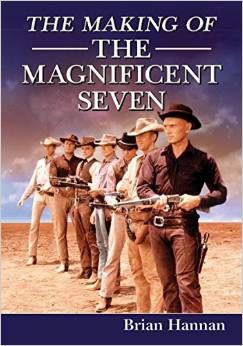
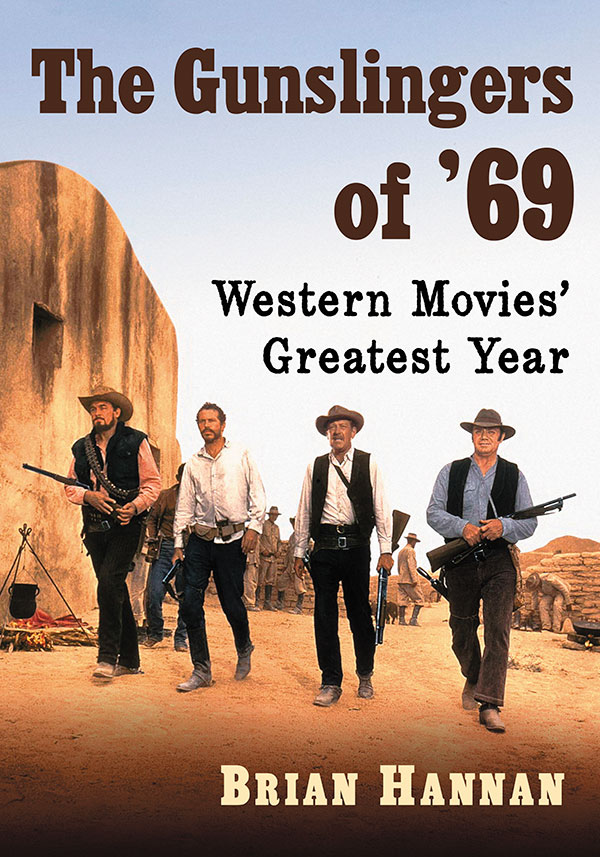

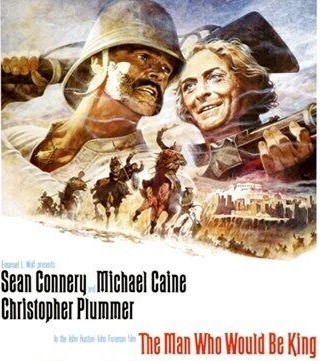


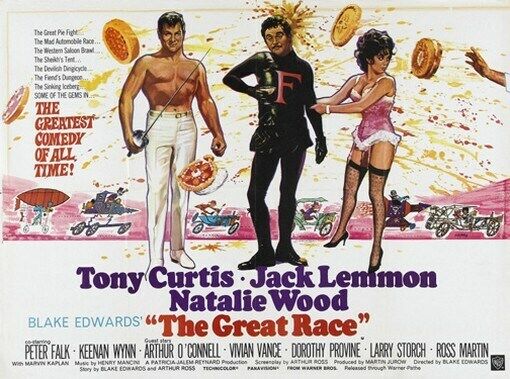


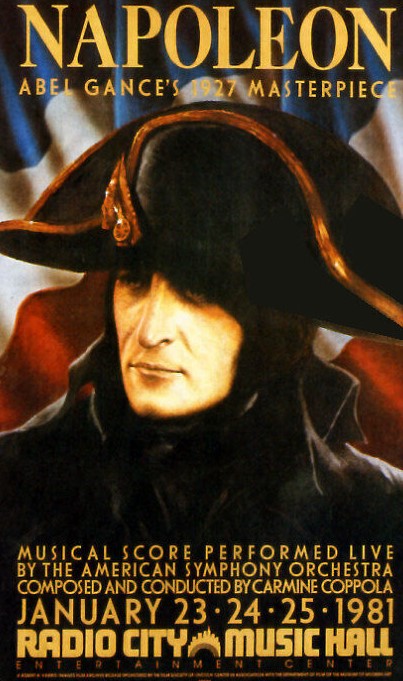


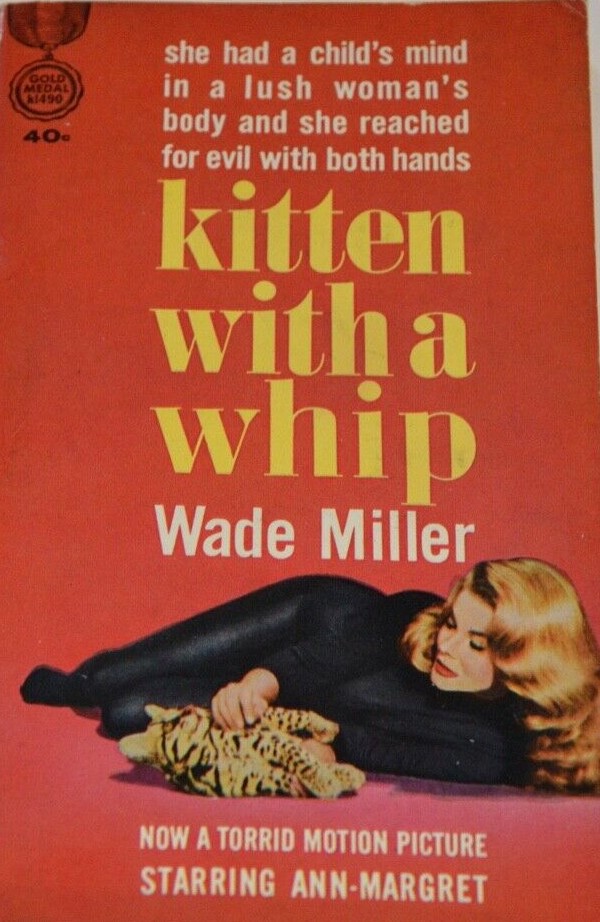

 The Magnificent 60s