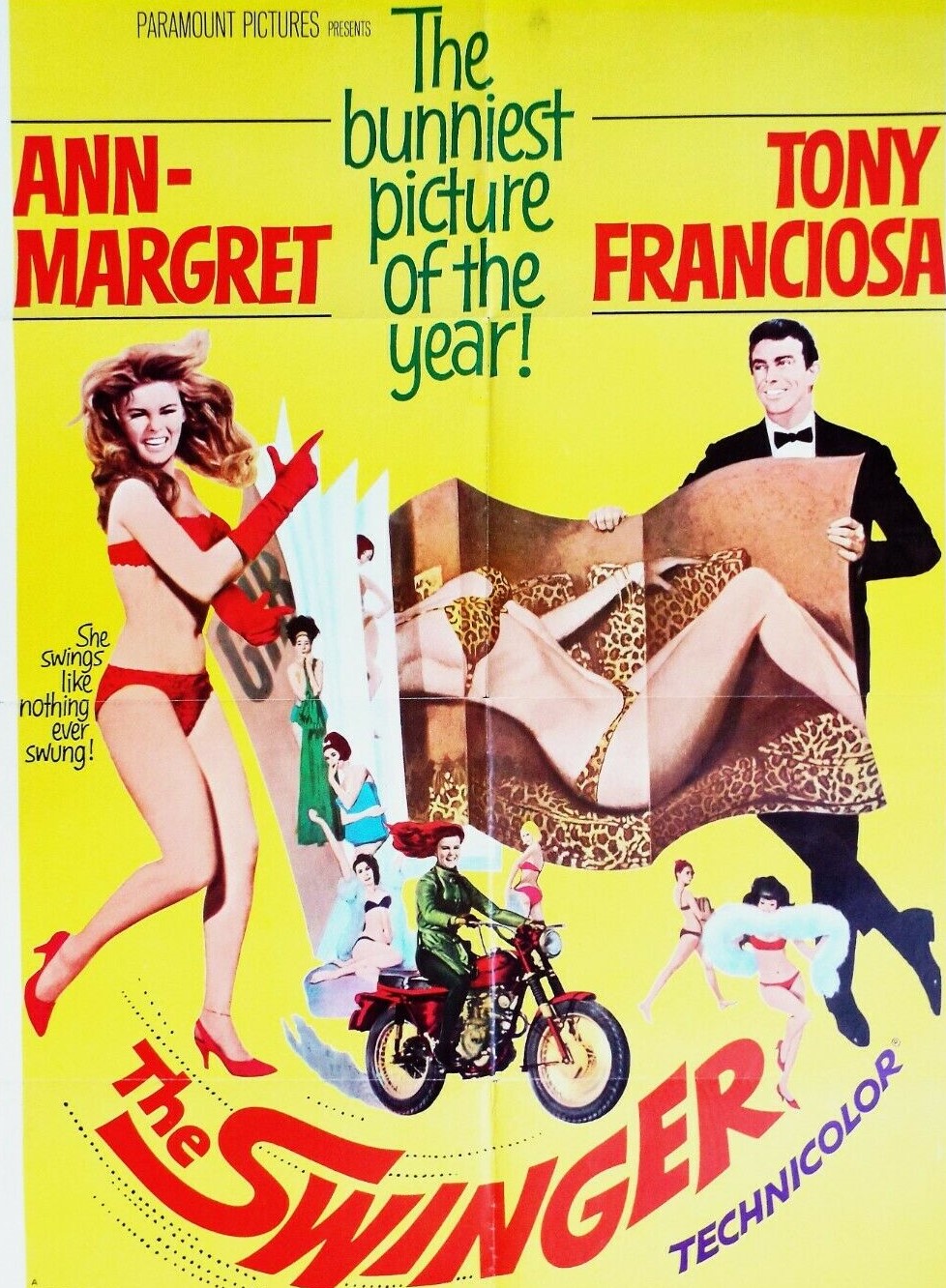
As chosen by my readers, this is the most popular movie on the Blog, so I thought I’d check back and see how it stood up. Having seen it before, of course, I knew what to expect. And despite the star’s acting abilities being better showcased in items like Once a Thief (1965) and Stagecoach (1966) I still found this effortlessly put together to deliver a movie that presented what studio and possibly the star felt was the best version (in terms of instant audience appeal) of herself. Think fun, fun, fun, if lightweight, lightweight, lightweight.
Pure confection. There was a sub-genre of romantic comedy pictures that spun on a simple plot device to throw together actors with terrific screen charisma. Doris Day, Rock Hudson and Cary Grant did little more than meet a potential new partner, fall out with them and then resolve their differences. The importance of actors of this caliber was the difference between a high class piece of froth and mere entertainment. This falls into the latter category, neither Ann-Margret nor Anthony Franciosa reaching the high standards of the likes of That Touch of Mink or Pillow Talk.
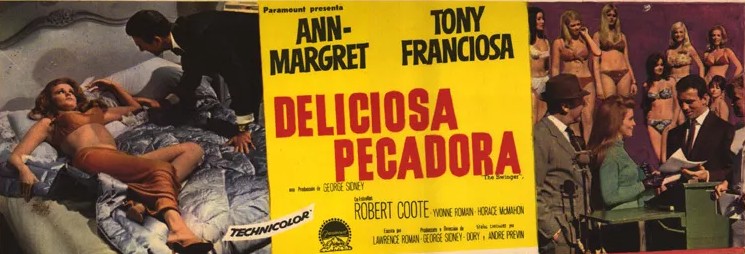
That said, this was clearly custom-made for Ann-Margret and her growing fan-base. Despite displaying unexpectedly serious acting chops in Once a Thief (1965) this plays more obviously to her strengths. She gets to sing, dance and generally throw herself around. The face, hair, smile and body combine in a sensational package.
Kelly Olsson (Ann-Margret) plays a budding writer so naïve that she tries to sell her stories to Girl-Lure, a Playboy-type magazine, owned by high-class Brit Sir Hubert Charles (Robert Coote) and run by Ric Colby (Anthony Franciosa). When her work is rejected, Olsson writes an imitation sex-novel, The Swinger, purportedly based on her own life. Sir Hubert buys the idea and Ric sets up a series of accompanying photo-shoots using Kelly as the model until he discovers her book is pure fiction.
The setting is an excuse to show an avalanche of young women in bikinis. The slight story is justification enough for Ann-Margret to strut her stuff as a singer and dancer. Since her stage show depended more on energy than singing, this effectively showcases her act.
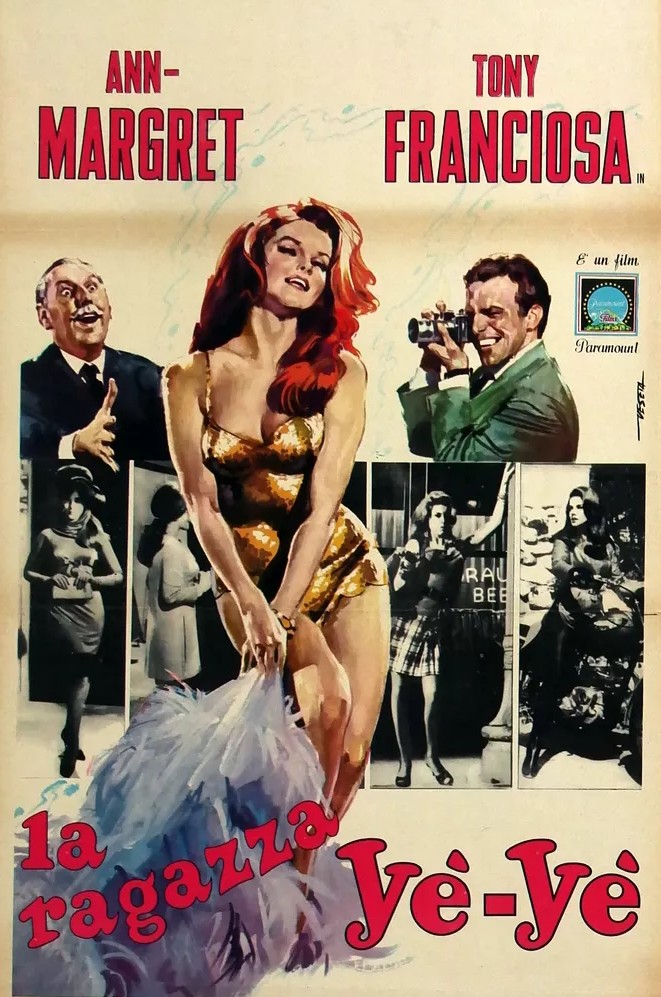
So two-dimensional are the principals, you are not going to mistake any of these characters for actual characters. The film lacks such depth you would not be surprised if the likes of Elvis Presley or Cliff Richard popped up. The comedy is very lite, an initial attempt at satire soon dropped, the few bursts of slapstick seeming to catch the stars unawares.
But that’s not to say it’s not enjoyable, Ann-Margret is a gloriously old-fashioned sex symbol and certainly knows how to shake her booty. The standout (for lack of a better word) scene revolves around body painting. She even gets the chance to ride a motorcycle, one of her trademarks. Anthony Franciosa (Go Naked in the World, 1961) has little to do except smile. Yvonne Romain (The Frightened City, 1961) has a thankless role as Ric’s girlfriend.
Director George Sidney teams up with Ann-Margret for the third time after Bye Bye Birdie (1963) and Viva Las Vegas (1964). This was his penultimate outing in a 20-year Hollywood career whose highlights included Anchors Aweigh (1945), The Three Musketeers (1948), Annie Get Your Gun (1950), Showboat (1951) and Pal Joey (1957). So he certainly had the musical pedigree to ensure the songs had some pizzazz but clearly less impact on the script which was reputedly scrambled together at short notice by Lawrence Roman (McQ, 1974) to fulfil a studio commitment to the star.

 The Magnificent 60s
Here is more:
“The 1 Nov 1965 DV announced the upcoming production as Paramount Pictures Corporation’s “next starring vehicle” for actress Ann-Margret. A news item in the 3 Nov 1965 DV stated that television star Gene Barry was the studio’s first choice for her leading man. The item included the alternate title, Spitting Image. Barry was later replaced by Tony Franciosa. On 5 Nov 1965, DV reported that Ann-Margret’s boyfriend, television star Roger Smith, was seeking a co-starring role. While the 8 Nov 1965 DV confirmed that Smith’s schedule would allow him the opportunity, he was not cast in the film. On 8 Nov 1965, DV announced that producer-director George Sidney was seeking “12 shapely, photographic magazine models,” to be known as “The Swingin’ Dozen.” The young women were required to be approximately five feet, five inches in height, with uniformly voluptuous measurements. Auditions were scheduled for 7 Dec 1965, as reported in the 6 Dec 1965 DV. The 4 Jan 1966 DV noted that George Sidney had a cameo role as “a cook in a hamburger joint.” According to the 16 Jan 1966 LAT, his blue convertible Bentley automobile, known as “Herman,” also made an appearance. Production charts in the 16 Dec 1965 DV stated that principal photography began 13 Dec 1965. Ann-Margret told the 16 Dec 1965 DV that the screenplay was being rewritten to showcase her talents. In addition to the actress and her character sharing the surname “Olsson,” she would also play a dual role, perform four songs, and ride her own motorcycle in the picture. One of Ann-Margret’s costumes, designed by Edith Head, was adorned with 14-carat gold buttons that once belonged to Emperor Napoleon of France, each valued at $1,000. On 25 Feb 1966, DV reported that Ann-Margret was scheduled to film the opening sequence on a trampoline, then embark on a four-week tour to entertain American troops in South Vietnam. Three weeks later, the 16 Mar 1966 DV stated that she would begin recording the soundtrack album on 24 Mar 1966. While Sidney was completing production, he told the 20 Mar 1966 LAT that he licensed the exact songs he had in mind for specific sequences, such as “That Old Black Magic” by Harold Arlen and Johnny Mercer, rather than commission sound-alike songs. On 3 Aug 1966, DV revealed that a scene in which Ann-Margret “slithers thru 176 gallons of mult-colored paints,” dressed only in a flesh-colored bikini, was being censored for release in the U.S. Although the actress said she would never appear in the nude or utter obscene language in public, she admitted that her dancing tended to result in censorship. Following the film’s 14 Dec 1966 opening in New York City, the 15 Dec 1966 NYT responded with a scathing review. The 14 Dec 1966 DV reported that Ann-Margret was to attend the 22 Dec 1966 opening in London, England. According to the 21 Oct 1966 DV, her recording of the theme song was released in early Nov 1966. Casting announcements during production included Jan Watson, Susan Cavett, China Lee, Christine Williams, Kathy Martin, Phyllis Davis, Midori, Veronica Erickson, Diane Webber, Dawn Villere, Teddy Parks, and Ilona Wilson (13 Dec 1965 DV); exotic dancer Beverly Powers, using her stage name, “Beverly Hills” (14 Jan 1966 DV); Phil Arnold and Harry Fleer (19 Jan 1966 DV); Larry J. Blake (20 Jan 1966 DV); Marion Chavez and Harry Varteresian (24 Jan 1966 DV); Siri (8 Feb 1966 DV); Fred Driven (18 Feb 1966 DV); and studio tailor Morris Rappaport, practicing his trade on camera (11 Feb 1966 DV). The 17 Dec 1965 DV included assistant director Nat Holt among the crew.”
LikeLiked by 1 person
Very many thanks for that. Great information and stuff I never knew.
LikeLike