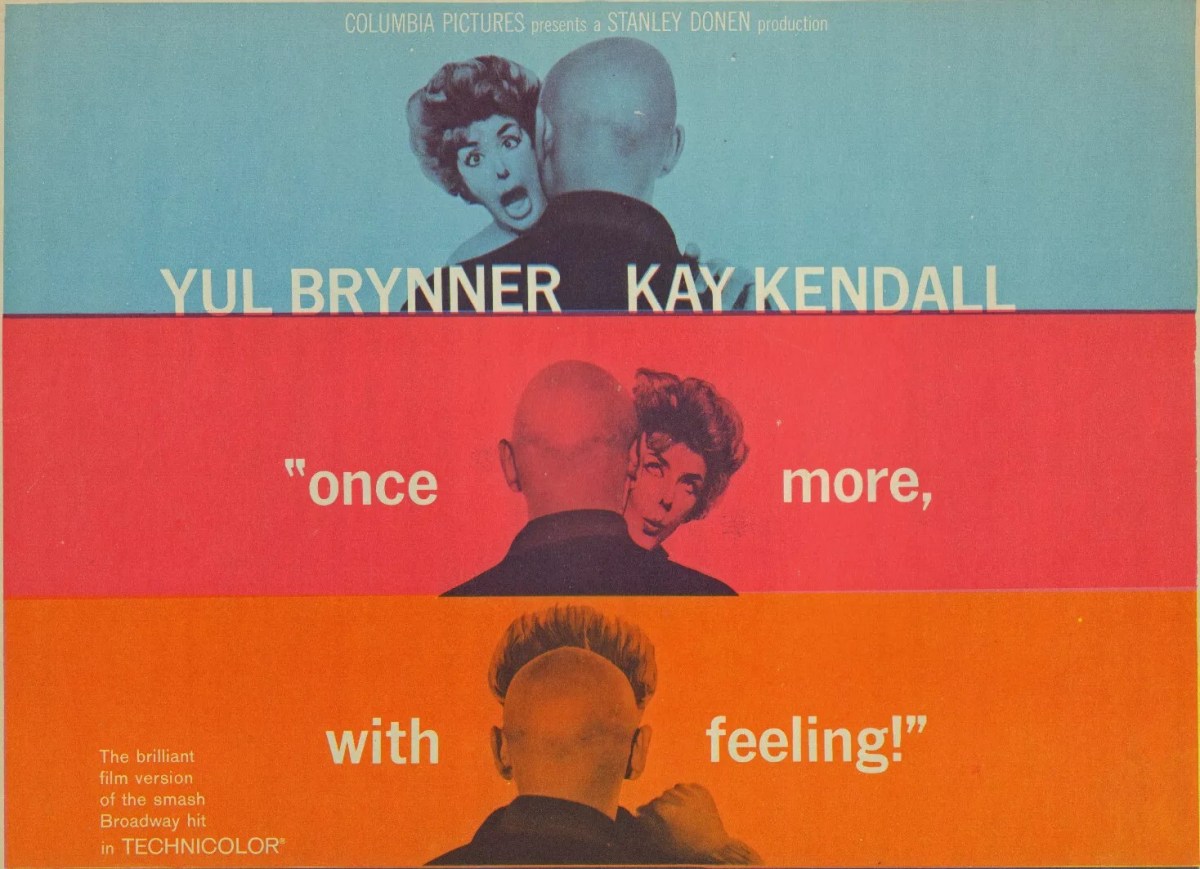
At the very least I had thought, given the involvement of classy director Stanley Donen (Charade, 1963) that this might go down as a glorious failure rather than just a straightforward glossy dud thanks to the woeful miscasting of Yul Brynner (The Double Man, 1967) and a bizarre plot. Am sure it must have appeared a welcome change of pace from a string of heavyweight dramas for the actor.
Adapted from the Broadway success by playwright Harry Kurnitz (Goodbye Charlie, 1964) this never escapes its stage origins, too many dramatic entrances, faked dramatic faintings, unwelcome guests ushered out. That would all have been manageable had Yul Brynner shown the slightest instinct for comedy. Bluster doesn’t compensate. Playing a tyrannical orchestra conductor would hardly take any acting for a performer who radiated intensity.

Victor Fabian (Yul Brynner), as egomaniacal and temperamental as you’d expect from a top conductor, is caught in flagrante by harpist wife Dolly (Kay Kendall) with young musician Angela (Shirley Anne Field). After she storms out, he loses his mojo. Worse, his orchestra loses its most efficient fundraiser, since Dolly is the one who keeps donors sweet.
Dolly has wasted no time acquiring a new admirer, esteemed physicist Richard (Geoffrey Toone), and wants a divorce in order to marry him. But wait, there’s a catch. Not the obvious one that Victor turns over a new leaf and determines to win her back, abandoning arrogance in favor of humble ardent wooing.
No, she can’t leave him because, wait for it, they never married. Well that’s not so jaw-dropping as the consequence. He insists that she can’t get a divorce unless she marries him and during an agreed short period together presumably that will give him time to flex his romantic muscles and win her back.
I can only assume that in the sophisitcated circles in which they run, the idea that they have been living in sin might cause her considerable embarrassment. But I’m perplexed at the notion, even for the less permissive times, that this would provoke sufficient scandal – more scandal than getting divorced in the first place? Or that they would expect nobody to notice the sudden marriage and wonder how they have managed to so openly live together? This seems nothing more than a jumbled-up head-over-heels barmy plot strand.

Anyway, she agrees, and he does his best to win her back even to the extent of playing a piece of music, beloved of a sponsor, that he detests.
The plot belongs to the golden age of the screwball comedy but the picture doesn’t play it that way. There’s more to being frenetic in pursuit of laffs than just being frenetic and this never takes off.
While Brynner is strictly one-note and never manages to bring a suggestion of genuine romance into the proceedings, the director is equally at a loss to inject any oomph or style and it looks as if he’s done little more than film a stage show with all its cinematic limitations.
Kay Kendall (Les Girls, 1957) in her final role – she died of leukemia – is equally constricted by a character who huffs and flounces and never embraces the comedy side of screwball.
This was the first of two straight comedies pairing Donen and Brynner and I’m dreading its successor Surprise Package (1960). Kurnitz adapted his own play which had been a decent success on Broadway, so the movie failure can’t all be blamed on him.









 The Magnificent 60s