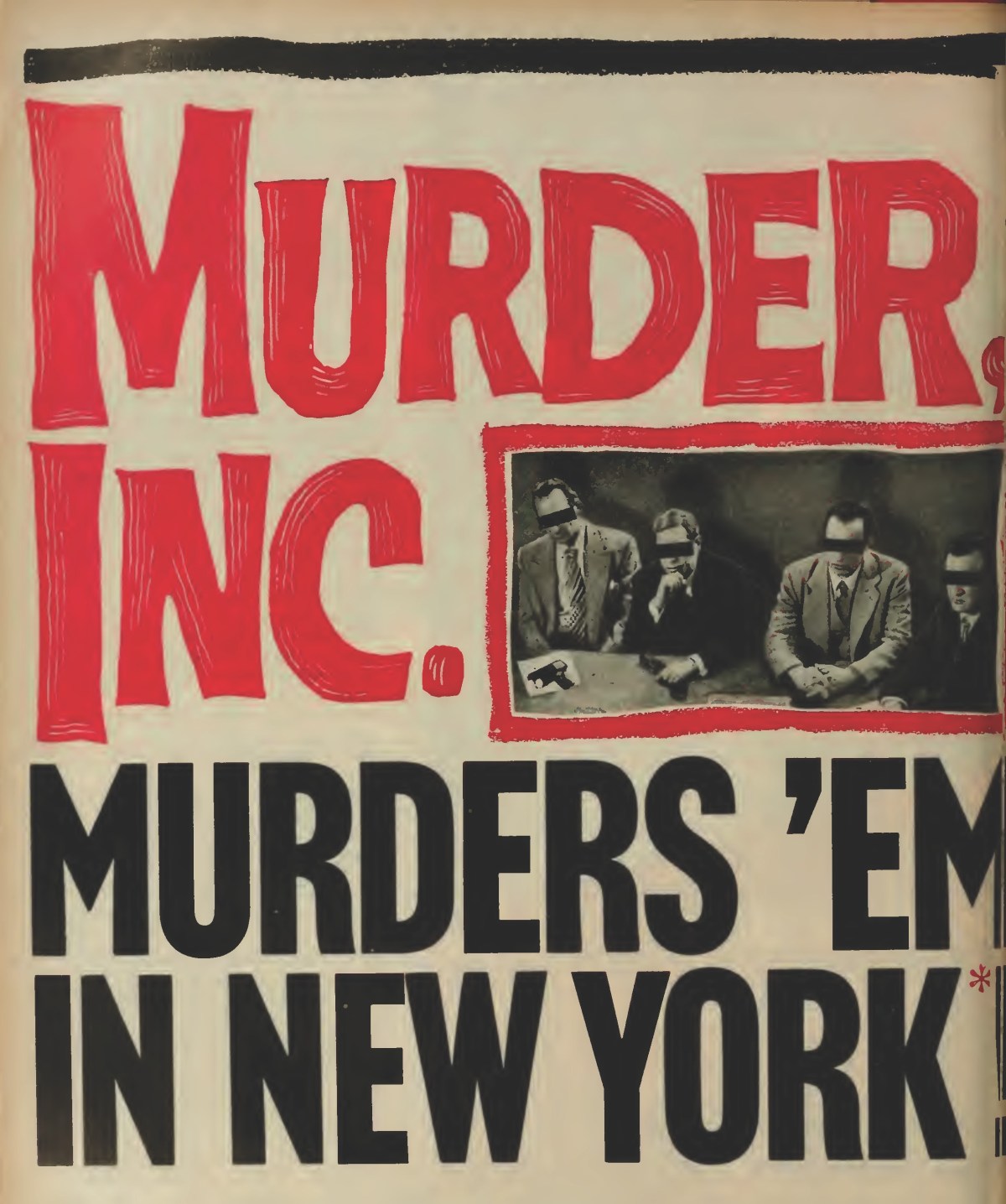
A gangster trend hit the mean streets of Hollywood at the start of the 1960s. But in the absence of big box office hitters like James Cagney, Humphrey Bogart and Edward G. Robinson, these were all B films with unknowns or low-ranked stars in the leading roles. Whereas Little Caesar (1931), Public Enemy (1931), The Roaring Twenties (1939) and White Heat (1949) were fictionalized accounts of hoodlums, the gun-toting movie spree kicked off by Machine Gun Kelly (1958) and Al Capone (1959) was based on the real-life gangsters who had terrorized America’s big cities in the 1920s and 1930s.
By the end of 1960, moviegoers had been served up an informal history of the country’s best-known mobsters from Ma Barker’s Killer Band (1960), Pretty Boy Floyd (1960), The Rise and Fall of Legs Diamond (1960) and Murder Inc (1960). The infamy of the criminals was so comparatively recent that moviemakers assumed audiences had a wider knowledge of their exploits and the context of their crimes.
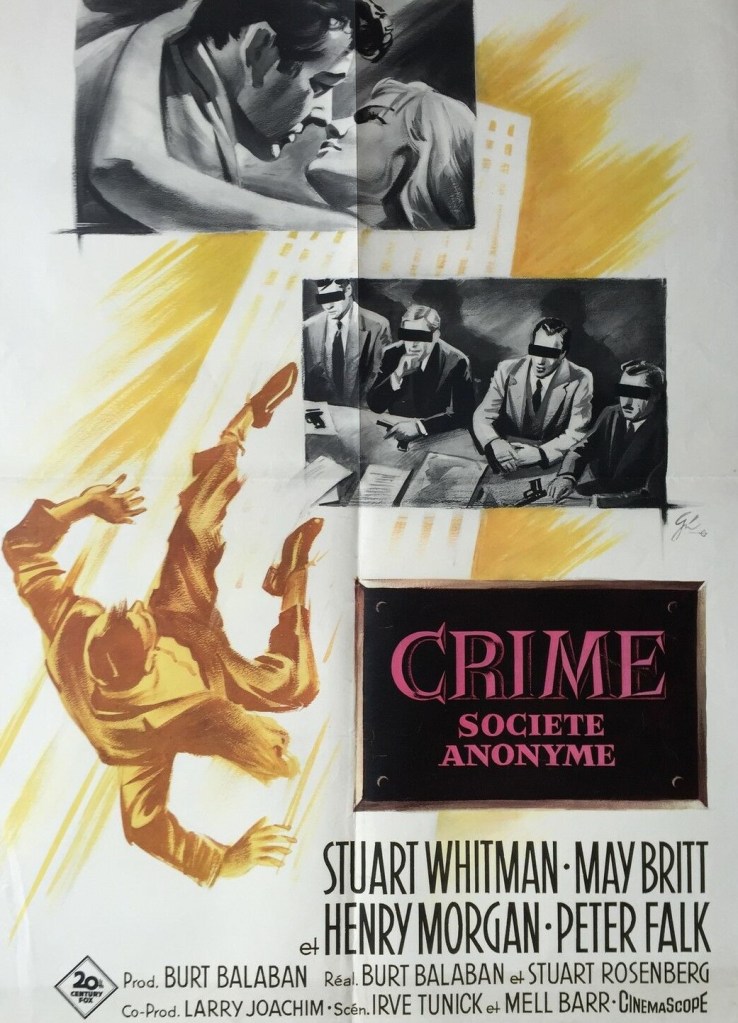
Murder Inc tells how underworld kingpin Lepke Buchalter – Tony Curtis played him in the more straightforward biopic Lepke (1975) – set up a system of killing dissenters in the ranks for the entire American Cosa Nostra (aka The Syndicate) in a way that prevented those ordering the murders being connected to those committing them, the same kind of protective cell operation used by terrorists. He created a separate organization of hitmen.
This quasi-documentary, with occasional voice-over narrative, focuses on three characters – the quiet-spoken Lepke (David J. Stewart), hitman Abe Reles (Peter Falk) and singer Joey Collins (Stuart Whitman) who becomes involved to pay off a gambling debt. Later on, the focus switches to Brooklyn assistant district attorney Burton Turkus (Henry Morgan), against a backdrop of massive police corruption, investigating the murder epidemic this deadly enterprise created. The films jumps around too much to be totally engrossing but it is certainly an interesting watch.
The two main villains could not be more different, Lepke representing the new school, a businessman, ordering killings but never participating, and for such a tough character tormented by a delicate stomach. Reles is old school, relishing opportunities to murder, and raping Collins’ honest wife Eadie (May Britt) in part because she treats him as scum. It’s hard to muster much sympathy for Joey especially as his wife takes the brunt of the violence.
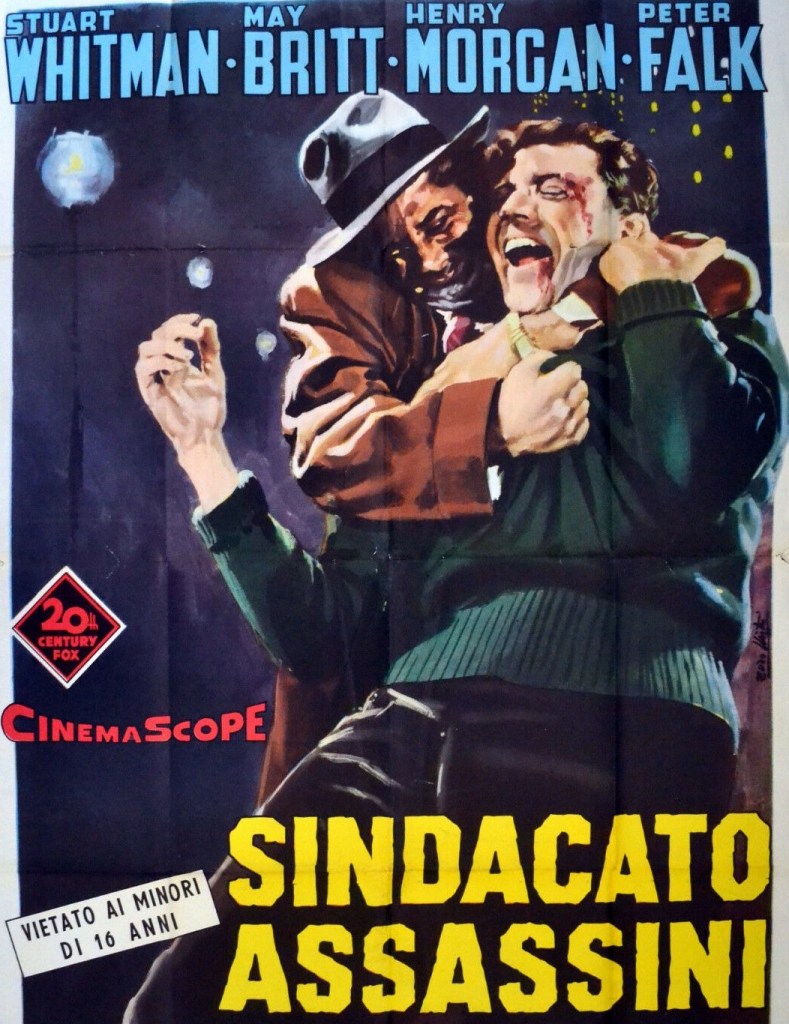
In an Oscar-nominated performance Peter Falk (Castle Keep, 1969) steals the show as the chilling, venomous killer, the kind of nonentity who rises to prominence only through his penchant for homicide. Swedish star May Britt (The Blue Angel, 1959) isn’t far behind with a portrayal of a strong woman saddled with a weak husband. David J. Stewart (The Young Savages, 1961) only made three movies in the 1960s and his milk-drinking hood was as scary in his pitilessness as his more overtly violent underling.
Stuart Whitman (The Commancheros, 1961) is almost acting against type for he was later known for rugged roles. Henry Morgan (It Happened to Jane, 1959) gave his portrayal of Turkus similar characteristics to Lepke, appearing as a quiet individual, concerned with details, except that he was incorruptible.
Simon Oakland (Bullitt, 1968) is an honest cop, Vincent Gardenia (Mad Dog Coll, 1961) is a lawyer, comedian Morey Amsterdam (The Dick Van Dyke Show, 1961-1964) plays a hotel manager, Sylvia Miles (Oscar-nominated for Midnight Cowboy, 1969) has a bit part and singer Sarah Vaughan is a singer.
For some reason, this movie starred a number of actors in leading roles who made few screen appearances. This was the only movie of the decade for May Britt, David J. Stewart made only three movies during the same period, and Henry Morgan only made three pictures in his entire career, this being the last.
The movie boasted two directors. Stuart Rosenberg (Cool Hand Luke, 1967) was replaced by Burt Balaban (Mad Dog Coll, 1961) when the threat of strike action by actors and writers in 1960 forced the 18-day shoot to be cut by 10 days so it’s hard to say who was responsible for which scenes, although the film does boast some unusual aerial shots. Written by Irve Tunick (High Hell, 1958) and Mel Goldberg (Hang ‘Em High, 1968) from the book by Burton Turkus and Sid Field.
Killers are loose – and how!

 The Magnificent 60s
Henry Morgan’s fame came not from acting but as a radio comedian/satirist in the 1940s and then for fifteen years as a panelist on the game show “I’ve Got A Secret” from 1952-1967 (there is an episode of “I’ve Got A Secret” from 1960 where the real Burton Turkus appears as a contestant with the secret, “Henry Morgan played me in a movie and he has never met me before”) It was because of Morgan’s fame as a radio comedian/TV panelist that another actor originally billed as Henry Morgan, had to change his movie billing to “Henry ‘Harry’ Morgan”, and then on TV when he starred on shows like “Dragnet” and “MASH” as just “Harry Morgan”.
LikeLiked by 1 person
Thanks for that. I knew nothing about him. Amazing the acting profession doesn’t allow two people to share the same name.
LikeLiked by 1 person
Yes, it’s a Screen Actors Guild rule in the US that if you have the same name, you have to add an initial or change the spelling at minimum. That’s why Michael J. Fox is Michael J. Fox because there’d been a Michael Fox already.
Sometimes there can be two with the same name if one is American and the other British and neither acts in the other country. There was a Tracy Reed who was in “Dr. Strangelove” who was British and there was in the late 60s and 70s a black actress in the US with the same name who spelled it the same way. Since the British Tracy Reed was never a SAG member it was okay for that to happen.
LikeLiked by 1 person
Thanks for clearing that up. wonder what would have happened to Tracy Reed if she has wanted to act in America.
LikeLike
I think since UK Tracy started earlier in her career than US Tracy, if she’d tried to get a SAG membership for the US at the time of Strangelove she would have been able to keep her name for being first, and US Tracy would have been forced to take another name altogether. I think the funniest story involving an actor being forced by US rules to change his name was that of Stewart Granger, who was born James Stewart and known to his friends as Jimmy. Naturally he had to change his name and he wrote that when he met his famous namesake, the first thing he asked him was if that was his real name and he was relieved when the answer was yes because he would have hated to have changed his name for the sake of someone who had changed their name to Jimmy Stewart!
LikeLike
Funny story about Stewart Granger. Thanks for sharing. Odd, though, the rule about US and UK.
LikeLiked by 1 person