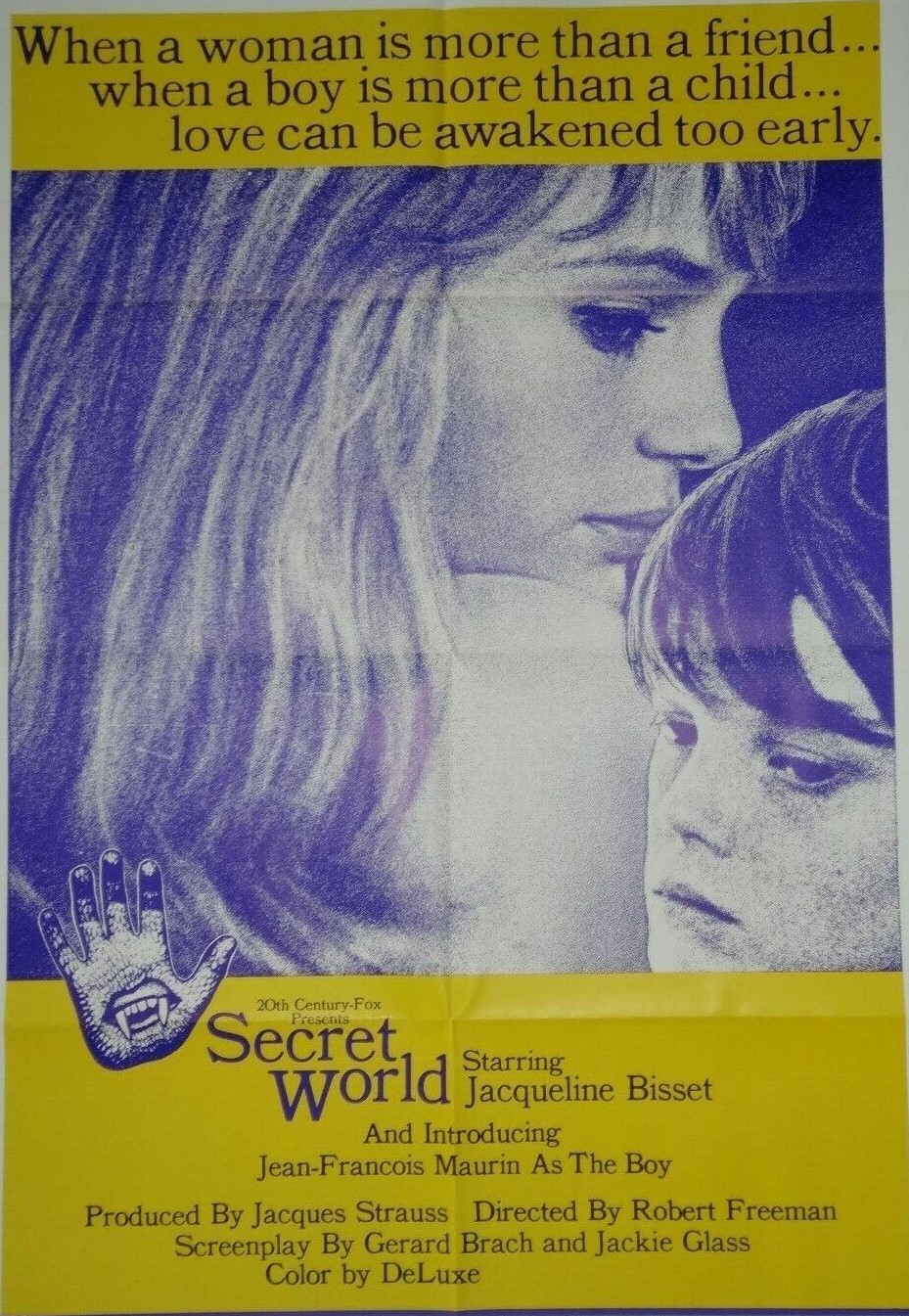
Jacqueline Bisset is the big draw here. After breaking into the Hollywood bigtime with female leads in The Detective (1968) and Bullitt (1968) she put her newfound marquee weight behind a low-budget French arthouse picture. But ignore the marketeers best efforts to present this as malevolent in the style of The Innocents (1961) or the illicit template of The Nightcomers (1971) or Malena (2000).
No children were corrupted in the making of this picture. Instead, it’s a slow-burn thoughtful exposition of a child coming to terms with loss and a young woman discovering she is more than a mere sexual plaything. Any explosive drama comes from father-son rivalry but mostly it’s a reflective, absorbing movie that follows twin narratives, the attraction of the orphaned introspective 11-year-old Francois (Jean-Francois Vireick) to the English mistress of his uncle Philippe (Pierre Zimmer) and the damage her arrival causes to a fractured household.
than is actually the case, but nonetheless – and take this as subtle – creates
an element of ambiquity about the demure Wendy.
Astonishingly, given its arthouse credentials – long takes, glorious cinematography, brooding close-ups – this was the final film for both directors (no idea why there were two) Paul Feyder (in his debut) and a sophomore effort from Robert Freeman (The Touchables, 1968). Given a screenplay by regular Polanski collaborator Gerard Brach (Wonderwall, 1968) and an intrusive heavy-handed score, you get the impression of two separate movies struggling to fit a single canvas.
On the one hand, you’ve got a perfectly acceptable romantic intrigue, Philippe and son Olivier (Marc Porel) fighting, sometimes metaphorically (games of chess etc), sometimes physically (a punch-up), over the woman, passed off as the daughter of a wartime colleague, and a wife Monique (Chantal Goya) refusing to stand on the sidelines, switching hairstyle to blonde and employing various wiles to prevent the affair. While the male rivalry is overt, the wife’s manipulations are more subtle.
On the other hand, you’ve got the lonely boy, who indulges his imagination, spinning tales of monsters in a lake and spies in the vicinity, mostly ignored by his relatives, hiding out with a pet rabbit in a treehouse, occasionally filching small items, creating a crown out of a stolen brooch and pieces of tree bark. There’s a lot that’s presented without explanation. For example, a couple of months after his parents died in a car crash that he alone survived, he mopes around in a jumper full of holes, either a sign how little his adoptive parents care for him, or perhaps the item of clothing he was wearing the day his mother died.

You can view his behavior – creeping into Wendy’s room at night when she’s asleep – as creepy or just the hankering of a small boy after a substitute mother. But mostly, he lives a life of wistfulness, longing for what he once had, unable to fit into a household split by various emotions. When he snips a lock of Wendy’s hair, or snaffles a bottle of her perfume, it’s to add to his little box of mementoes rather than from any underlying sexual motive. And it’s hard to view his growing feelings for Wendy as early stirrings of sexual attraction. When at one point he falls asleep on her bosom, you couldn’t interpret that as anything more than maternal instinct.
That’s not to say there isn’t tension. But that’s almost entirely played out in the context of father, son and wife. Francois is a welcome gooseberry defusing the unwelcome attentions of Olivier, whose overtures Wendy constantly thwarts. Olivier, well aware of the role Wendy plays in her father’s life, mocks his mother’s attempts to hold onto her errant husband. Wendy, meanwhile, abhors the role she is forced to play, the trophy mistress, and reacts in maternal fashion to the lonely child.
Excepting the intensity of the father-son relationship, the screenplay underplays while still developing character more fully than you might expect.. The child is as manipulative as his aunt in finding ways to spend time with the object of his affection.
Mostly, this has been dismissed as a poor example of the French arthouse picture or as a Bisset vanity number or for illicit elements than never catch fire. But, in reality, it’s a superb character study set in an unromanticised French countryside – rats need shooting, for example, massive tray of cheese served up for dessert rather than the grand wine cellar you might imagine a chateau to contain, or clothes or other ostentatious examples of wealth.
There is so much that is incisively ordinary. Philippe insists on measuring the boy’s height. Monique drops her chilly façade to help the newcomer get rid of a wasp. The arrogant Olivier loses all credibility when he runs away from a gang. The children play out childish rituals. Francois douses the rabbit in Wendy’s perfume so he can keep the smell of her close.
The secret world here is four-fold, the one Philippe foolishly and brazenly attempts to maintain, the one Olivier hopes to possess, the one Francois enjoys and the idyll from which Wendy is shaken out of.
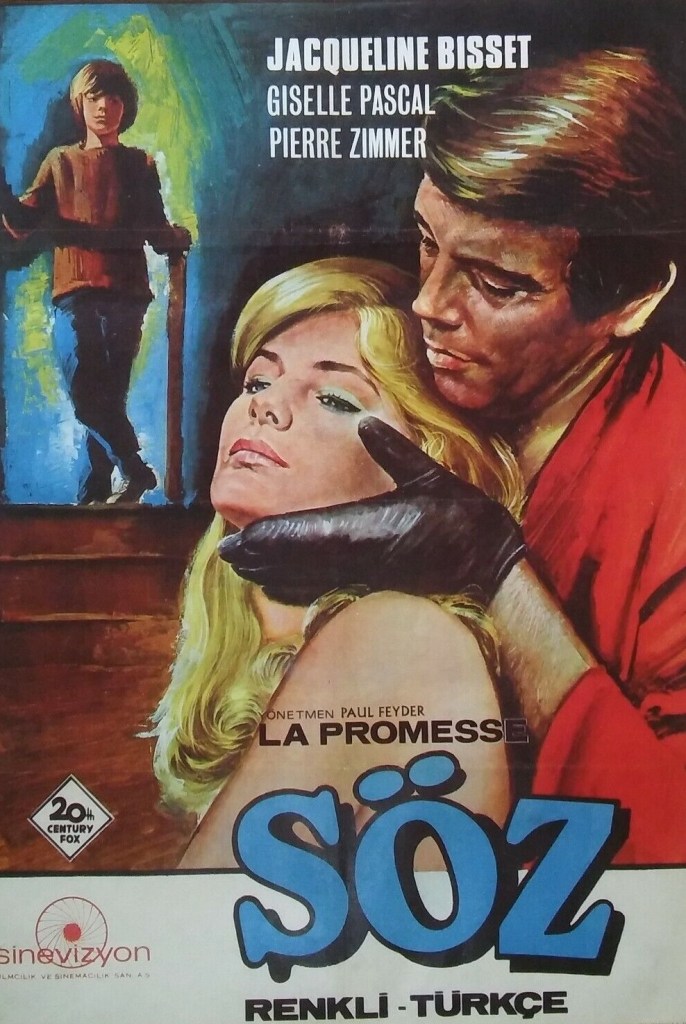
The direction is very confident, none more so, oddly enough, than in the only sex scene, which takes place primarily off-screen, although with the lascivious involvement of a leather-gloved hand.
Rich in detail, supremely atmospheric, well worth a look.


 The Magnificent 60s
I have, and will NEVEr dismiss any film as a Bisset vanity project. She sould be as celenrated as a Mirren, Smith or Dench IMHO. Great star, strong actress and still going!
LikeLiked by 1 person
She was a very interesting actress in her choice of material. Spoke fluent French so that helped. While it’s common now for top stars to dip into arthouse fare every now and then it wasn’t in the 1960s/1970s and she led the way in that respect.
LikeLike