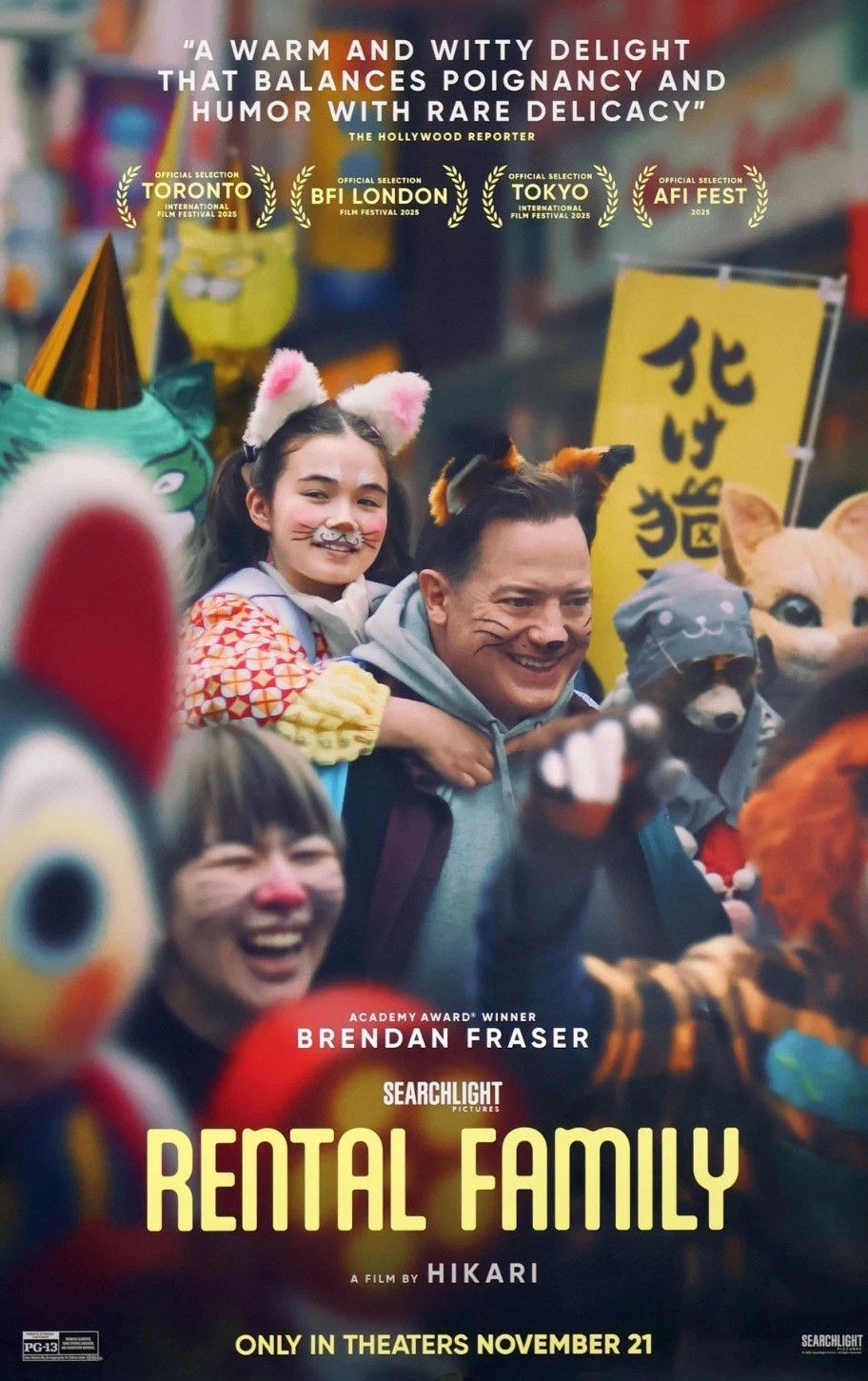
Gaming the system takes on a new meaning in this unlikely hybrid. What sets out to be a hard satire of the rigidity of Japanese culture is compromised by the need to turn it into a feel-good dramedy courtesy of importing American sometime star Brendan Fraser. There’s an awful trade-off here and I think the film suffers as a result of the compromise. I’m no big fan of movies that arrive in my multiplex courtesy of picking up accolades at a film festival, but, as it happened, I only saw print ads for this after I had seen it at a Secret Screening” so had no idea it had actually come via film festivals.
Take the Yank, Brendan Fraser at his puppy-dog best, out of the equation and concentrate on either his boss Shinji (Takehiro Hira) or colleague Aiko (Maru Yamamoto) and you would as easily have come to the same emotionally satisfying conclusion. Sold as a hard-edged indigenous Japanese satire I think it would easily broken out of the arthouse ghetto.
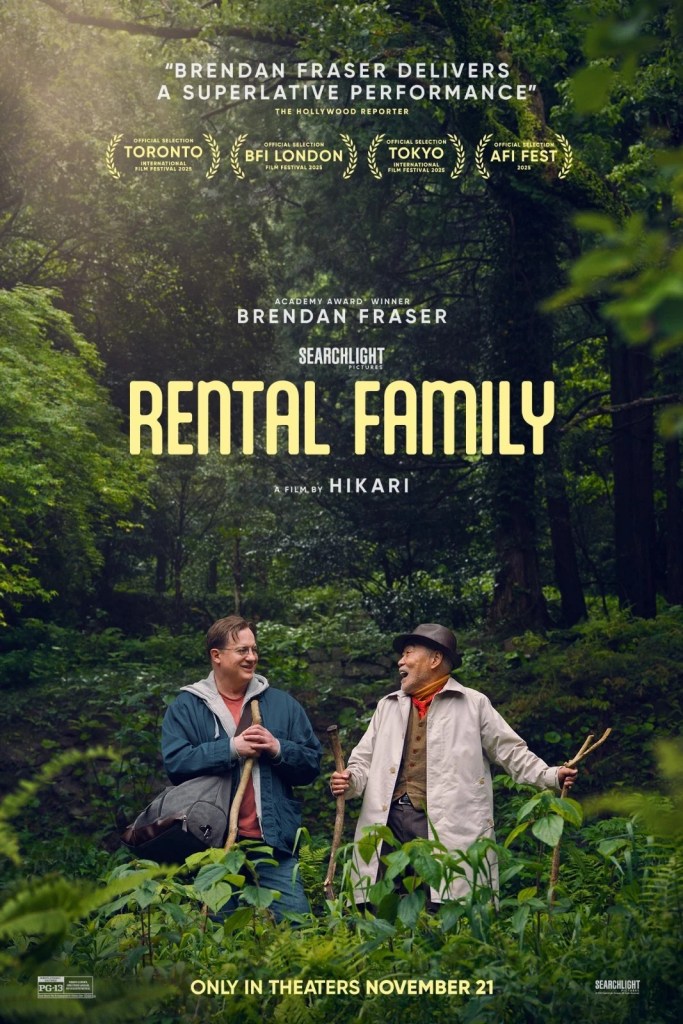
Apart from anything else it’s been, out of desperation I guess, sold as a kind of Mrs Doubtfire, imposter bonding with a young child, but in fact that’s a small part of the overall story, and in trying to make it the central element, goes off-piste.
Let me tell you what a rental family is, in case you are as unfamiliar with the term as I was. Apparently – I looked this up – this phenomenon arrived in Japanese culture in the 1980s and there are about 300 companies currently employing in selling human fraud to various clients.
So if, for example, you are gay but are fearful of denying your parents the opportunity to see you settled in a traditional male/female marriage, then you simply hire a husband for the day of the wedding and then once the ceremony is over you go back to your true love. Or, if, for example, you’d really like to experience your own funeral you can hire an actor to play a corpse while you listen to the nice things people say about you. Or if you want to keep your father, a retired famous actor, think he hasn’t been forgotten you hire an actor to play a reporter to provide him with the adoration you think he deserves.
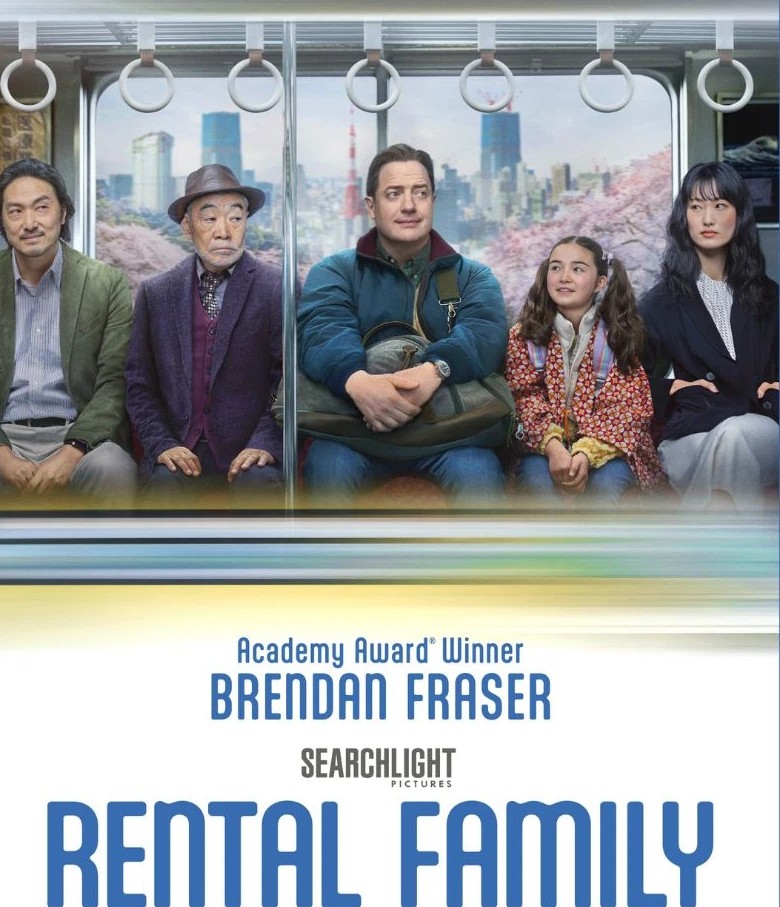
Or, should you be a single mother and think that will prevent your daughter getting into the school of your choice you simply hire an actor to play the daughter’s long-lost father. That’s taking the helicopter parent to an extreme, I’d say. Still, in between playing all his other roles, which include befriending a geek who likes to visit strip clubs, the aforesaid American actor Philip (Brendan Fraser) drops into the life of the appealing daughter and does the kind of things dads do with young children, hardly much of a stretch since this child is nowhere near the kind of parent-hater she’d be when she hit her teens.
Not much thought has gone into what the idea of the extremely brief appearance of a fake dad will do to a vulnerable child, but hey-ho, that gives Philip the chance to fill the kid in on the realities of life. “Adults lie,” he states crassly and the kid is so desperate to have a dad, she’ll go for a fake one, and doesn’t hate him any more for his cruel deception.
There are some other sections I didn’t really understand. Shinji’s specialty appeared to playing a boss who reduced aberrant employees to gibbering wrecks. It wasn’t clear if this was some kind of fetish – a person who wanted to be screamed at – or a dress rehearsal for an employee who would have to grovel before his employers for embezzlement or somesuch. And it’s not entirely clear why Aiko has to don a blonde wig and sit in a bar and wait for a woman to come in and whack her across the face – a proper slap, one that leaves a bruise – for stealing away (supposedly) her husband.
And it beggars belief that Philip would become so enmeshed in his role of reporter that he would agree to accompany the old actor on a two-day cross-country journey to some shack in the middle of nowhere where the old fella grew up, clearly forgetting that the old fellow’s daughter would be going out of her mind with worry.
But take Philip out of the equation and there’s far more dramatic nuggets as the supporting cast do more than enough to satisfy emotional demand. You might wonder why – except for filling in the time and offering a contrast to Philip’s lonely existence – we are given a glimpse of Shinji’s home life, where his happy wife greets him with a beer and a lovely meal and he can set his son’s troubled mind to rest. But in easily the best scene in the film, we discover wife and son are fakes, that Shinji is living the kind of fantasy he sells.
Structurally, Philip is presented as our window on this odd world. But it jars when he’s seen as putting it right – white savior and all that – and also when you consider he has his own fantasy, paying for love by the hour.
Directed by Hikari (37 Seconds, 2019) who shared screenplay credits with debutant Stephen Blahut.
On oddity for sure, the satire works but the feel-good is limp.
This hasn’t been released yet in Japan – though it premiered some months back at the Tokyo International Film Festival – which has, confusingly, the same acronym as the Toronto International Film Festival, so don’t mix up your TIFFs – and I’d be interested to know how it was received by the public there.
 The Magnificent 60s