John Wick Chapter 4 (2023) ***** – Seen (three times) at the cinema

The Godfather Part II of action movies. It’s taken me three visits to fully appreciate the visual, aural and thematic splendor. Usually when someone pays homage to the likes of John Ford, David Lean, Francis Coppola, Akira Kurosawa, Luchino Visconti, Ridley Scott, Michael Mann, James Bond (yup) and the myriad directors who filmed a car chase, the result is rarely top-notch. That’s not the case here.

Let’s begin with sound. The bone-jarring punch that opens this picture is easily the best aural opening of any picture and would make the case for Imax straight off the bat. That’s followed by thematic motifs, the sun (I can’t tell if it’s rising or falling) and the stairs that will figure so prominently, the sun especially a gorgeous palette, whether streaming through the Eiffel Tower or in fabulous sunrise mode to indicate the beginning of the climactic duel, a throwback to the classic western, and as operatic in its composition as anything Sergio Leone could throw at us.

Not to mention that this is essentially a story of bounty hunters, and that puts it squarely in the window of the spaghetti western. And could you get any closer to Leone than naming one of the pair of assassins in pursuit Mr Nobody? As the price on John Wick’s head reaches dizzying proportions – $40 million – it’s open season. Setting aside the punching and kicking and whacking and ramming with cars, nobody has filmed shoot-outs like these since the glory days of Michael Mann.  

And that’s before we come to Hollywood’s best-ever dog, a cojones-chewing throat-mauling nutcase that can turn cute at any given moment. And if you are looking for thematic completion there you have it, this entire series began because an idiot killed John Wick’s dog. This is a dog as if it had somehow been born out of John Wick.

Perhaps the best element of the spoken and unspoken brotherhood that infuses the picture is  the underlying cynicism that accompanies it. You save someone and they owe you. Mr Nobody (Shamier Anderson) comes to Wick’s rescue twice, once cynically because the price on his head is not yet high enough and then out of acknowledgement for his enemy’s action regarding the dog.

And it takes a moment, given Wick is never permitted explanation, to realise that Wick’s final action will provide a satisfactory outcome to all concerned.

Only a director of note would think to capture the sound of sand tricking through an hourglass and the silence when it stops, or the tap of a tiny spoon against the tip of a tiny coffee cup. The Marquis (Bill Skarsgard), tasked by the invisible High Table with bringing down Wick, enjoys such extraordinary wealth you wonder what more does a man need – except of course to satisfy his ambitions within the closed circle of the High Table. Probably no supporting member of any cast has ever been provided with such elegant narrative.

Underneath blazing chandeliers in a room the size of a small town, he chooses one cake from an immeasurably large selection – the rest of which presumably go to waste – and only, delicately with a fork, eats half. As if never sated, he must lick the last of his coffee from his spoon. The female riders in his stables are practising with sabers, you imagine for more than acrobatic purpose. His final act reveals the man in all his arrogance and cowardice.

You wonder where the heck did Chad Stahelski come from to make a movie of such majesty. Yes, I know he’s a former stunt man but that’s like asking Yakima Canutt to conjure up something as iconic as The Searchers. The preceding Wick trilogy, as good as they are, did not set you up for this.

There’s not a single wasted character. The previous betrayer Winston (Ian McShane) returns and is not just blamed for the whole debacle but finds his prospects tied in even more closer to his one-time buddy. The Harbinger (Clancy Brown), who begins as messenger and  transitions to intermediary and finally judge,  has such a mythical presence  you wish Marvel could pay heed and hire someone with his gravitas.

Stahelski has such command of his material that he can set up twists for which his narrative skills provide solution. Instead of the traditional sons of gangster pictures, and bear in mind it was an errant son who started this whole business off, it’s daughters, one innocent of her father’s occupation, the other complicit. Some codes are replete with honor, others more practical.

Once the deadline is set for a duel to resolve the situation, blind assassin Caine (Donnie Yen) needs Wick to make it, but, having assisted him, evens the odds by slicing through his hand. At the end of a tortuous ordeal fending off the multitudes in Paris, Wick has a 200-step climb to his final destination. Further multitudes lie in wait. He gets to the top before he rolls back down and has to start all over again, the clock ticking.

And there can’t have been a better final image than in  Wick loosening his belt.

Brilliant script by Shay Hatten (Army of the Dead, 2021) and Michael Finch (Predators, 2010), with some lines that will enter the screenwriting Hall of Fame, and Wick and his supporting cast are stupendous, but in the end this film belongs to the director and a movie that calls out to be seen in the cinema and to be called a masterpiece.

I’ll probably go back next week.
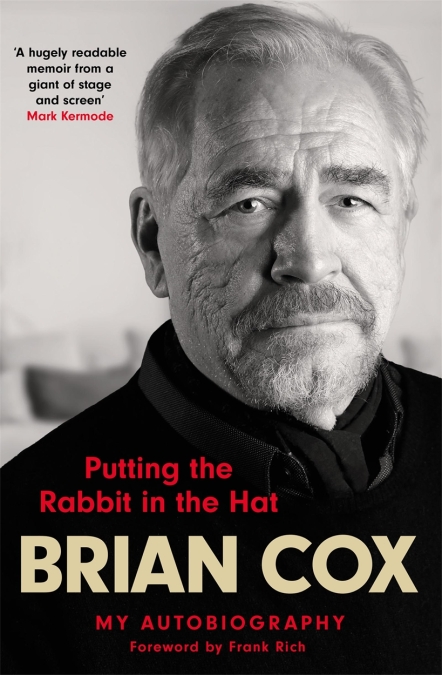
The “Succession” Man – Brian Cox

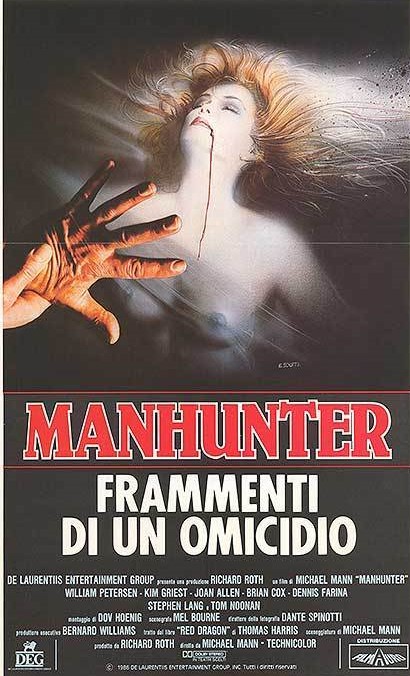
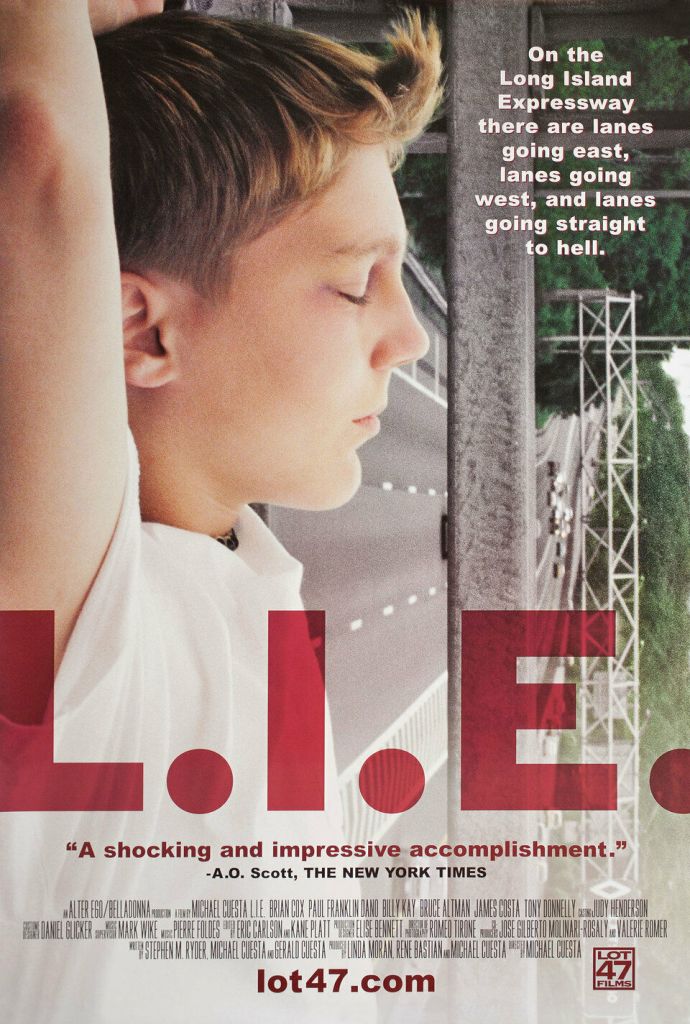
If you find that most movie star biographies concentrate on gossip at the expense of genuine insight to the craft of acting, then this one is for you. For the bulk of his film career, Cox, outside of such films as Manhunter (1986), L.I.E (2001) and Churchill (2017), has been in the main a supporting player and not even the kind of supporting actor regularly commended by Oscar voters, rather the type of artist whose face you recognize and welcome in small but important parts. Probably you will be unaware that he was more of a titan on stage, winning two Olivier awards – the British equivalent of the Tonys – and nominated another twice as well as wins and nominations for theatrical productions in America.

So he makes no distinction between the various mediums – film, television, stage – in detailing the development of his craft.  His first seminal moment came from the David Storey play In Celebration when director Lindsay Anderson having spent 90 minutes trying to slow the actor down for one segment eventually in frustration explained to the actor the reason for takings things slowly: his character returning home for the first time in years would spend time reacquainting himself with the house, taking in what had changed and what was familiar. In other words, “I learned to be a character rather than describing or acting it.”

When he moved into films, he had enough self-awareness to realize he was never going to be the leading man (even in the cult Manhunter, he was billed third or fourth in the credits) and determined he was “going to earn my wage as a character actor and that what I really wanted to do was create characters similar to those I loved from the old films… (where) characters just zing at you, no matter how small the part.”

He also appreciates his co-stars, especially the superstars. Of Keanu Reeves, he pointed out: “Despite choosing interesting work and being an interesting guy, he still had a reputation as a bit wooden…He took himself off to a small theatre in Canada and played Hamlet. He stuck at it and he’s actually become quite good over the years. He’s become rather good because he’s learned his job.” He has similar praise for Brad Pitt. “Like Keanu the initial appeal is all about the heartthrob looks, so he’s had to learn on the job; he’s had to dedicate himself to his craft…I love that ambition, that dedication, not to be better looking or more famous or have a sexier partner, but to be a better actor.”

When an actor has 234 credits in film and television you can tell instantly he’s a character actor. While occasionally Cox has appeared in high profile ventures – Braveheart (1995), X2 (2003), Troy (2004), and Rise of the Planet of the Apes (2011) – more often you would find him turning in bit parts in smaller pictures that you have possibly never heard of like The Water Horse (2007), Citizen Gangster (2011) and Morgan (2016).  Sometimes he pulled out a television plum, Nuremberg (2000) for which he won an Emmy or British comedy Bob Servant Independent (2013).   

With such a variety of movies, he has a wealth of anecdotes. He took over the role intended for Dustin Hoffman in The Long Kiss Goodnight (1996) and replaced Tommy Lee Jones in Chain Reaction (1996). He has stories to tell about Sir Laurence Olivier, Kevin Costner, Morgan Freeman, Samuel L. Jackson, Harvey Weinstein, Steven Seagal. Woody Allen, Scarlett Johansson, Mia Farrow, John Schlesinger and a dozen others.  

But he doesn’t like Quentin Tarantino or the acting of Sir Ian McKellen. “I really don’t have much time for Quentin Tarantino. I find his work meretricious. It’s all surface. Plot mechanics in place of depth. Style where there should be substance. I walked out of Pulp Fiction.’ Of McKellen he observes: “He is a master of what I’d call front-foot acting. It’s very effective…but it doesn’t quite fulfil what I believe is one of the key functions of acting.”

He was paid $10,000 for Manhunter while Anthony Hopkins walked away with a million for Silence of the Lambs (1991). He turned down Pirates of the Caribbean (2003) and Game of Thrones. Terrorists nearly boarded his plane during 9/11. His  mother suffered from mental illness. His father died when he was young.

After a half century of as many downs as ups and little likelihood that publishers would be knocking on his door for his autobiography, he suddenly became a massive star thanks to Succession. Supreme acting skills that had been ignored by the Hollywood cognoscenti were crucial to Logan Roy becoming one of television’s most popular – and hated – characters. His great talent is stillness, to be able to convey myriad emotion without speaking a word.  

But publishing an autobiography is not the true mark of success. Being in demand is. As well as future series of Succcession, he already has in the can the following films – The Jesuit, Skelly, Prisoner’s Daughter and Mending the Line and is currently shooting The Independent, in all of which he is either top-billed or second-billed, a far cry from sixth or seventh billing in supporting roles.

Discover WordPress

A daily selection of the best content published on WordPress, collected for you by humans who love to read.

The Atavist Magazine

by Brian Hannan

WordPress.com News

The latest news on WordPress.com and the WordPress community.