Allow me a digression. Let me take you back to the 1950s-1960s and the construction of the Lincoln Center in New York. That was seen as a “good thing” because although it drove out an entire community, the end result was an arts center that helped redevelop a rundown area of Manhattan while at the same time driving up the price of what had now become prime real estate. Sure, thousands of poor people lost their homes, but what was that in relation to a haven for the arts? No counting how many made huge profits.
The Lincoln Center didn’t send a left-wing press howling for the blood of Robert Moses, the urban planner who reshaped pretty much the whole of New York for decades but ripped the heart out of a vibrant Puerto Rican community and a bustling jazz scene in the name of slum clearance. The 7,000 inhabitants and 800 business in San Juan Hill couldn’t afford the rent in the 4,000 apartments that replaced their homes and the promised urban relocation came to nothing. Nobody was knocking on the door of the Metropolitan Opera or the Philharmonic, among the Lincoln’s tenants, berating them for causing such catastrophic social damage. Middle-class values took precedence over working class need.
I’m familiar with Moses and the Lincoln Center story because I read Robert Caro’s scathing biography of him, The Power Broker. But the makers of The Apprentice appear to have no knowledge of how much political machination and corruption it took to get the Lincoln Center constructed and the damage it inflicted on thousands of lives.
So, the building of Trump’s first hotel, in an equally rundown area of New York, where, incidentally, no inhabitant was displaced, is apparently the opening gambit for a game of hypocrisy. I’ve no doubt Trump has a lot to answer for, but this picture doesn’t go anywhere near asking the right questions.
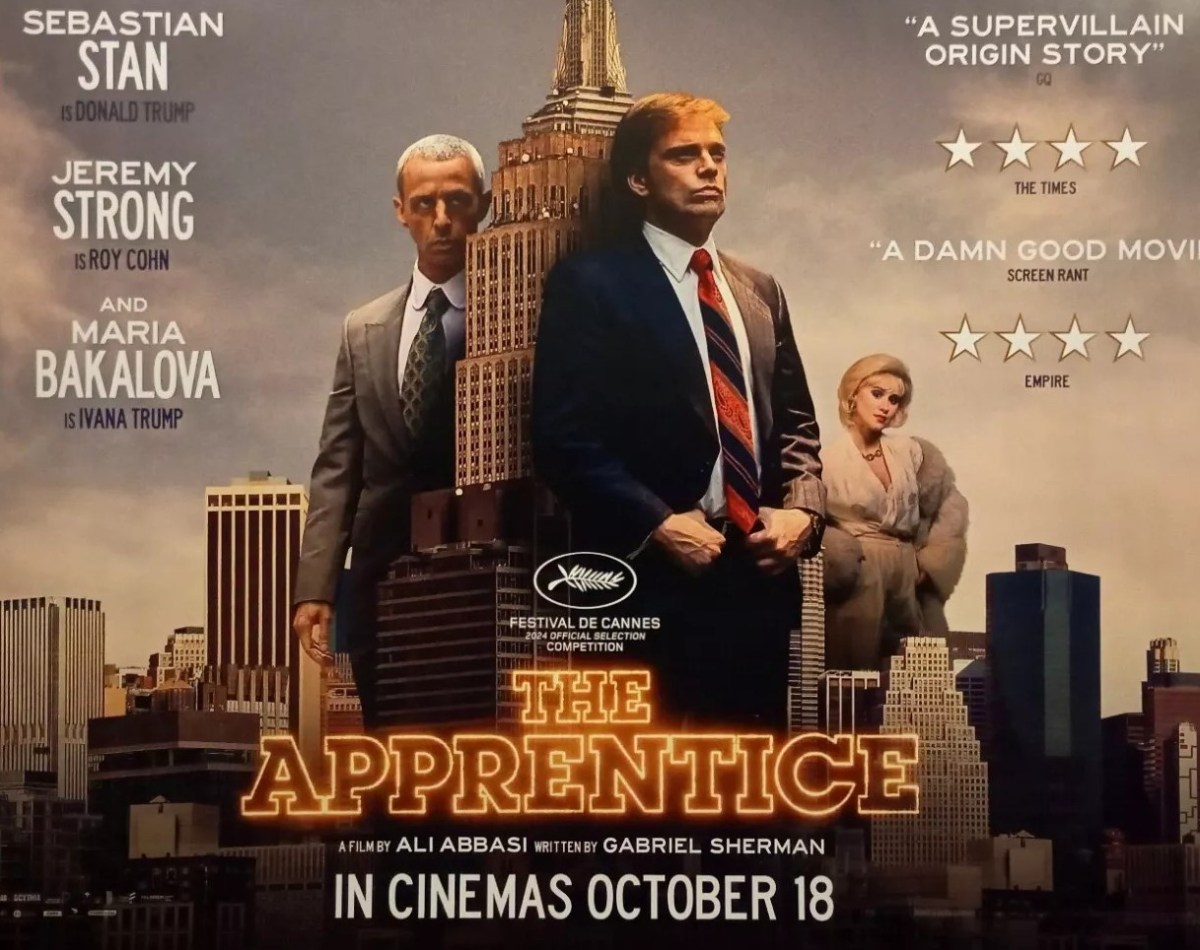
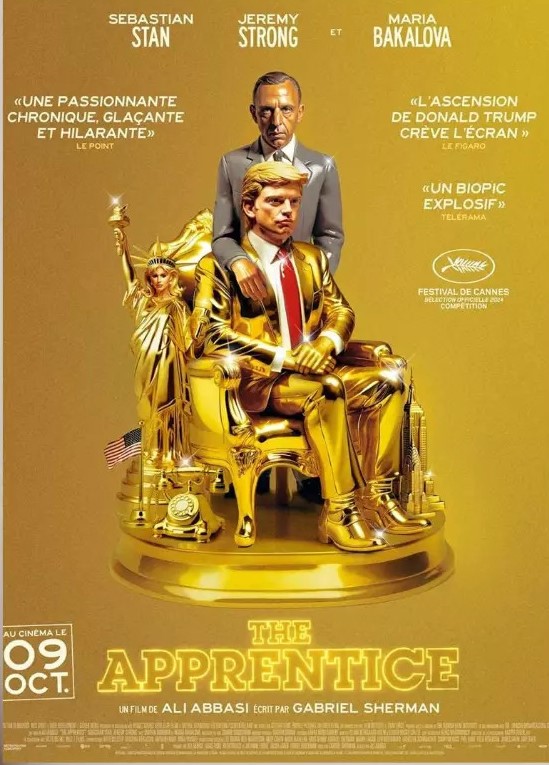
I’m not particularly convinced by Sebastian Stan’s (The 355, 2022) portrayal either. About the only thing he gets right is that moue he does with his upper lip. The thing that typifies Trump, the way it does hundreds of entrepreneurs, is energy. And that’s totalling lacking here, in a bid, I guess, to diss Trump. It feels like director Ali Abbassi (Holy Spider, 2022) has already made up his mind the character he wants to see portrayed.
But think of The Wolf of Wall Street (2013). To a man, these characters are heinous, but somehow Scorsese makes us want to watch them. Or Spielberg’s Catch Me If You Can (2002), a sleazy counterfeiter cast in a more interesting light by the playing of Leonardo DiCaprio.
I’m not saying Trump should be deified, far from it, but any business movie that’s attracted any decent box office has done so by investing a lot more in character and narrative structure. Wall Street (1987) comes to mind. This Trump doesn’t look as if he could win a prize at a state fair let alone have any chance of grabbing the golden ring.
All the best business films are able to show you the inner workings of business without boring you to death. This goes quite a way to boring you to death without going anywhere near the more interesting aspects of business.
There’s also an unusual narrative structure. Even if the portrayal of Roy Cohn (Jeremy Strong), Trump’s lawyer, rings true, it presents him as a more corrupt character than Trump. Sure, Trump uses him to get ahead, but that’s mainly because Cohn has so many corrupt politicians in his pocket.
I wasn’t convinced by Jeremy Strong (Succession) either. He came across as a Glasgow ned about to demonstrate the Glasgow kiss or one of those puppets with the wobbling heads you saw on British television series Thunderbirds.
For all the critics who felt this might just give Trump a bloody nose, my guess is he would revel in the portrayal, the buccaneering spirit, the win at all costs mentality.
Robert Caro would have got him spot on. Unfortunately, biography-wise, he’s too busy putting the final touches to his monumental biography of LBJ.
A missed opportunity.
 The Magnificent 60s