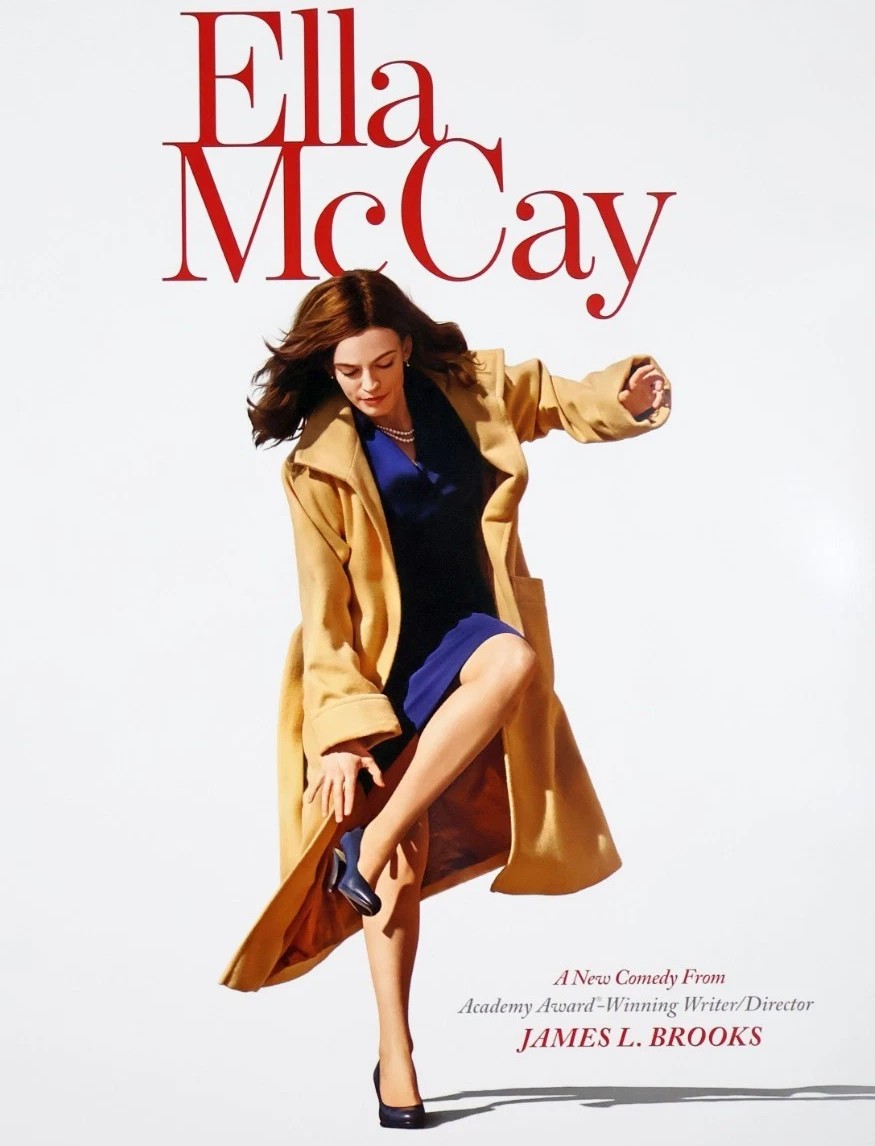
Ella McCay (2025) **

I should have taken notice of the horrific opening weekend for Ella McCay – just $2 million return on a $35 million budget. But it seemed unfair to ignore a new picture by the Oscar-winning writer-director of Terms of Endearment (1983), Broadcast News (1987) and As Good As It Gets (1997). Maybe I should have taken into account his cinematic rustiness, this is his first picture in 15 years, though that’s leavened by the fact he’s not exactly been prolific, including this a career spanning just eight pictures, so this could just be another gem a long time in the making.

Alas, no. It’s an unholy mess. From the set-up it presents as an expose of politics in the sharply satirical manner of Broadcast News. But all we learn about politics is the amount of time politicians spend drumming up money from sponsors in boiler rooms filled with begging employees working the phone and that be careful who you choose as a running mate because if the top person dies or – in this case – gets promoted, you’re left with someone nobody voted for and who has such little grasp of the humans she’s meant to be working for that in her ideological frenzy she bores everyone to death.

This looks as if it started one way and went another. A simple plot device could have been used to explore the problems of politicians squaring family lives with duty. Ella McCay (Emma Mackey)  – promoted to governor of an unnamed state because the incumbent, Bill (Albert Brooks), is promoted elsewhere – has been caught out using a room in the government building to have lunchtime sex with restaurateur husband Ryan (Jack Lowden).

This might have done wonders for her career, given she’s such a stuffy uptight lady, and the issue would have deserved no more than a mild slap on the wrist for illicit use of government property, and highlighted the problems of work-life balance in the business. Instead, it’s forced to do triple duty in a bizarre manner.

A journalist with so little grasp of politics is dumb enough to think this is actually an expose worth blackmailing someone over. And a politician with so little grasp of PR is dumb enough to think this poses a threat. And a husband with probably a very good grasp of how business works tries to pay off said journalist only for the whole farrago to explode in everyone’s face and result in a vengeful husband instigating divorce proceedings and blaming her for the bribery.

Oh dear, these bad men damaging a young woman’s promising career. Except the head of her political party calling her to book is a woman and it’s Ryan’s mother who puts him on collision course with his wife. Ella is just tone-deaf to everyone except herself. In her inauguration speech she fails to thank Bill or her husband and in her first meeting with her staff drones on for so long fails to notice they are falling asleep.
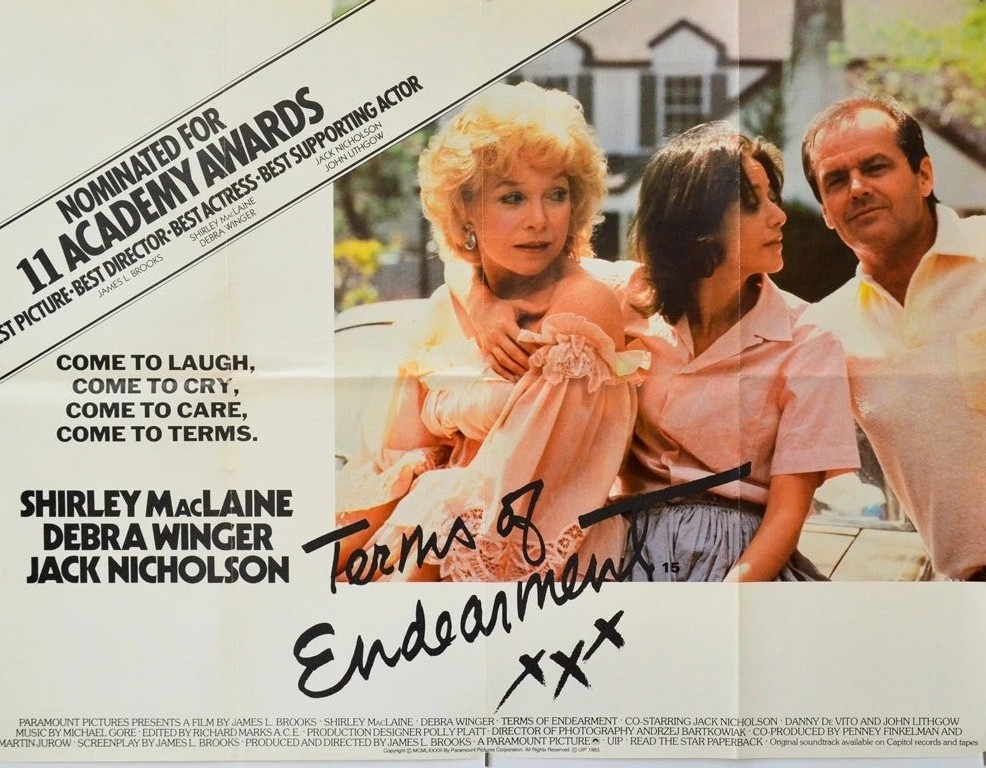
Reminder of just how good James L. Brooks could be.

It’s not just Ella who’s tone-deaf it’s the director. There’s a just terrible scene where having decided to spend the night at her brother’s apartment she fails to notify her police guard and then blasts them in the morning for watching over her overnight and wasting taxpayer’s money by clocking up overtime and this is presented as if in fact her anger is proof of her innate goodness.

Rammed into this bizarre concoction is estranged dad Eddie (Woody Harrelson) whom Ella refuses to forgive for his womanizing – and in fact the only scene that actually carries any heft is the one where as a teenager she refuses to play the happy family game when he’s been caught out in a misdemeanor.

Oh, and while we’re at it, her brother Casey (Spike Fearn), an agoraphobic computer geek who happens to pocket $2 million a year on a spread betting hustle, is on hand to  listen (unwillingly it has to be said) to her self-justifying rants and effort is put in to justifying his continued presence in the picture with a dumb plugged-in romance.

The main problem is that mostly Ella is on the verge of a nervous breakdown, constantly whining, bursting into tears (or screaming – the apparent alternative) and what sets out to show how women are constricted in politics actually instead reveals how someone constitutionally unfit for the hard graft of politics becomes a liability. But, wait, hooray, she does good in the end.

Everyone overacts. So there’s no excuse except directorial slackness for usually dependable actors like Woody Harrelson (Now You See Me, Now You Don’t, 2025) and Jamie Lee Curtis (The Last Showgirl, 2024) and for Emma Mackey (Emily, 2022), face in constant fidget, inexperience might mitigate. Jack Lowden (Tornado, 2025), done no favors by the script, and veteran Albert Brooks (Concussion, 2015), in his first movie in a decade,  are better, but that’s not saying much.

Just awful. American moviegoers were right to give this a body swerve.
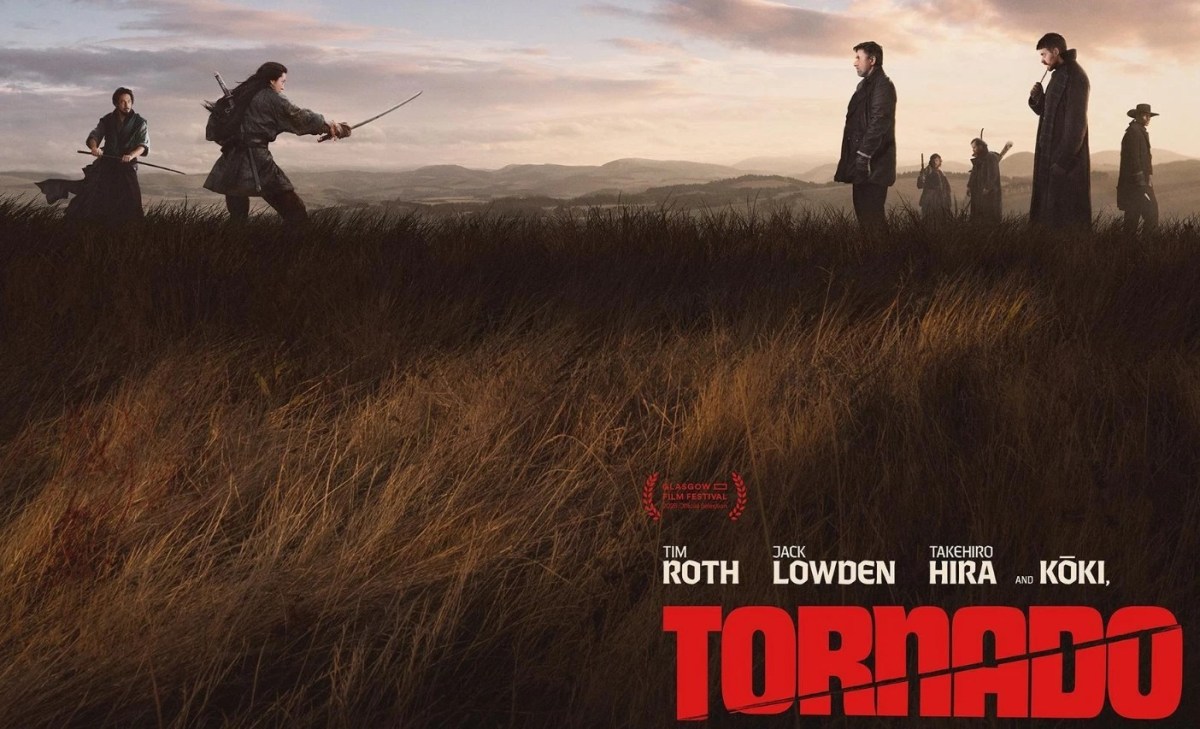
Tornado (2025) **** – Seen at the Cinema

Cult’s a strange creature. Try to cultivate it from the outset and chances are you’ll strike out – the days of Quentin Tarantino hitting a bulls-eye are long gone. So, basically, what you’re left with these days is a picture that flopped on initial release but gradually developed exceptional word-of-mouth and maybe found a welcome home in streaming or on the retrospective circuit if that still exists. But that process takes several years, and the best hope these days is that it gives the director or star a lift. In this case, the door’s been left open for a sequel.

And on paper this sounds an awful conceit. Samurai swordsmen on the loose in antique Scotland? We’re talking 1790, for goodness sake. Were they shipwrecked, enslaved? We never find out. Back story here is in short supply and that’s all to the good because tension never dissipates.

There are only a couple of tropes – a pair of mewling nepo babies suffused with entitlement is as far as that goes.

The rest is original, intriguing and directed with authority. You’ve got gangsters, puppeteers, a circus troupe, and skeletons playing the violin. Twists are in short supply – the expectation that a knife thrower might turn into a male lead is dashed, and dust settling on the top of a piano which should give away the presence of a fugitive is ignored.

The tale is one of greed. And of the greedy feeding upon the greedy. By chance, travelling samurai puppeteer Tornado (Koki) spots the theft of a thieves’ haul of gold by a young pickpocket (Nathan Malone). She helps the boy secrete the two bags of gold in the caravan of her father Fujin (Takehiro Hira). But then she tosses him out of the moving caravan with only one gold piece for his trouble.

When the thugs led by Sugarman (Tim Roth) catch up, her father, unaware of his daughter’s complicity in the theft, is killed protecting her. So the girl and the boy go on the run. There’s none of the usual bonding of thieves.

Sugarman’s son Little Sugar (Jack Lowden) knows the girl has stolen the gold and in rebellion against his father determines to have it all to himself and not above killing off a colleague who gets in his way. Sugarman is a ruthless thug, setting fire to the encampment of the circus troupe for hiding the girl, and not above knifing his son to death.

Tornado doesn’t show the slightest sign of remorse at being the reason for her father and the boy and a strongman who protected her being killed nor for being the cause of the circus troupe being rendered homeless. She’s as amoral as the rest of them. But in the end she does put them all to the sword.

So, theoretically – and this is how it’s being marketed – it’s a revenge thriller or a samurai western (which has already been done with Red Sun, 1971) and both attempts at categorization are way off the mark. It has much more in common with Tarantino, of infighting among gangsters, but it’s so splendidly done, with terrific composition and use of the widescreen that it touches the cult mother lode, in that it is indescribable, creating a world of its own, set in a lawless world where the strong dominate and the weak run for cover. And it’s also a world where you better not get wounded, because that will be cue for someone else to take advantage.

Tornado transitions from rebellious daughter – “who put you in charge” she complains to her father – moaning about being bored and can’t take the job of being a puppeteer seriously, and she’s not that good either at paying attention when her old man tries to teach her more swordfighting. And, of course, she’s to blame for the death of her father. Her instinct is to run and hide and wait till the brouhaha dies down. And it’s only when she realizes that she can’t effectively carry two heavy sacks of gold that she decides to cut and run – with the emphasis on the cutting, slicing and dicing the gang till there’s only Sugarman left and he’s, ironically, dying anyway from a wound inflicted by her father.

So not your ideal heroine. In the old days she’d have been an innocent, guiltless, only taking up the sword or gun after her father was killed by ruthless villains. It’s all the more interesting for not going down that route.

The choices director John MacLean (Slow West, 2015) doesn’t make define the picture. There’s no love interest, Little Sugar and Tornado could as easily have conspired to make off with the dough, or some narrative device could have thrown them together. But both want all the gold for themselves. The knife expert you think is being introduced to come to her rescue. But no go there either.

Tim Roth (Rob Roy, 1995) is superb as the cold-eyed gang boss and Jack Lowden (Slow Horses, 2022-2024) as his shifty son and MTA Koki makes a startling debut.

It’ll be gone from cinemas by the time you read this review but look out for it on a streaming platform and I hope it will prick your interest as much as mine.

Discover WordPress

A daily selection of the best content published on WordPress, collected for you by humans who love to read.

The Atavist Magazine

by Brian Hannan

WordPress.com News

The latest news on WordPress.com and the WordPress community.