
Given I’m on my annual Cinerama binge, it’s interesting to see how current giant-screen format Imax developed from the previous king of the giant screens, Cinerama.
Quiz question: what connects King Kong (1933) to Cinerama? Follow-up quiz question: what connects Lawrence of Arabia (the man not the film) to Cinerama? Tie-breaker: what connects Cinerama, which had its heyday in the 1960s, to the current Imax.
Merian Cooper, the producer behind King Kong, and Lowell Thomas, the broadcaster whose fame was built on the dramatic footage he took of Lawrence of Arabia during World War One, were both vital to the development of the new screen sensation Cinerama, which made its debut two years before Twentieth Century Fox unveiled Cinemascope.
Both Cinerama and Imax began as vehicles for documentaries, the cinematography they involved initially considered too cumbersome for Hollywood directors to use. Initially, also, both formats were presented in cinemas specifically designed for showing films made in the process.
But, effectively, both Cinerama and Imax followed the same business model, one that Hollywood only too readily appreciated. They were premium priced products. Whereas most items you buy are the same price wherever you make the purchase, movies followed an extended version of the way publishers sold books. Readers had to pay extra to be first in the queue for a favorite author’s latest work, the hardback version of a novel appearing about a year in advance of the cheaper hardback.
In the silent era, Paramount instituted a food chain for movie presentation. Pictures opened first in the big city center theaters at top dollar prices ($2 – the equivalent to $35 now – not unusual in the 1920s) before working their way down a dozen different pricing levels until they reached the cheapest cinemas. As the business developed, although the U.S. cinema capacity grew to around 20,000 outlets, Hollywood reckoned that 70 per cent of a movie’s income came from a fraction of those houses, primarily from the more expensive first- or second-run cinemas.
Treatment of audiences is more democratic now. All tickets cost the same and the food chain is long gone, but in the 1950s and 1960s when Hollywood was battling the beast of television it appeared that audiences could be wooed back to the movies by giving them something bigger and better – and they were happy to pay the price. Imax follows the same pricing strategy.
Cinerama was not just the ultimate in widescreen but it offered visceral thrills. Given camera point-of-view audiences raced down a rollercoaster in This Is Cinerama (1952) and were astonished to see different global vistas presented in their full glory rather than as mere backdrops to actors. And while audience response was astonishing even by industry standards, and receipts tumbled in hand over fist, the concept soon lost popularity as audiences moved on to the more dramatically-accessible Cinemascope and its imitators and by the 1960s the format was more or less dependent on the company spinning out its back catalog in endless reissues.
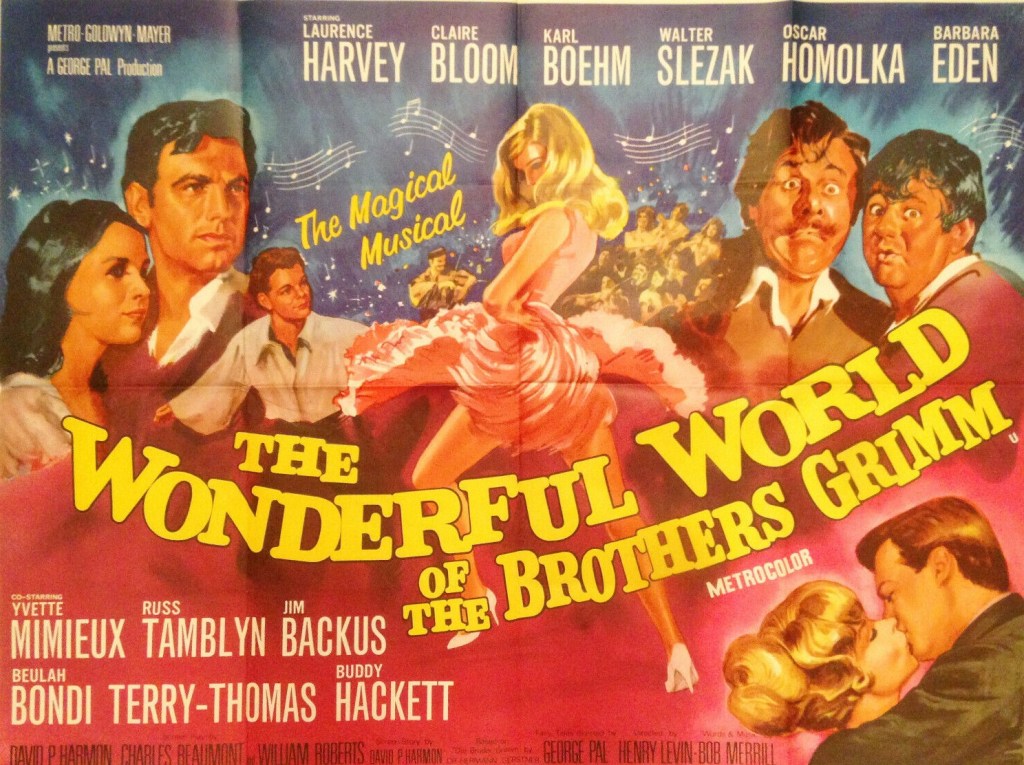
Hence, the move towards dramatic storylines as instanced by How the West Was Won (1962) and The Wonderful World of the Brothers Grimm (1962), both initially presented in the premium-priced roadshow, separate performance, format. In quick fashion, too, Cinerama dispensed with the cumbersome three-lens camera and invented a single-lens alternative which made it much easier for directors.
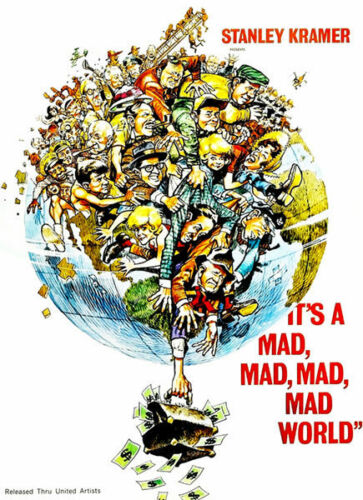
During the 1960s Cinerama presented another eleven big Hollywood pictures ranging from It’s a Mad, Mad, Mad, Mad, World (1963) and Grand Prix (1966) to Ice Station Zebra (1968) and Krakatoa, East of Java (1969). But as the industry hit the financial buffers at the end of the decade, the writing was on the wall, and although Cinerama invested in 35mm movies like Straw Dogs (1971) the game was over for the format by 1972.
Imax was pretty soon positioned as its natural successor, unveiled in 1970 in Japan with Tiger Child, the first purpose-built cinema opening in Toronto in 1971 with North of Superior. The screen was much bigger than anything Cinerama or 70mm had offered. It was over three times the size of Cinerama. But it was of different dimensions; where Cinerama went wider, Imax went taller.
But again, the camera was an obstacle for Hollywood use. And like Cinerama, the format’s attraction was sheer spectacle. All the initial output was documentary-based, often with an educational purpose, though soon progressing to what was termed “entertainment” (Everest, 1998) and the movies were short by Hollywood standards, often less than an hour, which permitted Imax theater operators to present a greater number of daily screenings than an ordinary cinema.
Initially, they were not specifically premium-priced, but potentially more profitable because of the number of daily showings. Theaters typically kept 80 per cent of the box office which limited entrepreneurial interest since budgets for these movies were in the $6 million-$12 million range, not low enough to easily turn a profit. The movies could run for months, but there was the same problem as before – shortage of new product.
By 1990 Imax had largely pulled out of exhibition, ownership limited to nine theaters, and out of production.
Oddly enough, it was reissue that revived Imax. Disney planned a reworked version of its classic Fantasia (1940) as a method of generating more money from a picture that had already grossed $184 million on video. Traditionally, Fantasia got its best results from limited release, its previous revival outing shown in a maximum of 500 houses. Nor did Disney agree to the usual financial terms, demanding a 50 per cent share of the box office, rather than the normal 20 per cent.
Fantasia 2000 (2000) was released in 54 cinemas willing to commit to an 18-week run. While every Imax record was smashed, the picture, at a cost of $90 million, didn’t break even. But it did usher in Imax as a reissue vehicle. Disney used Imax for the 10th anniversary relaunch of Beauty and the Beast (1992), bringing in an extra $25 million in rentals. Two years later The Lion King (1994) in Imax brought in $15.6 million and Apollo 13 (1995) $1.7 million.
Naturally enough, Disney recognized the potential for Imax for new films and made Treasure Planet (2002) in an Imax version. But the big boost came with The Matrix sequels. Both The Matrix Reloaded (2003) and The Matrix Revolutions (2003) were digitally remastered for Imax, the latter the first to be shown simultaneously with the ordinary print.
Nowadays, Imax is part of the release mix, bringing a hefty chunk of premium-priced box office to the overall gross and also, as witness the current Interstellar (2014) a hyped-up reissue vehicle.
SOURCES: Brian Hannan, Coming Back to a Theater Near You, A History of Hollywood Reissues (McFarland, 2016) p5, 10, 12, 295, 297-298; Kim R. Holston, Movie Roadshows (McFarland, 2013 )p 112-113; James B. Stewart, Disneywar (Simon and Schuster, 2008), p346-347; “A Decade of Limited Release,” Variety, February 18, 1998, p23; “Eric J. Olson, “Fantasia Signs Up Increase,” Variety, May 24, 1999, p32; Joseph Horowitz, “A Fantasia for the MTV Generation,” New York Times, January 2, 2000; “Fantasia Hits Imax Record,” Variety, January 4, 2000, p7; “Top 125 Worldwide,” Variety, January 15, 2001, p24; “The Top 250 Worldwide,” Variety, January 6, 2003, p26.
 The Magnificent 60s