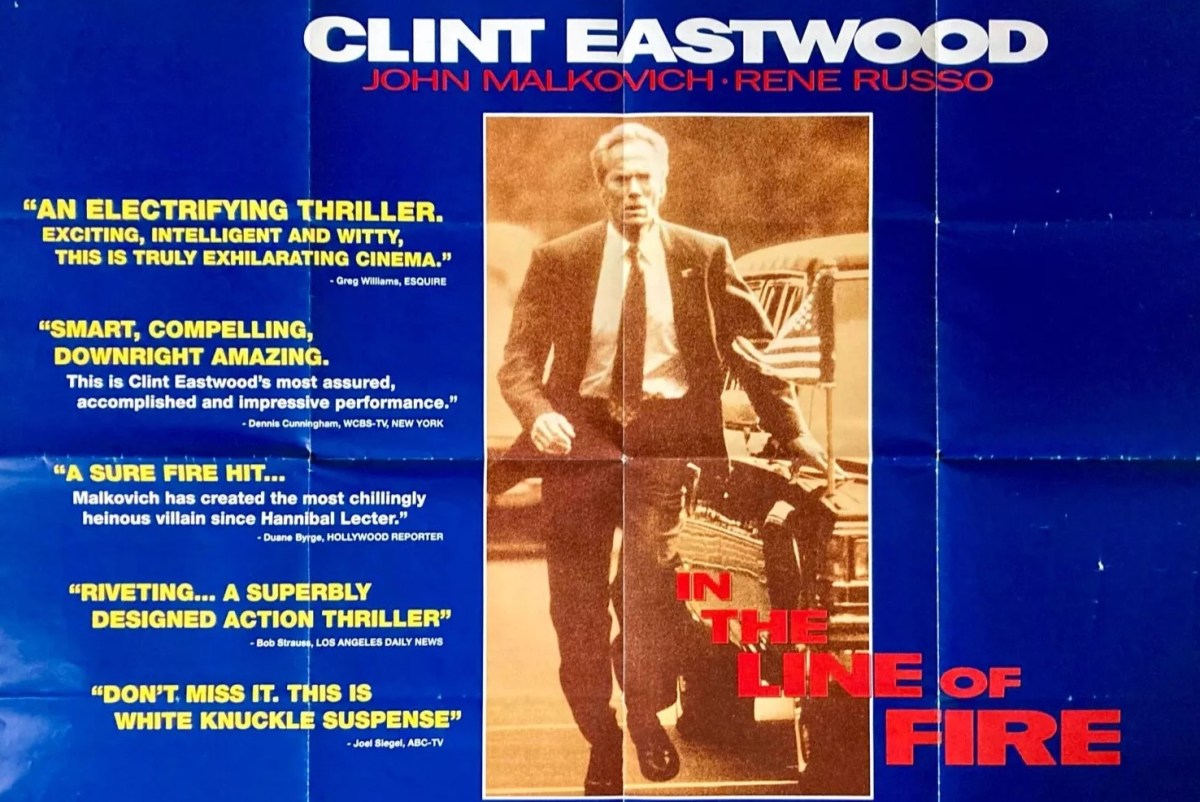
Outside of the top-billed trio of Julia Roberts, Sandra Bullock and Meg Ryan, Rene Russo stole the limelight as the decade’s leading lady, bolstering the credentials of such supposedly superior marquee names as Dustin Hoffman (Outbreak, 1995), Mel Gibson ( Lethal Weapon 3, Ransom and Lethal Weapon 4, 1992, 1996 and 1998), John Travolta (Get Shorty, 1995), Kevin Costner (Tin Cup, 1996) and Pierce Brosnan (The Thomas Crown Affair, 1999) – an almost unprecedented, for a female star of the period, roster of hits.
Not only that, but she had also come to the game late, 35 at the time of her debut in Major League (1989) and therefore well into the most dangerous age for a female star in Hollywood, her 40s, by the time she came to work with some of the industry’s biggest names. By comparison Julia Roberts was 23 at the time Pretty Woman (1990) was released, Meg Ryan 28 when she captured hearts in When Harry Met Sally (1989) and Sandra Bullock 32 when she snazzed Sylvester Stallone in Demolition Man (1993).
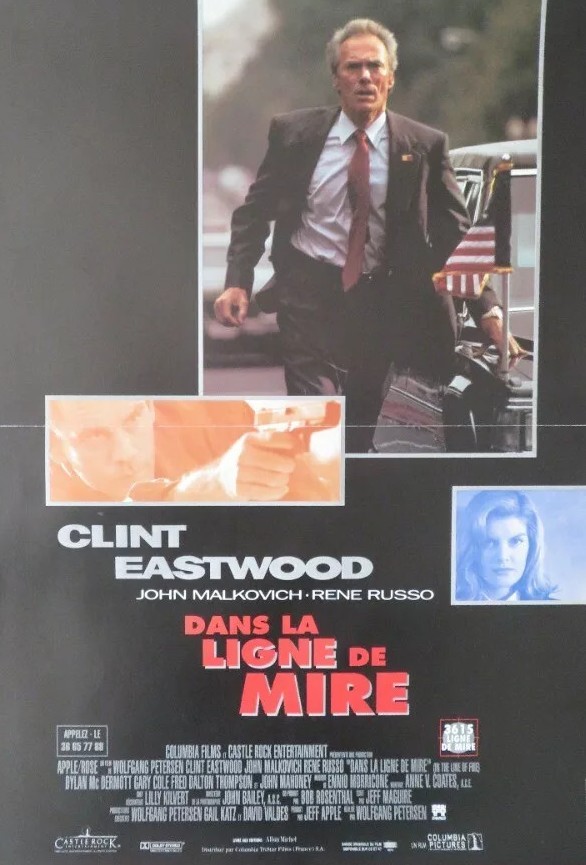
It’s worth remembering that Eastwood, the previous decade washed away with insipid box office, was entering a late career halcyon period, his critical and commercial esteem boosted by the Oscar-winning Unforgiven (1992). Previous male superstars close to retirement age weren’t called upon to put in a sprint or two. Sure, John Wayne and James Stewart could land a good punch, but that was generally in a confined space and nobody was calling on their athletic skills. But, here, Eastwood set the tone for later pictures like Taken – and he was a decade older than Liam Neeson in that one.
Russo, an MTA, oozed class and maturity, never looked as if she was out of her depth or if she would come off second best to any of the macho males she was generally surrounded with. This isn’t her greatest role – her duel with Brosnan takes that accolade – but comes pretty close.
As Lilly Raine, she nurses ageing Secret Service agent Frank Horrigan (Clint Eastwood) over the line. Frank isn’t just perennially out of puff, but catches bad colds and makes such a basic error that he’s chucked out of the presidential protection elite, though kept on by boss Sam (John Mahoney) in a bid to track down assassin Mitch Leary (John Malkovich).
This is nuts-and-bolts action, a lot of time spent in basic detection, following up insignificant leads, but it’s also a classic hunter vs. hunted duel, with for the most part the assassin getting the upper hand, running rings round the entire Secret Service with his disguises and ability to remain more than one step ahead. Instead of a car chase, there’s a rooftop chase.
Horrigan is the kind of imperturbable cop who doesn’t mind partner Al (Dylan McDermott) being suffocated half to death if it gives him an edge on a villain. He’s got a chequered past, maligned by the Warren Commission in the Kennedy assassination report, feeling his age, but when life gets too tough tinkers away at the piano.
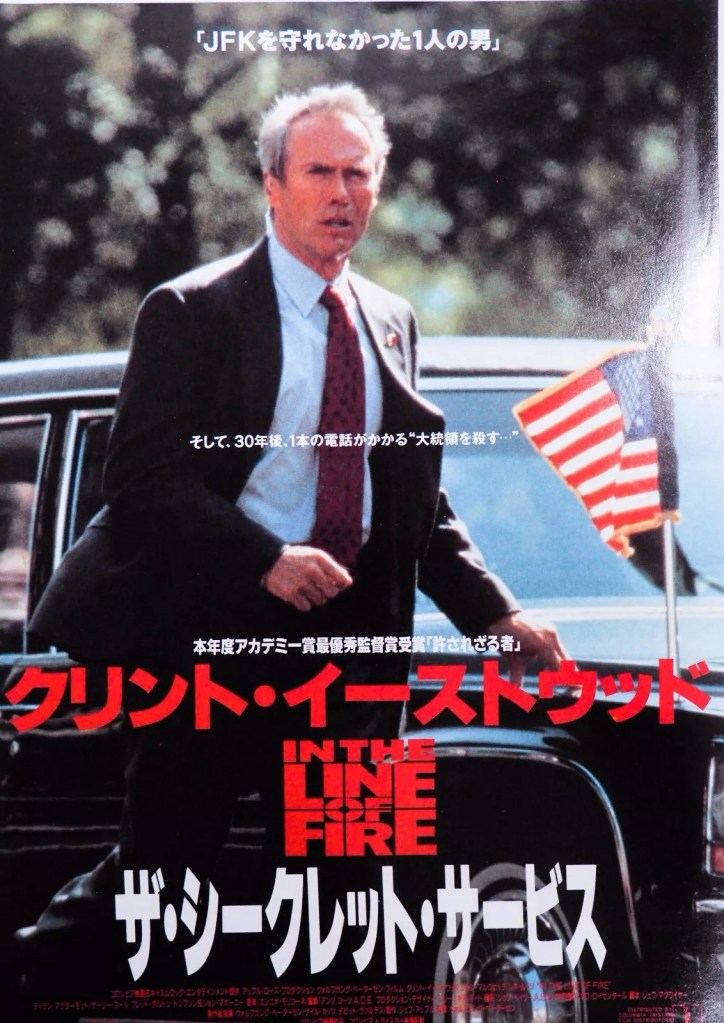
He has spicy exchanges with Lilly, taking sexism to what was an acceptable limit back in the day (now of course he’d be in the same dinosaur category as James Bond), and in due course, in quite oblique narrative fashion, wooing Lilly. The sex scene is treated as comedy, the first items to hit the carpet in the undressing malarkey are not panties and bra, but handcuffs and pistols. Hot romance is put on the back burner, which is just as well because Horrigan has his hands full not just with Leary but with a variety of superiors what with his inability to bite his tongue.
Meanwhile, we follow Leary as he coldly disposes of two men and two women in separate instances who have inadvertently caught him out. And he’s not going to make it easy for Horrigan. This isn’t the one-plan-man of previous assassin pictures, he doesn’t just have a back-up, instead employing all sorts of strategies to mislead and misdirect. And he’s not your usual nutter either. Clearly, he’s a worthy opponent, matching the enterprise, initiative and imagination of the anonymous killer of Day of the Jackal (1973). And in those days, what with developments in technology, an assassin can assemble his own gun rather than handing the task, as in Day of the Jackal, to a denoted weapons expert.
The stunning key sequence, astonishing in character terms, is when Horrigan passes up the option of shooting the assassin stone dead in favor of saving his own life – resulting in the irony (as Leary points out) of good guy being saved by bad guy. And in avoiding such action Horrigan condemns his partner to death. There’s as good a scene where I could swear Horrigan’s chin wobbles as he wonders if he could have prevented Kennedy’s death.
Sure, this is a variation on the serial killer trope of someone tormenting a potential victim, but the connections Leary attempts to build with Horrigan aren’t as far short as the cop would like to believe.
Director Wolfgang Peterson (Outbreak) is due considerable praise especially for his pacing, fitting in a complex narrative in a shade over two hours, building tension in myriad ways, but not being afraid to take a laid-back approach with the camera, long, lingering shots establishing mood and occasionally character. The sequence where Horrigan waits, somewhat wistfully, for Lilly to look back from a considerable distance after they have enjoyed an ice-cream together on a national monument is in many ways one of the finest nods to incipient romance ever put on celluloid.
Terrific acting all round. Written by Jeff Maguire (Victory, 1981).
Superb stuff. Top notch.
 The Magnificent 60s