It’s my own fault, I suppose. There’s probably no need to try and cram in as many movies as possible on my weekly visit to the cinema. I generally aim to catch two but, more usually, if the timings of showings align, I can see three. But, honestly, I’m fed up of posting two-star reviews of movies that have come garlanded with critical praise and some prize from a film festival.
So, let me get the duds out of the way first. I hadn’t expected a great deal from Good Fortune (2025) and that was just as well because it was awful, nary a laff, and some pious virtue-signaling sermon about the wealthy vs the workers.
I had expected much more from Springsteen: Deliver Me from Nowhere (2025). I’m a big fan of movies (and books) about creative endeavor, be they concerning painters, sculptors, writers and rock stars. But I have to confess I’ve never seen Brucie in concert and I’ve probably owned only ever owned a couple of albums, and one of those would probably be a greatest hits compendium.
And I’ve never seen The Bear so Jeremy Allen White is new to me. But this was just so boring, an angst-ageddon, consisting mostly of the character looking mournful. It was more like an extended Classic Albums documentary and although it followed the same trajectory as the Bob Dylan picture of a singer changing his career path, it was still just dull. Yes, it’s a shout-out for people with mental health problems, but, hey, that’s still a documentary and forgive me for going against the grain here but White hasn’t an ounce of the charisma of Timothy Chamalet, who, when the camera bores into his soulful face, you want to know what he’s thinking. So another virtue-signaling effort that I doubt will connect with anyone but the Brucies.
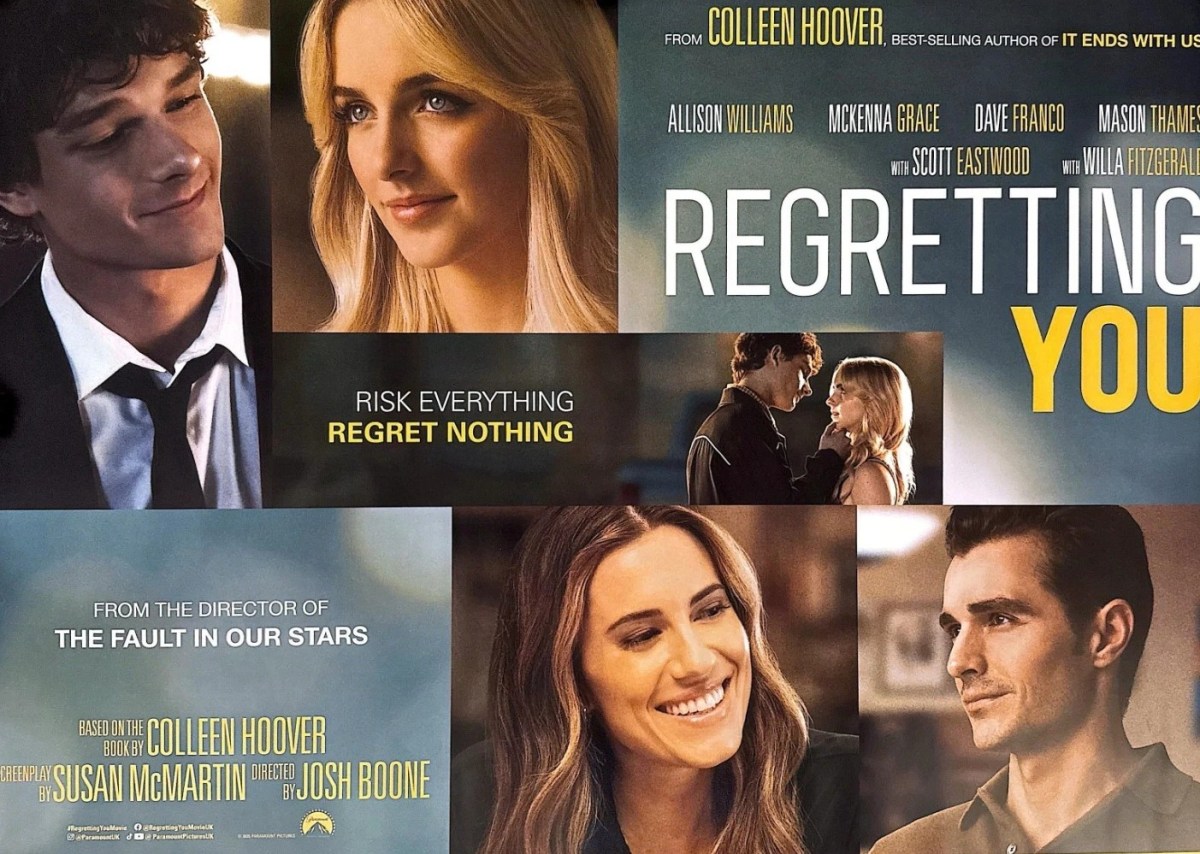
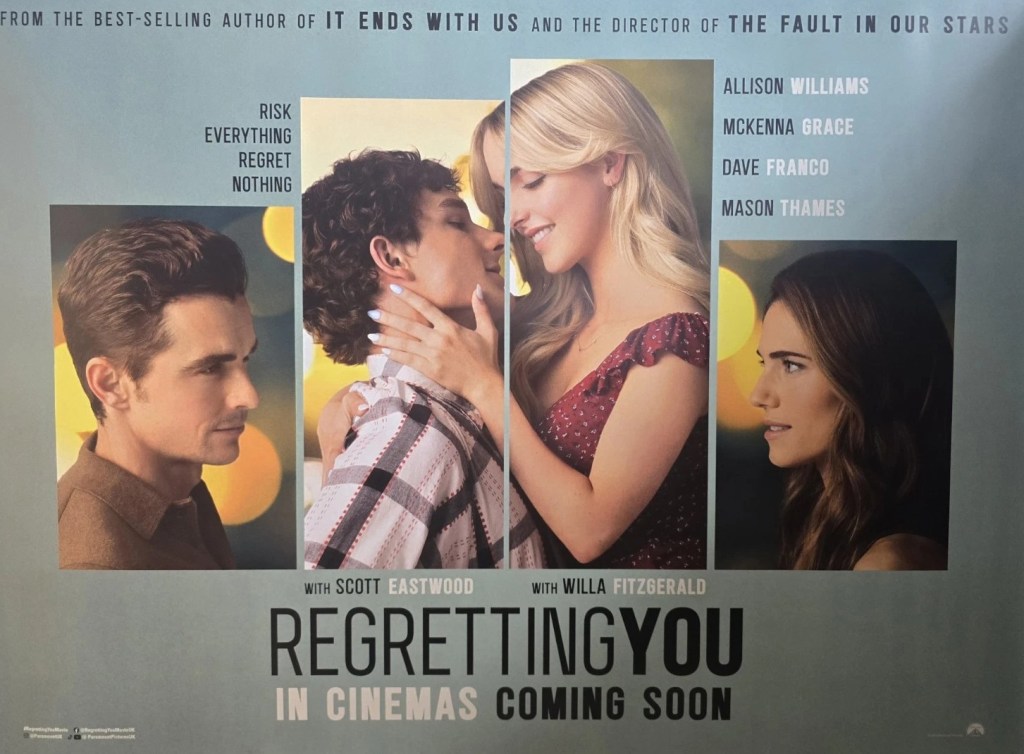
So that brings me to Regretting You, the picture of which I had least expectations on my weekly Monday outing to the multiplex. And it was, as it happened, last on the agenda, so I came at it not at all anticipating that it would save the day.
And it’s not, thank goodness, what used to be called a “woman’s picture” because the two male leads are giving plenty rope and, in some regard, actually have the stronger emotional scenes. But all the characters come across as real and there’s none of the jazzing up of narrative by someone opening a flower shop or a café. And there’s a very reflective attitude to sex, which may be woke-inspired, but certainly leans more into character than I would have expected.
The story is quite simple. Opposites attract and find that actually they’re not as attracted as all that in the lifetime sense and then swing back to people with the same attitudes to life and chaos ensues.
Outgoing uninhibited muscular jock Chris (Scott Eastwood) marries quiet reflective Morgan (Allison Williams) rather than the equally fun-loving Jenny (Willa Fitgerald). Way down the marital line after Jenny has had a baby with their college pal Jonah (Dave Franco), Chris and Jenny have an affair that only comes to light when they die together in a car crash.
Dependable Morgan doesn’t want to detract from her 17-year-old daughter Clara’s (Mackenna Grace) adoration of her beloved father so keeps this aspect from her. In her grief, though possibly just as a normal rebellious teen, Clara starts acting up, cue endless rows, and getting too chummy with Miller (Mason Thames) who comes from the wrong side of the tracks and complicated by the fact that he’s got a girlfriend to dump first before he can get it on with Clara.
Surprisingly, this is a lot more about grief than romance. The Clara-Miller entanglement is very chaste and even more slowburn is widow and widower discovering they have feelings for each other.
But romance definitely takes second place to grief. Clara can’t face attending her father’s funeral and skips it, much to her mother’s fury. Morgan can’t face sleeping in the same bed as her deceitful husband and spends nights on the sofa sipping wine. Jonah begins to believe that his son is the result of the affair and pushes the child away, unable to bear the baby’s smile that he believes is the spitting image of Chris. And everyone has to work out their grief.
The Clara-Miller romance is idiosyncratically, and therefore believably, done. Even more believable is his reaction when he realizes Clara wants sex in revenge against her mother.
The acting is a bit too television, overmuch dependance on gesticulation and face contortion, but otherwise solid enough.
Allison Williams (Megan, 2002) holds it all together as the dependable mother who only breaks out to refurbish the house. Dave Franco (Love Lies Bleeding, 2024) reveals a gentler, aspect to his work. Mackenna Grace (Ghostbusters: Frozen Empire, 2024) has the showiest part, but doesn’t revel in it. Mason Thames (How to Train Your Dragon, 2025) is also good value.
In fact, what comes over best is restraint, the widow and young lover holding onto the realities of the characters they play, rather than over-acting.
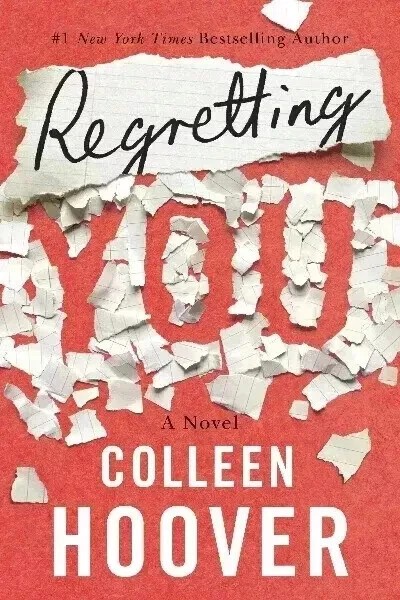
Directed with some skill by Josh Boone (The Fault in Our Stars, 2014). Written by Susan McMartin (After, 2019) from the Colleen Hoover bestseller.
While this doesn’t pack the dramatic intensity of the previous Hoover adaptation It Ends With Us (2024), it deals with the subject of grief in a sensitive manner.
I might be marking this up a tad in reaction to the pair of duds I saw first, but I think not too much. It delivers a solid enjoyable experience, and isn’t preaching, which, in itself, is rare these days.



 The Magnificent 60s