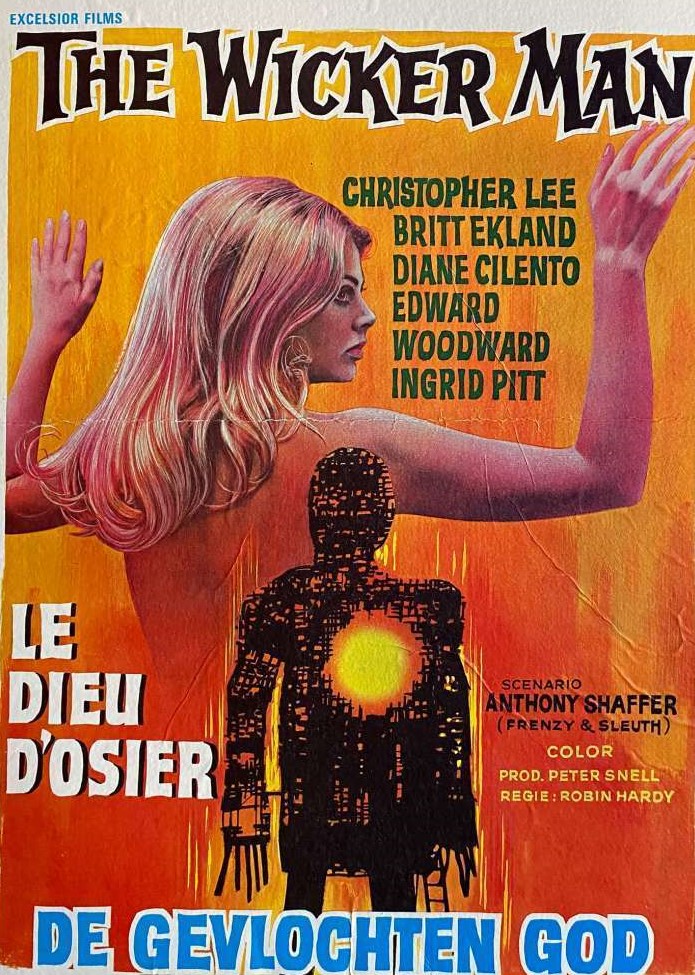
Cult films don’t come any bigger than The Wicker Man (1973). Regarded as a box office flop in Britain at the time of initial release, it struggled to gain any traction in the U.S., only managing a truncated release there towards the end of the decade. However, closer examination of the box office reveals a different story and suggests both that distributor British Lion was rather harsh in declaring it a box office disaster and that more careful handling on the delayed U.S. release could have produced better results.
In the U.K., it was denied a stand-alone release and went out as the second feature to the critically acclaimed and commercially successful Don’t Look Now (1973) directed with some style by Nicolas Roeg and starring Donald Sutherland and Julie Christie, and which has, assuredly, stood the test of time. Several weeks after Don’t Look Now launched as a solo feature on October 1973 at the prestigious Odeon Leicester Square in London’s West End it shifted in December to the less prestigious Metropole where it was coupled with The Wicker Man.
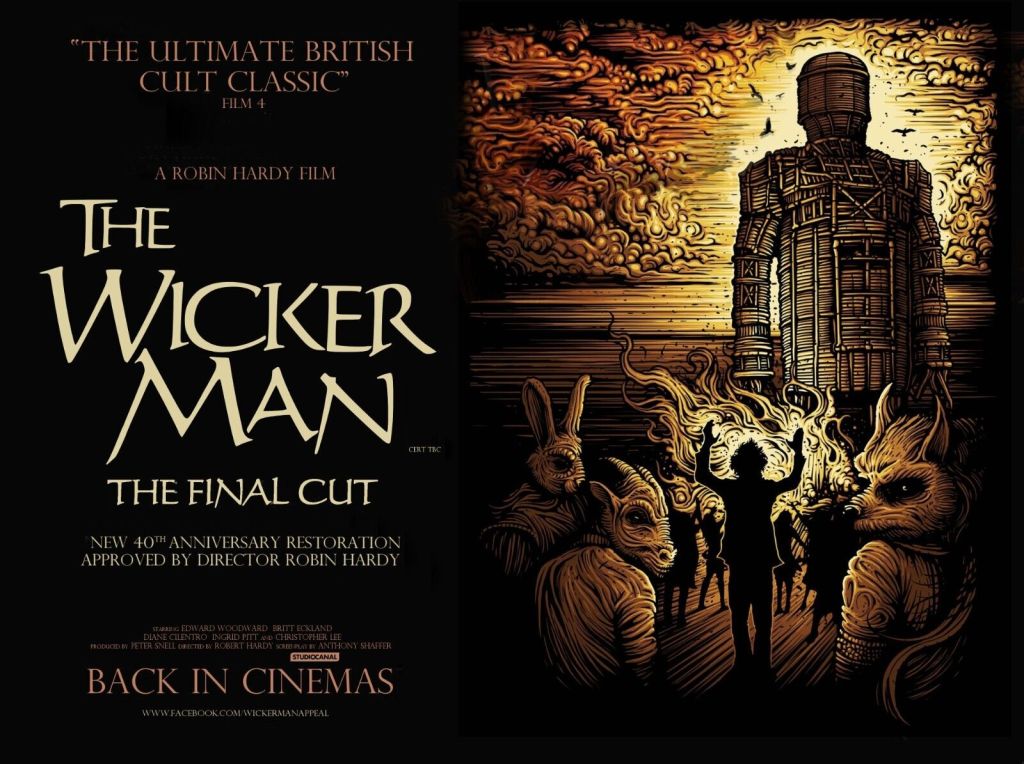
It’s my considered opinion that the reason the double bill managed such a long run – around five months – in the West End, moving between various cinemas, was, in substantial part, due to The Wicker Man. It had been released with virtually no fanfare and relied on word-of-mouth to attract an audience and I think it was the beginnings of that cult recognition that resulted in the double bill playing as long.
Given Don’t Look Now was a verified box office hit as a solo feature, it made little sense to couple it with an unfavored second feature since at this point the double bill was losing ground at cinemas. A single bill meant more performances, especially on the vital weekends, and therefore the potential for greater box office.
One of the elements that backed the notion that The Wicker Man was more important to the double bill than the distributors cared to acknowledge was that the fall-off week-by-week was minimal. The double bill played on in London’s West End long after it had completed a circuit run on the Odeon chain, suggesting that its attraction was perhaps due to the unexpected pulling power of The Wicker Man.
In its accounts, British Lion wrote off a $470,000 loss against The Wicker Man. But that seems like an accounting trick. The distributor had a choice in how it allocated the box office. A supporting feature could expect to receive little more than a flat fee as its share of the box office if it was deemed a B-feature. A genuine double bill – and bear in mind that horror maestro Christopher Lee was a box office attraction in Britain – would split the proceeds. That British Lion opted to treat it as a second feature, allowing it to maneuver the box office against the picture. Otherwise, given its low budget, it would certainly have turned a profit. The loss seems even more baffling when you take into account that it was sold to 17 countries.
In any case, since nobody else has tracked The Wicker Man’s actual performance in the UK and the U.S., I thought it might be interesting to do so.
UK (LONDON WEST END) BOX OFFICE 1973-1974
Don’t Look Now/The Wicker Man
Metropole (1,394 seats)
December 19 1973: – $5,300 (Variety deemed this “anaemic”)
December 26 1973: – $4,700
January 2 1974: – $4,900
January 9 1974: – $13,200
January 16 1974: – $9,700 (“very good”)
January 23 1974: – $8,700 (“fine”)
January 30 1974: – $7,700
Odeon Kensington (1,883 seats)
January 16 1974: – $16,800 (“boff”)
January 23 1974: – $13,700 (“robust”)
January 30 1974: – $10,900 (“fancy”)
February 6 1974: – $10,800
February 13 1974: – $9,300 (“stylish”)
February 20 1974: – $6,100
Odeon Haymarket (600 seats)
February 20 1974: – $6,000
February 27 1974: – $8,300
March 6 1974: – $7,700
March 13 1974: – $6,800
March 20 1974: – $7,400
March 27 1974: – $7,100
April 3 1974: – $6,900
April 10, 1974: – $5,700
Cincenta 3 (150 seats)
April 24 1974: – $2,600 (“nice”)
Cinecenta 2 (150 seats)
May 1 1974: – $2,700
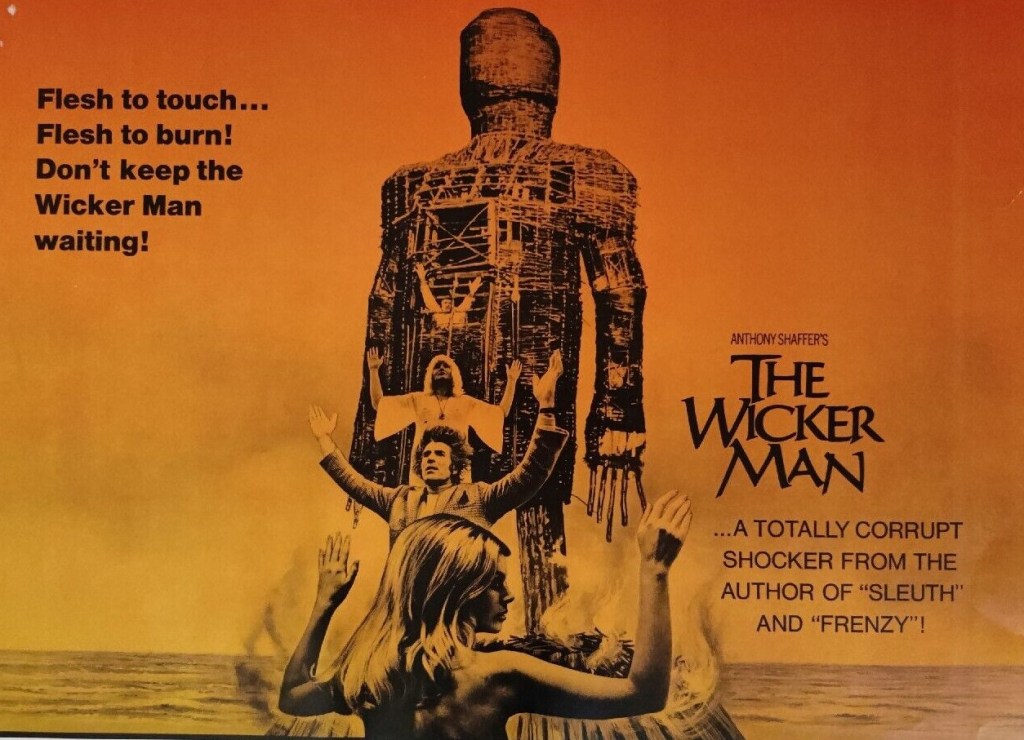
It was pretty much unheard of in London’s West for a programme to move around five cinemas, and, with the exception of Cinecenta, running for so long at each venue with a low drop-off week-by-week (steeper falls would have seen runs more speedily terminated). And when it came to the U.S. release, half a decade later, as you can see, much to everyone’s surprise, The Wicker Man on its own delivered both some notable opening figures and lengthy runs.
US BOX OFFICE 1977-1981
The Wicker Man only
Although being rated “R” by the U.S. censor in April 1974 and being reviewed by Variety in May 15 1974, The Wicker Man failed to gain any release in the U.S. even though one-time partner Don’t Look Now was widely distributed. The Wicker Man received a promotional fillip after winning top prize at the Fantastic Festival in 1974 but it wasn’t enough to boost its Stateside distribution prospects. Both National General and New World had considered taking it on but ultimately passed. It ended up at Warner Brothers which stuck it in the vault after a disastrous test at drive-ins in Atlanta and San Diego.
Box Office magazine gave it a favourable review in 1978, calling it a “lost horror classic” and noting that director Robin Hardy had made “an impressive debut.” The version its reviewer saw was cut from the original 102 minutes to 87 minutes. But the version seen by The Hollywood Reporter in 1979 was the restored version and its reviewer reckoned that the “dark intagibles” of its mangled release made it ideal fodder for a “cult audience.” By now PR had kicked in and it received the accolade of a front-page story in The Hollywood Reporter, calling it “reborn” and making play of the problems encountered along the way.
But apart from the Minneapolis misadventure in 1977, it wasn’t until 1979 that it made any release headway. Most of the bookings were in arthouse cinemas. But what is noticeable is length of runs and comparatively small week-by-week drop-offs.
Minneapolis: World (461 seats)
October 5 1977: – $2,000 (“poor”)
San Francisco: Lumiere (300 seats)
January 24, 1979: – $19,000 “boffo”
January 31, 1979: – $15,500
February 7 1979: – $13,000
February 14 1979: – $11,000
February 21 1979: – $10,600
February 28 1979: – $7,000
March 7 1979: – $5,700
March 14 1979: – Not known
March 21 1979: – $5,900
Los Angeles: Los Feliz Westland 1 (763 seats)
March 21 1979: – $19,500
March 28 1979: – $13,500
April 4 1979: – $11,000 (“not bad”)
April 11 1979: – $9,500 (“tidy”)
April 18 1979: – $4,000
April 25 1979: – $4,000
May 2 1979: – $3,100
Los Angeles: showcase release in four other theaters
March 21 1979: – $26,000
March 28 1979: – $18,000 (“pretty”)
Seattle: Crest (700 seats)
April 4 1979: – $7,100
April 11 1979: – $6,700
April 18 1979: – $6,300
April 25 1979: – $4,700
May 2 1979: – $3,300
New York: Paramount (533 seats)
April 2 1980: – $21,000
April 9 1980: – $9,000 (transit strike ruined second and subsequent weeks)
April 16 1980: – $4,400
April 23 1980: – $4,000
Boston: Orson Welles II ( 200 seats)
April 23 1980: – $15,000 (“house record”)
April 30 1980: – $14,000 (“lusty”)
May 7 1980: – $8,800
May 14 1980: – $8,700
May 21 1980: – $7,600
May 28 1980: – $6,200
June 4 1980: – $4,200
June 11 1980: – $5,200
June 18 1980: – $3,200
June 25 1980: – $3,300
Washington: Cerberus II (150 seats)
December 3 1980: – $7,500
December 10 1980: – $5,500
Kansas City: Fine Arts (560 seats)
January 21 1981:– $3,200
Kansas City: Watts Mill (250 seats)
February 11 198l: – $2,500
Miami: showcase release in four cinemas
April 1 1981: – $3,700 (“remote”)
Cleveland:
April 1981: shown as part of the Cleveland International Film Festival
Pittsburgh: Arcade (775 seats)
May 20 1981: – $5,000 (“stout”)
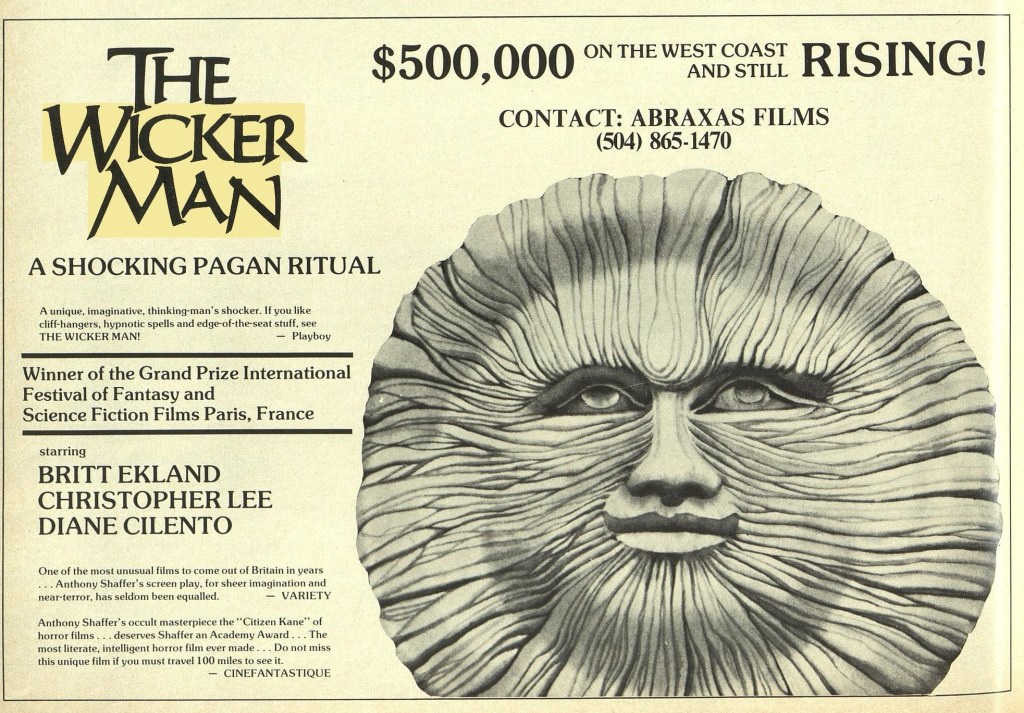
According to an advert in Box Office magazine placed by distributor Abraxas in October 1979, The Wicker Man had already grossed $500,000 on the U.S. west coast. counting it the 1980 and 1981 releases, more than likley it passed the $1 million gross. Whether any of these receipts found their way to British Lion is questionable, so the U.S. box office would have done little to remove the idea it was a flop, but, in fact, counting all the results together, it must have done enough overall to turn a healthy profit.
I should point out that the dates above refer simply to the dates when the box office was reported in “Variety” magazine and not to the actual date when the film was shown. Typically, “Variety” would report box office in the week after a film was shown but this could still be up to 14-17 days after. The actual week 1 / week 2 / week 3 stuff is completley accurate even if the dates might appear misleading.
NOTE/PLEA/WHATEVER: Collecting these figures took a huge amount of work so if you want to pass on this information to others, please acknowledge the source.
SOURCES: Variety, dates as shown; “Coming Releases,” Box Office, September 30, 1974, pA6; Review, Box Office, January 9, 1978, pA9; “Wicker Man Reborn Thanks to Persistent Young Distribs,” The Hollywood Reporter, February 15, 1979, p3; Review, The Hollywood Reporter, February 20, 1979, p3; Advert, Box Office, October 1979, 1979, p16; “Wicker Man Gets Proper Release After 6 Years,” The Hollywood Reporter, April 3, 1980, p1; “Strike Dents N.Y. Box Office,” Box Office, April 14, 1980, p7.


 The Magnificent 60s