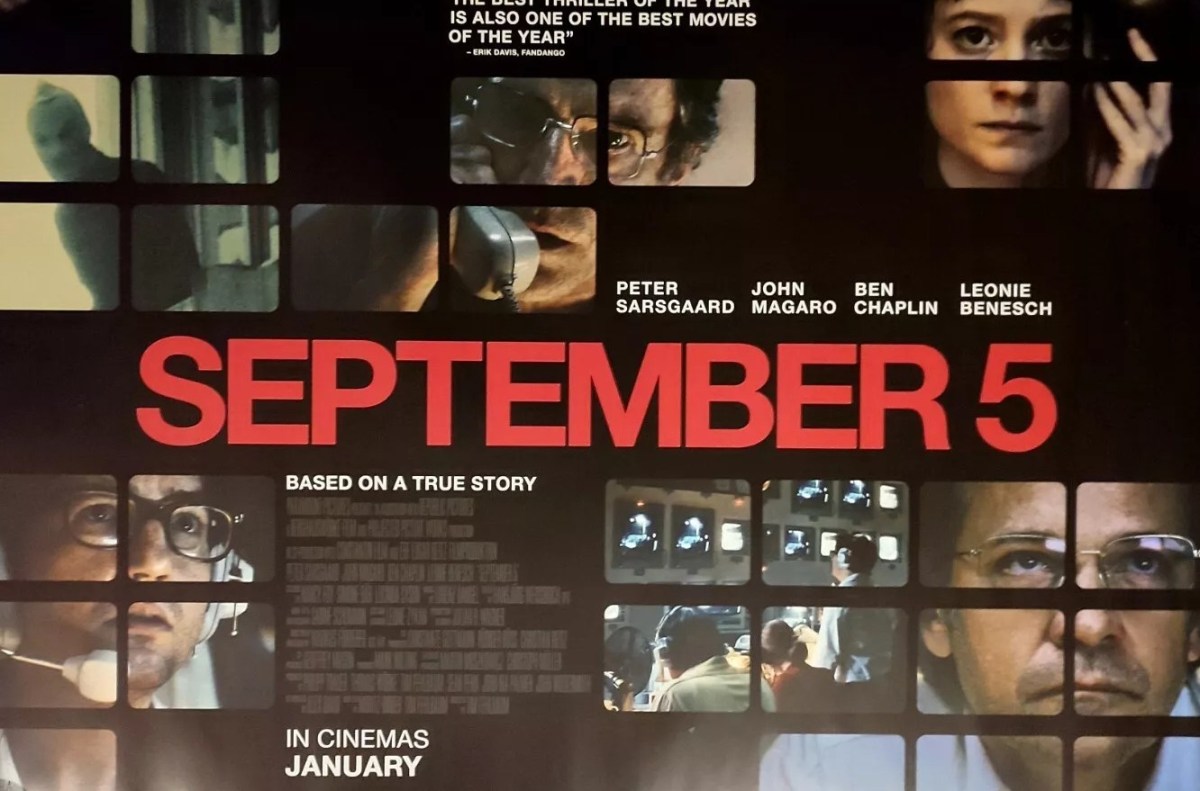
Watched this with growing revulsion. The final, triumphal, image says it all. The coverage of the terrorist attack on Israeli athletes at the Munich Olympic games in 1972 attracted a world record global audience of 900 million. Hooray! At least some good came out of it. How could anyone find celebration in such an atrocity? And ask a cinema audience to share in the tribulations of a television crew seeking the gold medal of the media games – the scoop.
No notion that in broadcasting the event – if it can be so termed – live that it opened the door to any other terrorist organization seeking a bigger global audience for its nefarious activities. You could blame the audience for watching. The networks after all are only pandering to public demand. They are not censors.
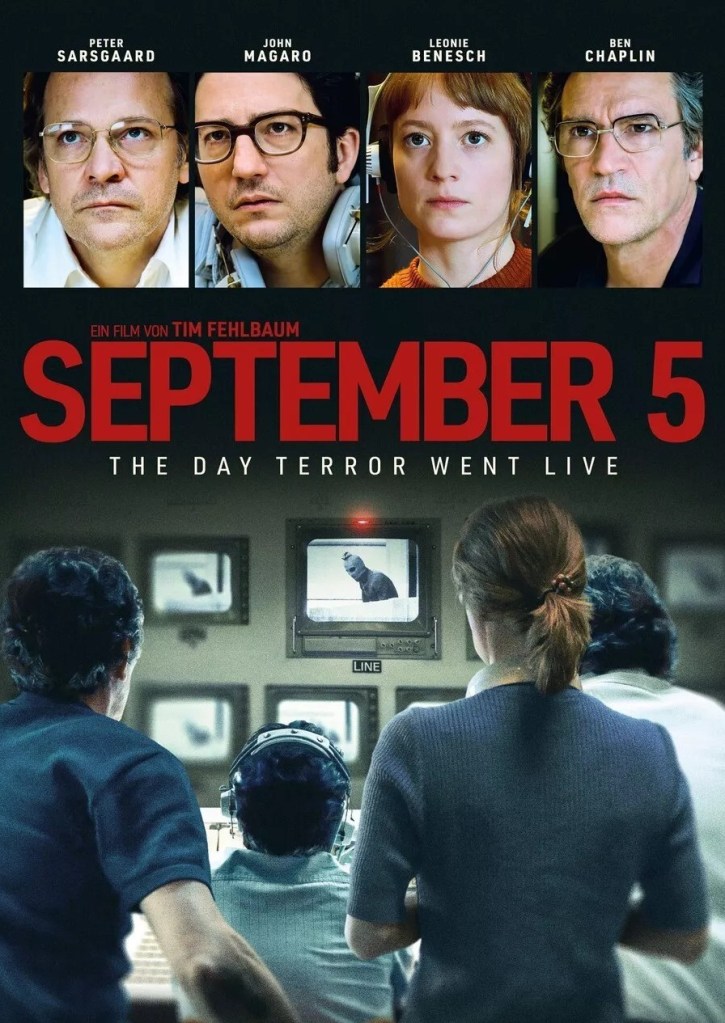
You’d hardly believe it but some of the characters here were all for broadcasting a live execution should the terrorists be so kind as to shoot someone within reach of the cameras. And, yeah, the terrorists knew there were cameras, because they could see the whole thing unfolding on the televisions in the rooms where they held their hostages. Which was very helpful, because it alerted them to the armed German police crawling over the rooftops.
In theory this falls into the subgenre of media backroom shenanigans, think Broadcast News (1987), or acclaimed tales of journalistic expose, king of that particular castle still being All the President’s Men (1976) though Spotlight (2015) might run it close, the ones where the reporters take a heroic stab at the establishment.
Here, though, the media is the establishment. This focuses on ABC, one of the three big U.S. networks, and it’s the tale more than anything of glory hunters, the sports division of the network stumbling upon the unfolding events and resisting every demand to hand it over to the more politically-aware and humanity-sensitive news department, boss Roone Arledge (Peter Sarsgaard) determined to win his place in the sun.
He’s the kind of manager who’s so arrogant that it’s not occurred to him to have around him anyone who speaks German – surely the Germans will oblige and all speak English – only to find that he relies to the extent of putting her life in danger on freelance German translator Marianne (Leonie Benesch). Given the crassness of the production, you won’t be surprised to learn that members of the team blame her for what her parents did or didn’t do during the Second World War.
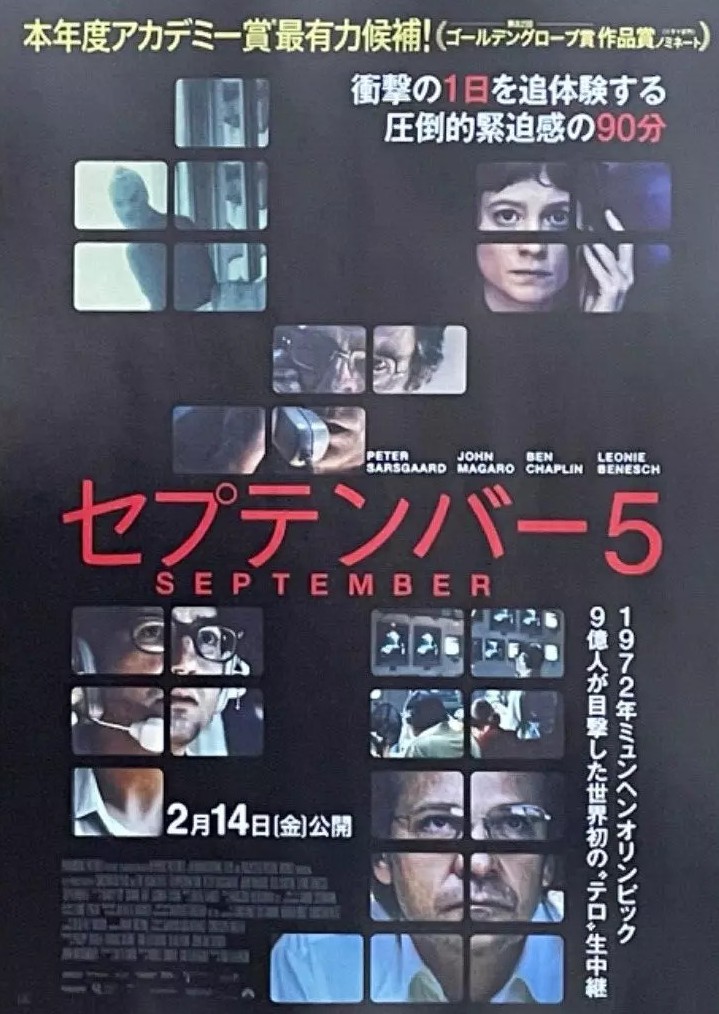
What Roone is especially good at is departmental politics, so he finagles CBS out of their satellite slot so he can win coveted airing time and even when he has to accede to demands that he share the footage with other networks comes up with the proprietorial scam to stick an ABC decal on the corner of the screen, a device that is still used today as you will be aware.
In any other circumstance I’m sure I would delight in having revealed to me all the tricks of the trade, how the reporters hack into police radio, how they cut and edit footage to maximum effect, and, under extreme pressure, still think lightning fast on their feet, one cameraman cleverly disguised as an athlete to evade the security surrounding the hostage situation and sneak secret footage back..
The Germans come off as incompetent, initial security effort called into question, their handling of the shootout deplored, scant regard given to the fact that, as one of the conditions of peace, German soldiers are forbidden to appear on German territory. Steven Spielberg managed to cover the situation more even-handedly in Munich (2005) in which, thankfully, the media were non-combatants.
“We were waiting for something to happen so we could take a picture of it,” laments Marianne at the end, perhaps not realizing that this is the same instinct that currently bedevils social media, the stacking up of views for being there. All the way through the journalists are in self-congratulatory mode, convinced they are making history, not stopping to think it might be of the worst possible kind.
The only reason for making this movie from the standpoint of the reporters is to glorify them. The athletes held hostage and eventually killed are mere pawns in the larger media game.
Crass, tone-deaf, cynical, clueless.
 The Magnificent 60s