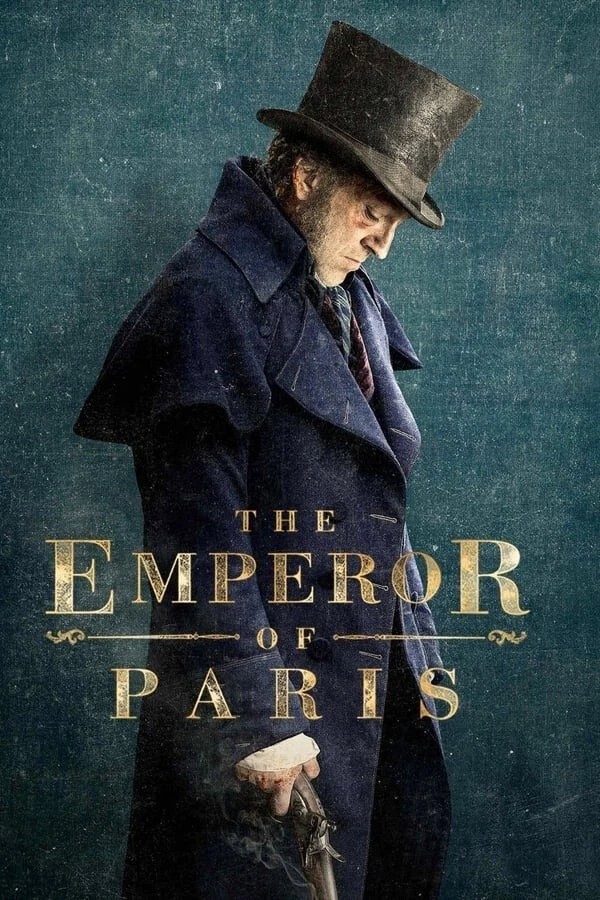
France has been particularly successful in attracting a global movie audience for its literary and real-life legends. There have been over 20 big screen versions of The Three Musketeers, six of The Hunchback of Notre Dame, over a dozen of Les Miserables, and Napoleon Bonaparte has been the object of stars like Marlon Brando and directors such as Ridley Scott. But one legendary French figure has failed to connect. Underworld thief-taker Vidocq has attracted little interest outside his homeland. Even Douglas Sirk’s Hollywood version A Scandal in Paris (1948) starring George Sanders failed to crack the international market.
The Emperor of Paris is the latest iteration. I came across it while scrolling through Amazon Prime’s small catalog and since it starred Vincent Cassel (Mesrine, 2008), inheritor of the Jean-Paul Belmondo mantle, I gave it a go.
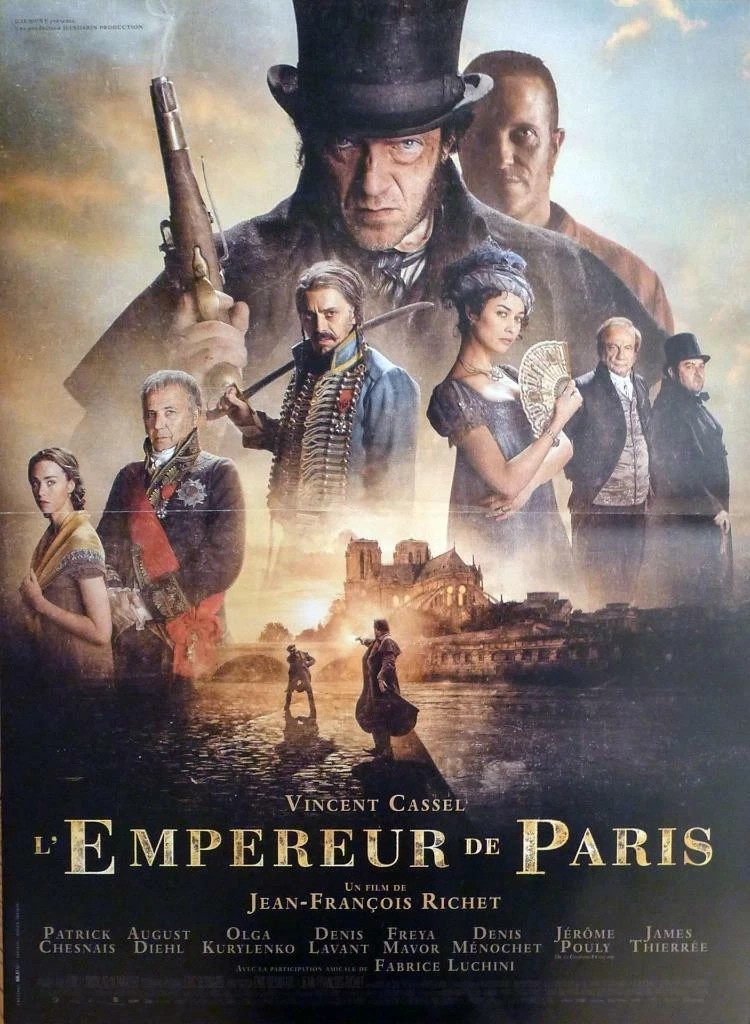
Set in Napoleonic times, Vidocq’s fame as a criminal relied on his ability to escape from the toughest prisons. After his last escape in 1805, when everyone believed him dead, he turns legit, building up a business as a fabric retailer. But later he turns into a highly successful thief-taker, hired by the police as an unpaid detective to clean up the streets of Paris on the basis that he will be granted amnesty. The officials dangle him on a string of promise for a heck of a long time.
While the legend of Vidocq rests on him becoming known as the father of modern criminology, the founder of Surete Nationale and setting up the first detective agency, this tale focuses more on action than detection – and presumably the boring bureaucracy that entails. Much of the information about criminals comes from Vidocq’s own experience, those of his accomplices and from informants, willing or otherwise.
There’s nothing sophisticated about the French cops, little more than night watchmen or official thugs who prefer interrogation to detection, and this is filthy twisty-street Paris before Haussman got his hands on it and recreated it with boulevards and broad expanse.
Vidocq knows more than the police where the bad guys hide out though some of them, like the celebrated American mobsters of the Prohibition era, are more likely to vaunt their notoriety, as with sadistic gang leader Maillard (Denis Lavant). And as ever when a hero ventures too close, the bad guys are apt to take extreme measures to gain revenge.
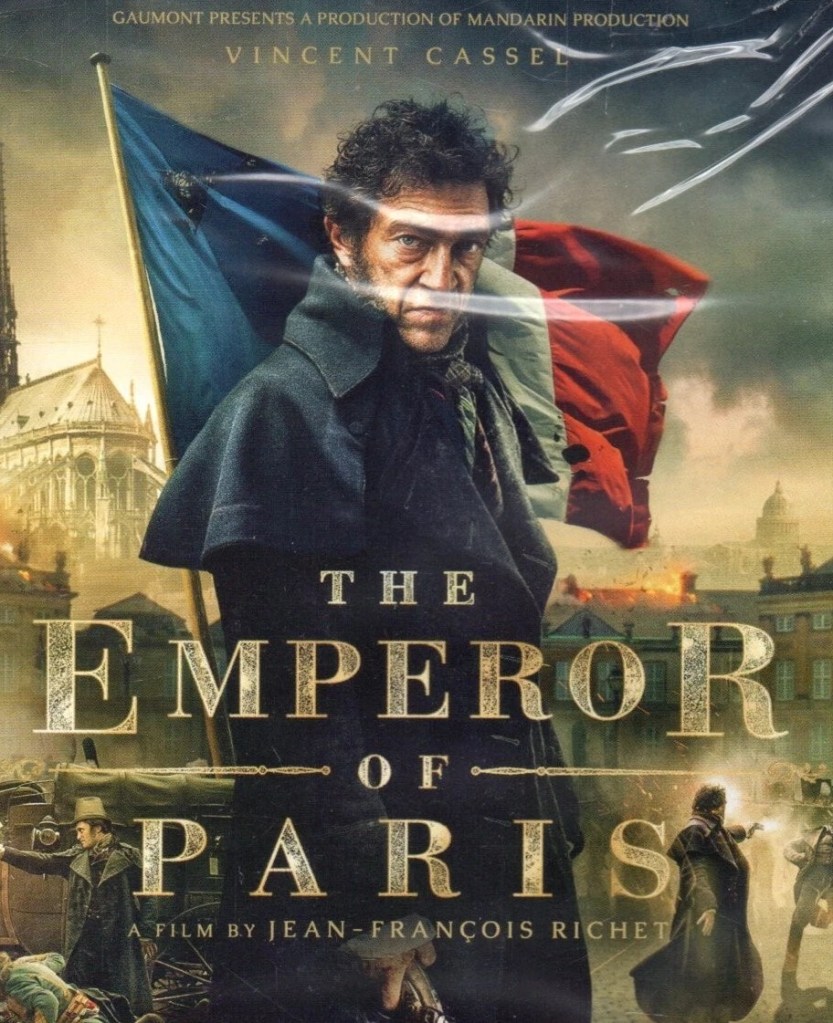
The harsh tale is leavened by the introduction of petty thief and prostitute Annette (Freya Mayor) who never manages to get Vidocq, who trusts nobody, to commit to a relationship, and social climber and arch seducer Baroness Roxane (Olga Kurylenko).
Vidocq himself is something of an enigma, soft spoken, dour, a loner, penned in by all his suspicions and led a merry dance, it has to be said, by high-ranking officials determined to deny him just reward. Betrayal, unexpected alliances and cold-blooded killings keep the narrative on a constant simmer. In one of the standard tropes, Vidocq assembles his own team, of criminals. The sets are excellent and the action pretty much non-stop
The role is tailor-made for Vincent Cassel, the best of the bad boy good boys, who mostly has to look surly and dispense his own version of justice. Denis Lavant (Holy Motors, 2012) is a memorable villain and August Diehl (Bonhoeffer: Pastor, Spy, Assassin, 2024) makes meaty work of best friend turned enemy. Freya Mavor (Marie Antoinette TV series, 2025) is both crafty and romantic while Olga Kurylenko (Thunderbolts, 2025) is mainly the former.
This has the feel of a two-parter, with the more interesting part of the tale in criminology terms still to come, but so far there’s been no sign of a sequel.
Directed by Jean-Francois Richet (Mesrine) who collaborated on the screenplay with Eric Besnard (Wrath of Man, 2021).
While nowhere near as compelling as Mesrine, it’s still a fascinating tale and Cassel is always good to watch.
Catch it on Amazon Prime.
 The Magnificent 60s