Deathstalker (1983) *** – Seen at the Cinema

Back in ye olde times before streaming killed off the ancillary market, you could make a decent buck from Z-list pictures that made no attempt to target the entire world but were quite content to feed the maw of a limited genre. Sword-n-sorcery never required anyone who could actually act, just topless beefcake and cheesecake, skin glistening as much as possible, special effects limited to an occasional explosion, monsters little more than rejects from the Star Wars cantina.

Chuck them out to an exhibition industry not so much starved of product as waiting an age to get their hands on a big-budget number, which like roadshow a couple of decades before remained in the biggest cinemas for months, and you would turn an easy profit. This one set the makers back a mere half a million bucks and picked up $1.2 million (in rentals) on U.S. release alone and, more importantly, another $2 million from video rental and the same again likely from sell-through and the same again when DVD appeared and again when cable started to run out of A-list and B-list features and scrabbled about for anything that could fill a slot. And that’s before you started talking about the overseas market, this kind of adventure, with heads, arms, eyes and fingers lopped off (and occasionally fed to pet monsters)  more acceptable worldwide than comedies or musicals

Yep, you’re right, this is exactly the same advert with the title color changed.

Heck, you didn’t even need much of a plot – any Lord of the Rings rip-off would do, a series of inanimate objects that combined to invest the owner with immeasurable power – and you didn’t even require to hide nudity under the guise of “sexposition” a la Game of Thrones, any passing gal liable to have her clothes ripped off or belong to some half-naked harem or be happy to step up for a bout of mud-wrrestling.

Must be World Deathstalker Day because a pair from this series turned up at my local multiplex courtesy of the people at DMP, who otherwise specialize in sci-fi and horror all-nighters or mini-festivals. Or it could be that Lana Clarkson attracted a cult following after being murdered by Phil Spector. Deathstalker, filmed in Argentina since you ask,  originally came out when my cinemagoing habit took a back seat to parenting so would have passed me by and I don’t remember getting a VHS/DVD fix, so I thought I’d toddle along and see why this deserved the reissue treatment along with this week’s other revival fave, Interstellar, which could at least claim tenth anniversary status.

Plot – since you insist – has our eponymous hero (Rick Hill) – no, hero’s too strong a word because he’s reluctant to put himself out for anybody unless it involves womanizing and financial reward – setting out, having been handed a powerful sword by a passing witch, to relieve the sorcerer Munkar (Bernard Erhard) of his power. Along the way he encounters a similar heroic hunk Oghris (Richard Brooker) and female warrior Kaira (Lana Clarkson) and gets sidetracked into attempting the rescue of kidnapped Princess Codile (Barbi Benton) and then taking part in a gladiatorial tournament and of course can’t help but get distracted by the half-naked women.

Munkar is a Machiavellian villain. He uses the tournament to get rid of any challengers to his throne, since they’ll kill each other in combat and he can murder the winner. Only Deathstalker is an obstacle, since his sword renders him invulnerable, and Oghris is easily tempted to turn traitor to solve that little problem. Contemporary audiences might run shy of this type of picture because, essentially, it’s Misogyny Central and there are three attempted rapes in the first five minutes and there’s hardly a minute goes by without some female losing their clothes.

Still, presumably, it does what it says on the tin, plenty action, ogres, imps, hog-faced warriors and naked women in abundance, and the usual narrative malarkey that you won’t need a degree to keep up with (unlike Interstellar, for example). And if you’re a fan of the celestial choir this one’s for you as any time Deathstalker raises the sword to the sky that comes on to indicate he’s not getting electrocuted by the sudden bolts of light saber stuff. You can come to scoff or enjoy for the genre romp it is, laugh at intentional and unintentional jokes, and sit back in wonder at the ten minutes of animated Intermission adverts that arrive at the rate of one a minute that were served up back in the day to entice Drive-In patrons to the delights of the Refreshment Counter.

Director John Watson (Under the Gun, 1987) stuck to the admittedly limited knitting, throwing in close-ups whenever the action stalled, allowing his star to demonstrate his array of knitted eyebrows and drawn lips.  Howard B. Cohen (Barbarian Queen, 1985) dreamt this one up.

Can’t say I complained too much once I knew what I was letting myself in for and a joy to see, in some eyes, a less-than-worthy vehicle being restored to the big screen.
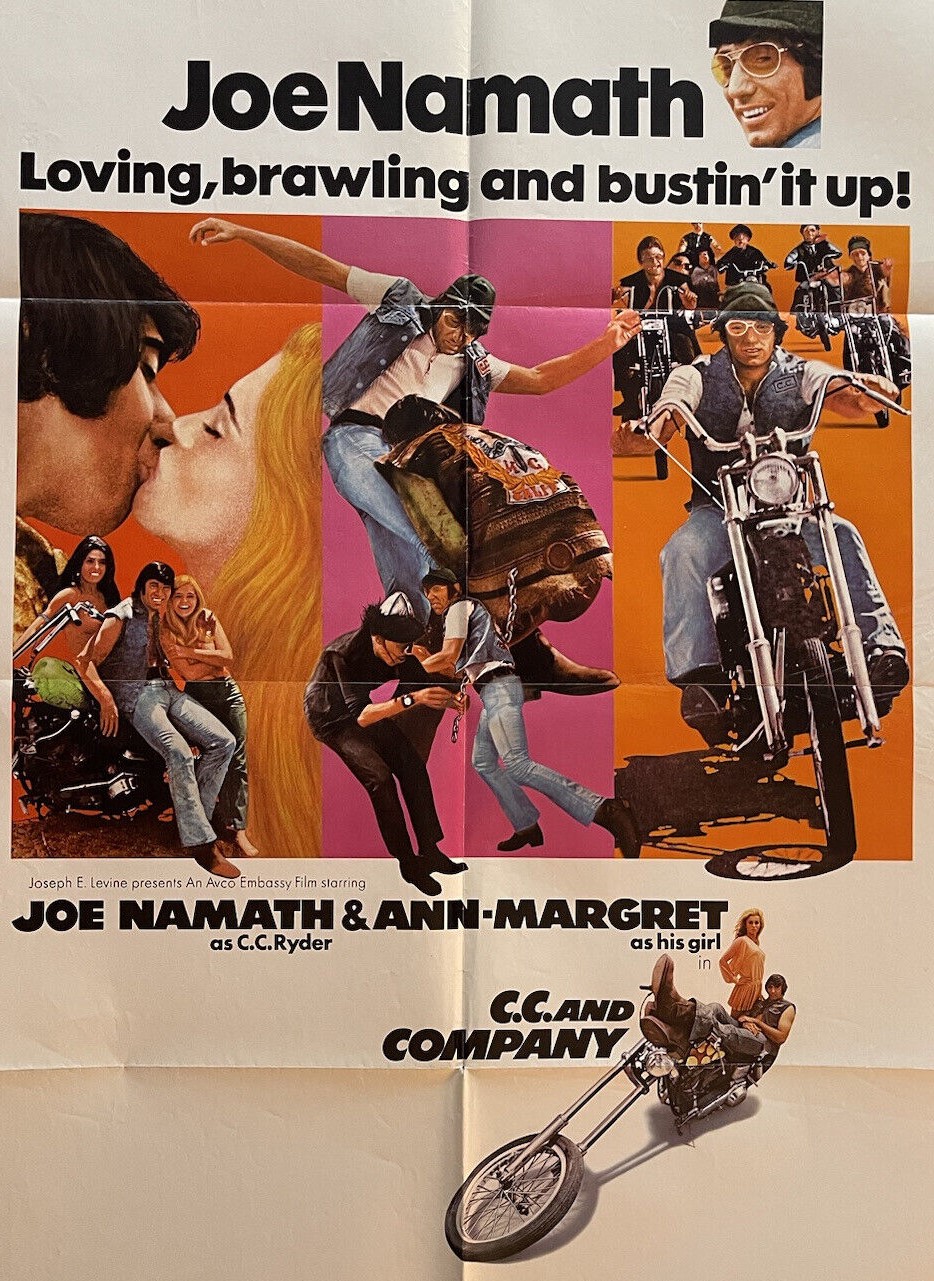
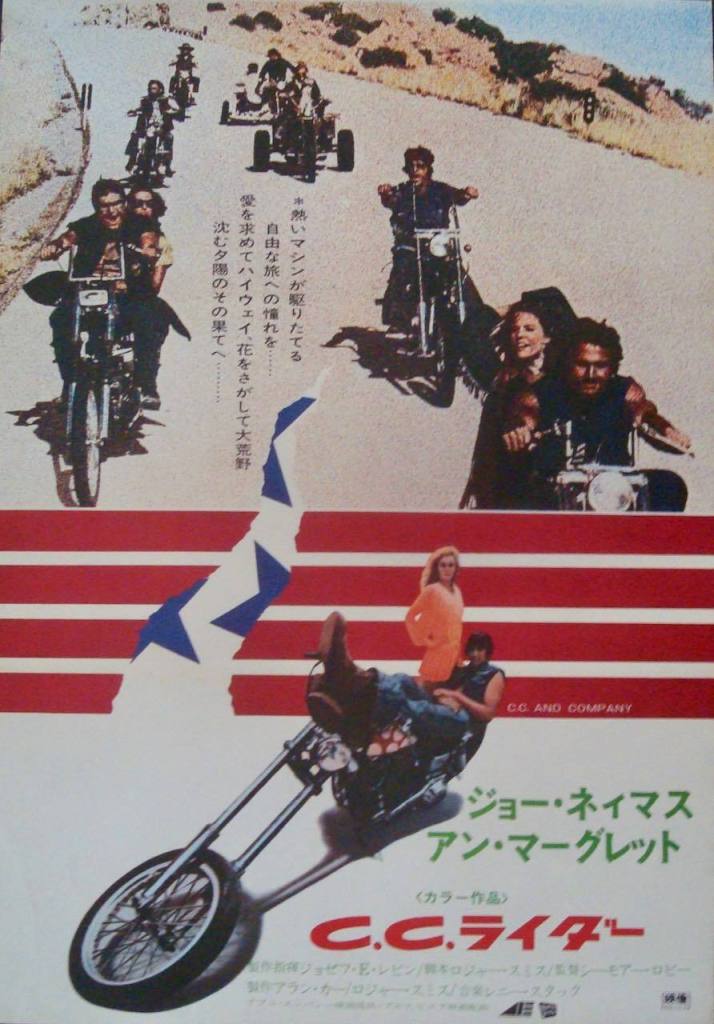
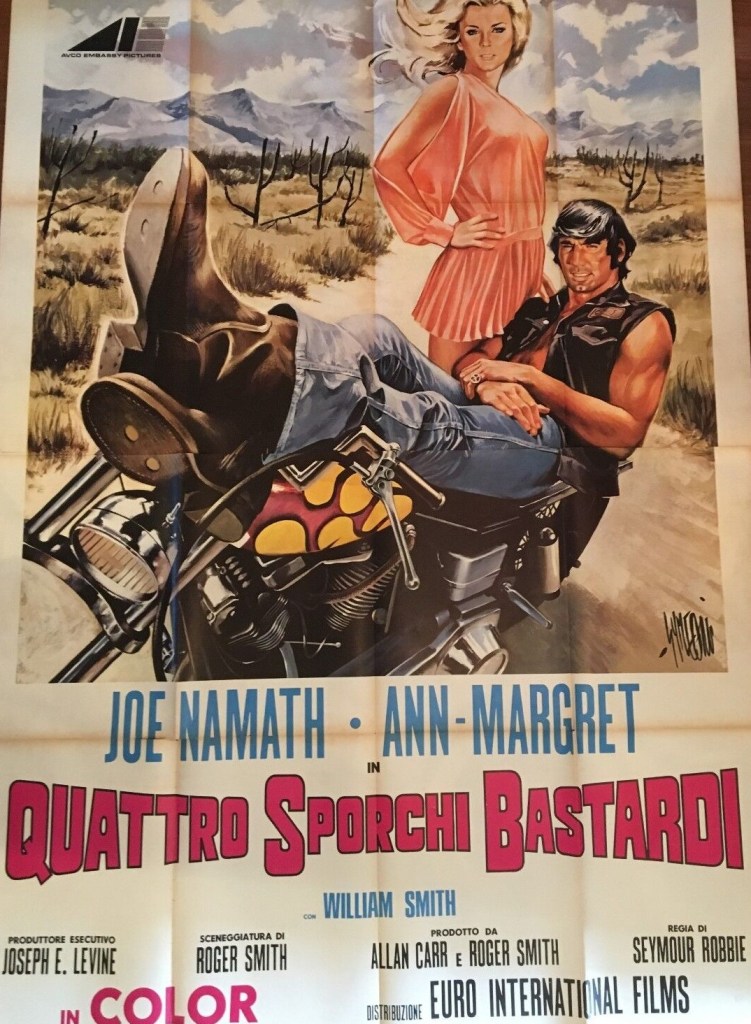
C.C. and Company (1970) *

Just terrible. Not even the presence of Ann-Margret (The Swinger, 1966) can save this. Scarcely a single redeeming feature and nothing that might lend itself to shift it into the So Bad It’s Good category. In fact, you would probably put it in a lower class, the So Bad It’s Worse Than You Can Possibly Imagine strata. Little seen for over half a century, and small wonder.

And, boy, did Ann-Margret need a hit after a three-year self-imposed exile in Italy, where she earned big bucks for pictures that hardly got a sniff on the U.S. release circuit, putting an almighty dent in her marquee value. In theory, she should have returned home with a bang, as female lead in a Stanley Kramer production, R.P.M. (1970), the most prestigious picture she had ever been associated with, and easily the best director. But that, riding the counter-culture wave, was a big flop.

This was her second attempt at counter-culture. Motorbike sagas were bankable after the success of Easy Rider (1969) and even as B-pictures had attracted decent audiences for the likes of The Wild Angels (1967) and Run, Angel, Run (1969).

But this was saddled with a terrible star in Joe Namath, and a terrible script by Roger Smith (The First Time, 1969), Ann-Margret’s husband-manager, that puts the wild boys of the highways in a motocross competition, swapping their high-powered bikes for the much smaller Kawasaki engines used in that sport.

If you were American, Joe Namath was a god. If you were foreign, he was a nobody. One of the country’s greatest American football (not soccer!) players, he had made his movie debut in another flop, Norwood (1969). My guess is Ann-Margret was there to help out her husband, also the producer, and beef up the marquee.

But C.C. Ryder (Joe Namath) looks more like an overgrown schoolboy, hulking though he is, than a Hell’s Angel. For the lack of believability he invests in the role you would have done as well with pop star Fabian (Ten Little Indians, 1965).

Anyway, on with the barmy story. So, fashion director Ann (Ann-Margret) has the bright idea, as fashion directors did in those days, of setting up a shoot against the backdrop of a motocross event, kind of like Zabriskie Point (1970) but with bikes. On the way, her car breaks down. The two passing bikers who come to her rescue have something else in mind and she is only saved from rape by the intervention of Ryder.

He belongs to a biking troupe headed by Moon (William Smith), the misogynist’s misogynist, who slaps his women around and sends them out to prostitute themselves on the highways because unlike the enterprising chaps from Easy Rider he’s not got the brains to set up a drugs operation. Then he gets the inspired notion of picking up easy money by sending his guys to compete in the motocross competition because, surely, them being serious motorbike freaks they can beat the hell out of any professional motocross rider who does this for a living.

No doubt audiences will be rooting for the amateurs the way they do for the young kids in other movies that need to put on their own show to save an orphanage or the like.

Naturally, Ryder falls for Ann. Equally naturally, Moon doesn’t like that one bit. And so kidnaps Ann, ensuring Ryder comes to the rescue. Cue a showdown. No doubt we’ll see an almighty battle with chains and wrenches and surely there will be a flashing blade or two as this pair roll around in the dust.

Nope! Let’s just find a handy football stadium and race round the athletic dirt track. That’s bound to be more exciting. You would get more excitement watching goldfish in a bowl.

Theoretically, the combination of Namath and Ann-Margret should have reached the incendiary levels of football star Jim Brown’s sexual tussle with Raquel Welch in 100 Rifles (1969). Nope. Namath has all the screen charisma of a beetle and there’s nothing Ann-Margret can do to help that. You couldn’t have wasted her first nude scene on someone less deserving.

As you might expect, Ann-Margret does get to dance, but for some reason the camera is more focused on Namath who is lacking in the shake-your-booty department.

There is one decent scene and one interesting shot. Unfortunately, the only good scene is the opener, giving a false sense that this might be an interesting picture. It involves Namath “grazing” his way round a supermarket, making up a sandwich from easily available ingredients, even stealing a tissue from a box to wipe his lips. What a rascal, no wonder everyone would be terrified of such a biker. And in the climactic race one of the bikers hits a fence that collapses concertina style.

But that’s it, a 94-minute vanity project that killed off Namath’s movie career and nearly put the kibosh on Ann-Margret’s. You can’t really blame television director Seymour Robbie (Marco, 1973) for failing to improve the material or the stars.  

Sometimes being a completist (in this case following Ann-Marget’s career) has its down side.  

PREVIOUSLY REVIEWED IN THE BLOG: Ann-Margret in State Fair (1962), Viva Las Vegas (1964), Kitten with a Whip (1964), The Pleasure Seekers (1964), Bus Riley’s Back in Town (1965), Once a Thief (1965), The Cincinnati Kid (1965), Made in Paris (1966), The Swinger (1966), Stagecoach (1966), Appointment in Beirut/Rebus (1968), Criminal Affair/Criminal Symphony (1968).

Discover WordPress

A daily selection of the best content published on WordPress, collected for you by humans who love to read.

The Atavist Magazine

by Brian Hannan

WordPress.com News

The latest news on WordPress.com and the WordPress community.