
Another tricky one because, of course, I’m supposed to mock this colossal box office flop. Not least because, as later events proved, you couldn’t lift the Titanic off the seabed in one piece since it had actually broken in two. And there’s the dumb maguffin to end all dumb maguffins that kicks it all off in the first place, but you did need some excuse for the exercise. And, in fairness, in theory at least, it’s more cinematic to show the ship going down, and having lovelorn lovers to lament, than to see it coming up with no passengers to root for.
That said, the actual hunt for the lost vessel and the raising is stupendous stuff, even on the small screen, and with a director with greater visual flair than Jerry Jameson (Airport ’77, 1977) it could have been even better. But there can’t be a more iconic climactic shot than the Titanic steaming into New York, missing its scheduled arrival by a mere six decades.
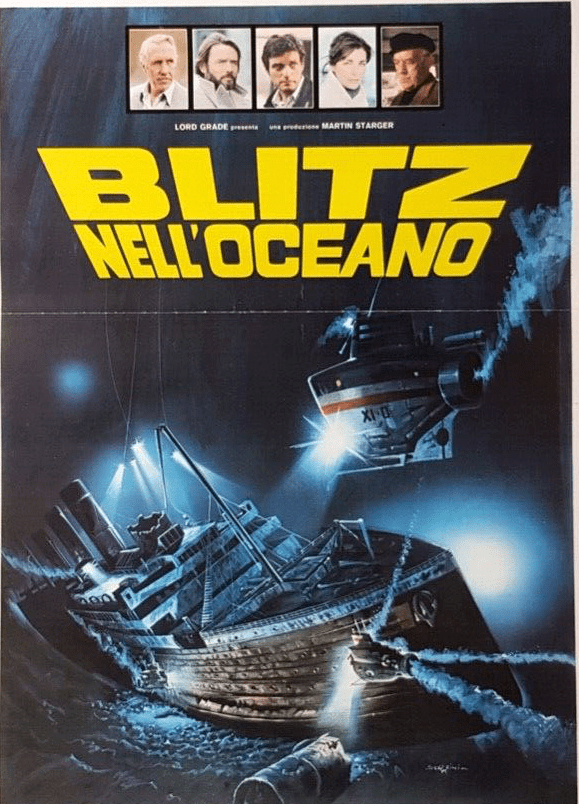
Question is, does the technical stuff, the underwater photography, the raising, the impeccable model-work, make up for the lack of smarts elsewhere? Heck, who cares? No one is interested in whatever storyline the makers come up – and, let’s face it, not even DiCaprio and Winslet, good though they are, were the driving force for the James Cameron version – all they are interested is the recreation of the mythical ship, probably the only one everyone in the world can name. So get the nautical elements right and you’re pretty much there.
Critics, and crucially audiences, back in the day didn’t think so. But I disagree. I couldn’t begin to tell you much about the hare-brained narrative – some item so crucial to the present-day (1980, that is) ongoing Cold War between the U.S. and the U.S.S.R – and I couldn’t care less. Nor would you find many takers for a love triangle involved explorer Dirk Pitt (Richard Jordan), journalist Dana (Anne Archer) and all-purpose politico Gene (David Selby). And although an occasional acting heavyweight like Jason Robards (as an Admiral) and Alec Guinness (as a Titanic survivor) hoves into view, it’s the character actors like J.D. Cannon and M. Emmet Walsh who have more to do.
But that’s not much either, because anyone involved in the underwater stuff is required only to show two emotions, shock and awe, and to be honest they do a good job because really all we need are witnesses to the amazing. The picture tickles along for a bit while the principals argue about the right way to go about their task and where, specifically, to concentrate the search, and then about the actual mechnics of the raising, that aspect suddenly given the kind of self-imposed deadlines that seemed de facto for disaster pictures (they are always running out of time) because some guys are now trapped in the ship.
But just as James Cameron awed audiences with his reimagining of the interior of the mighty ship, it’s no less imposing here in its impoverished state, stripped of its glory, nothing but the naked façade of the still-amazing below decks. And when it finally does surface carries magical visual splendor.
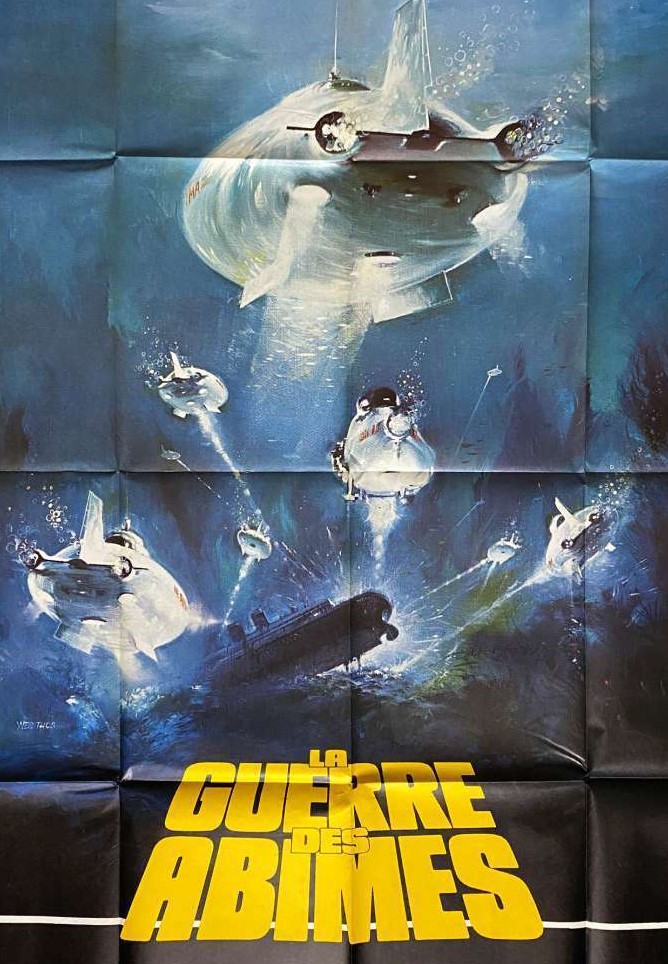
In truth, I found I was tuning out of the human goings-on, waiting with bated breath for the next sighting – or the first – of the ship. And we’re spared the endless wittering-on about how the ship sank and who was responsible and you could argue the narrative trigger in Titanic (1997) of the old lady’s brooch is every bit as dumb as the rare mineral secretly stashed on board here.
Jerry Jameson’s cinematic career was sunk by the poor box office and he didn’t receive another movie credit for over a decade. But he does a decent enough job here in the absence of a genuine all-star cast and those sequences depicting the hunt and the triumph work very well indeed. None of the acting is awful, but the stars have been hired for obvious reasons – being inexpensive might have been the starting point – and neither Jason Robards (Hour of the Gun, 1967) nor Alec Guinness (The Quiller Memorandum, 1966) attempts anything you’ve not seen before. While Richard Jordan (Logan’s Run, 1976) is too freshfaced for his character, Anne Archer (Fatal Attraction, 1987) suggests vivacity on legs.
Screenplay credited to Adam Kennedy (The Domino Principle, 1977) and Eric Hughes (Against All Odds, 1984) in reality went through a hatful of different hands. Based on the Clive Cussler bestseller.
Don’t believe the critics – and possibly not even me – on this one but I found it a surprisingly good watch.
 The Magnificent 60s