The Flight of the Phoenix (1965) ****

Take twelve condemned men, drop them in the desert hundreds of miles from safety with only enough water to last two weeks, and nothing to eat but dates, and make them work together to effect salvation from their predicament. Not exactly the premise for The Dirty Dozen (1967) but not far off. Flight of the Phoenix appears a dummy run for director Robert Aldrich’s more ambitious war picture, not least because in terms of structure it is only eight minutes shorter. There are no women in the picture (except those appearing in a mirage) and the men, of all different types, must come together or die in the savage heat.

You might argue that the audience for this kind of picture no longer exists. In the 1960s there was a big market for the Nevil Shute/Hammond Innes/Elleston Trevor type of novel which contained a lot of practical detail at a time when heavy industry – mining, shipbuilding, oil, car manufacture – was a massive employer and the ordinary man had an easy understanding of – and was often fascinated by – the principles of engineering. Bear in mind that this was the era of space rockets and there was excitement about man’s planned flight to the moon.

During a sandstorm a small twin-engined plane carrying passengers from an oil field crash lands in the Sahara. James Stewart as the pilot was a casting trick. In a previous aerial adventure No Highway (1951), Stewart was the ordinary joe challenging authority. Here he is the authority figure challenged and part of the film’s guile is the way he has to concede that authority to the one person on board everyone hates, arrogant German aircraft designer  Hardy Kruger. The global job lot of passengers includes: two soldiers, martinet officer Peter Finch and his mutinous sergeant Ronald Fraser; Richard Attenborough as an alcoholic navigator; oil worker Ernest Borgnine on the brink of insanity; Scotsman Ian Bannen reprising the sarcastic troublemaker of previous desert drama Station Six Sahara (1963); Frenchman Christian Marquand as a doctor; veteran Dan Duryea as the company accountant; Italian Gabriele Tinti; George Kennedy and Alex Montoya; plus a monkey of no fixed abode. The monkey, incidentally, is cleverly utilised. He’s not a sentimental or cute device, there to soften a hard guy or for comic relief, but Aldrich often cuts to his squeals or his face when there is imminent danger.

Two passengers are already dead, one is seriously injured. They have been blown so far off-course they will be impossible to locate. There is only enough water for ten or eleven days. It is a given in such circumstances that tempers will explode and hidden secrets surface. Were they guaranteed rescue those two pegs would be enough to hang a movie on.  Since there is no such guarantee, this becomes a picture about survival. The obvious manoeuvre comes into play on the fifth day. Finch determines to walk to safety, over 100 miles in deadly heat. But it’s not a trek picture either, the engineers present know the risks. Mountains will cause false compass readings and those going will walk around in circles.

What? I can get that magnetism in the mountains can affect a compass but where does the walking round in circles enter the equation? Because, explains Attenborough patiently, a person does not automatically walk in a straight line if there is no actual road. If right-handed then you’ll walk in a left-hand direction because the right leg is more developed than the other and takes a longer stride and there’s nothing you can do about it. This doesn’t matter if you are walking along an actual path but in the desert with no road markings it’s lethal. And this is the beginning of a bag of what would otherwise be deemed trivia except that such facts are a matter of life and death. This is a movie about reality in a way that no other realistic or authentic picture has or will be. Physics is the dominant force, not imagination.

Finch’s sergeant fakes an injury to avoid going. The mad Borgnine, originally prevented from leaving, sneaks away in the night. James Stewart, in courageous mode, goes after him. While he is away, Kruger carries out a character assassination. And continues on his return – “the only thing outstanding about you is your stupidity.” By now though, Attenborough has warmed to Kruger’s insane idea of building a single-engined plane out of the wreck of the twin-engined one. And that becomes the crux of the story. Can they build this weird contraption? Will they manage it before they die of thirst? Will rising tensions prevent completion? Are they fit enough after days in the boiling heat to manage the herculean tasks involved?

Aldrich keeps psychological tension at fever pitch, helped along by the pessimistic Stewart and the wildly pessimistic Bannen, needling everyone in sight, who delivers lines like “how I stopped smoking in three days.” Stewart and Attenborough have to come to terms with the parts they played in the plane crashing, Fraser with his cowardice. Issues arise over leadership and water theft.

I won’t spoil it for you by mentioning the incident that threatens to demolish the entire project. But the finale is truly thrilling, edge-of-the-seat stuff and the skeletal monstrosity being constructed looks hardly capable of carrying the monkey let alone a full complement of passengers. Aldrich is a master of the group shot with unerring composition and often movement within the frame or just a simple bit of business by an actor, for example George Kennedy at one point tapping his hand against his leg, ensuring that the film does not solely focus on a couple of characters. Sometimes all Aldrich needs to make his points are reaction shots.

Aldrich called on Lukas Heller for the screenplay, having worked with him on Whatever Happened to Baby Jane (1962) and Hush, Hush Sweet Charlotte (1964). Aldrich’s son William and son-in-law Peter Bravos had bit parts, killed off during the crash.

Flight of the Phoenix virtually invented the self-help rescue genre that relied on ingenious mechanical ideas – rather than more simplistic notions – such as later absorbed in movies like Apollo 13 (1995) and The Martian  (2015). Aldrich’s mastery of group dynamics would stand in him in good stead for The Dirty Dozen. A terrific movie and well worth seeing.

See also also the companion piece – Book into Filmwhich is posted tomorrow.

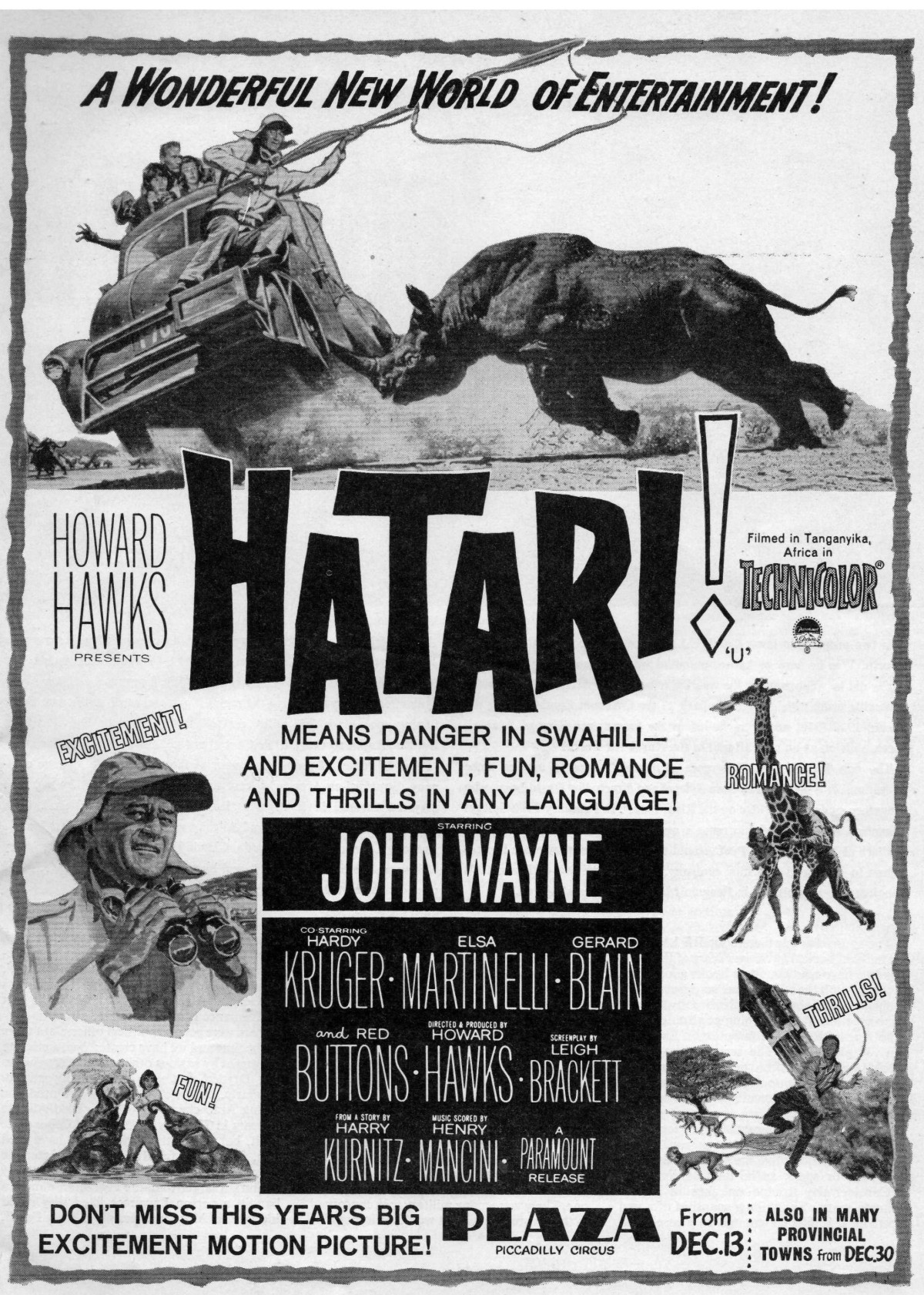
Hatari! (1962) ***

What this movie needed was Cinerama. That format blended exotic locale and thrills. The Tanganyika setting and jeeps belting across uneven terrain to capture myriad wildlife provide the two required elements. But the rest of the film struggles to keep up.

Here Howard Hawks combines his two most common themes, a group of men stuck together facing an unusual task and a battle of the sexes. But without the tension of an upcoming gunfight (Rio Bravo, 1959) or bizarre romantic comedy contrivance (Bringing up Baby, 1938), it falls short of the director’s highest standards. But as he set such high standards, virtually anything would.

Paramount went the extra mile on this one, producing, in addition to the normal pressbook, a special “Care and Handling Manual” such as had previously accompanied Psycho. This was a week-by-week breakdown of marketing activities – from arranging a John Wayne hat tie-up, to getting record stores and bookshops to prepare window displays, stencilling paws on the ground leading to the cinema and organising permits for a safari-parade on opening day. There was a tie-in with Jeep and the movie was a natural for involvement with schools and kids

The original concept intended to pair Clark Gable and John Wayne so that might have produced better results. Setting aside the gripe of the unlikely romance between a young Elsa Martinelli (rather than a mature Maureen O’Hara) and the ageing Wayne, this remains highly entertaining and a thrilling ride. Watching the actors do their own dangerous stunts, bouncing over potholes and battered in trucks moving at high speed, holding on for dear life (Wayne as the catcher unprotected on the outside)  as the vehicles swerved and twisted, the thunder of hooves, confronting extremely dangerous and extremely wild animals such as rhinos, makes up for other deficiencies.

Martinelli does not quite have the zap of a Hepburn or Monroe but does well as the photographer infiltrating a male enclave and her bonding with the baby elephant (triggering Henry Mancini’s “Baby Elephant Walk” theme) steals the picture. A pet leopard also provides a decent riff on the girl-in-the-bath number. Quite a number of plot lines are worked in to give actors of the calibre of Hardy Kruger something to do and to stretch the likes of Red Buttons who is rarely given any decent dramatic material.

In quite a different role, Wayne, for once not called upon to save the day, gives a good performance. Not only do they not make them like that anymore, they wouldn’t be allowed to make them like that these days, notions about working with animals (though none were harmed) much changed.  


The Trial of the Chicago 7 (2020) ****

Oscars voters will be sharpening their pencils for Aaron Sorkin’s political powerhouse. Comic Sacha Baron Cohen is a revelation as yippie Abbie Hoffman while Yahya Abdul-Matten II as Bobby Seale, Mark Rylance as the defense attorney and Frank Langella as the  judge will surely be in contention. Eddie Redmayne as Tom Hayden (Jane Fonda’s squeeze and later a Congressman) might also be favored. I guess Sorkin’s name will be in the hat but once again his writing and directorial skills clash.

The trial was a repercussion of the riots in Chicago surrounding the Democratic Convention in 1968. At the outset I was baffled and confused by the plethora of personalities and coming to grips with the American legal system but once the courtroom drama got underway I was hooked. The battle between a judge and defendants who refuse to recognize his authority plays out like Perry Mason at warp speed (though with the regulatory old-school last-minute intervention).   

But I would urge you to see this on the big screen because at any one time so many characters litter the frame they will be too compressed on television and in part because the two most stunning scenes have far greater impact when the action is blown up.

As the various civil rights groups descended on Chicago to stage a protest, the police and National Guard expected a riot – and proceeded to start one. A few years later, the government produced trumped-up charges against the various leaders, including Black Panther Bobby Seale who just happened to be in the vicinity. We are well used, unfortunately, to police brutality and here it is no less brutal. The police have also infiltrated the various groups so can provide doctored evidence of intent. But what is most shocking is the way political will subverts the law. Even grizzled legal eagles are astonished by the judge’s antics especially when Bobby Seale is chained and gagged in the courtroom after one too many outbursts. On the other hand, the banter between the accused and the judge, while breaking  protocol, is hilarious; Hoffman and sidekick Jerry Rubin often beating the judge to the punch which a cry of “overruled.”

As a young student at the time I was aghast at television images of the Vietnam War, had seen the Black Panther salute at the 1972 Olympics, and read some Eldridge Cleaver and James Baldwin, but was only vaguely familiar with the personalities behind opposition to the Vietnam War. Here, these personalities are presented mostly in confrontation with the exception of Jerry Rubin, who romances what turns out to be a cop. Wit of both the humorous and intelligent kind are given ample display, sometimes both together. It could have degenerated into a battle between Clever and Cleverer (Hoffman and Hayden, take your pick as to which was which), but that is only part of the wider picture.

While Sorkin’s brilliant script captures the quirks of both the personalities and the legal system, Sorkin the director gets in the way, insisting on incorporating black-and-white newsreel footage and inserting a stand-up comedy routine by Abbie Hoffman. And he definitely pulls his punches regarding Hayden ‘s contribution to the riots.

The best scene is the duel between Redmayne and Rylance in a dummy run for the former taking the witness stand. But the cinematic standout is the ending. Although echoing “Captain, My Captain” in Dead Poets Society (1989) it carries a far deeper meaning, setting on collision course two tenets of American culture, respect  for the court and regard for those who have fallen on field of battle.

My only real carp is why this was a film at all when there is clearly ample material for a television series, a four- or six-parter along the lines of Mrs America (2020). I’ll probably watch this again when it reaches television but I will be surprised if it has the same impact as seeing it at my local cinema, where, by the way, I paid for admission. Either way, don’t miss it. It starts on Netflix Oct 16.

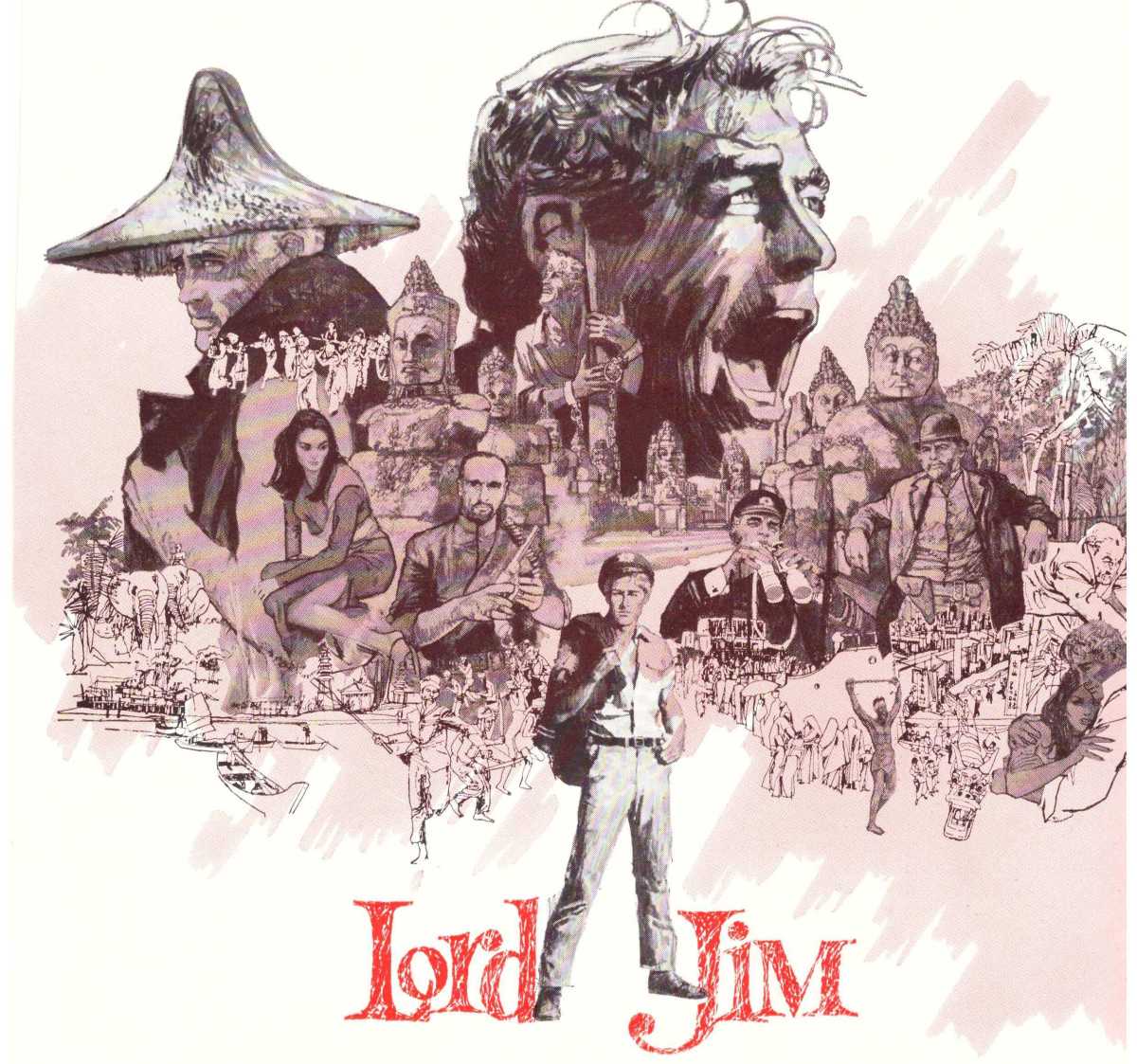
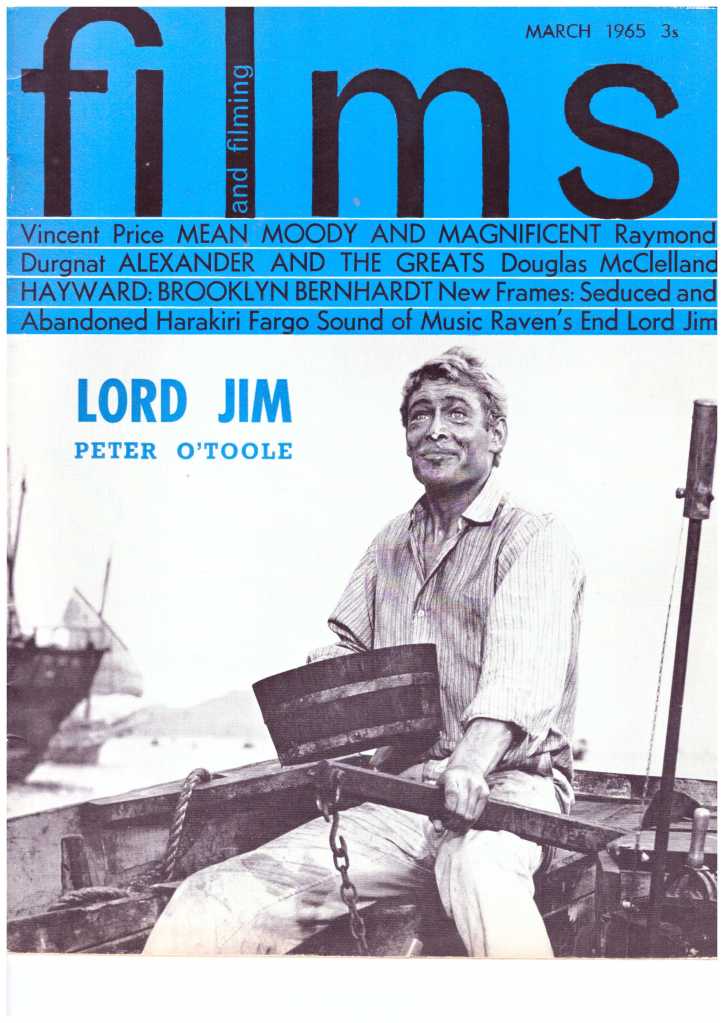
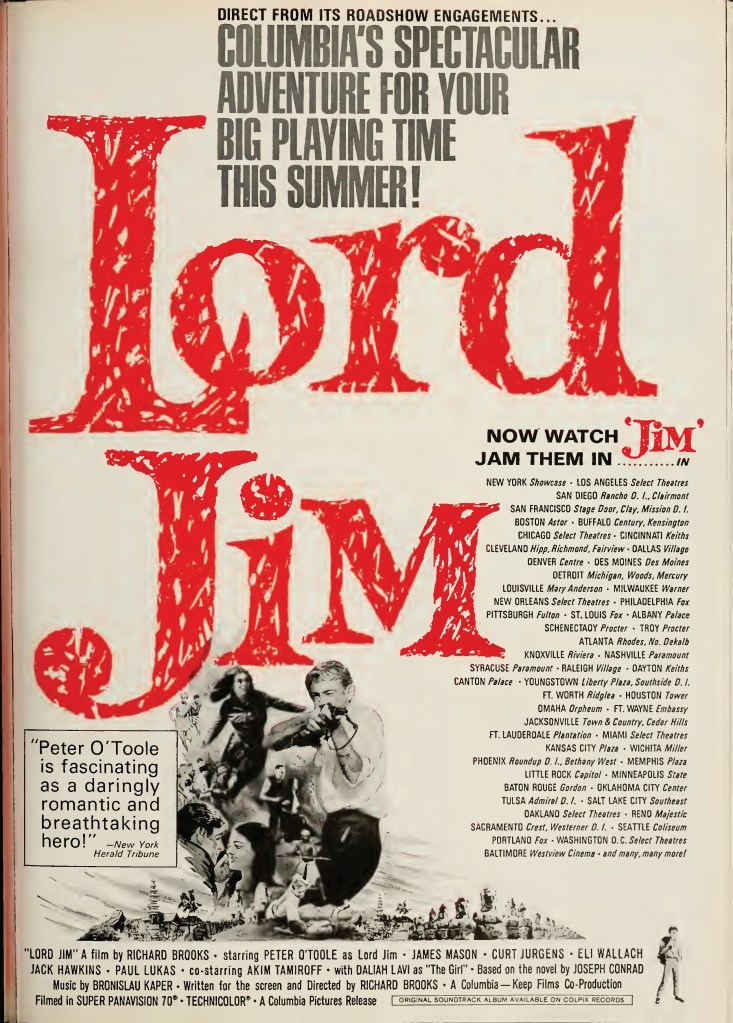
Lord Jim (1965) ***

What if redemption isn’t enough? When shame is buried so deep inside the psyche it can trigger no release? That’s the central theme of Richard Brooks’ adaptation of Joseph Conrad’s classic novel.

The title character’s shame comes from, as a young officer, abandoning a ship he believed was sinking only to later discover it had been rescued with a cargo of pilgrims to point the finger of blame. He is branded a coward and kicked out of the East India Trading Company, plying his trade among the debris of humanity.

You might think he later redeemed himself by foiling a terrorist plot at great risk to his own life. But that cannot erase his shame. Nor can helping revolutionaries overthrow a despotic warlord (Eli Wallach), enduring torture and again at great risk. What other sacrifice must he make to rid himself of the millstone round his neck?

Writer-director Brooks had a solid pedigree in the adaptation stakes – The Brothers Karamazov (1958), Cat on a Hot Tin Roof (1958), Elmer Gantry (1960) and The Sweet Bird of Youth (1962) – but sometimes you felt the writer got in the way of the director. That’s the case here. There was enough here to satisfy the original intended roadshow customers, great location work, grand sets, length, a big star in Peter O’Toole, but there is no majestic camerawork.

There are good scenes but no great sweep and the result is a slightly ponderous film relieved by stunning action, some moments of high tension, the occasional twist to confound the audience and ingenious ways to mount a battle.

James Mason as a hired killer has many of the best lines – “heroism is a form of mental disease induced by vanity” and “the self-righteous stench of a converted sinner” – all in reference to Jim. Everybody has great lines except O’Toole, he is very much the introverted persona of Lawrence of Arabia, a part he can play with distinction, face torn up by self-torture, fear of repeating his original sin of cowardice and convinced he will be cast out again should people discover he had abandoned hundreds of pilgrims.

Apart from the storm at the outset, the central section in the beleaguered village is the best part as Jim finds sanctuary, love and purpose, and conjures up the possibility of burying the past.

Part of the problem of the film is the director’s need to remain faithful to the source work which has an odd construction and you will be surprised at the parts played by the big-name supporting cast of James Mason, Jack Hawkins and Curt Jurgens.

Many of the films made in the 1960s were concerned with honor of one kind or another and, despite my reservations about the film as a whole, as a study of guilt this is probably the best in that category, in that this character’s conscience refuses to allow him an easy way out.  

Brooks had been toying with making this picture for nearly a decade, having purchased the rights in 1957 for $25,000 from Paramount which had made made a silent version in 1925. but, like MGM, which also passed on the project, Paramount considered a remake too great a commercial risk. Columbia, which had just signed the director on a multi-picture deal, took the gamble and handed Brooks a $9 million budget. Albert Finney was briefly considered for the title role. Given the movie was being shot in Super Panavision 70, one of the widest of the widescreen formats, Brooks hired Lawrence of Arabia alumni for the technical department – cinematographer Freddie Fields and prop master and set designer Geoffrey Drake.

You can catch this on Amazon Prime.

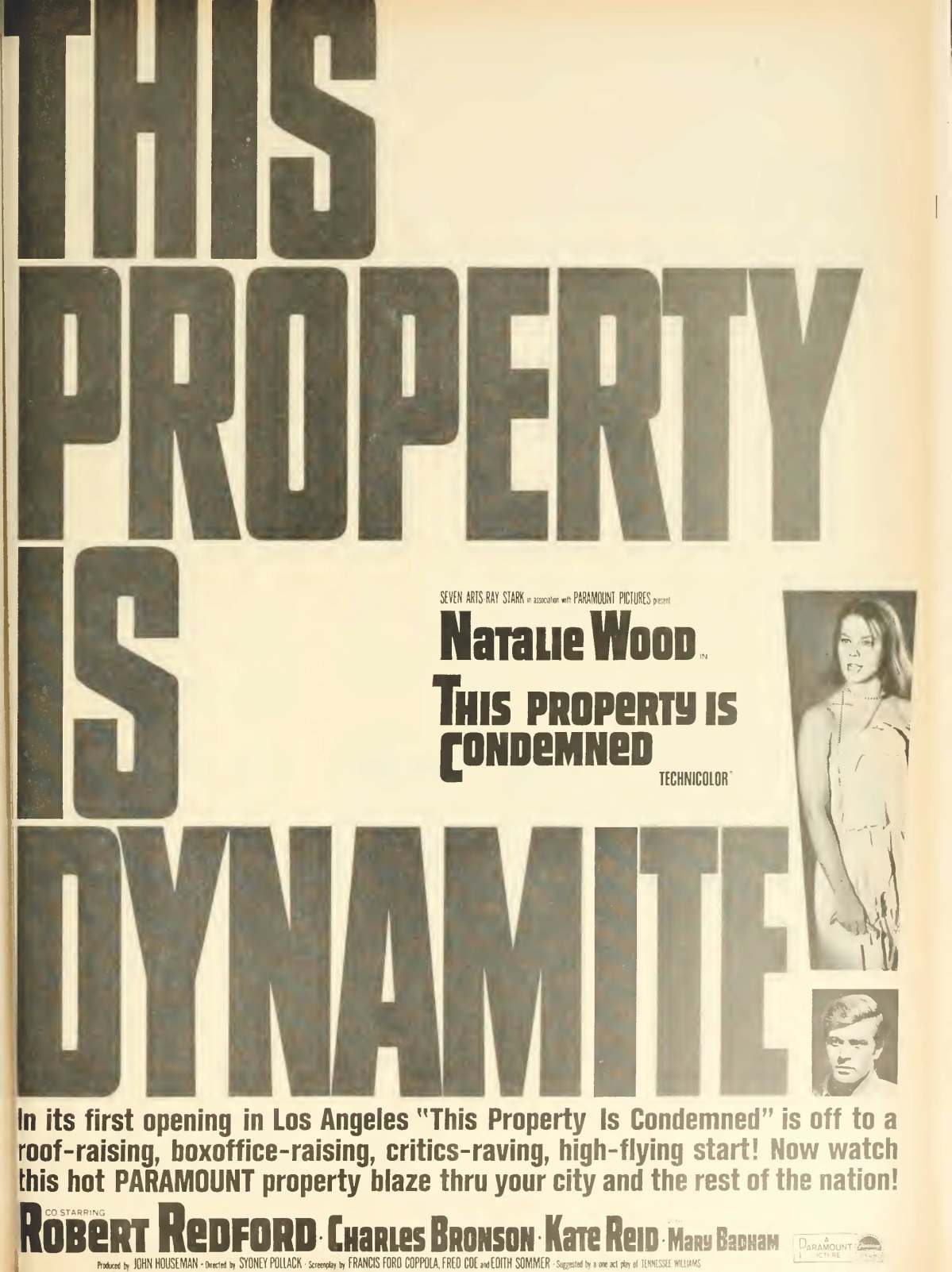
This Property Is Condemned (1966) ***

Hollywood hadn’t seen this much hair in a decade, not since Elvis burst onto the screen in Love Me Tender (1956), but Robert Redford’s blond barnet would be his calling card for the next half century. This was his fifth picture and his second with Natalie Wood after the previous year’s Inside Daisy Clover.

This Property Is Condemned doesn’t go much further in cinematic terms than the one-act play by Tennessee Williams  on which it is based. Wood is a small-town girl living a life of fantasy in the Depression to cover up the reality of her situation, almost pimped out by her mother who owns a down-at-heel boardinghouse, Redford the latest in a long line mostly unsuitable suitors to whom she clings for escape.

There’s an unnecessary prologue and epilogue, the former’s existence justified only by necessity for the latter to round off the film in a rather abrupt manner, and a bit of a cheat in Redford’s screen introduction whereby the audience is set up to imagine him as a drifter rather than a railroad official coming down the line to lay off workers.

Charles Bronson, a revelation as the predatory older man making play for the mother in order to gain access to the daughter, shows how mean a guy can be when he doesn’t have a pistol to hand. He foregoes the brooding laconic persona of later movies to deliver a rounded performance. Kate Reid is the kind of mother you would never forget but wished you could.

Director Sydney Pollock in his sophomore venture after The Slender Thread (1965) does his best with the over-dramatic material and there are several nice touches, the opening with a young girl in red balancing on railroad tracks, a scene that fades in a bedroom until only light from a window remains, and lovers meeting by reflection across a pond.

But it’s an uneven picture, the grim first half in Mississippi at odds with the almost fairy tale second section in New Orleans as the lovers develop a badinage that did not previously exist and you just wait for the explosive revelation that must come.

Wood is as good as the material permits, a woman prone to exuberant spirits is always a whisper away from hysterics, and it is only when she invests the situation with her own steely-eyed reality that the character comes alive. At this point Redford was an actor with potential rather a star and his personality does not bounce off the screen the way it would with Butch Cassidy and the Sundance Kid where Paul Newman provided an able foil.

You can catch this on Amazon Prime.

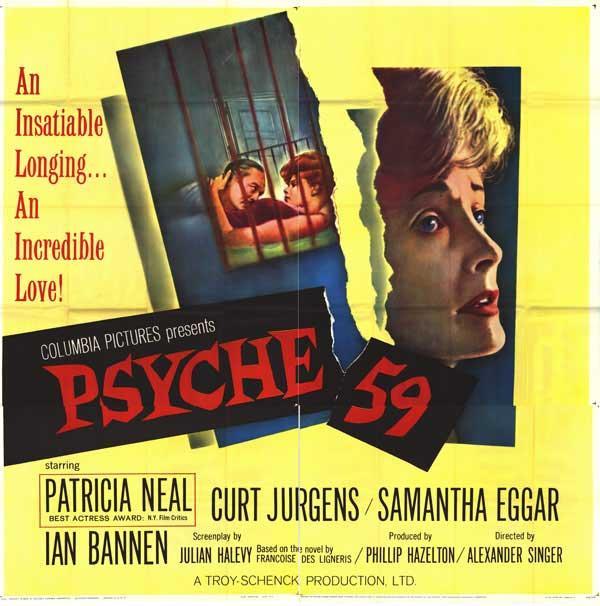
Psyche ’59 (1964) ****

This is a low-budget gem, an exploration of the psychological consequences of grooming. You can probably guess from the outset where it is headed but simmering tension has rarely been handled so stylistically.

With the exception of Patricia Neal, an unexpected Best Actress Oscar-winner for her previous film Hud (1963), there were no stars in the cast. Curd Jurgens was only beginning to play characters for whom a German accent was not essential, Samantha Eggar one movie shy of her breakout picture The Collector (1965), Ian Bannen, essentially a character actor, building on his success in Station Six Sahara (1963).

Blinded after an unexplained psychological trauma, Neal welcomes back, over husband Jurgens’ objections, her much younger sister Eggar to the family home. Bannen is the family friend, caring (possibly overmuch) for Neal, hankering after Eggar. The screenplay by veteran Julian Zimet (Saigon, 1947, with Alan Ladd) is taut as a drum, every line a threat, suppressed emotion or piece of exposition that could bring the whole house of cards tumbling down.

The blindness is exceptionally well handled, Neal’s need for physical contact with her husband sensual in its expression. Though she can a ride a horse, her vulnerability is implicit; as she is led across a beach you wonder what would happen were she to be abandoned. What she cannot see becomes central to the movie. That Eggar – vivacious but damaged – clearly has some hold over Jurgens is demonstrated in a tete-a-tete between them but as tensions mount such scenes cannot be kept secret and when Jurgens grabs Eggar’s hair and she retaliates by jabbing him with scissors, neither party emitting a sound, Neal is oblivious to it all.

Eggar takes delight in exposing what has lain on the surface for too long – when Bannen begins to fall for Eggar, the younger woman astutely remarks to her sister: “Am I taking him away from you?”  Neal, however, is self-aware, convinced she could see if she wanted to, if she was prepared to lift the psychological barrier that keeps the past safely hidden. “I’m afraid to see,” says Neal, “there’s something I’m scared to look at.”

Given the period when it was made there was a lot that could not said – or shown – and even so the film was censored prior to release, but it is the direction by Alexander Singer (A Cold Wind in August, 1961) that lifts the picture up. An acolyte of Stanley Kubrick, the movie teems with imagination. Close-ups and extreme close-ups are balanced by long two-shots, a conversation in a car between Jurgens and Bannen mostly direct to camera a prime example.

Emotion is captured at every turn and Singer avoids the cardinal sin of treating Neal like an invalid or focusing on her reaction to what she cannot possibly see, her eyes hidden behind dark glasses for much of the time. Levity is provided by Beatrix Lehmann as Jurgen’s sci-fi-reading horoscope-obsessed mother and by a couple of excitable children.

The grooming is in the past but the after-effects very real. In a film like this it is tempting to consider that certain attitudes are dated, but it is clear from this film that nothing has changed, that men believe they can take what they want regardless of the impact on their victims.

Harlow (1965) ****

In the light of the MeToo movement, this is a salutary tale of tawdry Hollywood. Such a convincing picture of Hollywood abuse was as true now as it is then. However, although presented as a biopic it is more pertinently viewed as a “reimagining” of the life of sex goddess Jean Harlow. While taking a few liberties with the truth where the main character is concerned, the rest of it could easily be realistic since we are now only too familiar with the excesses men in any kind of power in Hollywood believed they were entitled.

Jean Harlow was a hugely popular star in the 1930s before her untimely death at the age of 36. This film depicts her as a virgin (not true) who turns neurotic (not true) after her impotent husband commits suicide (debatable) on their wedding night (not true) leading to her go off the rails and die from pneumonia (not true).

But in terms of the Hollywood system a great deal rings true and if the Me Too movement had existed in the late 1920s and early 1930s the finger would be pointed at a huge number of men.

The film is at its best when dissecting the movie business. A five-minute opening sequence demonstrates its “factory” aspect as extras and bit players clock in, are given parts and shuffle through great barns to be clothed and made up, often to be discarded at the end of the process.

No sooner has this version of Jean Harlow been given a small part than she encounters the casting couch, operated by a lowly assistant director, who bluntly offers five days’ work instead of one if she submits to his advances. When she turns him down, work is hard to come by and she resorts to stealing lunch before being rescued by agent Red Buttons. After tiny parts that mostly consist of her losing her clothing, receiving pies or eggs in the face and displaying her wares in bathtubs, she gets a big break only for that producer to demand his pound of flesh – “I’ve already bought and paid for you.” Here, she has “the body of a woman and the emotions of a child” and ends up choosing the wrong suitor which leads to a calamitous outcome.

However, the pressures of stardom are well-presented: she is the breadwinner for her unemployed mother (Angela Lansbury) and lazy stepfather (Raf Vallone) and soon box office dynamite for a studio chief (Martin Balsam) who sees in her the opportunity to sell good clean sex. The negotiations/bribery/ blackmail involved in fixing salaries are also explored.

But the film earns negative points by mixing the real and the fictional. The agent and husband Paul Bern existed but most of the others are invented or amalgamations of different people. MGM is represented as “Majestic” and among her films there is no Red Dust (1932) or China Seas (1935) but lurid inventions like Sin City

Director Gordon Douglas was a versatile veteran, with over 90 films to his credit, from comedies Saps at Sea (1940) and Call Me Bwana (1963) to westerns The Iron Mistress (1952) and Rio Conchos (1964) and musicals Follow That Dream (1962) and dramas The Sins of Rachel Cade (1961) and Sylvia (1965) which also starred Baker. The opening scene apart, which is a seamless construction, he is adept at this kind of helter-skelter drama. John Michael Hayes (Rear Window, 1954) has produced a punchy script.

In the title role Carroll Baker has probably never been better, comedian Red Buttons excellent in a straight role while the smarmy Vallone is the stand-out among a supporting cast that also includes Peter Lawford, Leslie Nielsen and Mike Connors.

Despite the fact that virtually none of the movie is true, I have given it four stars for its realistic portrayal of Hollywood.

The Devil-Ship Pirates (1964) ***

Despite the title and Hammer’s penchant for the unholy, there is nothing satanical about this picture. Christopher Lee, less cadaverous than in his better-known incarnation as Dracula, plays the captain of ship called Diablo, part of the defeated Spanish Armada, who lands in 1588 on British shores and by convincing the locals that the British have been defeated  imposes an occupation.

Writer (and later director) Jimmy Sangster’s clever premise works, the lord of the manor (Ernest Clark) immediately surrendering and befriending the invaders, most of the villagers succumbing, a few more doughty lads (Andrew Keir and son John Cairney to the fore) rebelling. 

Running alongside its regular horror output, Hammer had a sideline in swashbucklers, the Men of Sherwood Forest (1954), Sword of Sherwood Forest (1960), The Pirates of Blood River (1962) and The Scarlet Blade (1963) – aka The Crimson Blade – preceding this, and all, interestingly, aimed at the general rather than adult market. Australian director Don Sharp, in the first of several teamings with Lee, does extraordinary well with a limited budget. Although the village square was a leftover from The Scarlet Blade, there is a full-size galleon, swamps, fog, floggings, a hanging, fire, chases, a massive explosion, and a number of better-than-average fencing scenes.

In other hands, more time could have been spent exploring the psychology of occupation, but despite that there is enough of a story to keep interest taut. Lee has a high-principled lieutenant who secretly subverts his master’s wishes. Tension is maintained by Lee’s ruthlessness, the efforts of captured women to escape, and attempts to seek outside help. While the intended marketplace meant toning down actual violence, Sharp creates a menacing atmosphere. The final scenes involving sabotage are tremendously well done.

I should acknowledge a vested interest as John Cairney was a distant relative and I do remember as a child being taken to see his previous outing Jason and the Argonauts (19630 but, strangely enough, this one was given a miss by my parents. I wonder if the title put them off.

Hurry Sundown (1967) *****

Otto Preminger’s drama was the first of a trio of heavyweight films in 1967 – the others being In the Heat of the Night and Guess Who’s Coming to Dinner – that took African-American issues seriously. In post-war Georgia land-grabbing by ambitious Michael Caine pits him against World War Two vet John Philip Law and African-American farmer Robert Hooks who team up. Throw in a sextet of feisty women – Jane Fonda (Caine’s wife), Faye Dunaway (Law’s wife), schoolteacher Diahann Carroll (Hooks’ love interest), Donnie Banton (Caine’s lover), Beah Richards (Hooks’ mother) and Madeleine Sherwood (Burgess Meredith’s wife) – and you are set for a series of emotional confrontations.

Preminger had spent most of the decade making films about big subjects – Exodus (1960), the politics behind the formation of Israel, Advise and Consent (1962), just politics, and The Cardinal (1964), politics within the Roman Catholic Church

Preminger is both economic and elegant. From opening dialogue to climactic court scene, the picture races along, and continuous use of tracking shots ensures the movie never gets bogged down. While there is no lynching, racist abuse, whether direct or indirect (through patronizing attitude) is never far from the surface. Corrupt judge Burgess Meredith is by far the most vicious, his unrestrained language making you wince. But even those with more measured approaches have to play the game, Law gives a lift to Hooks but has to let him off before they reach town in case anyone spots this, Hooks forbidden, for example, to buy dynamite.

But the racists do not get it all their own way. Jane Fonda, Caine’s wife, stands up to Meredith and her standing in the community is so strong that others boycott Meredith’s daughter’s wedding leading to the judge receiving a tongue-lashing from his wife. Weak sheriff George Kennedy coming to arrest Hooks is bamboozled by his female relatives while  Diahann Carroll charms her way past the judge.

The women are uniformly strong. Fonda goes from seductive wife to distraught mother, but in between capable of defrauding Hooks’ mother, her childhood nanny, out of her inheritance. Her usual shrill delivery is tempered somewhat by the deeper emotions she is forced to bear. Hooks’ wife Dunaway resents his return after in his absence taking on a full-time job while running the farm and now resisting the idea of selling up to Caine. Hooks’ mother, beholden to white men all her life, now turns against them. Donnie Banton (Burgess’s daughter) makes no bones about the fact that she is marrying her “dull” fiancé for his money. This is no spoiler because you will have guessed some similar outcome but at the end it is Carroll who takes the initiative in her relationship with Hooks and  marches into his house with her baggage, declaring she has come to stay.

And although the ruthless Caine is the bad guy, he, too, is afforded insight, soothing himself by playing a musical instrument, a man with talent who had “distracted” himself by pursuit of money. And there is another touching moment when he takes in a runaway child. Acting-wise, Caine is a revelation. Gone is the trademark drawl and the laid- back physical characteristics. Here he talks snappily – and no quibbles with his Southern accent either – and strides quickly. That we can believe he is brutal, gentle, remorseful and ruthless is testament to his performance.

Similarly, this is a massive step forward in Jane Fonda’s career, away from the limp Hollywood comedies and sexed-up French dramas, and her internal conflict springs from being forced to choose between husband and son, between her innate sexiness that oozes out in every intimate scene and maternal longing to comfort her disturbed child. While her attempt to defraud Hooks’ mother comes from a desire to keep her husband, her eyes tell you she knows that is no excuse.

What’s perhaps most surprising of all is the tenderness. There are wonderful, gentle love scenes between Caine and Fonda and Law and Dunaway.

Children, too, also unusually, play a central role. Caine’s callousness is no better demonstrated than in his earlier treatment of his son. Law’s eldest son also resents his father’s return and, viewing Caine as a more suitable adult, betrays his father. Burgess Meredith is obliged to drop one of the worst aspects of his racism in order to appease his daughter.  

The acting throughout is uniformly good. Dunaway’s debut won her a six-picture contract with Preminger which she quickly wriggled out of. Singer Diahann Carroll’s role as a confident young woman led to a television series. Robert Hooks would also enjoy small-screen fame. The surprisingly effective John Philip Law would partner Fonda in sci-fi Barbarella (1968) and link up with Preminger again in the ill-fated Skidoo (1969).

Unfairly overlooked by Oscar votes, who preferred the other Poitier films, Hurry Sundown, despite the rawness of the language and the innate brutality meted out to African-Americans, has been vastly under-rated. It is worth another look because at its core is not just racism but big business which scarcely cares about the color of those it exploits. It is as much about the power shift in relationships and ambition.  

The DVD below plays in all regions and without subtitles.

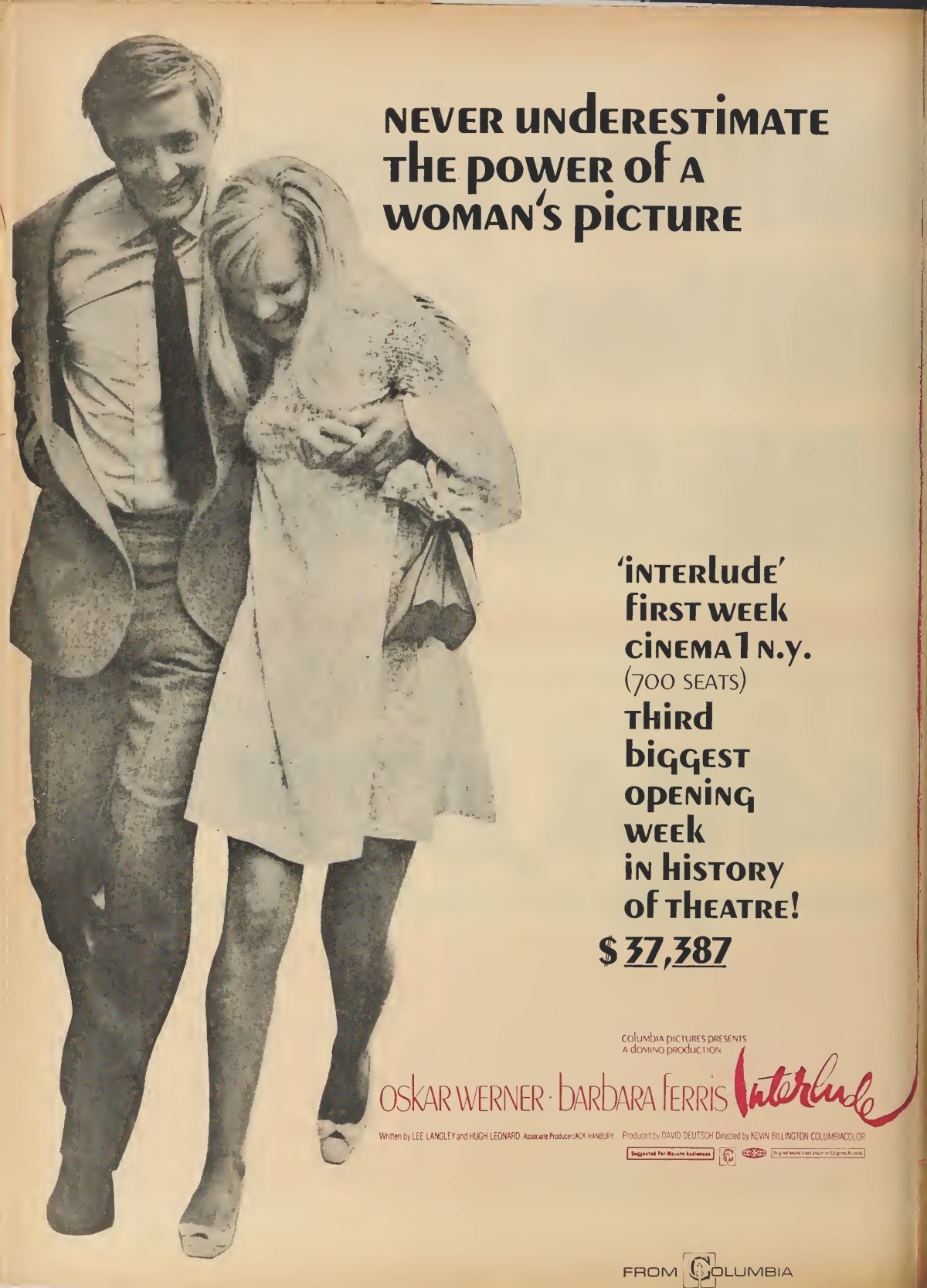
Interlude (1968) ****

Kevin Billington’s debut benefitted from a brief fad for classical music soundtracks, Elvira Madigan kicking off the fashion the year before, 2001: A Space Odyssey, which opened at the same time as Interlude trumping everything in sight. And as luck would have it, this was not the only movie about an orchestra conductor, Counterpoint with Charlton Heston released in America a couple of months before this one opened in Britain.

What makes the movie so enjoyable is that overlaying the sumptuous love story is the angst of a mistress. It’s sweetly set in wonderful British locations, riverside inns, olde worlde hotels, trendy restaurants, a few flashes of swinging London, luxurious mansions. The solid backdrop for something as fragile as romance.

There could not be two more opposites to attract, the rich Oskar Werner (Jules and Jim, 1962) in full-on arrogant mode, all dark glasses and leather gloves with enough petulance to sink a barge, and journalist Barbara Ferris (off screens since the lamentable Catch Us If You Can three years before) who lives in a bedsit with a goldfish called Rover. He drives a Rolls-Royce convertible, she a Mini. 

There are some very good touches. We first see the characters in mirrors. He plays a “concerto for wine glass and index finger.” There is the very serious British business of whether milk goes in first to a cup of tea.

The screenplay by Lee Langley and Irish playwright Hugh Leonard is sharp and often witty.  “I want to marry you,” says Ferris, before conceding, “I just don’t want to be your wife.” There is clear realization of the nature of his personality in her remark, “Instead of being what you want, I’ll be what you’ve got.”

Even when emotion is expressed there is a feeling that a lot is still suppressed. Ferris goes from high excitement to high dudgeon and carries within the seed of fear, a character who spends as much time in terror as in love. This is exacerbated when she spots of Werner’s wife, stoically played by Virginia Maskell, at the hairdressers and “all of the sudden” the wife who has existed in her imagination “has a face.”

John Cleese and Donald Sutherland have decent cameos, the former in a bit of an in-joke as a PR man wanting to get into comedy (“satire – that’s my field”), the latter as the womanizing brother of Werner’s wife.

Oddly enough, the music – Beethoven, Tchaikovsky, Mozart, Dvorak, Brahms and Rachmaninov – acts in the same manner as Easy Rider the following year, as extensive interludes to the developing drama. Perhaps it is where Dennis Hopper got the idea.

It is very rounded for a romance, the acting excellent and the undernote of despair well-wrought.

I caught it for free on Talking Pictures TV, but I’m not sure how often it is being scheduled. Otherwise, here’s the DVD link.

Discover WordPress

A daily selection of the best content published on WordPress, collected for you by humans who love to read.

The Atavist Magazine

by Brian Hannan

WordPress.com News

The latest news on WordPress.com and the WordPress community.