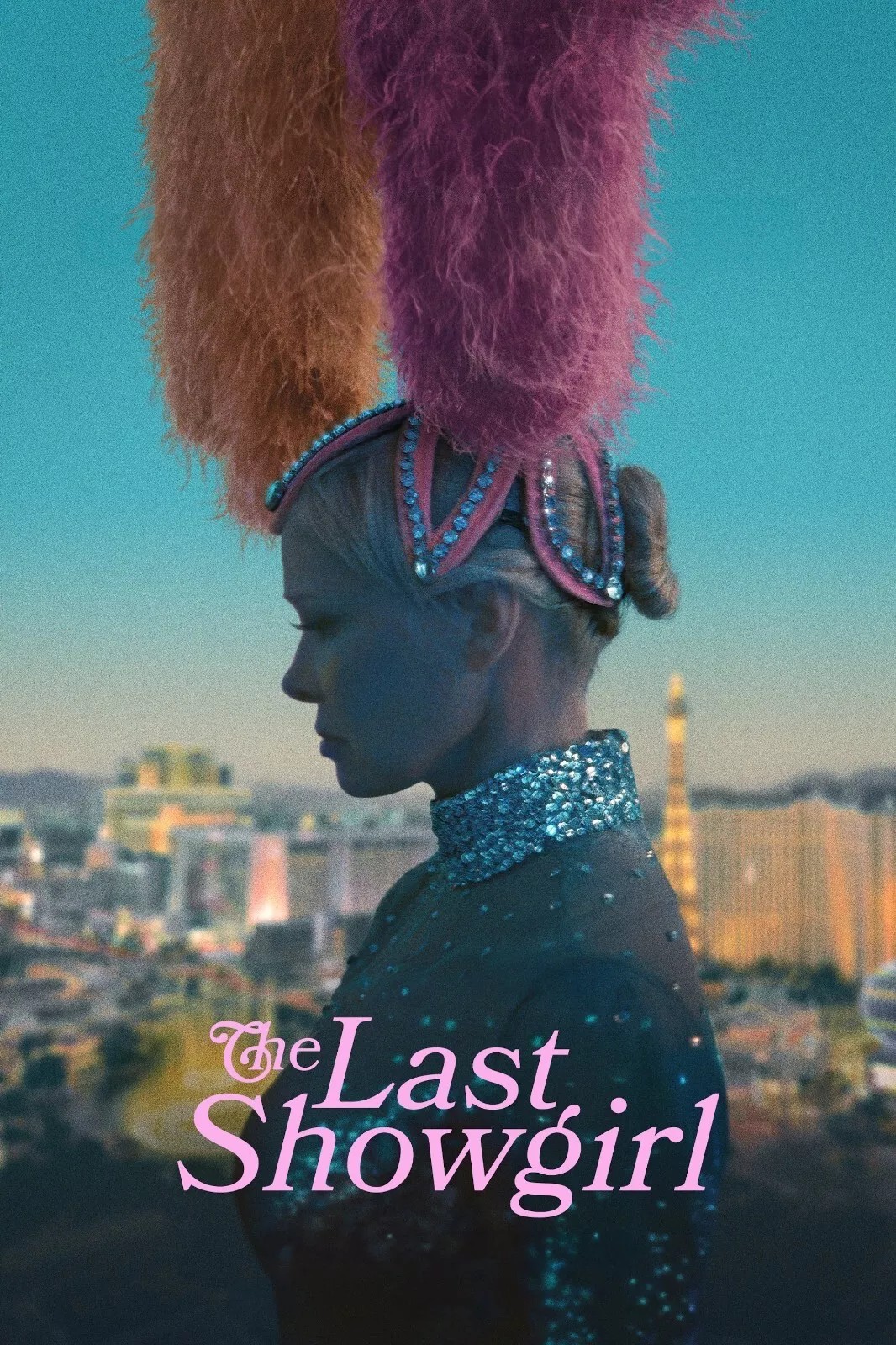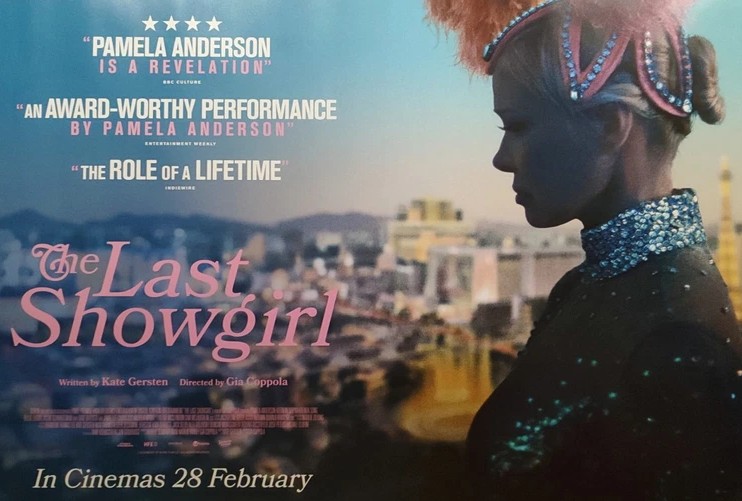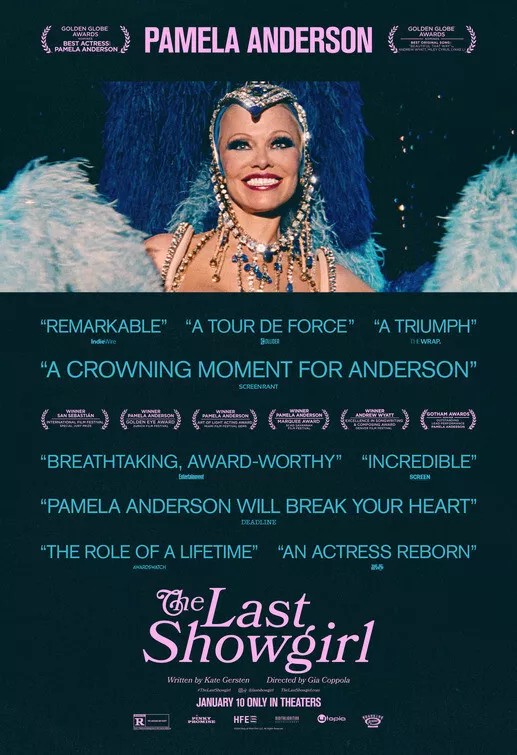
The Last Showgirl (2025) **** – Seen at the Cinema

I’m assuming this fell foul of Oscar voters because it lacked a woke agenda. In fact, it’s distinctly anti-woke, the subject matter of women flaunting their bodies for dough, and a heroine who revels in it, going against the contemporary grain. And I know Demi Moore put on a more showy performance in The Substance (2024) but Pamela Anderson here demonstrates significantly more substance. Everything you’ve heard about her performance is true and you do wonder, far more than with Demi Moore, why some casting director didn’t alight on such talent which would have been ideal for a rom-com or drama as a put-upon character.

I’ve scarcely come across a more well-rounded character – and yes the script by Kate Gersten was an Oscar shut-out, too, but scripts are more than fancy-dancy lines or setting up woke agendas. There’s a just fabulous scene where ageing showgirl Shelly (Pamela Anderson) slams the door in the face of one of the young dancers coming to her for emotional support. Shelly is too wrapped up in other personal dilemmas at that point to cope. Up to now she’s been maternal to a pair of younger girls, Jodie (Kiernan Shipka) and Mary-Anne (Brenda Song), and happy to offer a shoulder to cry on.

But it’s two-way. The girls help her fix bits of her costume. Following the door-slamming episode, Jodie takes the hump and refuses to assist pre-show and Shelly come a bit unstuck.

But not only is Shelly a willing participant in male fantasy, she’s also poster girl for a female fantasy, that her body and somewhat limited talent will carry her through to old age (older age, she’s 57 now) and she can dwell on career highlights such as being feted by the media and corporations who ferried her across the world as some kind of brand ambassador.

Frankly, she’s not ready to face up to much – certainly not the end of her career, the show (Le Razzle Dazzle) is closing and her daughter Hannah (Billie Lourd) is not only challenging her perception that she was a good mother but derides her occupation.

The script is cleverly structured in a kind of Christmas Carol fashion. We’ve got before – Jodie and Mary-Anne the eager beavers with stars in their eyes. After is represented by the jaded older hard-drinking gambling addict Annette (Jamie Lee Curtis), reduced to cocktail waitress (a rather grand term for what she does) in a casino with her cleavage on show as a possible repository for tips.

Shelly has more than enough shades of character. She’s daffy, hard-nosed when the situation requires, manipulative (also when required), selfish, unselfish, fulfilled, unfulfilled, friendly, lonely. Turns out there’s still room for the exploitative show as long as striptease can be performed in post-ironic fashion, throw in some slapstick and bizarre comedy, and there’s demand for the straightforward Vegas showgirl but they need a good bit more dancing training than Shelly can muster – brutally taken apart in that scene.

Thankfully, director Gia Coppola (The Seven Faces of Jane, 2022) doesn’t go down the sentimental route, nor is she out to curry pity. You’ll sympathize with Shelly for sure, but you’ll hold back because her problems are all of her own making and you know full well that she’ll find some solution, manipulative or not, to her immediate problems.  

If you’re looking to expend a bit of sympathy your better bet is Annette. The scene where, presumably as part of her job, she has to climb on to a mini-stage in the casino and gyrate to a tune with nobody paying the blind bit of notice resonates. Sharp-tongued though she is, Annette has the self-awareness to know she will always be broke, unable to kick her gambling addiction, even if it means losing her home and sleeping in her car.

Hannah’s really the only cliché, there as a scripting prop to make Shelly reassess her life (interestingly enough Shelly finds little to fault), and make her face up to her tawdry career. Though in a scene which makes some emotional sense – acceptance of parental failings, I guess, or pride at paternal skill – that I didn’t believe the daughter applauds her mother’s dancing having previously lambasted it.

This is old-school, from the time when you could make a whole film just about a character coming to the end of their career and facing up (or not, as here) to decisions made. It could be a football coach or a teacher or a politician. Here, it just happens to be a showgirl.

This would in any case have been the best performance of Pamela Anderson’s career because, frankly, that bar was set decidedly low. Demi Moore, by comparison, could at least point to some critical acceptance for roles like Ghost (1990) and A Few Good Men (1992). I don’t buy into the idea that box office stars are hard-done-by in not being offered Oscar-bait roles because as we’ve seen only too often any star can buy their way into a good role – by that I mean cutting their salary to the bone or spending their own dough to bring a picture to fruition, it’s what the term “vanity project” was invented for.

Still, with what Pamela Anderson presents here, shorn not so much of make-up but the glossy sleekness of her previous screen persona, and presenting a more realistic characterization, you could see her fitting well into a series of more demanding roles.

Yes, for once, the reviews are correct. Well worth seeing.  

Squad 36 / Bastion 36 (2025) **

Netflix appears to be going through the gears – the wrong way. But that’s what happens when you’re so dependent on content – any content. But no different really from old Hollywood, always a bucket of stinkers in the days when studios had to each greenlight 20-25 pictures just to stay in the business.

I’d been encouraged by Toxic Town (2025) and my love of French policiers to take a chance on this one. It shouldn’t have been much of gamble. Even though French gangster/crime movies don’t travel all that well, for aficionados like me, growing up on the likes of Gabin, Belmondo and Delon (and intruder Bronson)  that doesn’t matter. Still lingering in my memory are Mesrine (2008) and 36 Quai des Orfevres (2004) with Daniel Auteil and Gerard Depardieu, for example, directed by Olivier Marchal, who helms this one.

This at least gets off to a good start, a blistering chase through a rain-sodden Paris, clever interchange of personnel in cars and on motorcycle, hounding target Mahmoud through the streets. Eventually, Antoine (Victor Belmondo) has him trapped. But in the first of a series of bizarre twists the criminal gets away. How? Well, it’s simple. It’s down to bureaucracy. Instead of putting a bullet through a guy armed with a gun, presumably a crime in itself, Mahmoud effectively reminds Antoine that he doesn’t want to be seen shooting an armed man in public.

What? Double what? Mahmoud might not be resisting arrest but he’s clearly armed and dangerous. But of course there’s another reason Mahmoud can’t be arrested. Because the cops don’t have evidence to link him to criminals – the tracking is in the hope he’ll lead them to the bad guys. However true that may be, at the moment of this confrontation Mahmoud is clearly committing a criminal act, unless he’s got a license to carry a gun in public.

Then it gets even dopier. The top cop is furious because the chase has generated complaints from the good citizens of the French capital. Ooh la la! Then Antoine gets busted because – wait for it – he put in hospital three guys who ambushed him. Guilty apparently of using excessive force. That seems a tad unhinged. Is there any way to combat an attack by three thugs without putting at least a couple of them out of action?

This might have been redeemed had Antoine capitalized on his early edginess. He’s in the illegal business himself, but only to the extent of participating in underground bare-knuckle boxing matches. At one point he takes a hell of a beating – we’re talking Clint Eastwood territory – so that should have set him up for the rest of the picture.

But instead he reverts to completely dull as six months later, having been shifted to another unit, he returns to, unofficially, investigate the deaths of two members of his original squad and the disappearance of a third, Richard (Soufiane Guerrab), who has gone loopy – possibly after reading the script – but then disappeared from a psychiatric clinic.

Antoine has various leads to follow and occasionally, in case the plot is too difficult for us to follow, we pop into the lives of the other cops involved so we know full well they are up to something dodgy. Meanwhile, as with the best cop pictures, there’s a cover-up, which may be because the top brass is implicated or because it would just harm public relations if the public were to even think (perish the thought!) that there could be corruption in the police force.

This just drags on and on. It could easily do with losing a good 30 minutes. But even then it would sag. None of the actors involved take it by the scruff, the way they used to in the good old days, not even when they are presented as an old-fashioned hard-drinking hard-smoking gang. You used to be able to rely of supporting actors to steal scenes, just for the hell of it if they were older and to put down a marker for the future if they were younger, but that doesn’t seem to have occurred to anyone here.

There’s an ironic twist at the end, the kind you used to get in the paranoia thrillers of the 1970s. Cracking start, good ending, but not very much to hook you in between.

Written and directed by ex-cop ex-actor Olivier Marchal from the book by  Michel Tourscher.

Goes through the motions without hitting the spot.

Toxic Town (2025) ****

We’ve become pretty democratic this side of the Pond when it comes to individuals taking on giant corporations. Usually, the whistleblowing kudos goes to an attorney – Erin Brockovich (2000), Dark Waters (2019) or a journo (The Insider, 1999) or a left-wing activist (Silkwood, 1983). But after the success of Mr Bates vs. the Post Office (2024) the focus has come back to the common man.

Or the very ordinary woman, as here. Susan McIntyre (Jodie Whittaker)  couldn’t be more down-to-earth as she (insert your own swear word) tells everyone. But she’s also very keen on booze and sex. But when she gives birth to a wee boy with a deformed hand, her partner skedaddles. She meets another woman Tracey Taylor (Aimee Lou Wood) whose child dies from complications after. Her partner sticks by her and they try again.

If the characters had been given the camera-eye view that the audience has – of lorries filled with bestial orange liquid driving through the town and dumping the waste not far outside it, you would have thought someone might take action sooner. But this is an industrial town, Corby, famous for the manufacture of steel – so the workers were used to the after-effects. We’re getting all this waste, and the dust clouds spread as well, because the steel plant has closed – putting 11,000 people out of work – and the factory is demolished to make way for some kind of barmy theme park.

An inoffensive council bureaucrat takes umbrage at the lack of safety on the demolition site. After his claims are dismissed by boss Roy Thomas (Brendan Coyle), he takes his evidence to councillor Sam Hagen (Robert Carlyle).

Given it’s Britain, you get plenty of politics, old-school Labour struggling to survive in the new harsh financial climate, the cosying up of cronies, the sneering at anyone with a degree, the eternal passing of the buck, and, more importantly, hiding the buck. Nothing to see here. Eventually a journalist Des Collins (Rory Kinnear) gets involved. But he really needn’t have bothered, for Susan McIntyre drives this case. Once she shakes off her self-pitying, her initial revulsion at the child, and gets rid of undesirable men, and has something worth fighting for  she’s full on.

Jodie Whittaker (Dr Who to you and me) is a revelation. This is a part that requires an actress to give her all and still find a way for nuance. There’s no shortage of cussed young women determined to self-sabotage their dreams – look no further than Wild Rose (2018) and The Outrun (2024) – but this is in a different league altogether and long before Mr Bates got his act together Ms McIntyre was shooting with both barrels.  

But it would be just another flag-waving exercise if so much wasn’t invested in the characters. Scenes of wives trying to beat the dust out of orange-sodden clothes, Susan playing games with her wee boy, kissing his antiseptic hands, her one-night-stand treating her with disrespect, the whistleblower twice rejecting bribes and tending his very ill father, even Roy seeing any issues as getting in the way of his dream of becoming council leader. You tend to think it’s just big business with all the upper-class camaraderie that that suggests that has an inbuilt exclusion zone for anyone attempting to tamper with the status quo, so it’s refreshing to know that the old boys network extends all the way through local left-wing politics.

Jack Thorne (National Treasure, 2016) put in the hard yards to stitch this all together so it wasn’t just another polemic but a character-driven drama. Minkie Siro (Pieces of Her, 2022) directs with occasional elan.

A must watch. Netflix at last comes up trumps.

Companion (2025) **** – Seen at the Cinema

Body Heat meets I, Robot in a film noir high-concept sci fi female revenge thriller. Such a contagion of ideas should skid off the rails but it works a treat as debut director Drew Hancock offers a highly intelligent adult movie. And might have been ideal Valentine’s Day counter-programming fodder to the more lightweight Bridget Jones: No More Please except that Captain America: Brave New World has already snapped up the counter-programming slot. Hopefully, this will pull in a deservedly wide audience that it’s still around to cause the other franchise operations some grief.

In my eyes sci fi and horror have to follow an internal logic, in other words create a world that can’t be twisted to suit an inconvenient obstacle. This is filled with them, but the best is when our heroine Iris (Sophie Thatcher) has discovered she’s a robot programmed to fulfil the needs of her owner but gains control of herself and plays around with her personality only to discover that the electric car in which she is trying to escape won’t respond to her new voice.

This is just so brilliantly done that when you get one twist after another following in logical fashion you don’t recognize these as twists but rather logic played out to the ultimate degree.

Three couples meet for an idyllic weekend in the country in a fancy pad beside a lake, owned by dodgy Russian multi-millionaire Sergey (Rupert Friend) who has brought along docile trophy mistress Kat (Megan Suri). Joining them are robot owner Josh (Jack Quaid) and Iris and gay couple Eli (Harvey Guillen) and Patrick (Lukas Gage), who, also, it transpires, is a robot.

The robots are programmed with highly believable meet-cutes, one involving a fancy dress party, the other the clumsy up-tipping of a stack of oranges in a supermarket. The robots are programmed to a) have sex at the drop of a hat; b) love their owners; c) be unable to tell a lie  and d) follow the first rule of robotic development, as laid down by Isaac Asimov, of being unable to kill a human.

The last commandment ain’t quite so hard and fast and it turns out an owner, for nefarious purpose, can actually turn on the aggression control. As much as Sergey is probably, thanks to his wealth and perceived status as a thug, programmed to assume any woman is there for the taking, so a robot, aggressive instincts sharpened, can respond violently to attempted rape.

So, first of all, this looks like it’s going to be a tale of how do the other members of the holiday gang deal with Sergey’s murder and the more philosophical question of whether a robot can be held responsible for a crime or whether blame would lie with the owner for dickering around with the controls or for the inventor for allowing such a possibility.

You could have had a fair old time exploring any of these possibilities, and a fairly satisfying picture, given the detail of the programing and the examination of female dependency (Kat is as much under the thumb of Sergey as Iris of Josh) and male control and in low-key fashion the kind of guy who would otherwise most likely be an unwilling celibate. The movie poses another question that it doesn’t really go into, which is how our view of an otherwise unattractive male character changes when he has a beautiful woman on his arm, Hollywood the first to perpetuate such fictions.

Anyway, the story goes in a different direction. Turns out Josh is quite the sneaky conspirator. He has programmed Iris to take the rap for Sergey’s death while he and Kat make off with the $12 million the Russian keeps in his safe. But, like any heist picture, the theft is the easy part, the thieves inclined to fall out, and with a robot distraught at discovering she’s a robot and that her life is a fiction (and Josh’s to boot) then it’s only going to get murky.

But that’s without taking into account more logic. As the story develops, Patrick takes a programmed shine to Josh, acting as his protector, Josh discovers the makers of the robots have built in some safeguards, and Iris finds that the acquisition of greater intelligence (with little more than, ironically, a swipe right) more than makes up for losing the love ideals for which she is constructed and which constitutes the center of her understanding of her life’s purpose. Like M3GAN (2022), this is sitting up and begging for a sequel.

Top marks to Drew Hancock, who doubled up as writer, for exploring so many avenues and in contriving an interesting plot without cocking it up with easy solutions. Sophie Thatcher (Heretic, 2024) is the standout, but Jack Quaid (Oppenheimer, 2023), latest in the acting dynasty, essays well a difficult part, turning from clumsy charmer to needy controller. Lukas Gage (Smile 2, 2024), too, shifting up the gears from adorable to deadly.

Certainly, one of the most intelligent sci fi thrillers in a long time.

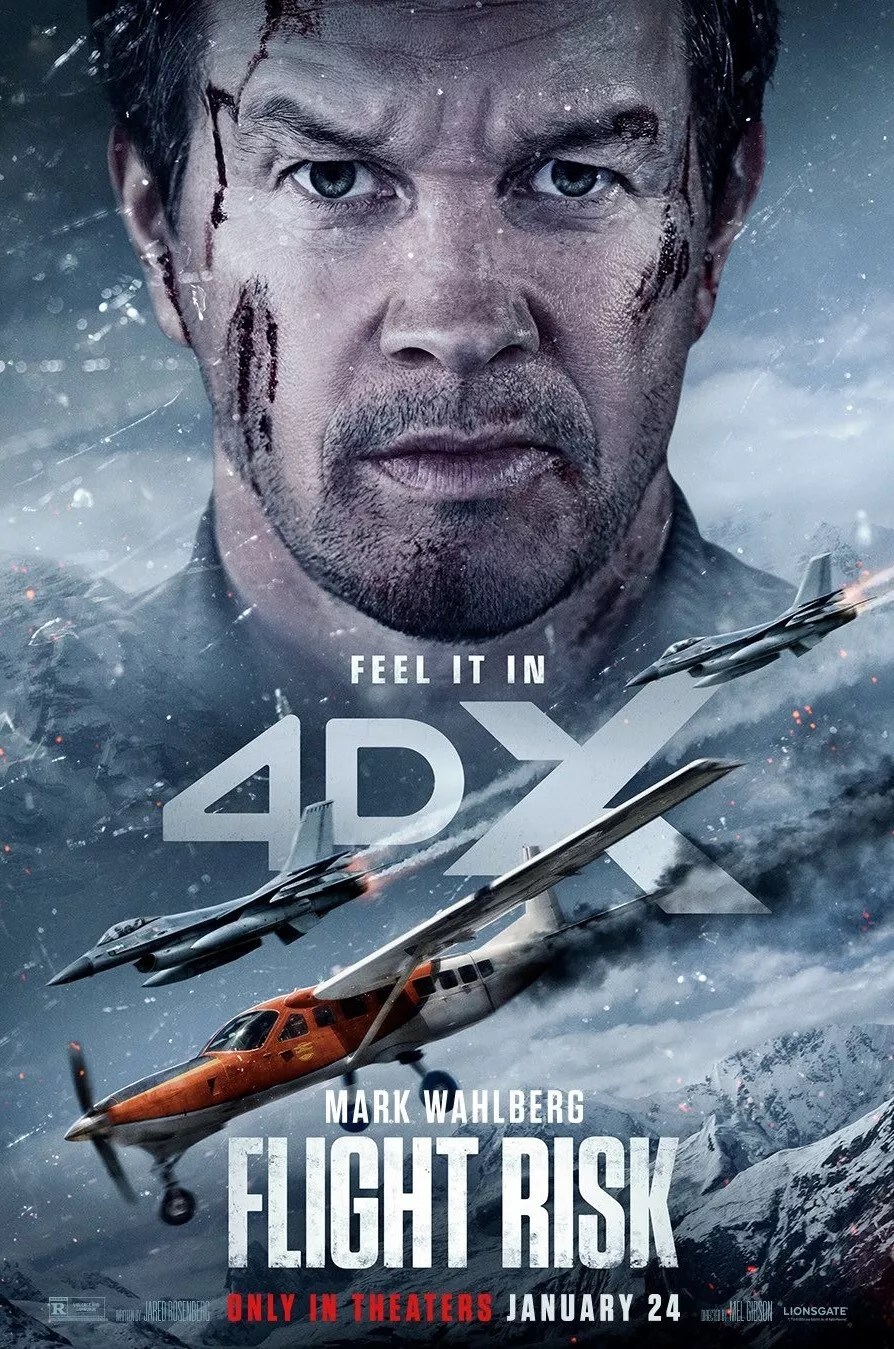
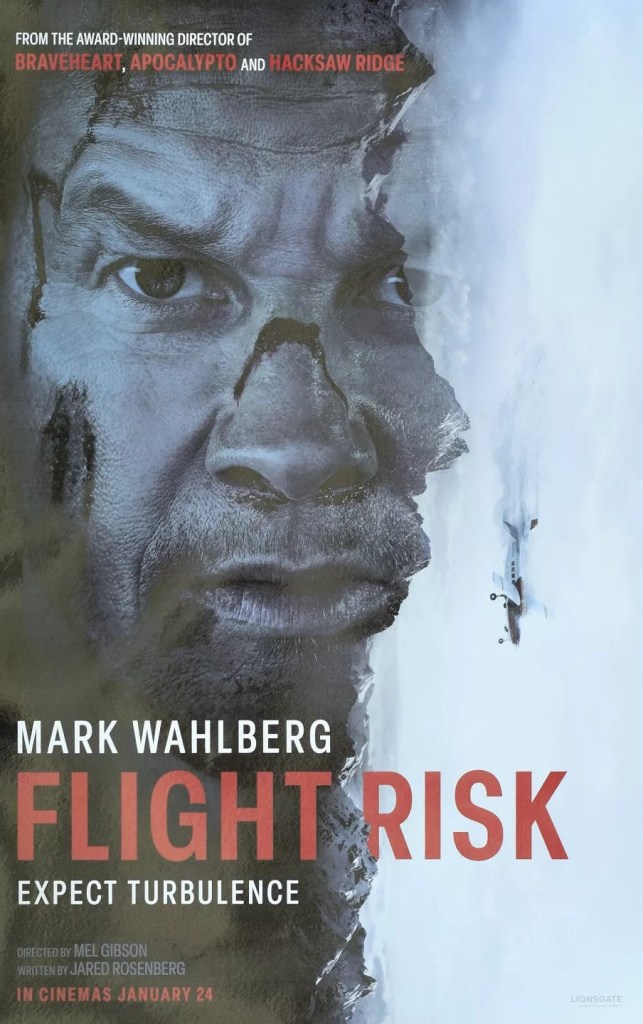
Flight Risk (2025) ** – Seen at the Cinema

At best, nifty piece of counter-programing, short on running time compared to the ballast-heavy bum-numbing three hours-plus of The Brutalist. At worst – where do we start? Maybe with the bald wig where you can see the join. Just part of the bombastic over-the-top zoppazaloola performance by Mark Wahlberg, deciding not to entertain a smidgeon of finesse or subtlety, not even of the John Malkovich (In the Line of Fire, 1993, Con Air, 1997) vintage, in his portrayal of a sadistic bisexual rapist murderer with a propensity for chopping off fingers and indulging in other anatomical atrocities.

The aim was, I guess, Narrow Margin on a Plane, though the confines of a cabin in a tiny plane leave little room for maneuver. And blow me down if the whole damn thing wasn’t shot over Alaska as the movie portends, but in Nevada, although I guess to the uninitiated one snow-capped peak looks very much like another. And blow me down number too, just when the tension (what tension?) should be ratcheting up to eleven, if we don’t take time out from chaining up the bad guy to allow our other more civilized bad guy to go all sentimental on us and want to do something good.

And that’s before we delve deep into a dumb back story about our cop being responsible for burning a prisoner to death after she went against all the rules of the profession and allow said female prisoner to take a shower, shackled to the bath to permit privacy, not expecting someone to lob a Molotov Cocktail into the bathroom. Your heart bleeds.

So, U.S. Marshal Madolyn (Michelle Dockery) in sore need of redemption after the prisoner-burning episode is escorting Winston (Topher Grace) from his hidey-hole near the Arctic Circle so he can appear as a witness in a Mafia trial, him being the mobsters’ accountant. Daryl (Mark Wahlberg) is their cocky pilot. Winston’s main job is to add laffs, by being just the kind of weak-minded entitled chap who took the easy route to riches rather than go to college and get a proper job. Madolyn has got other things on her mind beyond redemption and not liking the look of the cocky pilot.

She has sniffed out corruption in the department which might go as high as very high indeed, with a guy on the Mafia payroll, whom Winston, once he gets into his stride as a reformed criminal, is going to give up. All this by dint of her remote detection.

Or she could just be distracted by the rom-com elements of the plot. Did I mention there was romance? Our Madolyn is way too smart to fall for a dumbass like Winston and ain’t going to let a cocky hardhead like Daryl engage her in banter. But she’s a sucker for a sweet-talking off-stage fella who’s going to instruct her how to fly the plane once she’s incapacitated Daryl. He’s full of great information which I’ll bear in mind next time I’m on a plane coming in to land that’s run out of fuel. Guess what, it’s easier to land a plane if it’s run out of fuel. Phew, that’s a relief.

I’m generally all-in when it comes to hard-edged crime pictures with less-than-stellar casts as long as the action keeps coming and the plot makes some sense. This feels like they put out an all points bulletin for any idiotic plot handle they could find and when that didn’t work thought  the casting would save them. Let’s get one of those top-class English lasses from Downton Abbey and put her through the mill and let’s get a fairly stellar action star and let him go off-piste.

In fairness, Michelle Dockery, who had already mined a tough streak in Godless (2017), isn’t bad, discarding all the girly girl prettiness in favour of no make-up no-nonsense toughness and twisting around seven ways to sundown to accommodate all the twists in the plot, even softening enough to indulge the romantic dreams of her off-stage lothario.

There’s maybe a chance this will turn into so-bad-it’s-good gold and if so it will be down to a demented performance by Mark Wahlberg (Father Stu, 2022), one of the few top stars, either by desire or financial necessity, to take risks with his screen persona. The problem is that his part is really a glorified cameo, the picture not so much revolving around his horrid horror-porn imagination, as the redemption-cum-rom-com focus of Michelle Dockery, the latest in a series of eye-gouging unlikely action heroines.

Directed by double Oscar-winning Mel Gibson (Hacksaw Ridge, 2016), no slouch himself, as an actor, in putting in a demented performance. Directed, without, I guess, the slightest notion of irony. Script by Jared Rosenberg in his screen debut.

But as I said, beats The Brutalist hands-down when it comes to lean running time (just 87 minutes).

Discover WordPress

A daily selection of the best content published on WordPress, collected for you by humans who love to read.

The Atavist Magazine

by Brian Hannan

WordPress.com News

The latest news on WordPress.com and the WordPress community.