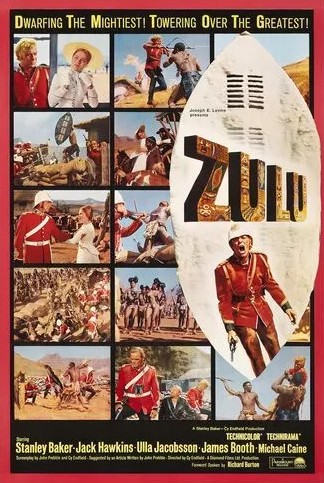
With all the (deserved) appreciation of Zulu, it’s hard to imagine it was a massive flop in the United States. Independent producer Joe Levine planned a double whammy for summer 1964 – The Carpetbaggers, an adaptation of the sizzling Harold Robbins bestseller, and Zulu. He even arranged for Zulu to follow The Carpetbaggers into the prestigious Palace first run cinema in New York. Spending big, Levine whipped up a huge marketing campaign for Zulu, which had notched up record grosses in the UK. There was a double-page spread in Variety in January 6 and again in February 10. One million promotional badges were distributed. A featurette “Great Battles in Film” was sent to 100 television stations.
Levine had a great line for the media. “I haven’t had time to read the script but I liked the title.” Subsequently, he told reporters he had read the script on a Friday and bought it the following Monday.
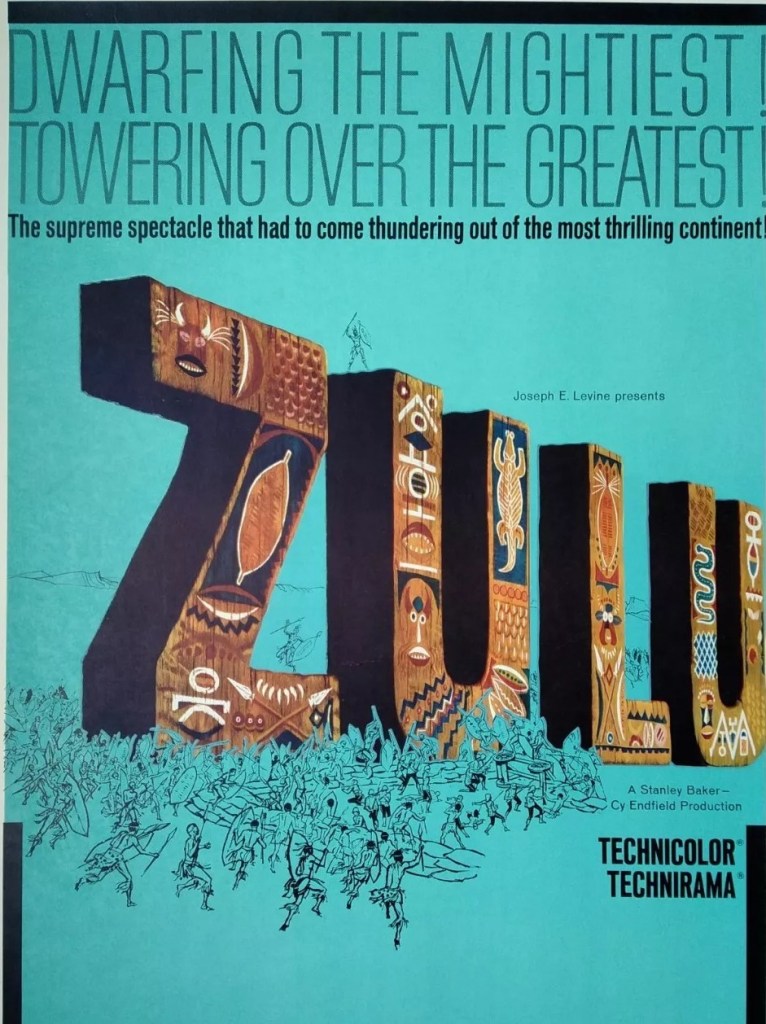
It had opened at the end of January at the Plaza in London’s West End and reports of its record-breaking $26,000 opening were expected to generate high hopes among U.S. cinema owners. Like The Carpetbaggers, it was distributed by Paramount. By April it had earned a record $638,000 in London alone, including $155,000 in a nine-week run at the Plaza.
Levine had form in finding success from the most unlikely projects. He had launched the low-budget Italian-made Hercules (1958) on the American public. Audiences weren’t quite unsuspecting given the fortune he had spent on promotion. It was money well spent and quickly went into profit. So the prospect of selling a British film about a battle nobody had ever heard of and, except for Jack Hawkins in a supporting role, starring unfamiliar names, did not faze Levine.
But the two films could not have been further apart. Where The Carpetbaggers stormed to $862,000 from 25 theatres in the New York area, Zulu could only manage $190,000 from 30 in Los Angeles. Zulu scored well in first run in Detroit – an $18,000 opening at the 2996-seater Palms, a second week of $16,000 and running two more weeks. There was a “smash” $15,000 in the 606-seater Loop in Chicago first run for starters and another three weeks but then it was quickly consigned to drive-ins. It registered $16,000 at the 1909-seat Pilgrim in Boston, $10,000 in openers in Cincinnati, $6,000 in Portland and $7,500 in Buffalo. It held well in Providence at the 2200-seat Majestic, first week of $7,000, second week of $5,000.
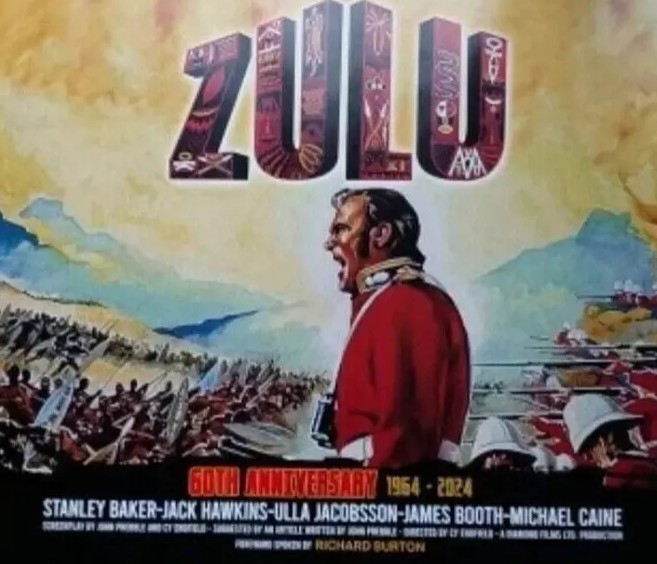
But there was only $8,000 from nine houses in Denver and $80,000 from 13 in Kansas City. Failure to find a niche was not for want of trying. In successive weeks in Los Angeles, it was supported by Nicholas Ray epic 55 Days At Peking, comedy Ensign Pulver, and Viking adventure The Long Ships.
To salvage something, Levine send it out, within a couple of months of initial release, as the support film to Italian-made Yesterday, Today and Tomorrow starring Italian sexpot Sophia Loren, possibly one of the strangest movie programs of all time.
In the annual box office rankings, The Carpetbaggers placed second. To get into the Variety annual chart, you needed to make more than $1m in rentals (the amount the studio received after the cinema had taken its cut). Seventy-eight movies managed this. Zulu was not one of them.
But even the poorest box-office performer has an afterlife. So in 1965 Zulu was pushed out again anywhere that would have it. That meant it supported some odd, not to say ugly, bedfellows – exploitationer Taboos of the World in Kansas City, The Three Stooges in The Outlaws Is Coming in Phoenix, B-western Stage To Thunder Rock in Long Beach, How to Stuff a Wild Bikini in Des Moines and Rhino in Abilene. They liked it in Long Beach where it supported both Circus World and That Man from Rio. It was the second feature to None but the Brave in Provo, Utah, and to two more successful Joe E. Levine movies, Yesterday, Today and Tomorrow in Ironwood, Michigan, and Marriage, Italian Style in Corpus Christi, Texas. Triple bills being a staple of drive-ins, it was seen with Viva Las Vegas and Beach Party in Tucson.
But it was not just support meat. Almost a year after its release, it topped the bill in Helena, Montana, with Robert Mitchum in Man in the Middle as support. In Chester it was the main attraction with Homicidal in support. In Weimar, Texas, it was supported by Tarzan the Magnificent and in Bridgeport by First Men on the Moon. At the Cecil theater in Mason City, Iowa, it played on its own, as it did in Colorado Springs where it was advertised as “in the great tradition of Beau Geste” (supply your own exclamation marks.)
But it was not done yet. Exhibitors in San Mateo had a soft spot for Zulu in 1966. It played there seven times, as support to The Great Race, Marlon Brando western Appaloosa, Fantastic Voyage (in two theaters), What’s Up Tiger Lily?, The Leather Boys and Lawrence of Arabia. Abilene brought it back twice, for a re-match with Rhino and then in a double bill with Kimberley Jim starring singer Jim Reeves when it was promoted as “a true story of the Zulu tribe.” Fremont cinemas also ran in twice – with Return of the Seven and Fantastic Voyage. In Troy and Bennington it rode shotgun with Elvis in Harum Scarum. In Charleston it supported Arabesque, in Winona The Second Best Secret Agent and in Long Beach What Did You Do in the War, Daddy?
The highlight of 1967 had to be a double bill with The Daleks (Dr Who and the Daleks) in Delaware, or perhaps the teaming with Batman in Cumberland, Maryland, or El Cid in Ottawa. Zulu returned twice to Fremont to support Africa Addio and John Sturges’ Hour of the Gun. In Modesto it played with Where The Spies Are. In Long Beach it was put on at a pop concert where the headline act was Organized Confusion (anybody remember them?). These three years of repeated showings hardly counted as a proper reissue, but it did cast an interesting light on what may – or may not – have turned into something of a cult film. In Britain, where it was a smash hit, it was reissued on the ABC circuit in 1967 and 1972. While it was largely unwelcome in the U.S., worldwide was a different story, bringing in $9 million in grosses.
SOURCES: 1964: Variety – U.S. box office figures: June 24, July 1, July 8, July 15, July 22, July 29, august 5, September 2, October 6. Information about other bookings comes from local newspapers.

 The Magnificent 60s
Not so surprising given the political climate in the USA at the time. Stunning movie. I feel fortunate that my dad didn’t care about the silly politics.
LikeLiked by 1 person
Joe Levine was very surprised given the money he spent promoting it. Glad you managed to catch up with it.
LikeLike