Sinful Davey (1969) was a rare black spot during the second half of the 1960s for acclaimed independent production outfit Mirisch Brothers. With a loss of $2.57 million – counting domestic and foreign rentals – it was only beaten in the red ink stakes by Blake Edwards war comedy (always a dangerous combination) What Did You Do in the War, Daddy? (1966) starring James Coburn which lost $2.75 million.
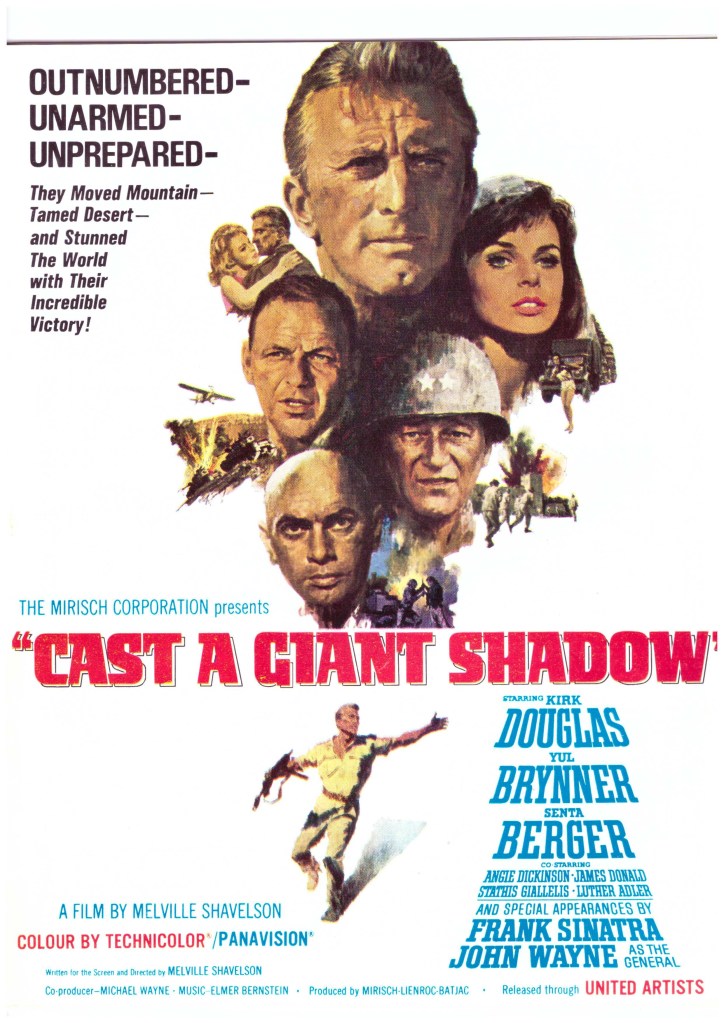
But otherwise this was a banner period for the mini-studio which made a profit of $36.1 million on an expenditure of $69.4 million. Except for the Blake Edwards, its biggest gambles turned out winners or at least scraped by into the black. Hawaii (1966) with Julie Andrews and Max von Sydow, budgeted at $13.9 million, produced $4.9 million profit and the all-star Cast a Giant Shadow (1966) steered clear of disaster, if only just, with a profit of $890,000 on its $5.51 million budget.
That Mirisch came racing home in triumph was largely down to a pair of less conspicuous projects. Getting by on the third-lowest budget of the period, the Oscar-winning In the Heat of the Night (1967) transcended its miserly budget of $2 million to carve out a $16 million notch on the box office rentals bedpost. Norman Jewison Cold War comedy The Russians Are Coming, The Russians Are Coming (1966) pulled in nearly $8 million profit on a $3.9 million budget. Romantic heist thriller The Thomas Crown Affair (1968), pairing Steve McQueen and Faye Dunaway, with double the budget of In the Heat of the Night, scored just shy of $7 million profit.
The sequel Return of the Seven (1966), with Yul Brynner leading a new team of gunslingers, shot up $3.62 million profit on a paltry budget of $1.78 million. A second Blake Edwards comedy The Party (1968), with Peter Sellers, made a profit of $1.5 million on a $3 million.

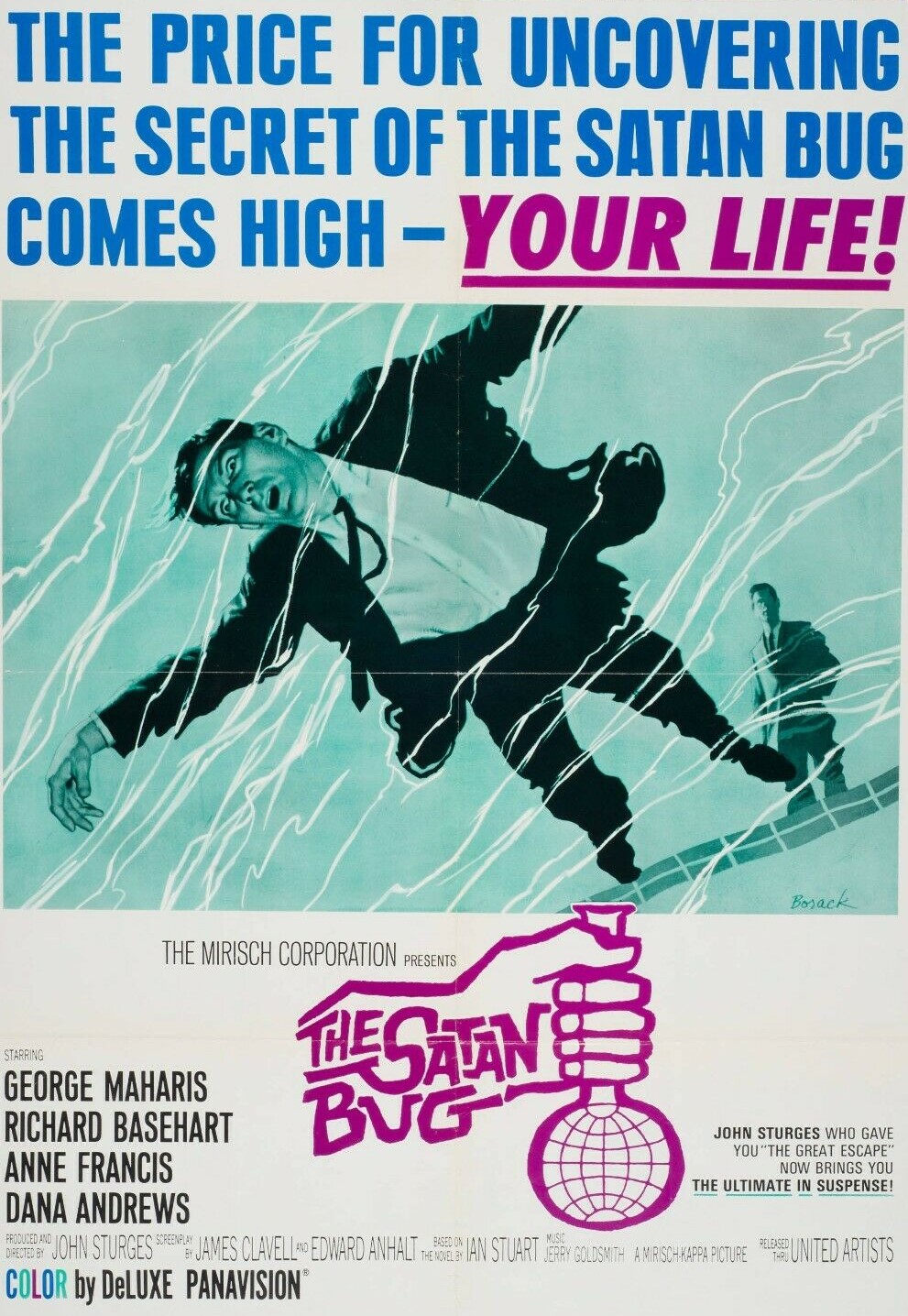
With only four out of 18 movies registering as official flops, the rest of the pack broke even or better. There would be some sighs of relief that John Sturges 70mm western The Hallelujah Trail (1965) starring Burt Lancaster and Lee Remick, limped home with $385,000 in the black after an expenditure of $7.15 million. Sturges did better with the lower-budgeted The Satan Bug, based on the Alistair MacLean bestseller. Making do with a budget of $1.78 million, it was profitable to the tune of $822,000. Billy Wilder’s The Fortune Cooke (1966) with Walter Matthau and Jack Lemmon, made $900,000 on a $3.7 million budget.
Two of the smallest-budgeted items – Return from the Ashes (1965) with Maximilian Schell and Samantha Eggar and Suzanne Pleshette melodrama A Rage to Live (1965) both brought in around $180,000 profit on budgets of $1.56 million and $1.32 million, respectively. The two other outright flops were Fitzwilly/Fitzwilly Strikes Back (1967) starring Dick van Dyke and another John Sturges western Hour of the Gun (1967) with James Garner and Jason Robards heading back to the OK Corral – $300,000 loss for the former ($2.9 million budget) and $600,000 for the latter ($3 million budget). Scraping home, literally by the skin of its box office teeth was the adaptation of Broadway musical How to Succeed in Business without Really Trying (1967) which managed a whole $5,000 profit on a $3.7 million budget.
However, Hollywood had become accustomed to downgrading foreign box office expectations, a caution borne out by the proportionately poor overseas response to the likes of Hawaii which only managed $2.8 million on foreign rentals. The Russians Are Coming, The Russians Are Coming made four times as much in rentals in the U.S. compared to abroad, In the Heat of the Night’s domestic contribution was double that of foreign.
On the other hand, foreign was the major reason Return of the Seven did so well. It pulled in $3.9 million in rentals overseas – the fourth biggest result of the period – compared to a disappointing $1.5 million at home. Similarly, Hour of the Gun would have been an even greater flop after the domestic market delivered only $900,000 in rentals, allowing redemption of a sort with $2.4 million abroad. Even The Hallelujah Trail had foreign audiences to thank for $4.5 million compared to $3 million at home. The Satan Bug did twice as much business away from home as in the U.S.
Of course, when I talk about profit that’s only in reference to rentals compared to budget. Other costs have to be added in before movie is considered a genuine success. That’s best exemplified by earlier Mirisch picture The Great Escape (1963). Budgeted at $3.75 million, it brought in global rentals of $11 million but only made $326,000 in final profit. Some Like It Hot (1959) amassed rentals of $12.9 million on a $2.8 million budget. Profit? Just $487,000.
Who’d be a movie producer?
.SOURCE: “Mirisch First 20-Picture Deal” and “Mirisch Second 20-Picture Deal,” United Artists Archive, Wisconsin Center for Film & Theater Research.

 The Magnificent 60s
I do not believe those low profit figures. They must use accounting tricks in order to avoid tax.
LikeLiked by 1 person
Few people did believe them. If you were a big tar in those days percentages were worked out against the gross (rentals, that is, not what we’d call gross) so at least they could not be cheated. I do believe like you that figures were manipulated at various points. However, there were other grey areas that were hard to contest. A studio and a mini-major like Mirisch needed to cover its overhead so that is included somewhere. The biggest issue I also felt was the distributor. He was never paid a flat fee but a percentage usually 30%.
LikeLike