
The Mirisch Brothers, the first of what would be called the “mini-majors,” ushered in a Hollywood production revolution in the 1950s and 1960s by not just paying over-the-odds for top directors and actors – $750,000 apiece for John Wayne and William Holden for The Horse Soldiers (1959) plus $250,000 for John Ford, for example – but giving them far greater freedom in the choice of scripts, control of pictures and a bigger share of the profits. This approach went down very well with the talent, less so with rival studios who complained their approach was driving up costs at a time when Hollywood was on the brink of collapse with major studios teetering on the edge of bankruptcy as audiences plummeted.
Walter Mirisch was the name best known to moviegoers since he worked as producer on the company’s output. Harold Mirisch was best known to the studios since he was the guy who set up the deals and found the funding. Marvin Miriasch was the backroom boy who ensured the whole process kept ticking over.

Mirisch had secured a deal with United Artists to supply a series of pictures, the first contract calling for 20 movies. Generally, the company was lauded by the trade press as innovative thinkers producing a stream of noteworthy movies such as Some Like it Hot (1959), The Magnificent Seven (1960), The Great Escape (1963) and Irma La Douce (1963) .As independent producers they had more than their fair share of Oscar successes.
But like every player in Hollywood, they employed sleight of hand, convincing the media that they were highly successful operators when the reality was exactly the opposite. The Wisconsin Center for Film and Theater Research, part of the University of Wisconsin, holds a vast archive relating to United Artists. Within that archive, I was able to source the materials that cast an alternative light on the Mirisch Brothers’ initial foray into the Hollywood big-time.
The figures revealed that the first 20 pictures – including Some Like it Hot, The Great Escape and Irma La Douce – in the Mirisch-United Artists deal racked up a cumulative $8 million loss.
In fact, one of the factors driving down the company’s potential profitability was the amount of money it gave away in profit-share. In addition, the bigger profits were often to be found in distribution and exhibition. For a start, about 50% of box office revenue found its way into the exhibitor’s pockets. From what was left over, another big chunk went to the distributor, in this case United Artists, and once profit-participants had been paid off, there was sometimes remarkably little finding its way back to the Mirisch Brothers’ coffers.
For example, Some Like it Hot, which according to these figures generated a total of $12.9 million in domestic and foreign rentals* (i.e. what’s left after exhibitors have taken their share), racked up less than half a million dollars in profit for the Mirisch Brothers. The Magnificent Seven earned three times as much overseas as in the U.S. so though viewed as a flop at home it ended up with $321,000 in the bank. The Great Escape brought in a profit of $326,000 on total rentals of $11 million while Irma La Douce topped that with $440,000. The Apartment (1960) delivered Mirisch’s biggest profit of $1.09 million.
But those were the only films – out of the 20 launched in Mirisch’s first few years of operation – to turn a profit. The other 15 all hit the buffers. That was not a good ratio at all. That three-quarters of the Mirisch picks turned into losers was hardly cause for celebration.
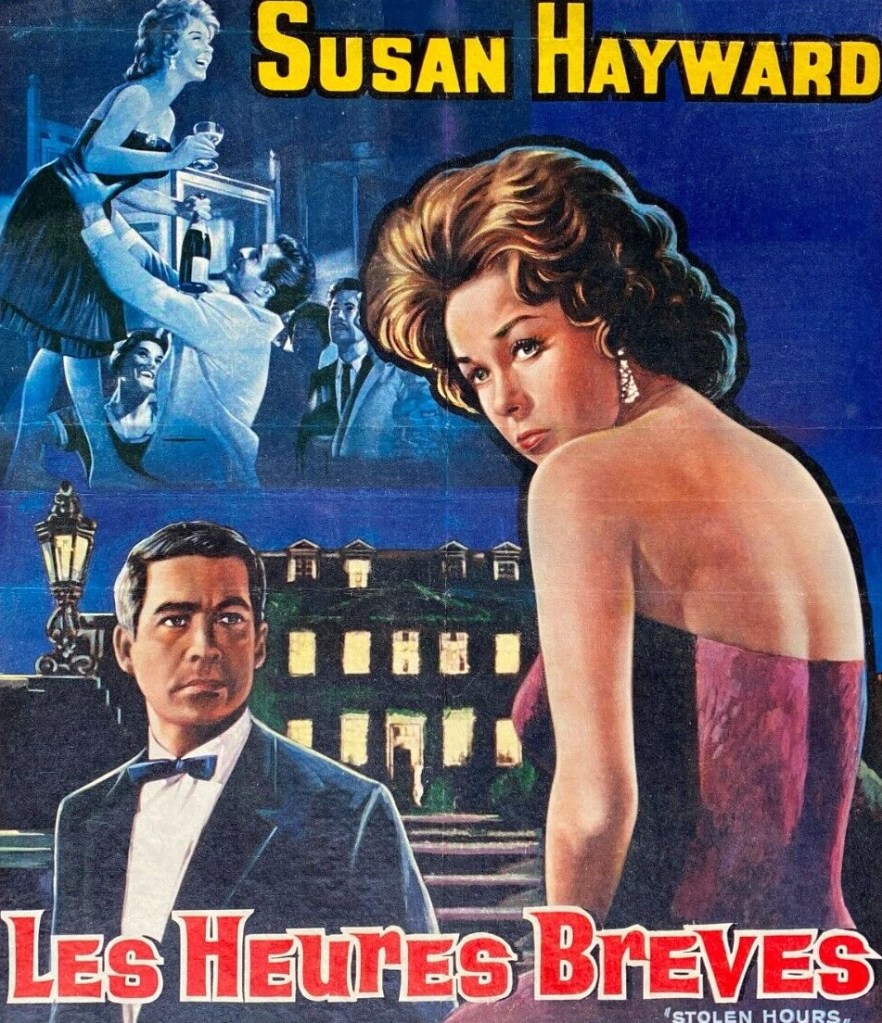
Some of the losses were stratospheric for the time. The Children’s Hour (1961), with Audrey Hepburn picking up a colossal upfront fee, was in the red to the tune of $2.7 million. The loss on The Horse Soldiers amounted to $1.8 million with Billy Wilder’s ill-fated One, Two, Three suffering a $1.5 million loss with Toys in the Attic turning into a $1.2 million liability. Stolen Hours with Susan Hayward added nearly $1 million to the company’s overall debt. Even Elvis Presley, at that point a guaranteed box office draw, offered no respite – the loss on Kid Galahad above $430,000 and that of Follow That Dream $195,000.
So you might be wondering with such a poor ratio of hits to flops why the Mirisch Brothers managed to stay in the game. Well, before the final figures were in on the contract to deliver the first 20 pictures, United Artists were already committed to a further 20 movies, some of which were already in production. But there were two other elements acting in Mirisch’s favor. The first was that exhibitors were desperate for new movies, the industry only beginning by 1963 to turn a financial corner, and it was expected that Mirisch would have learned from its mistakes and stop underwriting expensive pictures (which turned out to be untrue).
But second, and more importantly, the Mirisch losses did not impact so badly on United Artists. That studio made the bulk of its revenue from distribution. Even if a picture was a flop, UA’s 30% distribution fee was based on the gross, so a movie that maybe ended up as an overall financial flop could still generate enough revenue to keep UA happy.
Also, UA, now seeing record profits from the likes of its investment in Tom Jones (1963) and on the brink of a James Bond bonanza could afford to carry its production partner. So Mirisch kept on pretending it was a huge success and the trade press kept on believing it.
*These figures do not including television sale or future reissues. But initial television sales in the early 1960s averaged about half a million dollars for successful movies. What television would pay was based on the original domestic gross (i.e. perceived popularity). Only a couple of pictures, most notably The Magnificent Seven, significantly added to their initial release income through reissue. So it is extremely unlikely that the Mirisch Brothers would have gone into profit on those first 20 pictures through reissues and television sales in the 1960s, and doubtful if they would have even halved the losses.
SOURCE: “Mirisch Pictures First 20 Picture Deal,” Appendix II, United Artists Archive, Wisconsin Center for Film and Theater Research.

 The Magnificent 60s
What an information I did not know! I thought they phenomen al success in some of them, like The Magnificent 7 and The Great Escape etc.
LikeLiked by 1 person
Surprised me too.
LikeLike