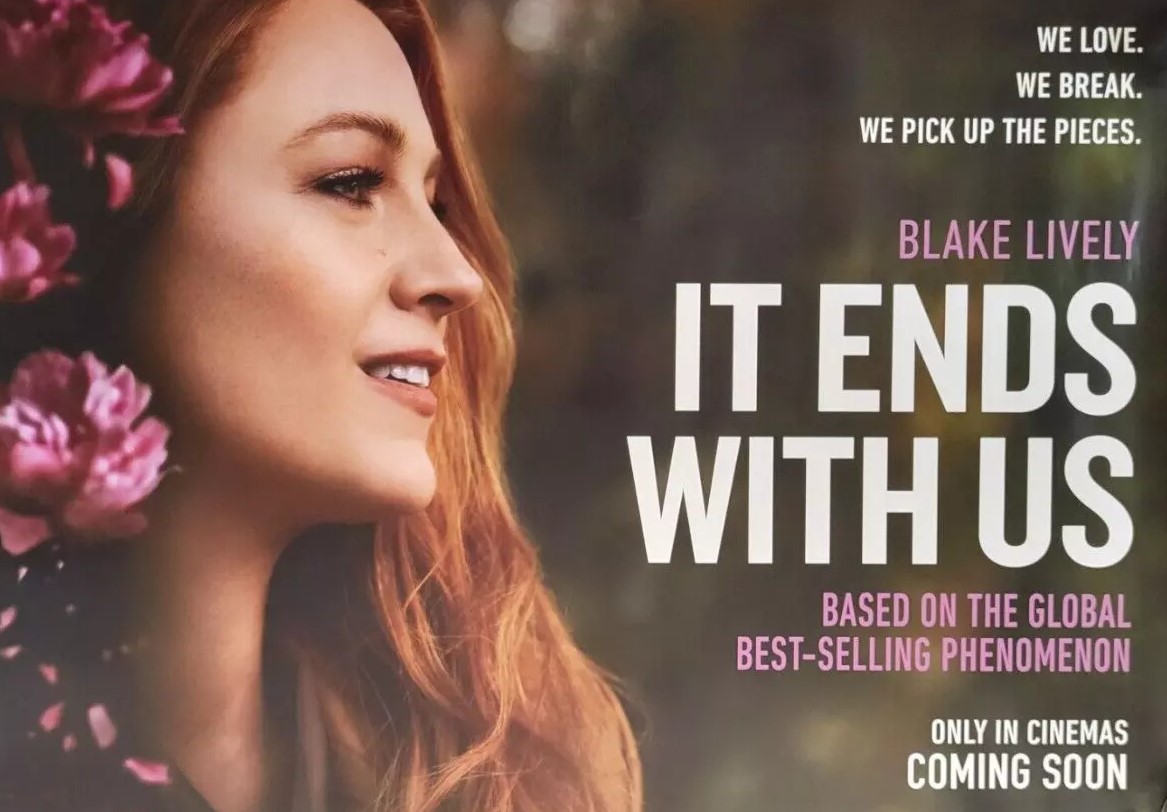
Doubt if I’m the target audience for this little number. In truth, I snuck it in between the excellent Alien sequel and the execrable Trap in my weekly cinema outing. They don’t make them like this any more in part because the straightforward romantic drama was overtaken by the quirky rom-com at which the likes of Tom Hanks, Meg Ryan, Julia Roberts, and Hugh Grant excelled. In the Hollywood Golden Age, Clark Gable would hardly have fashioned a career had he not been teamed with a host of top female stars and Spencer Tracy and Katharine Hepburn couldn’t keep their hands off each other.
But come the 1960s the superstar as loner did away with that popular genre. Apart from The Thomas Crown Affair, Steve McQueen scarcely had a screen romance worth noting, nor did Paul Newman, Lee Marvin or Clint Eastwood and although Charles Bronson ensured wife Jill Ireland had a role in virtually all his movies, romance was rarely on his mind. But cast your mind back to The Way We Were (1973), the incredibly popular pairing of Barbra Streisand (billed first you might notice) and Robert Redford and you can see what, for one reason or another, Hollywood tossed away.

Domestic violence wasn’t on the menu back then and while it plays a part here, that’s not to detract from a solid romance with an excellent meet-cute, two hunks, some terrific dialog, and a sparkling supporting cast. This could be dismissed as upmarket Mills & Boon, especially given the three principals are, respectively, a florist, chef and neuro-surgeon, outside of a fireman just about the sexiest professions abounding in the world of fiction.
Florist Lily (Blake Lively) has to choose between commitment-phobic top doc Ryle (Julian Baldoni) and childhood sweetheart Atlas (Brandon Sklenar), now a successful chef. Her shop assistant Allysa (Jenny Slate) warns Lily about her lothario brother Ryle, but eventually he wears her down and they embark on a relationship that ends in marriage. But when Atlas pops up again, the perfect marriage begins to wear thin.
The return of Atlas brings back memories of her father who abused her mother and beat up Atlas after discovering him in Lily’s bed. The movie skips over Lily’s failure to stand up to her father and, although Atlas was hospitalized as a result of the encounter with her father, she allows her first proper boyfriend to drop out of her life. Luckily, he bears no grudges and sits on the sidelines offering tacit support should her marriage go sour. Unfortunately, she’s tucked his telephone number away in her mobile phone cover and on finding it the already simmering Ryle kicks off.

We open with a great scene with Lily, called upon to give the eulogy at the funeral of wealthy father (Kevin McKidd), walking out without finding anything good to say. There’s a clever visual, the piece of paper where supposedly she was to write down the five things she loves about the deceased, but all she’s written are the five numerals, and it’s as cleverly reprised later on.
The domestic violence is artfully done, so that, at first, we are inclined to believe that he strikes her on the face or throws her down the stairs by accident, partly from seeing the incidents from her confused point-of-view and partly a mind-set that doesn’t want to accept that her chosen mate may be the spitting image of her father. The bite on the tattoo on her neck accompanying attempted rape is a different story. While Ryle doesn’t per se have justification for his innate violence, his inhibition is partly explained by guilt over a devastating incident in his childhood.
The title comes from the final scene. Presenting baby to father, Lily asks Ryle what advice he would he would give his daughter should she ever confess she had been smacked around or thrown down the stairs. He’s shamefaced enough to give the correct answer and she’s smart enough to give him the boot. “It” meaning violence from men, “ends with us,” she whispers to the baby.
And although that’s the big supposed big takeaway from the movie, in reality it doesn’t pivot on that element, instead it’s a very satisfactory almost classical love triangle of the kind they used to make, with plenty good lines and packed with interesting scenes.
Blake Lively, as she proved in The Rhythm Section (2022), is very capable of carrying a picture but here she’s swamped by support. Justin Boldoni (Con Man, 2018) is in double-hyphenate form – he directed it (Clouds, 2020, his previous) – stepping up to the plate not just as a prospective candidate to become Hollywood’s next big male sex symbol but making an impressive movie, slow-burn to allow characters to find their feet and for the actors not to rush at scenes or bite off lines. Jenny Slate (I Want You Back, 2022) is superb. Christy Hall (Daddio, 2023) adapted the Colleen Hoover bestseller.
Thoroughly satisfying involving drama.

 The Magnificent 60s
Didn’t know Slate was in this, but it’s a cultural phenomenon so I will check this out. Would love to see how they got such a huge audience, it never turned out for Lively before, I guess the book and being effective counter programming did the heavy lifting.
LikeLiked by 1 person
BookTok did most of the pre-selling I guess. Movies as varied as Mamma Mia and Barbie showed there was a colossal market out there for female-skewed pictures.
LikeLike