Unless you could afford to visit first run in big cities or grew up in the multiplex era when every cinema played the same movies, you would have noticed in 1967 a considerable difference between what was shown, both in type of movie and length of run, in different towns all over the country, whether you lived in the USA, Britain, France, Italy, Australia or the Far East. The U.S. trade magazine Box Office ran a fortnightly page devoted to reports of how various movies performed in various locales. Small town cinemas showed movies long after their first run, second run and even third run in the big cities. Sometimes they refused to pay exorbitant rentals and waited even longer. More likely, they turned down pictures they didn’t think would appeal to their clientele. So this is a snapshot of the lives of exhibitors back in the 1960s.
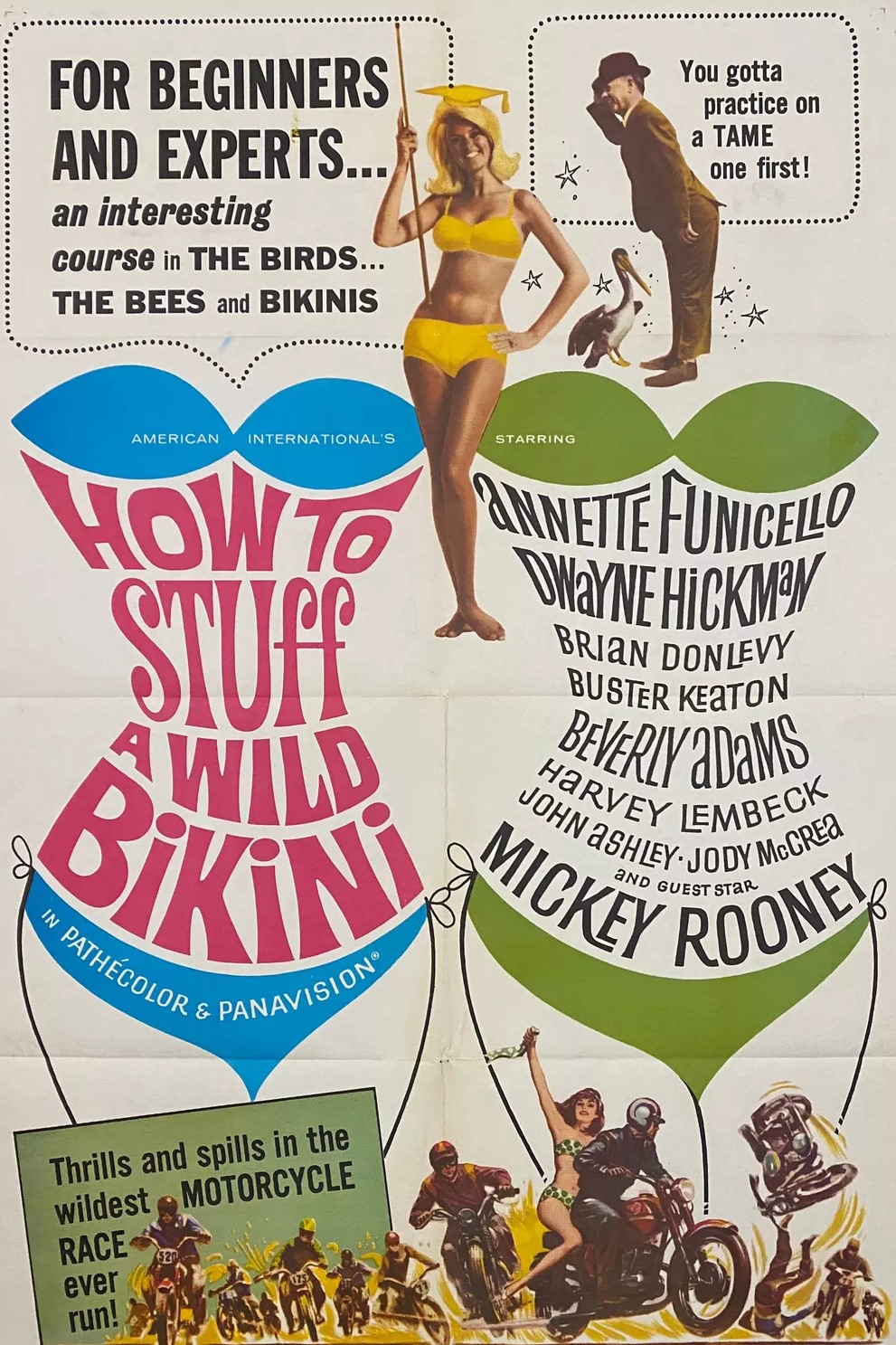
How to Stuff a Wild Bikini (1965) went down a storm in Lockwood, Missouri, so much so that exhibitor Charles Burton planned to bring it back for a third run. He was less keen on Born Free (1966), “a fine film” but a box office turkey because, unlike Disney, Columbia didn’t put merchandising weight behind it. Of The Chase (1966) headlining Marlon Brando, he complained “I refuse to call this a movie.” British adventure East of Sudan (1964) proved a hard sell in part due to the title at the Capitol in Rochester, New York. That Man in Istanbul (1965) was considered “better than any James Bond” at the Villa in Malta, Montana.

The owner of the Jackson Theater in Flomaton, Alabama, complained he had been duped into paying a 50 per cent rental for Lady L (1965) starring Sophia Loren and Paul Newman. “I’ll never learn,” he moaned and was equally dismissive of all-star comedy roadshow Those Magnificent Men in their Flying Machines (1965), “very disappointing in gross and entertainment value.” Paul Newman, even allied with Julie Andrews, proved no bigger a draw there in Torn Curtain (1966). “The lowest Hitchcock grosser I’ve ever played,” lamented the owner.
The manager of the Starlite Drive-In in Chipley, Florida, recommended sci fi The 10th Victim (1965), “guaranteed to hold interest,” although he conceded that Ursula Andress was the draw. Another house in the same state, the 90 Drive In in Baldwin, attributed the success of Boy, Did I Get A Wrong Number (1966) not to sexy European sex symbol Elke Sommer but to comedienne Phylllis Diller because Bob Hope “doesn’t usually draw well here” and it did the best business ever for a movie featuring the star. Leon Kidwell at the Majestic in Allen, Oklahoma, reckoned Red Line 7000 (1965), a flop most places, was “just what my crowd likes” and also recommended Arabesque (1966) “one of the best pictures to come out Pinewood (England).” But “war stories don’t work” in the Scenic in Pittsfield and Henri Verneuil’s Weekend at Dunkirk (1964) no exception despite “nice performances” from Jean-Paul Belmondo and Catherine Spaak and the in-built excuse that it was foreign.
Opinions varied on Elvis. “Poor business..(not) like they were one time (when audiences) wanted to see Elvis every few months. Old, new, rerun, they didn’t care,” but the bottom had dropped out of the market for a revival of Kid Galahad (1962) at the Main Theatre in Stonewall, Alabama, while Paradise Hawaiian Style (1966) was deemed “good enough” at the Scenic – “its Elvis and that’s a lot” commented the cinema’s Arthur K. Dame.
There was clearly still an audience for less controversial films, witness the remake of Smoky (1966) starring Fess Parker, hardly a marquee name, but it came off as a “very good horse story” at the Jackson and A Man Called Flintstone (1966) was a hit at the Star Drive In in St Johnsbury, Vermont. Offbeat Lord Love A Duck (1966) starring Roddy McDowell and Tuesday Weld hit a home run at the Scenic. “My small audience got a big kick out of it and went home happy,” noted Dame. A reissue of The Brides of Dracula (1960) did well at Rochester which also had audiences clamoring for more gritty historical offerings like The War Lord (1965) featuring Charlton Heston. In light of the success of Cat Ballou (1965) and The Professionals (1966) the Jackson rescheduled Lee Marvin oldie The Killers (1964) as part of a double bill. .
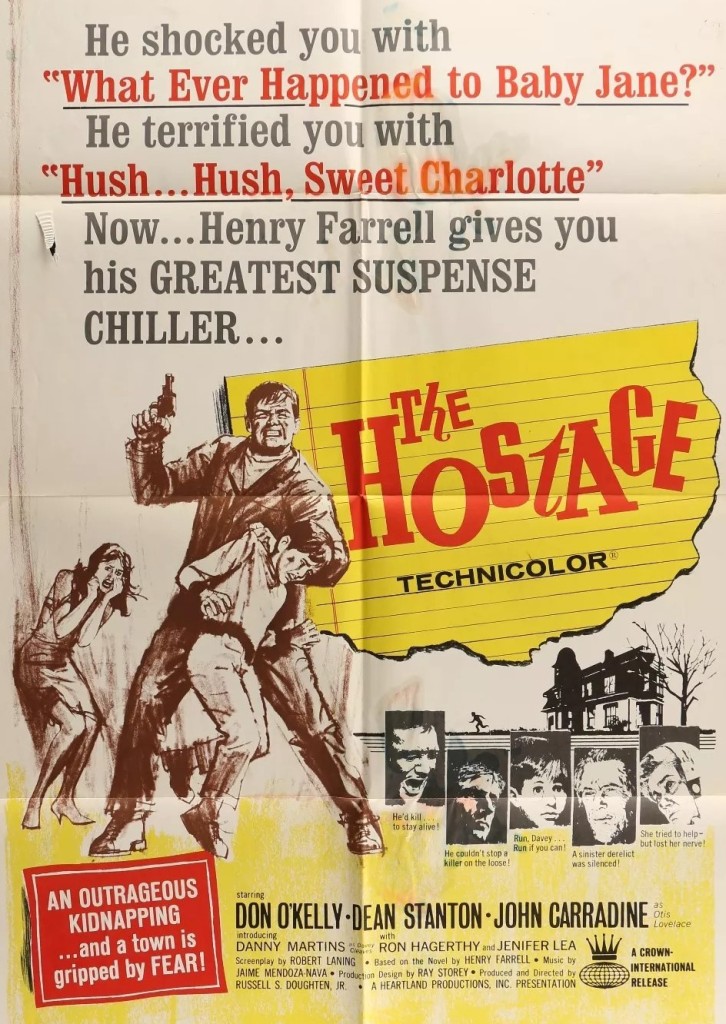
The chances of such houses enjoying anything approaching a day-and-date release were remote. So when the Lans in Lansing, Iowa, had the opportunity to do so you could hardly blame the exhibitor for taking the gamble of putting more advertising bucks behind locally-made The Hostage (1967) but in retrospect the “fine suspense picture…didn’t do business.”
Of the features mentioned, Those Magnificent in their Flying Machines had the longest run, four days, probably dictated by the distributor, and the unheralded Lord Love a Duck the shortest (one day). Arabesque. Torn Curtain, The Hostage and That Man from Istanbul merited three days but for all the rest screenings were limited to two days, and not just at the start of the week, many of those showings taking place over the Saturday-Sunday period.
It’s somewhat surprising to see how towns with tiny populations could support their own cinema. Among the operations featured here, the Capitol in Rochester had the biggest catchment area, a 330,000 population, but it wouldn’t have the market to itself, an area that size would have competitors. Of the other towns mentioned, Pittsfield had a population of 2,300; Malta 1,900; Flomaton 1,480; Lansing 1,328; Allen 1,000; and Lockwood 852. Small wonder they changed programs so often
SOURCE: “The Exhibitor Has His Say,” Box Office, January 9, 1967, pA4.

 The Magnificent 60s
Is there an award for the most mentions of Ursula Andress in one week?
LikeLiked by 2 people
You have just added to the list.
LikeLike
In the late Fifties and early Sixties and even in the early Eighties, all time favourites in brand new prints were shown at normal first run prices ie Scaramouche, The Adventures of Don Juan, Gone With The Wind, For Whom The Bell Tolls etc.
LikeLiked by 1 person
Wow. There was a big surge in reissues in the 1960s and 1970s as Hollywood tried to provide product that would appeal to the older audience. I envied you being able to see these oldies in a cinema rather than TV, video or DVD.
LikeLike