Phantom of the Open (2021) ** – Seen at the Cinema

A sentimental ending and Oscar winner Mark Rylance (The Bridge of Spies, 2015) can’t save this latest tribute to that particularly British phenomenon – the loser. While no doubt this is in essence the true story of golfing wannabe Maurice Flitcroft who gained some kind of notoriety – and latterly some celebrity – as the world’s worst golfer after posting, on live television, by a long way the worst score in British Open history, it’s plagued with a woeful attempt at no-hoper charm that just doesn’t work.

Rylance (Maurice Flitcroft) is part of the problem. He could be a cousin to Jim Broadbent’s dour character in The Duke, but where Broadbent comes to life in the second half, Rylance does not, a one-note performance that fails to elicit any sympathy for the character. Where do I start with what is wrong with the picture?

Well, for a start, the idea that a crane driver is an awful job. My grandfather was a crane driver in the shipyards in Clydebank and it was a skilled and highly-prized job and earned him a little bit more than the other workers down below and instead of moaning about his job he drove on his children to become educated – my mother among three of the family to go to university in World War Two Glasgow. Clearly, also, “poor” Maurice earned enough to put down a deposit on a house, a big achievement in the 1960s.

And the idea that Maurice had never heard of golf until the mid-1970s seemed preposterous when hardly 80 miles away Tony Jacklin, the son of a steel worker, won the British Open at Royal Lytham St Annes in 1969. The whole of Britain was electrified. I remember with my brother peering through the window of a television shop to watch it live on television. Equally preposterous is the notion that golf was a middle-class hobby. I remember as a teenager just after Jacklin’s famous win caddying for my father at a public golf course, which required no payment of annual fees nor wearing of fancy golfing ensembles. Golf was far from a hobby restricted to the well-off.

The closest loser-hero to Flitcroft is British ski jumper Eddie the Eagle (also filmed) but Eddie was at least a recognized and official contender in his sport. He did not try to sneak in the back door without doing any of the endless training necessary for anyone who wants to compete at a high level. It’s just crazy to set Flitcroft up as some kind of official-tweaking hero, when he simply managed to gain entry to the Open by cheating. The closest comparison in golf in the winner-from-nowhere category was John Daly who won a major in the U.S. in 1991, only qualifying after one of the contenders dropped out, but he had been a professional golfer for four years by that time.

And I hate this grim mud-tainted view of the 1960s and 1970s. I grew up in that period and certainly don’t recognize the picture painted. Flitcroft’s children, luckily, didn’t inherit the delusional gene, his twins becoming world champion disco dancers and his other son becoming a successful businessman.

Flitcroft just wanted glory without any of the hard work and it’s hard to find any sympathy for such a delusional man. Anyone who pointed out to Flitcroft just how delusional he was received short shrift in the film. Woe betide any official who thought this character was going to bring derision to golf, at a time when the sport was going through a revival, thanks to Jacklin who would inspire a generation of even better golfers like Nick Faldo and Ian Woosnam.

It’s almost a cosmic joke that everyday golfers looked upon Flitcroft as their idol simply because he played the game as badly as they did and that he received some kind of celebrity as a result. Odd, too, that nobody’s ever thought to make a film about a true winner like Tony Jacklin.
Banned, Ignored, Shelved

If anybody in Britain told you they saw Wild Angels (1966) when it came out that year you could safely accuse them of being liberal with the truth for that was one of the many films banned by the censors there. Global censorship remained a major issue for studios during the 1960s, every country imposing its own system, and very rarely did they conform with each other. At the beginning of the decade, the biggest issue was sex, by the end it was joined by violence and drugs.

Films were rarely banned in the United States since scripts for movies liable to violate the agreed guidelines tended to be submitted in advance and a compromise reached prior to production. However, local U.S. censorship bodies acting independently prevented some films being shown, This Rebel Breed (1960) in Memphis, Room at the Top (1959) in Atlanta. Movies banned in different countries included: Operation Eichmann (1961) in Israel and Germany, Queen Bee (1963) in Italy, The Collector (1965) in New Zealand, Wild Angels (1966) in Denmark, Lady in a Cage (1964) in Sweden and Geneva, Ulysses (1967) in Glasgow and Edinburgh, and Easy Rider (1969),  despite winning a prize at Cannes, in France. Doctor Zhivago (1965) was banned in Thailand for being pro-communistic and in India for the opposite reason. Ireland banned 56 movies in 1960, Finland 12 in 1962, Sweden 10 in 1963 and West Germany 19 that same year. In South Korea in 1962 you still could not see any Japanese movies.

Being banned of course became a promotional tool. It was a regular joke in America that a low-budget picture had no chance of box office success unless it was banned in Boston. In France, Les Teenagers (1968), Young Wolves (1968), The Nun (1966) and Paris Secret (1965) all benefitted from being released after tussles with the censor and the controversy over Ulysses saw it break box office records in Dundee in Scotland.

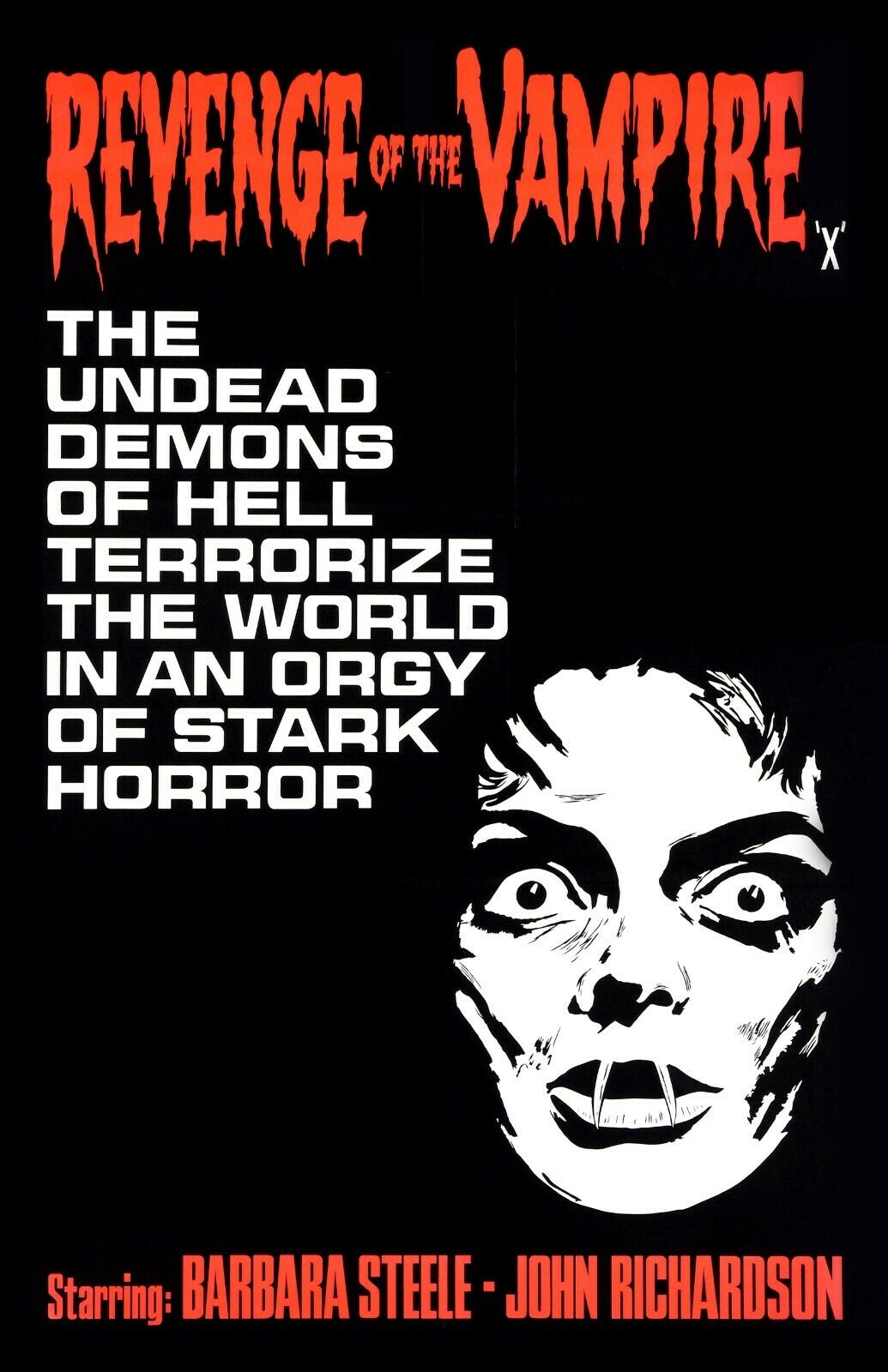
The British censor prevented screening of films deemed too violent including The Couch (1962) about a serial killer, Samuel Fuller’s Shock Corridor (1963), Violent Midnight (1963), The Thrill Killers (1963), Shock Treatment (1963) – despite a cast that included Lauren Bacall and Stuart Whitman – Fuller’s The Naked Kiss and Weekend of Fear (1966). Among horror films denied a showing were Blood Feast (1963), Two Thousand Maniacs (1964) and, initially, Mario Bava’s Black Sunday (1960) which was later reprieved and shown as Revenge of the Vampire.

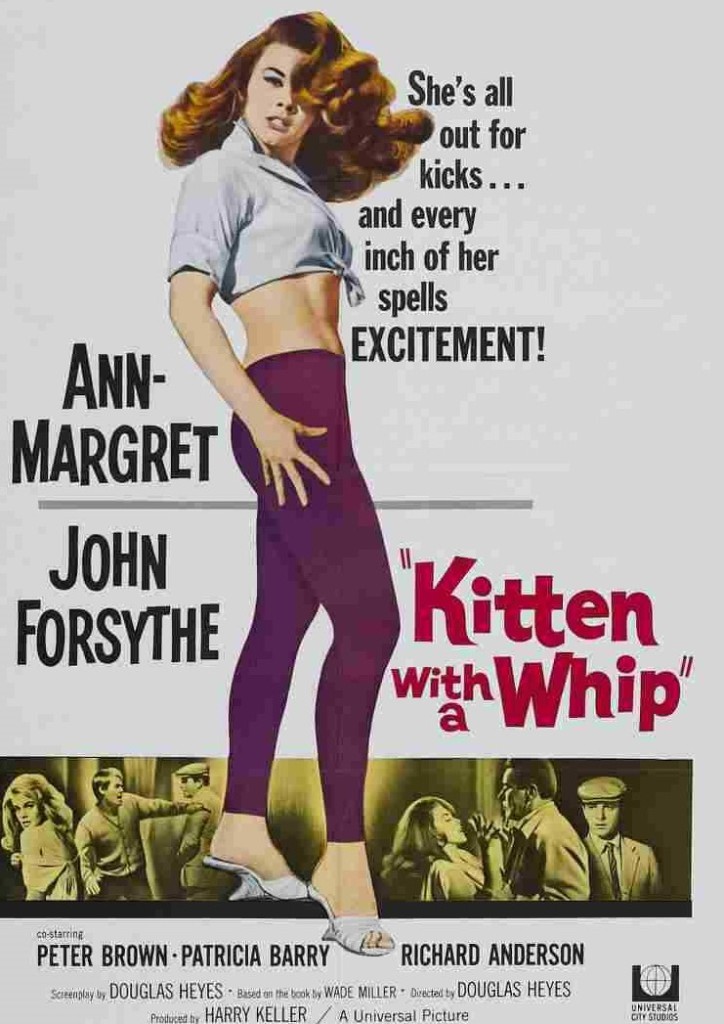
Juvenile delinquency, often straddling the biker world, was another subject to fall foul of the British Board of Film Censors. Among them The Choppers (1961), Jacktown (1962), The Cool World (1964), Kitten with a Whip (1964) starring Hollywood sensation Ann-Margret,  the aforementioned Wild Angels (1966), Rat Fink (1966), Hot Rods to Hell (1966) with Dana Andrews and Mickey Rooney, Riot on the Sunset Strip (1967), Born Losers (1967), Devil’s Angels (1967) and virtually anything that mentioned Hell’s Angels.

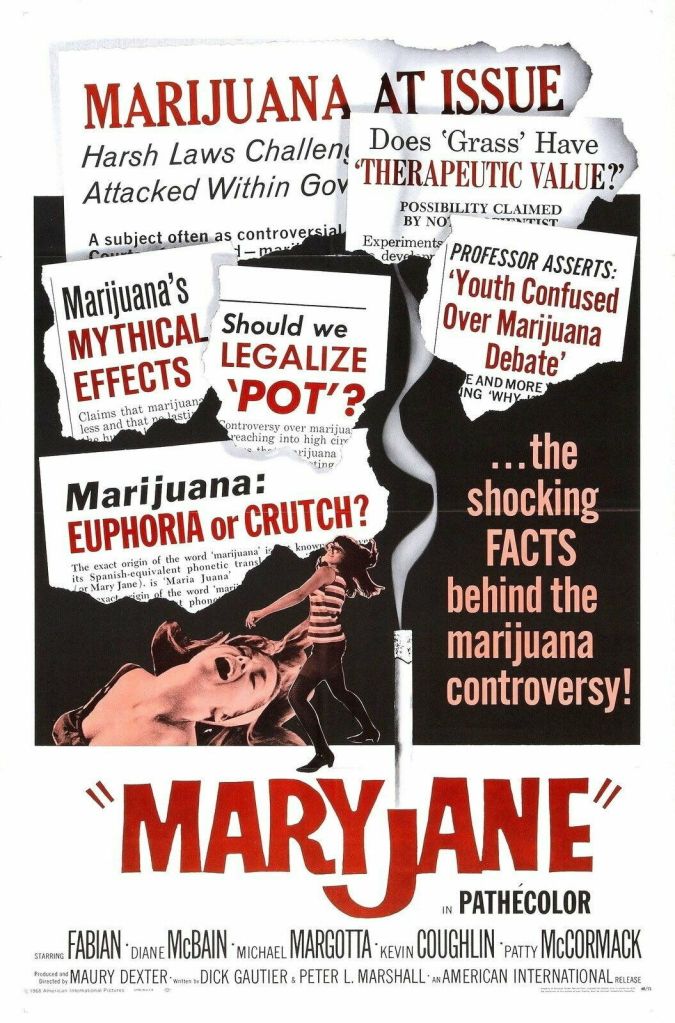
Drug taking was also forbidden to be seen, thus accounting for the absence on British screens of The Trip (1967), Hallucination Generation (1967), Mary Jane (1967), LSD Flesh of the Devil (1967) with Guy Madison and Revelation – The Flowering of the Hippies (1967). Easy Rider (1969) was passed for “being actively concerned with human beings and the effect of drug taking.” Films considered too morally dubious or too sexually open to let loose on British audiences included Sinderella and the Golden Bra (1964), 3 Nuts In Search of a Bolt (1964) starring Mamie Van Doren, 90 Degrees in the Shade (1965) with Anne Heywood, Russ Meyer’s Motorpsycho (1965), Good Morning…And Goodbye (1967) and Lee Frost’s The Animal (1968). Explicit language was the objection to Warrendale (1967) and Ulysses (1967), homosexuality the problem for Deathwatch (1965) starring Leonard Nimoy and Shirley Clarke’s documentary Portrait of Jason (1967).  

In Britain, to get round the censor’s strictures, the “cinema club” was invented in 1960 by Gala Film Theatres, an offshoot of a distributor specializing in racy fare, and within a month had 7,500 members, the operation launching with a showing of The Wild One (1953).  Local authorities could also take exception to the national censor’s findings and grant a reprieve for various films, Wild Angels and The Trip eventually achieving exposure in this fashion. Most cinema clubs would eventually segue into becoming outlets for soft porn but some stuck with the original concept of showing arty movies considered too risqué by the censor. The New Cinema Club in London, for example, in August 1969 programmed Wild Angels and Kenneth Anger’s Scorpio Rising (1963)

But the censor was not the only reason why films were not shown and ended up either ignored by the distributors or stuck on the shelf and we’ll come to those in another article.

David McGillivray, “The Crowded Shelf,” Films & Filming, September 1969, 14-15; “High Cost of Censor Fights vs. Principles,” Variety, March 2, 1960, 1;“If Banned in Britain, All Is Not Lost,” Variety, April 20, 1960, p48; “Theatre, Not Censors, Banned Breed,” Variety, June 1, 1960, p24; “Room at the Top Ban,” Variety, July 27, 1960, 4; “Operation Eichmann Banned in Germany, ” Variety, May 3, 1961, 1; “211 Pix Scissored, 56 Banned in Ireland,” Variety, May 3, 1961, p15; “Operation Eichmann Banned by Israeli,” Variety, November 1, 1961, p2; “12 Pix Banned by Finland Censors,” Variety, March 28, 1962, 17; “Singapore Censor Gets Tough with U.S. Pix; Satan, Suzie Banned,” Variety, August 8, 1962, 21; “Japanese Pix Still Banned by S. Korea,” Variety, December 12, 1962, p16; “Bee Banned by Italian Censor,” Variety, January 23, 1963, p18; “W. Germany Claims Only 19 Pix Banned, “ Variety, December 4, 1963, p11; “Swedish Censors Banned 10 in ’63,” Variety, February 5, 1964, p2;  “The Group Banned,” Variety, April 8, 1964, p84; “Lady in Cage Banned by Sweden Censors,” Variety, July 15, 1964, 2; “New Zealand Censors Turn Down Collector,” Variety, November 3, 1965, 11; “Cage Banned By Geneva Censors,” Variety, January 19, 1966, 16; “Can’t Second Guess Global Censors,” Variety, November 30, 1966, 20;  “Banned in Australia,” Variety, May 24, 1967, 26; “Scot Exhib, Whose Town Disapproves Censorship, Cleans Up with Ulysses,” Variety, May 1, 1968, 27; “Film Censors in France Spark B.O.,” Variety, May 8, 1968, 131; “Dracula Sole Film Banned in Israel Last Year,” Variety, May 28, 1969, 39;  “Britain gives ‘X’ Tag to Fonda’s Rider Pic,” Variety, June 18, 1969, 30; “Eire Banned 35  Films in ’68,” Variety, August 20, 1969, 32.

Discover WordPress

A daily selection of the best content published on WordPress, collected for you by humans who love to read.

The Atavist Magazine

by Brian Hannan

WordPress.com News

The latest news on WordPress.com and the WordPress community.