Behind the Scenes: Greta Garbo 1960s Revival Queen

More than two decades after Greta Garbo abandoned acting she was the Queen of London’s West End in one of the most astonishing comebacks in Hollywood history.

Although her Hollywood career was relatively short-lived, lasting only 15 years and ending voluntarily in 1941,  and at one point the highest-paid actor (male or female) in Hollywood, the London experience made her a big star all over again in the 1960s  – and later in the 1970s – when reissues of her most famous films filled holes in a global release system starved of product.
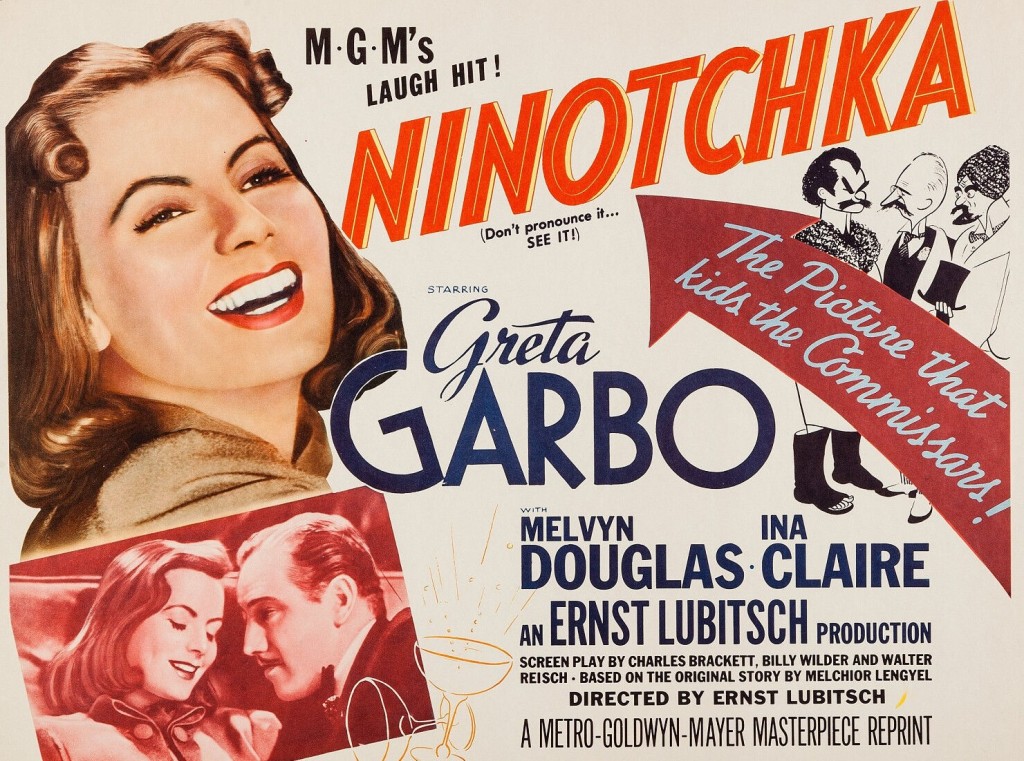
“Masterpiece Reprint” was cleaver ad-speak for getting round exhibitor phobia
regarding the words “reissue” or “revival.”
And it also suggested a new print since reissues were infamous for re-using long over-used old prints.

She’d first made an impact in the revival business in the U.S. reissue boom of 1948 in a double bill of San Francisco (1936) and Ninotchka (1939), a program so successful that shortly afterwards both were reissued again separately. The box office draw of pictures like these was such that some cinemas, for example, the State in Lubbock, Texas, re-launched themselves as “first run reissue” houses, the beginnings of the boom in repertory theaters.

But it wasn’t all gravy. Distribution didn’t just rely on old prints. Ninotchka, for example, not only had new prints but a new advertising campaign, campaign manual and accessories. However, apart from the first flush of revival, Ninotchka stumbled at the box office, too ambitious a level of release, quickly withdrawn after costing the studio $150,000.  

The impetus for the 1960s Garbo Revival came from abroad. In the U.S., Garbo films had by this point been viewed as arthouse fare, running, as in the 1950s, on a repertory basis, rented out for a flat fee, cinemas cramming in as many as a dozen films over one week. While they were available to anyone who wanted them, they came without attendant publicity. Given, they had all been screened on U.S. television they were considered a poor bet for a more commercial revival campaign.

But British television companies, of which there were only two – BBC and ITV – were more niggardly in buying Hollywood pictures so the major studios simply refuse to sell pictures, such as those starring Garbo, at what they saw as, compared to U.S. networks, cut-price rates.  

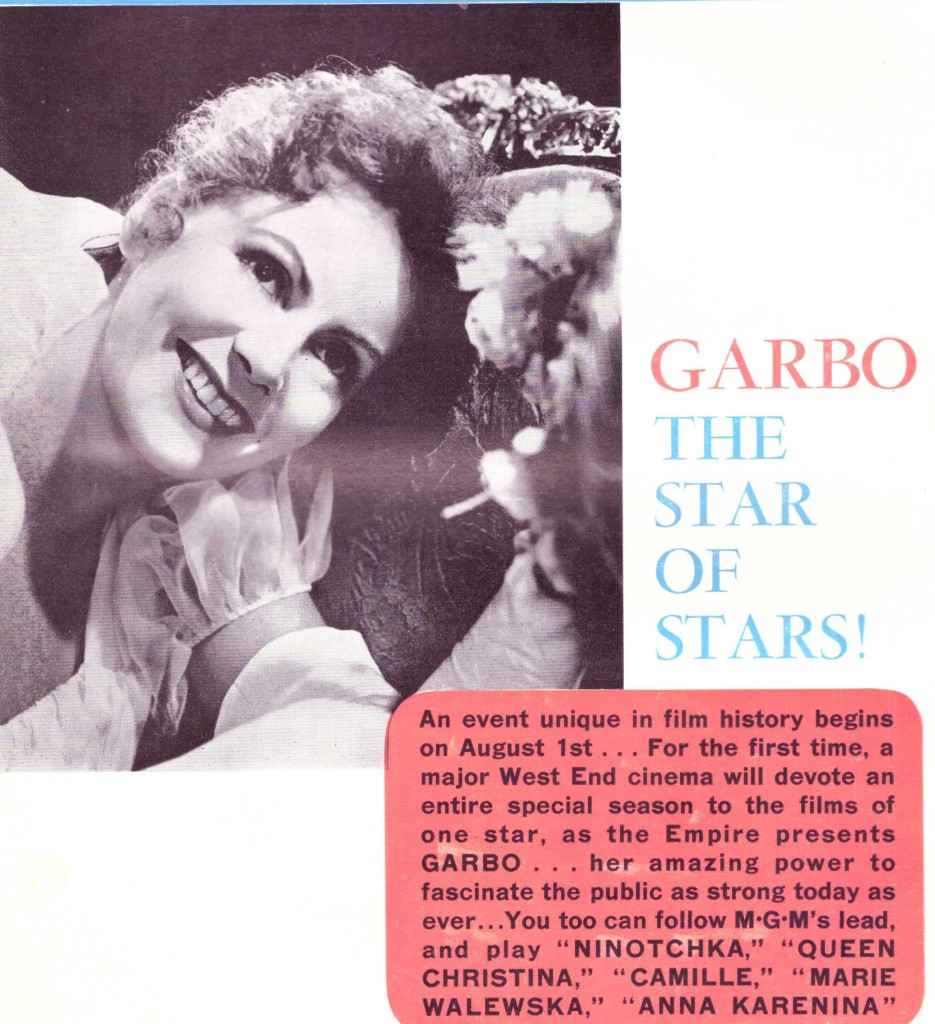
Even so, it was an act of incredible boldness for the Empire cinema in London’s West End, one of the top two theaters (the other being the Odeon Leicester Square) in Britain for movie launches, outside of roadshows,  to decide to take a gamble on reviving her movies following audience response to a brief showing at the Royalty. It was the first time a major commercial house in such a heavily-competitive environment  had devoted any time to what was in effect a retrospective, setting aside two months for a succession of Garbo pictures.

Two-Faced Woman (1941) – Garbo’s last picture – shored up $14,000 – equivalent to $140,000 now – in its first week. Queen Christina (1937) made a debut of $9,000 and Camille (1936) $11,000. In all, over this opening stint and a further season later on, the Empire screened eleven pictures – the others being Grand Hotel (1932), Anna Christie (1930), Mata Hari (1931), Ninotchka, Anna Karenina (1935), Marie Walewska (aka Conquest, 1937), As You Desire Me (1932) and The Painted Veil (1934)

And there was more to come. The Empire was the release showcase for the entire ABC circuit, so anything screening there would be rolled out in the country’s biggest chain.  Since ABC was decidedly not in the arthouse business, sending the movies out into the general mainstream seemed an even bigger risk. But such fears proved unfounded.

Garbo pictures were distributed throughout the country, and not just on the ABC circuit. In Glasgow, for example, the La Scala (owned by Caledonian Associated Cinemas) first-run house – rather than the city’s denoted arthouse the Cosmo – launched a three-week season comprising Ninochka, Queen Christina and Camille, two of the three going out as single bills.
Meanwhile, in the U.S. Garbo movies were being unfurled via the MGM Perpetual Product Plan, whereby classics (rented on a percentage basis) were screened for one day a week for a period of eight-to-ten weeks with audiences able to book a discounted ticket for the entire season. Abroad, there was more opportunity. Like Britain, countries like France revered the star and the movies were continually revived in Europe during the 1960s at commercial venues.

But by the end of the decade, the book should have been closed on Garbo. Because, in 1969, MGM, with the exception of perennials like Gone with the Wind (1939) and Doctor Zhivago (1965), pulled out of the reissue business. The studio withdrew from release its core library of around 100 vintage pictures because the operation was now losing money. Flat fee rentals of $100 (as opposed to the earlier percentage deals) for a three-day engagement failed to cover the costs of prints, distribution and advertising. The novelty of the one-day-a-week scheme had worn off.

MGM intended to try out the old “creating demand” tactic by keeping its oldies out of circulation for at least four years.  But the studio was in severe financial straits at the start of the new decade and not in a position to resist an offer in 1970 from Erwin Lesser of Entertainment Events who proposed taking out a two-year lease on 65 pictures that had “made film buffs out of two generations.” Lesser drew up a package of 26 “Movie Incomparables.” Garbo was the main attraction. Included in the list were As You Desire Me, not seen for 30 years. Lesser returned to rentals based on percentages rather than a flat fee.

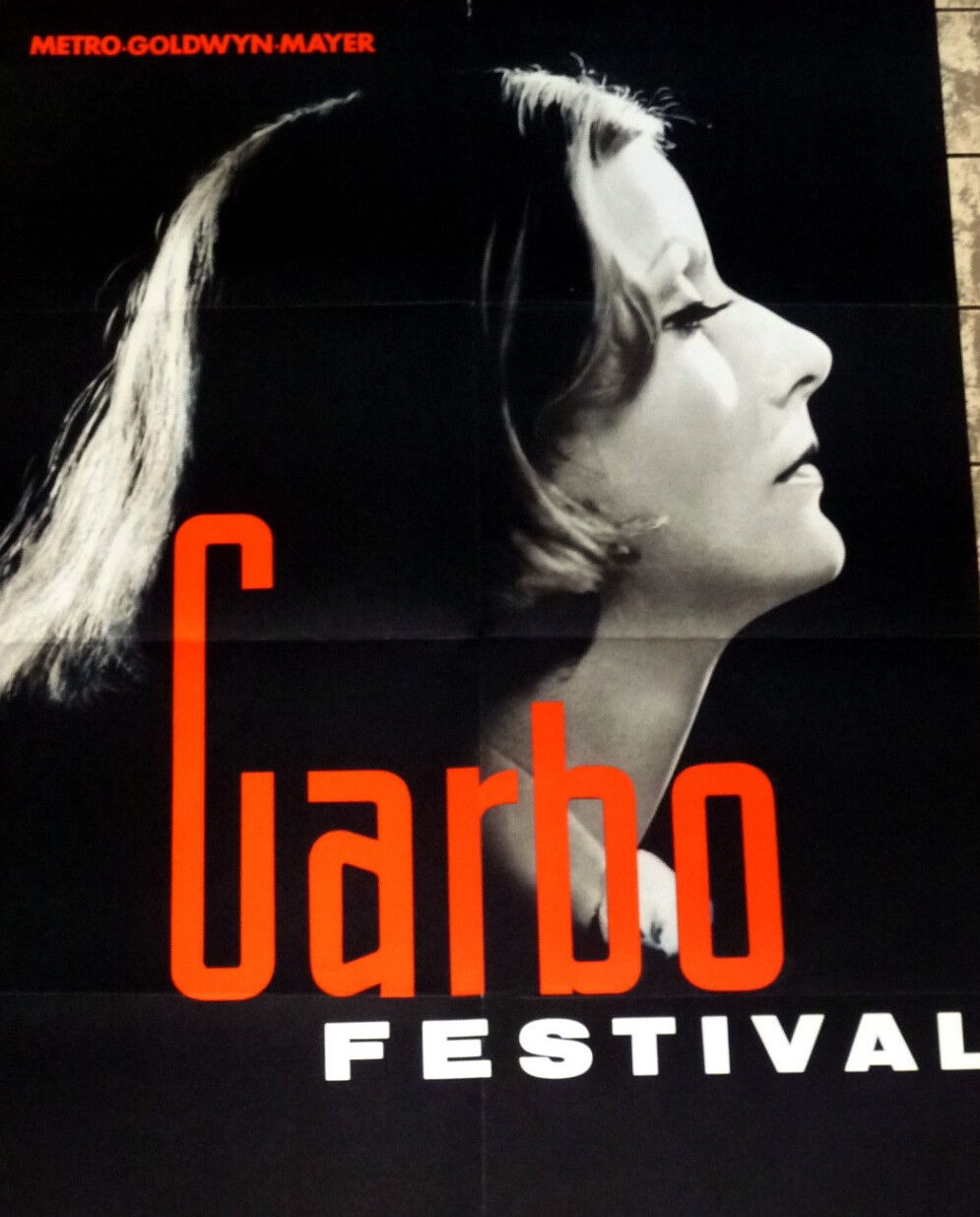
While Lesser made the movies available as single features and double bills and as support to new features, the main thrust of his marketing campaign was the “Garbo Festival,” an idea stolen from television which had taken to rewrapping old pictures as week-long events as a means of enticing viewers.
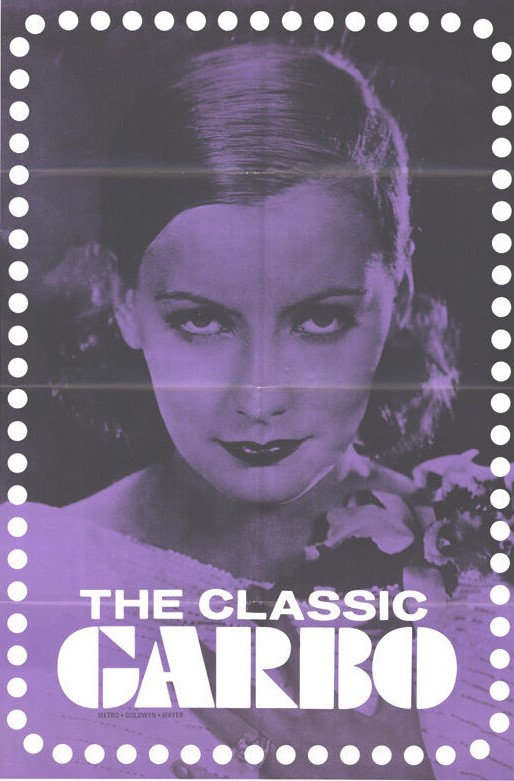
Although the Museum of Modern Arts in New York agreed to run a Garbo retrospective, that hardly produced the kind of box office juice that was required to kickstart a major revival.  So Lesser bided his time, and in the end accepted a nine-day “filler engagement” in March 1971 for the 565-seat Murray Hill arthouse in New York. A “rousing” first week delivered $15,000 – $113,000 in today’s money – while the remaining two days hit a colossal $7,800.

Garbo was back – and in some style. Two months later the Garbo package returned to Murray Hill for a socko one-week $11,000 followed by a move-over to the 533-seat Paramount. And then it was game on.

One of the major elements of the Festival was its flexibility. It became an umbrella term. Exhibitors could decide whether to create a program out of single showings or double bills that could run for consecutive weeks or for an on-off event of single weeks interspersed over a longer period with other features.

In Chicago the double bill of Grand Hotel / Anna Christie romped home at the 505-seat Cinema with $8,500 in the first week and $7,500 – an amazingly low drop-off at the box office considering 40%-50% tumbles in the second week are the norm today – followed by Mata Hari / Ninotchka also on $7,500. In the same city Camille / Anna Karenina racked up $4,800 at the 598-seat Carnegie.

In Philadelphia a four-film package hoisted $19,000 running simultaneously at the 500-seat World and the 855-seat Bryn Mawr. The second week take dropped by just $1,500. Two more packages running each for a week brought in a total of $15,000. In Pittsburgh and Detroit the seasons also ran for three weeks.

But showings were not restricted to arthouses. In Cleveland the package played the 1,500-seat Beachcliff, in Dayton the 1,000-seat  Cinema East and in Kansas City the 1,291-seat Midland.

Garbo’s name was kept alive all through the 1970s as revivals, either in one-week festivals, or shorter bookings, continued to bring in revenue across the USA and around the world, proving the continued box office potency of one of the industry’s greatest stars.  
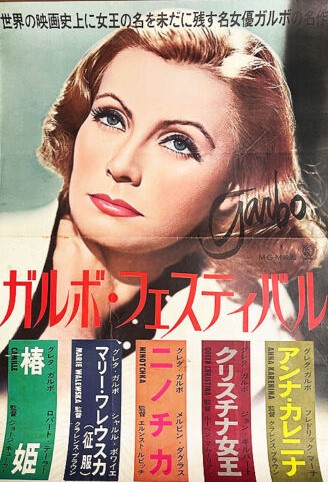
We’re still a few years away from the centenary of her Hollywood debut in MGM’s Torrent in 1926 so expect major reassessment then. Whether she breaks out of the arthouse confines and fuels new demand in the multiplexes might not be such a long shot. Release patterns for revivals have markedly changed, many now being promoted as “one-day-only” events (miss out at your own peril) rather than running over a week or longer. A major publicity campaign and the assistance of social media could change public perception of a star whose films embraced both the silent era and Hollywood’s Golden Age and who was never short of publicity.

In my opinion it’s always worth watching a Garbo film for one technical reason – the difference between male and female close-ups. Watch a Garbo picture and a close-up  could last for minutes, the end of Queen Christina for example, as her eyes move through a variety of emotions. Male close-ups by comparison are over in a flash. With few exceptions the soul of a male actor is rarely revealed in close-up and even rarer is for expression to so dramatically change.

SOURCES: Brian Hannan, Coming Back to a Theater Near You, A History of Hollywood Reissues 1914-2014 (McFarland, 2016) pp 33, 55, 56, 58, 75, 128, 130, 133, 212, 223-225, 232 “Test Garbo Retrospective at Royalty in London,” Variety, June 23, 1963, p11; “Garbo Pic Sets London Record,” Variety, August 15, 1963, p2; “Click of Metro’s Garbo Pix in London’s Empire Cues More Runs,” Variety, August 21, 1963, p19; “British Provinces May Get Metro Garbo Films,” Variety, August 28, 1963, p23; “Metro Classic (Garbo, Marx Bros, Tuners) Withdrawn from Market,” Variety, August 27, 1969, p3; “MGM Leases 65 Pictures for Re-Releasing,” Variety, August 10, 1970, p3; “Picture Grosses,” Variety 1971 – March 31, April 7, May 11, May 25, June 9, June 23, June 30, August 18, November 22, December 8.

Female Earnings – The Inconvenient Truth

Last week’s headline-grabbing articles about how few women featured in the rankings of top-earning movie stars, suggesting this was an age-old problem, overlooked one inconvenient truth. A century ago, actresses were the biggest earners in Hollywood.

In fact from Hollywood’s inception around 1910 and for the next sixty years actresses from Mary Pickford in the 1910s to Elizabeth Taylor either out-earned or equalled the male pay packets. I know. I wrote a book about it – When Women Ruled Hollywood (Baroliant, 2019). It was subtitled – “How Actresses Took on the Hollywood Hierarchy – and Won.”

The simple fact of the matter is that a woman – Florence Lawrence – in 1910 became the first Hollywood star, on the princely (or should I say princessly) salary of $50 a week, at a time when 77% of the female workforce survived on less than $7 a week. She was the equal highest-paid earner of the day.

Taylor earned $3 million for Cleopatra.

When movies began, movie stars were not as highly paid as those who worked on stage. But, again, women were by far the highest paid earners. The number one star in vaudeville – the U.S. version of music hall – was Gertrude Hoffman on, wait for it, $3,000 a week (about $90,000 equivalent now).  In 1911 the number one spot was shared – by two women. Sarah Bernhardt and Gaby Deslys now took home $4,000 a week. The following year Bernhardt was top dog again, on $9,000 a week and the next year again as the highest earner she pulled in $22,000 a week.

Movie stars of neither gender were earning that much but everyone knew what vaudeville stars earned so there was no shortage of precedent for actresses in the burgeoning movie business to ask for more. They employed a simple technique. They held studios to ransom. Give me more money or I jump ship.

In 1915, Mary Pickford broke all records for movie star earnings by taking in more than $150,000 a year. This was far more than male sensation Charlie Chaplin and even as his salary leapt upwards so did hers. In 1918 she picked up $1.8 million a year.

Despite the advent of top males in the 1920s of the calibre of Valentino, Lon Chaney, Tom Mix, Harold Lloyd and John Gilbert, women topped the earning chart once again. Gloria Swanson would have easily been the top-ranked earner had she accepted an offer of $18,000 a week but turned it down preferring to retain her independence. In her absence Corinne Griffiths came out of top with a $13,000 a week salary at First National.

Hepburn was on a cool $1 million per picture.

In the early 1930s Greta Garbo topped the heap with $500,000 a year – for a 40-week deal. In 1935 Mae West took home $480,000, not just the highest earner in the movies, but the second highest earner, $20,000 behind publishing magnate William Randolph Hearst, in the whole of the United States.

In 1936, when Gary Cooper came top with Ronald Colman second, women occupying the next three spots. In 1937 when Fredric March took the top spot, women placed, second, third, four, fifth and sixth. In 1938 Claudette Colbert was number one and Irene Dunne the topper in 1939.

Bing Crosby topped the bill in 1940, and the next year it was Colbert again. The war inflicted a number of anomalies on the business, mainly the arrival from radio of Abbott and Costello, top earners in 1942, with Fred MacMurray, without even taking top billing in most of his films of the period, hitting the earnings peak for both 1943 and 1944.  Ginger Rogers was top in 1945, Joan Crawford in 1946 and except for a parachute payment to stop him leaving Warner Brothers Humphrey Bogart would have been pipped at the post by Bette Davis, with chanteuse Deanna Durbin top of the heap in 1948.

With demise of the studio system in the 1950s, female earnings tumbled except for Marilyn Monroe who ran top earners John Wayne and William Holden close. But in the 1960s Elizabeth Taylor out-earned everyone by a huge margin and Audrey Hepburn, Doris Day and Julie Andrews either earned or equaled the earnings of top male attractions like John Wayne, Steve McQueen and Paul Newman.

The advent of action pictures, which sold more easily around the world than comedies or dramas, ensured that from the 1970s onwards men mostly ruled the earnings game. But still stars like Barbra Streisand, Jane Fonda, Julia Roberts and Sandra Bullock held their own. And it was not so long ago that it was the likes of Jennifer Lawrence, thanks to The Hunger Games franchise, beat everyone.

You can buy my book on Amazon for about £10 and $12.

The Blogger Speaks

This weekend I am one of the very few male speakers at the “Doing Women’s Film and Television History” international conference being hosted by Maynooth University, Dublin, on July 10-11. Naturally it is a virtual conference but it is packed with speakers from all over the world who have been researching issues relating to women working in film and television. I am not an academic so it is signal honor for me to be invited to speak at a university-run conference.

My topic is “When Women Ruled Hollywood” which looks at female salaries in the movie business from 1910 to 1970. Although most people think women were hard-done-by in Hollywood and generally considered as second-class citizens, I found this was not at all the case. In the 1910s, Mary Pickford earned double the earnings of Charlie Chaplin. In the 1920s, the top earning star of either gender was Corinne Griffith.s

At the start of the 1930s, Greta Garbo was the dominant figure when it came to salaries. In 1935 Mae West was the second-highest earner in the whole of America, beaten only by William Randolph Hearst, immortalised as Citizen Kane.

In the annual salary league for the remainder of the 1930s and 1940s, Claudette Colbert (twice), Irene Dunne, Ginger Rogers, Joan Crawford and Deanna Durbin all topped the rankings and in the years when males came out on top the female stars were not far behind.

While female salaries dipped in the 1950s, by the 1960s women were again beating the males at the salary game, Elizabeth Taylor way ahead of everybody, Audrey Hepburn on $1 million a picture, Julie Andrews out-earning Paul Newman in Torn Curtain and newcomer Barbra Streisand reaching unheard-of commercial heights.

I had written a couple of business histories of Hollywood, the research for which took me back to 1910 and in the course of writing those books I discovered information about salaries that would have been out of place in those works, so I dug around some more and came up with the information for this talk.

If you want an idea of my speech, you can check out this short sample on Youtube.

Hollywood: A Fashion Accessory

The new documentary on Audrey Hepburn – the Queen of Chic – and my reference to the making of the Valley of the Dolls in “My Books of the Year” blog made me wonder just how important fashion had become to movie marketing in the 1960s. So I did some digging. And found that the this particular decade had indeed been a golden age for Hollywood fashion.

Although actresses had set fashion trends before  – Lana Turner’s turtleneck sweater as evening wear, for example, Marlene Dietrich in pants, Carole Lombard’s shirts and Greta Garbo’s pillbox hat while Warner Brother’s star Kay Francis was often in reviews referred to as a clothes-horse – fashion had not previously been given the hard sell. Throughout the 1960s, that was remedied.

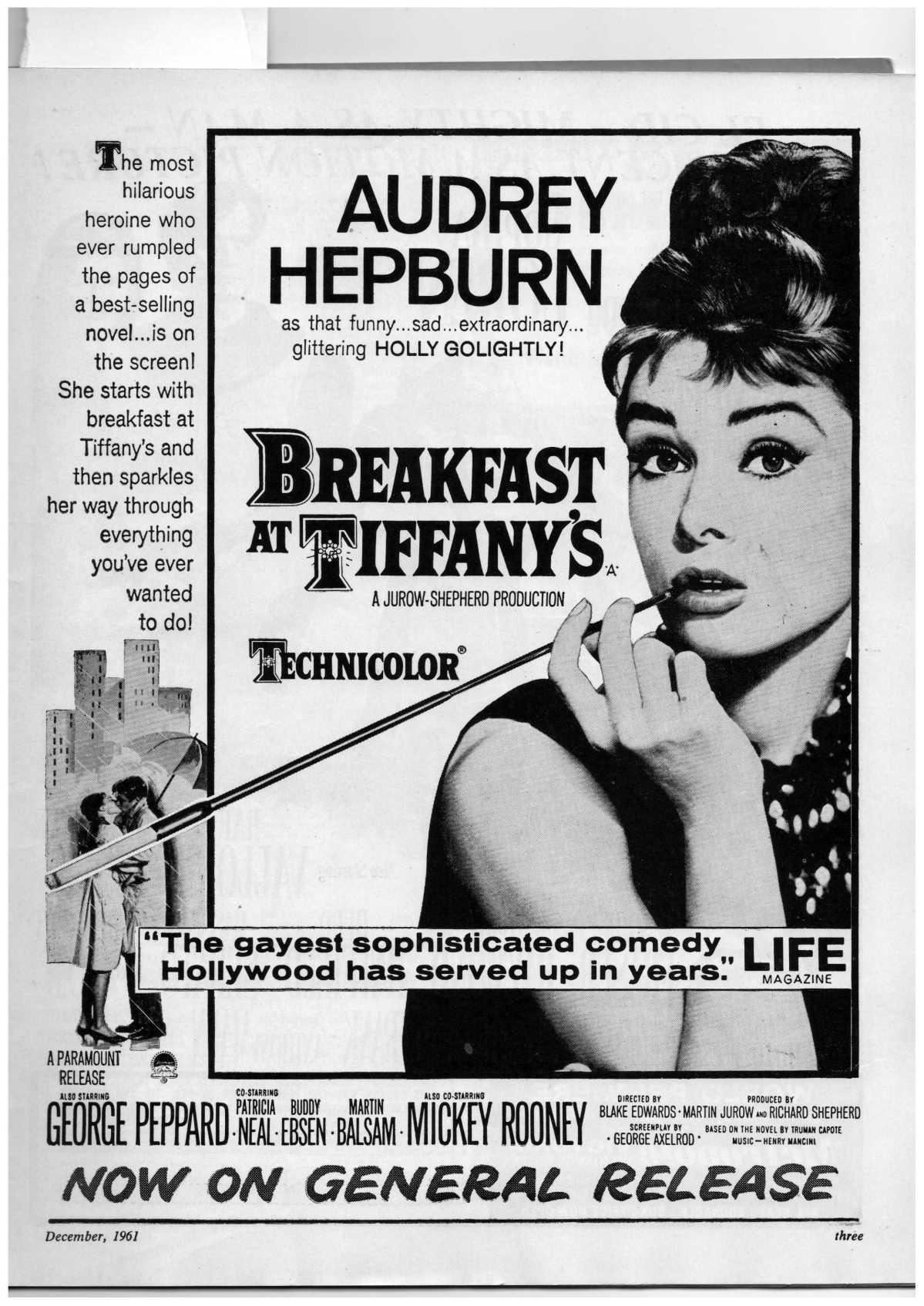
The new attitude to fashion as a marketing tool was instigated after a piece of market research. In 1960 United States market research company Sindlinger carried out consumer investigation on behalf of Universal that came to the conclusion that women made up 58 per cent of the audience going to see seven of the top ten pictures. In consequence, the studio decided to target the female audience with a marketing approach that would specifically appeal to that gender, namely fashion. First picture to benefit from this change of direction was Doris Day vehicle Midnight Lace (1960). Universal was a step ahead of the rest but Paramount was soon leading the field thanks to the impact on female fashion made by Audrey Hepburn in Breakfast at Tiffany’s (1961).

Jean Seberg was a designer’s delight. Yves St Laurent designed the clothes for Moment to Moment (1966).

In 1962 Paramount celebrated the fact that Edith Head was the industry’s only full-time contracted designer by hosting a fashion show on the penthouse set of the studio’s Come Blow Your Horn (1963) starring Frank Sinatra.  The event was called “Edith Head’s Penthouse Party.” Being showcased were costumes from eleven of the designer’s current or forthcoming movies. The cheapest outfit on show cost just $2.89 (worn by Patricia Neal in Hud – known at the time as Hud Bannon)  while the most expensive (for Jill St John in Come Blow Your Horn) set the studio back $3,700. In total the studio spent $420,000 on costumes for the movies.

As well as the two films mentioned above, other pictures in the Edith Head portfolio given a marketing push because of her fashion input included Elvis Presley vehicle Girls! Girls! Girls! (1962) co-starring Stella Stevens, comedy Papa’s Delicate Condition (1963) with Jackie Gleason and Glynis Johns, comedy Who’s Got the Action (1962) headlining Dean Martin and Lana Turner, and France Nuyen as A Girl Called Tamiko (1962). Also involved were Jerry Lewis numbers It’s Only Money (1962) and The Nutty Professor (1963), John Wayne adventure Donovan’s Reef (1963), Paul Newman-Joanne Woodward romantic comedy Samantha (later renamed A New Kind of Love, 1963) and Debbie Reynolds in My Six Loves (1963).

The outfits were modelled by some of the film’s stars including St John, Stevens, Nuyen,  Barbara Rush and Phyllis Maguire (also from Come Blow Your Horn), Myoshi Umieti and Martha Hyer (also from A Girl Called Tamiko) and Elizabeth Allen (Donovan’s Reef). Also on hand were four Japanese models and a quartet of actresses making the transition from modelling –  Patricia Olsen who had a small part in Samantha, Pat Jones, Mary Morlas and Olavee Parsons.  John Wayne, David Janssen (My Six Loves) and Cesar Romero (Donovan’s Reef) also put in an appearance but drew the line at modeling.

However, the big commercial push for Hollywood fashions came from My Fair Lady (1964). The impact of the Hepburn look in Breakfast at Tiffany’s was accidental, rather than deliberate. But from the outset the bulk of the promotional activity for the Lerner and Loewe musical was based around the costumes designed by Cecil Beaton. Whether or not the public could afford such flamboyant outfits was not uppermost in the minds of fashion editors – what Hepburn wore was just so stunning and converted into fabulous editorial spreads, especially for the magazines and newspaper supplements which by this time were mainlining on color, that it created a tsunami of marketing material.

In 1967 costumes hit a commercial peak with a record $12 million budget in total allocated to wardrobes. A total of $8 million was spent on just 15 movies. Easily topping the list was musical Camelot (1967) at $2.25 million while Doctor Dolittle (1967) racked up $1 million, Star! (1968) $750,000 and Funny Girl (1968) $500,000. Three hundred fashion editors attended a fashion show at the Plaza Hotel in New York for a first glimpse of the clothes worn in Funny Girl.

One year earlier Universal had pushed the boat out marketing-wise for the outfits designed by Yves St Laurent for Jean Seberg in Moment to Moment (1966). That same year Warner Bros had focused on fashion for its promotion of the fashion-conscious Kaleidoscope (1966). Stars Warren Beatty and Susannah York might as well have been fashion models given the range of outfits they wore and the movie’s Pressbook claimed the clothes specially created for the picture were on the biggest selling-points for a movie in years especially as most “in” stores “know about the kicky, eye-arresting swingy ‘mod’ fashion clothes which are all the rage.”

Candice Bergen, a former model, caused a sensation in Paris – where she was shooting Vivre pour Vivre (1967) with Yves Montand – when she participated in the Dior show. Her unexpected appearance as well as the clothes she wore received huge publicity. Also in 1967, MGM took out a full-page advertisement in Variety to, among other things, proclaim the impact of Doctor Zhivago on female fashion – “the world is wearing the Zhivago look.”

Expenditure was not an issue. A red velvet cloak worn by Kim Novak in The Legend of Lylah Clare (1968) cost an eye-popping $35,000 while Samantha Eggar’s fourteen costumes in Doctor Dolittle each cost between $7,000 and $14,000. The price of Vanessa Redgrave’s wedding dress in Camelot was $12,000.  Five gowns at a total of $17,000 made for Judy Garland for Valley of the Dolls (1967) were discarded when the actress was sacked and they did not fit replacement Susan Hayward.

Bonnie and Clyde had initially flopped in the U.S. so there was no great demand for Theodora van Runkle’s outfits. The film’s fashion craze started in London where it proved an unexpected hit. There, fashion house Matita launched a Bonnie outfit which caught on. But Stateside when the Bonnie look was widely adopted it was primarily because it was cheap to copy – a mid-calf skirt, thick-seamed stockings and the white beret not hard to replicate.

But it wasn’t just female fashions that benefitted from movie spinoffs. Male fashions seen in Bonnie and Clyde (1967) were adapted for commercial retail use by Geoffrey Beane and Donald Brooks, who were so convinced (mistakenly) that the movie would be a hit straight off the bat that the clothes appeared on racks long before the movie was released and the pair had to wait until the next year before demand for the movie turned into interest in its fashion.

In fact, men had always been a part of fashion marketing for the movies. Even a film as male-oriented and action-filled as The Guns of Navarone (1961) was given a fashion slant as a means of attracting a female audience – as I discovered when writing a book on the making of the film. “Navarone Blue” – was officially adapted by the British Colour Council while “Navarone Gold” was developed for the Colour Association of the United States. Both dyes were marketed to the manufacturers of automobiles, interior design and fabrics such as bedspreads. Grecian fashion was sold in 50 department stores including Macy’s. And it was written into the contracts of all the female stars that they wear clothes of either colour at premieres.

Lee Marvin had become an unlikely fashion icon and to take advantage of this new status MGM set up “coast-to-coast” promotions for Point Blank (1967). Highlander Clothes developed a fashion line as a marketing tie-up with over 60 stores from all over the country participating. Alcatraz – where part of the movie was filmed – was the location for a fashion shoot that went out in a three-page layout to the 20 million readers of Life magazine under the heading “Well-Dressed Moll Styles in Alcatraz.”

At the end of the decade another male-oriented picture, Downhill Racer (1969), was sold via a fashion marketing campaign. Steve McQueen, the epitome of cool, became a hook for fashion marketing, especially after The Thomas Crown Affair (1968) while Eli Wallach was an unlikely male model in upmarket male magazines. Earlier, for another male-dominated story, Seven Days in May (1964), director John Frankenheimer had been pictured wearing a Cardinal custom-made suit in an ad in Gentleman’s Quarterly. More in keeping with old-fashioned publicity gimmickry, for that film Paramount had also hired designer Mollie Parnis to create a suit for women that could be worn seven different ways on seven different days.

SOURCES: “Women Biggest Picture-Goers, So U Laces Midnight Campaign with Fashions,” Variety, Sep 7, 1960, 16 ; “Fashion Omnibus On 11 Features, By Edith Head,” Variety, Oct 31, 1962, 18; “H’wood Fashions Boom Year,” Oct 4, 1967, 5 ; “Paris Fashions – 1967,” Variety, Feb 15, 1967, 2; advertisement, Doctor Zhivago, Variety, Jan 4, 1967, 37.; Pressbook, Kaleidoscope; Pressbook, Point Blank; Pressbook, Seven Days in May; Brian Hannan, The Making of the Guns of Navarone (Baroliant, 2013) p153-154; Brian Hannan, Coming Back to a Theater near You (McFarland 2016) p186. 

Discover WordPress

A daily selection of the best content published on WordPress, collected for you by humans who love to read.

The Atavist Magazine

by Brian Hannan

WordPress.com News

The latest news on WordPress.com and the WordPress community.