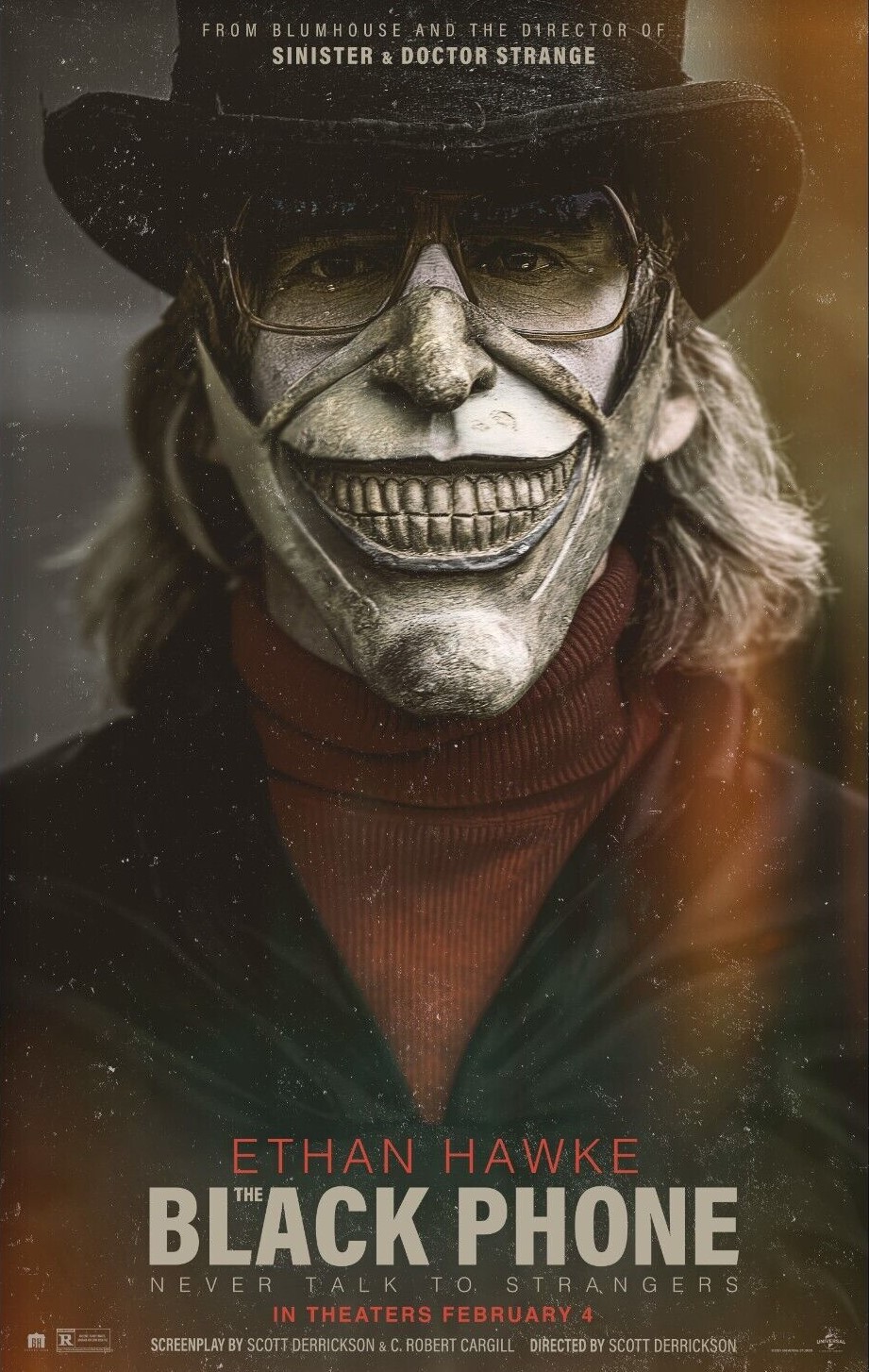
Most original horror film since Jordan Peele’s Get Out (2017) and sharing that film’s ability to throw the audience off guard by constantly twisting expectations and slowly taking its time to reach an incredible denouement. Be warned, though, it is about child abuse and some of the scenes come down to the knuckle. But it is also, surprisingly, a coming-of-age picture.
In 1978 in a Denver suburb, Finney (Mason Thames) and younger sister Gwen (Madeleine McGraw) live with widowed alcoholic father (Jeremy Davies), prone to beating his kids with a belt. Although bullied by classmates, Finney always picks himself up. Gwen has dreams which may be real – her mother committed suicide after similar visions.
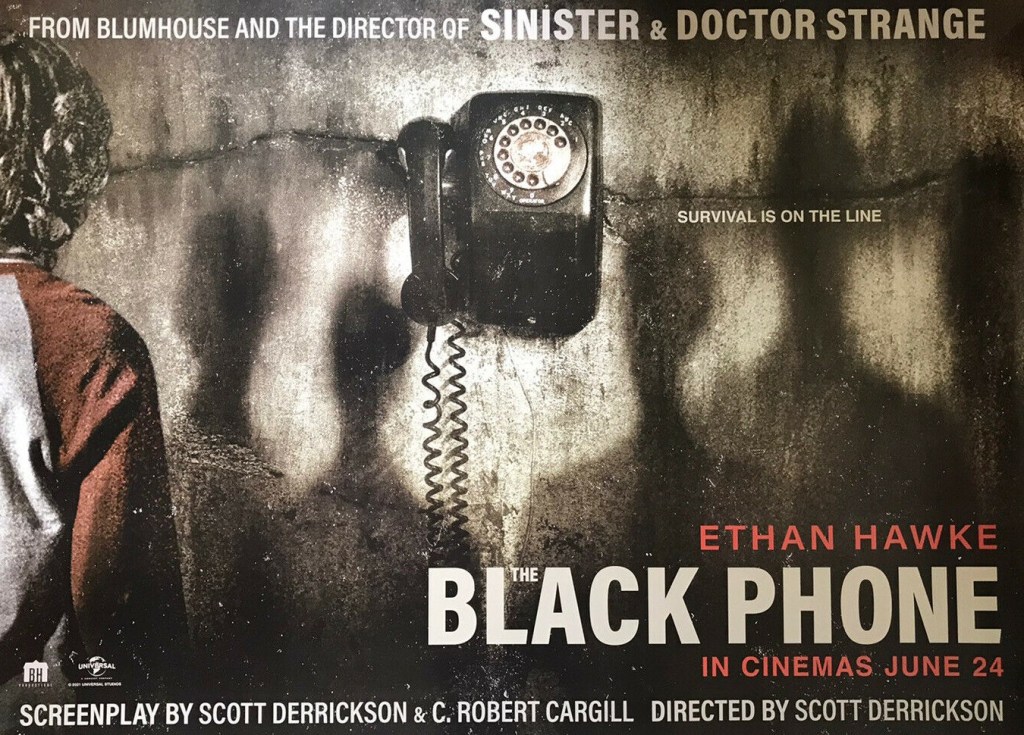
When Finney becomes the latest victim of masked serial child kidnapper The Grabber (Ethan Hawke) he finds himself trapped in a basement, empty except for a mattress and a phone that doesn’t work. The cops are baffled. Gwen attempts to reach her brother through dreams. When the phone mysteriously does ring it’s always one of the Grabber’s five previous victims offering practical escape advice. At the top of the stairs a half-naked masked Grabber sits in a chair gripping a leather belt waiting for his captive to become “naughty” so he can be punished.
I’m going to be in spoiler alert country if I tell you anymore but if you’ve seen the trailer be aware that’s far from the whole story. Part of what makes this so good is how realistic is the portrayal of the kids and the venal world they inhabit. They have no defence against the brutal father and in some respects expect adults to behave in horrific fashion. A boy who Finney helps with schoolwork acts as his protector but when he is kidnapped the bullies take revenge, handing out a bloody beating. Although brother and sister are close, there are few limits to their teasing. And Gwen has the lip of an adult in taking on a couple of unwary cops.
All the time you are left guessing. Is the Grabber behind the phone calls? Is it another of his elaborate games? Does he intend to offer escape, only to snatch it away? Can Gwen summon up spirits at will or will she flounder helplessly trying to save her brother. And if he disappears for ever, what prospect could be worse than living with her awful dad? Have the snippy cops got any leads at all? The father’s not out helping the hunt for his boy, so it possible he’s involved, especially since he wields a belt similar to the killer? Is Max, the visitor from out of state, possibly the killer, even though he appears to be a harmless cocaine-sniffing conspiracy nut?
And if five previous victims are gone, presumed dead, what chance has Finney, a vulnerable kid if ever? His protector was a very tough kid, one capable of beating a bully to a pulp, and if he can’t survive the kidnapping what chance does Finney have?
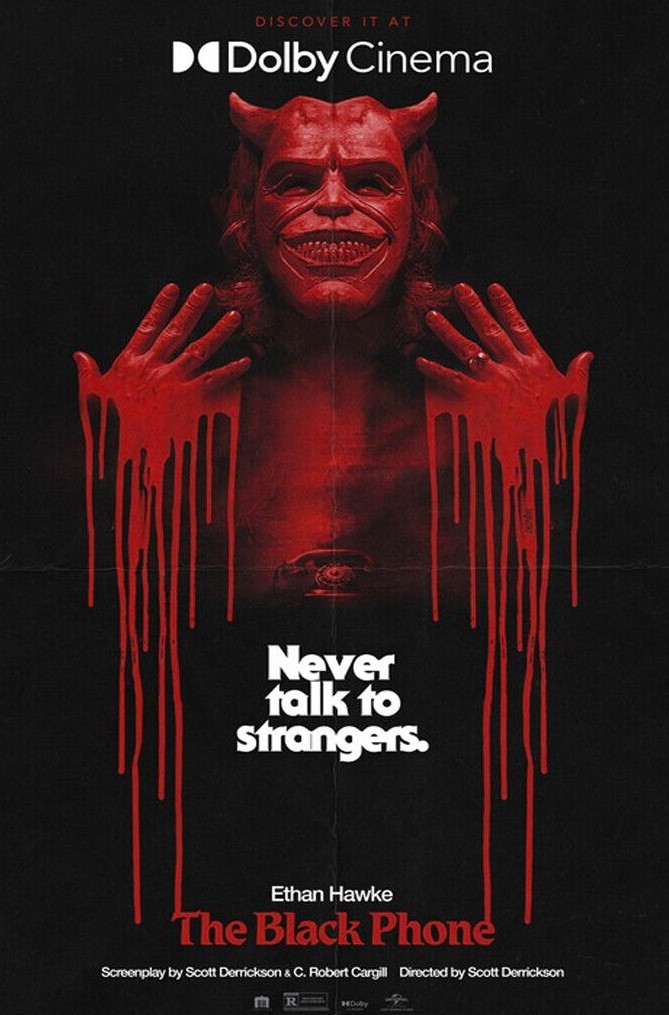
Over it all is the malevolent presence of the Grabber who wears two-piece masks (with devilish horns and long chin) that show different parts of his face but never the whole, who sometimes just sounds like a guy who has lost his way and means no real harm, if only he could sort out what’s gone wrong. His kidnapping ploy is to drop his shopping on the sidewalk and hope a nice kid is going to help, especially as he is a magician with a stack of black balloons, the kind of conjurer who might appeal to an edgy teenager who thinks The Texas Chainsaw Massacre the greatest film ever made.
Jump-out-of-your-seat shocks are few but this is a rare horror movie that has little reliance on such tricks. Tension is maintained with magnificent ease.
Mason Thames (Walker TV series 2021) and Madeleine McGraw (Secrets of Sulphur Springs, 2021-2022) are terrific as the kids, not putting a foot wrong as they move in the sometimes inexplicable adult world, but sharpening their teeth on vicious childhood. Sure the mask does a lot for Ethan Hawkes (The Northman, 2022) but his voice and his movements do the rest and this is a bold part to take on, way out of his comfort zone. Jeremy Davies (The House That Jack Built, 2018) is every bit as creepy.
While Scott Derrickson has dipped his foot into horror (The Exorcism of Emily Rose, 2005.) and for that matter the supernatural (Doctor Strange, 2016) before, he has never done so with such distinction, reining in the shocks in favour of escalating tension, never shifting focus away from the kids. He co-wrote the screenplay with Doctor Strange collaborator Robert Cargill based on the short story by Joe Hill (Horns, 2013).
 The Magnificent 60s