Red (2008) ****

Not that Red. Not that Brian Cox. In fact, this slow-burn low-key character-driven revenge drama preceded both the Bruce Willis-Morgan Freeman-Helen Mirren-Brian Cox actioner and the elevation of Cox to small-screen megastar via Succession. And, of course, it was made long before everyone was selling their soul to streamers. So, it’s odd just what a perfect fit it makes for watching on television.

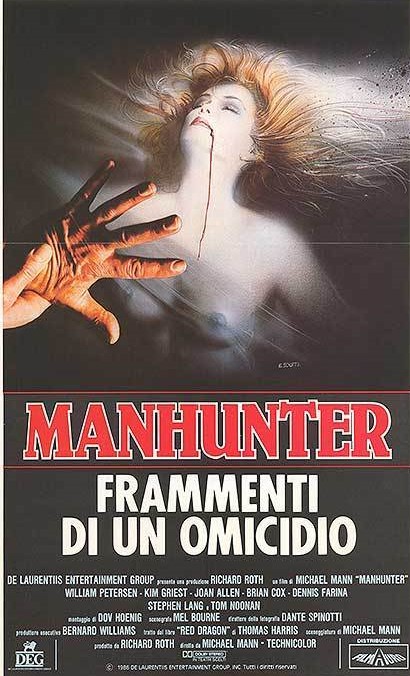
Don’t expect the loud-mouthed arrogant bully of Succession or the sometime scene-stealing that went with being an under-employed supporting actor for most of Cox’s career and think back to the quiet intensity of Manhunter (1986) and you get a pretty good idea of how this is pitched.
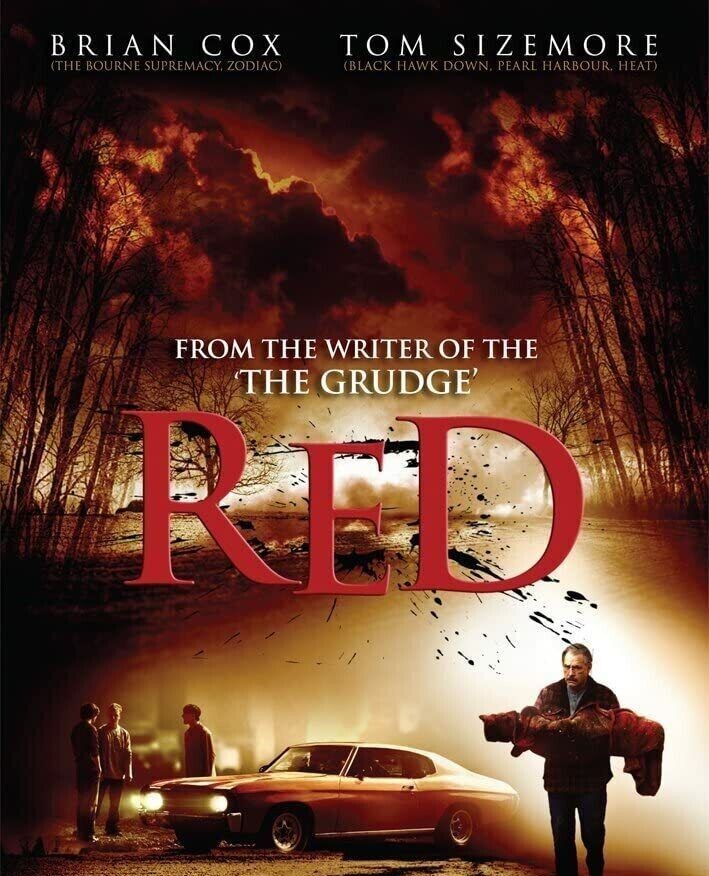
Widower Avery (Brian Cox) is enjoying a quiet spot of fishing accompanied by his dog Red when his idyll is interrupted by shotgun-toting tearaway Danny (Noel Fisher), his brother Pete (Shiloh Fernandez) and buddy Harold (Kyle Gallner). On finding the old man doesn’t have enough cash on him to fund a decent meal, Danny shoots the dog.

Now, legally, there’s not much you can do Stateside when someone murders a dog, bearing in mind this is in the days before John Wick found an illegal solution to the problem. Pinning a $100 fine or a few days jail time is as much as Avery could reasonably expect. But in Smalltown USA when the culprit’s father is well-connected unreasonable businessman McCormick (Tom Sizemore), legal recourse or even journalistic exposure is going to be hard to come by. An apology, any sign of remorse, might swing it as far as Avery is concerned but not only is McCormick disinclined to believe his son is guilty of such a misdemeanor, he’s likely to come out fighting.

Although an ex-soldier, and despite possessing a neat little armory of his own, Avery isn’t Rambo-inclined. But he can’t let the random death alone, especially because the dog was a gift – again John Wick-style – from his wife before her unexpected death. And even this would probably not trigger much more than a severe grinding of the teeth or hitting the bottle except McCormick ramps up the stakes, driving Avery off the road and burning down his business. Even then, Avery would probably settle for a smattering of  justice, not a fire-fight.

If McCormick or the kid had any idea just how diligent Avery is – he does his own detective work and proves an expert in hand-to-hand combat – he might have backed off but then that would have meant acknowledging parental responsibility and a son going awry. What’s so interesting about this picture beyond that it avoids the slam-bang approach, is the subtlety. Avery knows all about wayward children and that tragedy from his own life is seeded into the narrative without taking it over.

Similarly, it doesn’t dive down the rabbit-hole of a crusading journalist. When small-time reporter Carrie (Kim Dickens) does come into the scene, she’s not promising Pulitzer Prize glory, recognizes that McCormick will have more pull than her with her bosses, and for the most part she’s the necessary ear for the reclusive Avery to unload his pain.

Social media might well have done the narrative trick. Imagine local horror at seeing a well-to-do businessman tarred-and-feathered across social media, the do-gooders would be up in arms. But that’s not an option here. And although Carrie is more hard-bitten than Avery would like, she’s not hard-bitten enough to exploit his previous tragedy as a way of getting her story on the front pages of every newspaper in the country, even if it was only for the irony of the situation.

Nor, despite them sharing a companionable drink, and Carrie clearly liking the old buffer, is there any suggestion of budding romance, or if there is, that’s also hovering on the periphery. One glance at John Wick and you note the dramatic traps skipped over. Only one false step – the trite ending.

So, instead of full-tilt boogie action, we have a thoughtful drama presenting the various deeper shades of Brian Cox that generally remained hidden for the bulk of his career.

When  it turned up in the “new release” section of Amazon Prime, I mistakenly imagined this  was a new movie cashing in on Cox’s late-career newfound fame and imagined it was another project churned out in Streamerland. I tuned in with expectations of Cox cashing in on said fame, but was surprised to find a finely-wrought drama rather than a crime thriller.

Kim Dickens (Gone Girl, 2014) follows Cox’s low-key approach but Tom Sizemore (Breakout, 2023) can’t resist over-acting. Noel Fisher, in case you wondered, found fame in Teenage Mutant Ninja Turtles (2014 iteration).

Two directors were involved so I’m assuming Lucky McKee (The Woman, 2011), who was fired, wasn’t so much responsible for the dark-lit look as Trygve Allister Deisen, in his only movie so far. Jack Ketchum (The Woman ) and  Stephen Susco (The Grudge, 2004) worked out the screenplay.

Fascinating performance by Brian Cox in an story that takes the interesting rather than easy route.
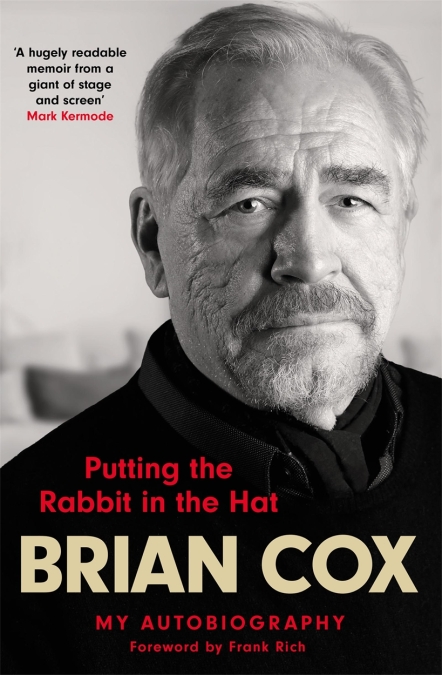
The “Succession” Man – Brian Cox

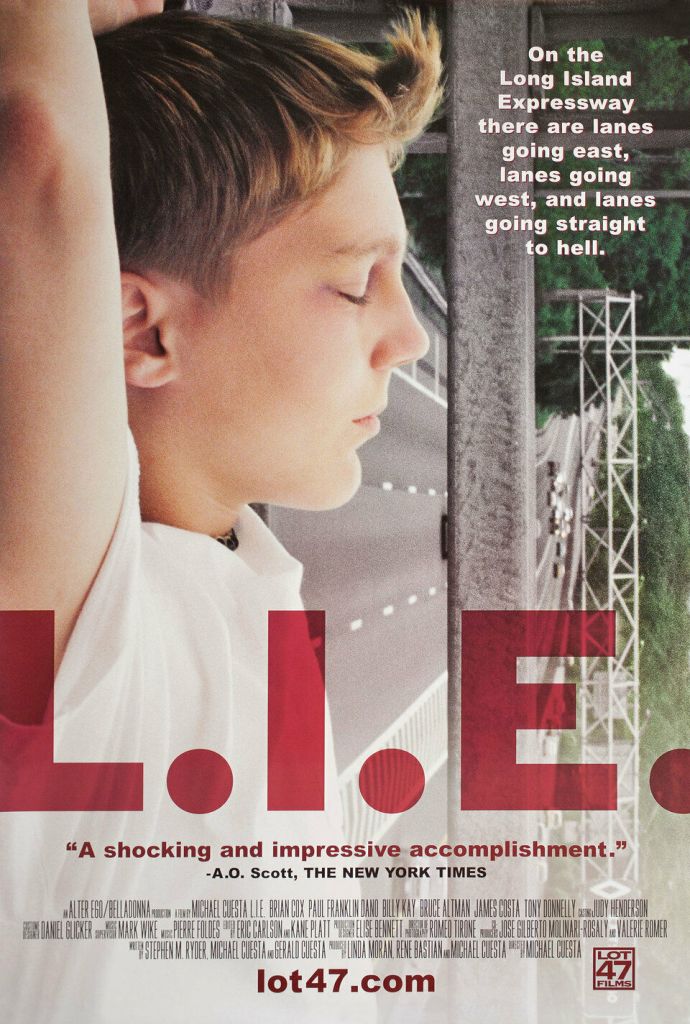
If you find that most movie star biographies concentrate on gossip at the expense of genuine insight to the craft of acting, then this one is for you. For the bulk of his film career, Cox, outside of such films as Manhunter (1986), L.I.E (2001) and Churchill (2017), has been in the main a supporting player and not even the kind of supporting actor regularly commended by Oscar voters, rather the type of artist whose face you recognize and welcome in small but important parts. Probably you will be unaware that he was more of a titan on stage, winning two Olivier awards – the British equivalent of the Tonys – and nominated another twice as well as wins and nominations for theatrical productions in America.

So he makes no distinction between the various mediums – film, television, stage – in detailing the development of his craft.  His first seminal moment came from the David Storey play In Celebration when director Lindsay Anderson having spent 90 minutes trying to slow the actor down for one segment eventually in frustration explained to the actor the reason for takings things slowly: his character returning home for the first time in years would spend time reacquainting himself with the house, taking in what had changed and what was familiar. In other words, “I learned to be a character rather than describing or acting it.”

When he moved into films, he had enough self-awareness to realize he was never going to be the leading man (even in the cult Manhunter, he was billed third or fourth in the credits) and determined he was “going to earn my wage as a character actor and that what I really wanted to do was create characters similar to those I loved from the old films… (where) characters just zing at you, no matter how small the part.”

He also appreciates his co-stars, especially the superstars. Of Keanu Reeves, he pointed out: “Despite choosing interesting work and being an interesting guy, he still had a reputation as a bit wooden…He took himself off to a small theatre in Canada and played Hamlet. He stuck at it and he’s actually become quite good over the years. He’s become rather good because he’s learned his job.” He has similar praise for Brad Pitt. “Like Keanu the initial appeal is all about the heartthrob looks, so he’s had to learn on the job; he’s had to dedicate himself to his craft…I love that ambition, that dedication, not to be better looking or more famous or have a sexier partner, but to be a better actor.”

When an actor has 234 credits in film and television you can tell instantly he’s a character actor. While occasionally Cox has appeared in high profile ventures – Braveheart (1995), X2 (2003), Troy (2004), and Rise of the Planet of the Apes (2011) – more often you would find him turning in bit parts in smaller pictures that you have possibly never heard of like The Water Horse (2007), Citizen Gangster (2011) and Morgan (2016).  Sometimes he pulled out a television plum, Nuremberg (2000) for which he won an Emmy or British comedy Bob Servant Independent (2013).   

With such a variety of movies, he has a wealth of anecdotes. He took over the role intended for Dustin Hoffman in The Long Kiss Goodnight (1996) and replaced Tommy Lee Jones in Chain Reaction (1996). He has stories to tell about Sir Laurence Olivier, Kevin Costner, Morgan Freeman, Samuel L. Jackson, Harvey Weinstein, Steven Seagal. Woody Allen, Scarlett Johansson, Mia Farrow, John Schlesinger and a dozen others.  

But he doesn’t like Quentin Tarantino or the acting of Sir Ian McKellen. “I really don’t have much time for Quentin Tarantino. I find his work meretricious. It’s all surface. Plot mechanics in place of depth. Style where there should be substance. I walked out of Pulp Fiction.’ Of McKellen he observes: “He is a master of what I’d call front-foot acting. It’s very effective…but it doesn’t quite fulfil what I believe is one of the key functions of acting.”

He was paid $10,000 for Manhunter while Anthony Hopkins walked away with a million for Silence of the Lambs (1991). He turned down Pirates of the Caribbean (2003) and Game of Thrones. Terrorists nearly boarded his plane during 9/11. His  mother suffered from mental illness. His father died when he was young.

After a half century of as many downs as ups and little likelihood that publishers would be knocking on his door for his autobiography, he suddenly became a massive star thanks to Succession. Supreme acting skills that had been ignored by the Hollywood cognoscenti were crucial to Logan Roy becoming one of television’s most popular – and hated – characters. His great talent is stillness, to be able to convey myriad emotion without speaking a word.  

But publishing an autobiography is not the true mark of success. Being in demand is. As well as future series of Succcession, he already has in the can the following films – The Jesuit, Skelly, Prisoner’s Daughter and Mending the Line and is currently shooting The Independent, in all of which he is either top-billed or second-billed, a far cry from sixth or seventh billing in supporting roles.

Discover WordPress

A daily selection of the best content published on WordPress, collected for you by humans who love to read.

The Atavist Magazine

by Brian Hannan

WordPress.com News

The latest news on WordPress.com and the WordPress community.