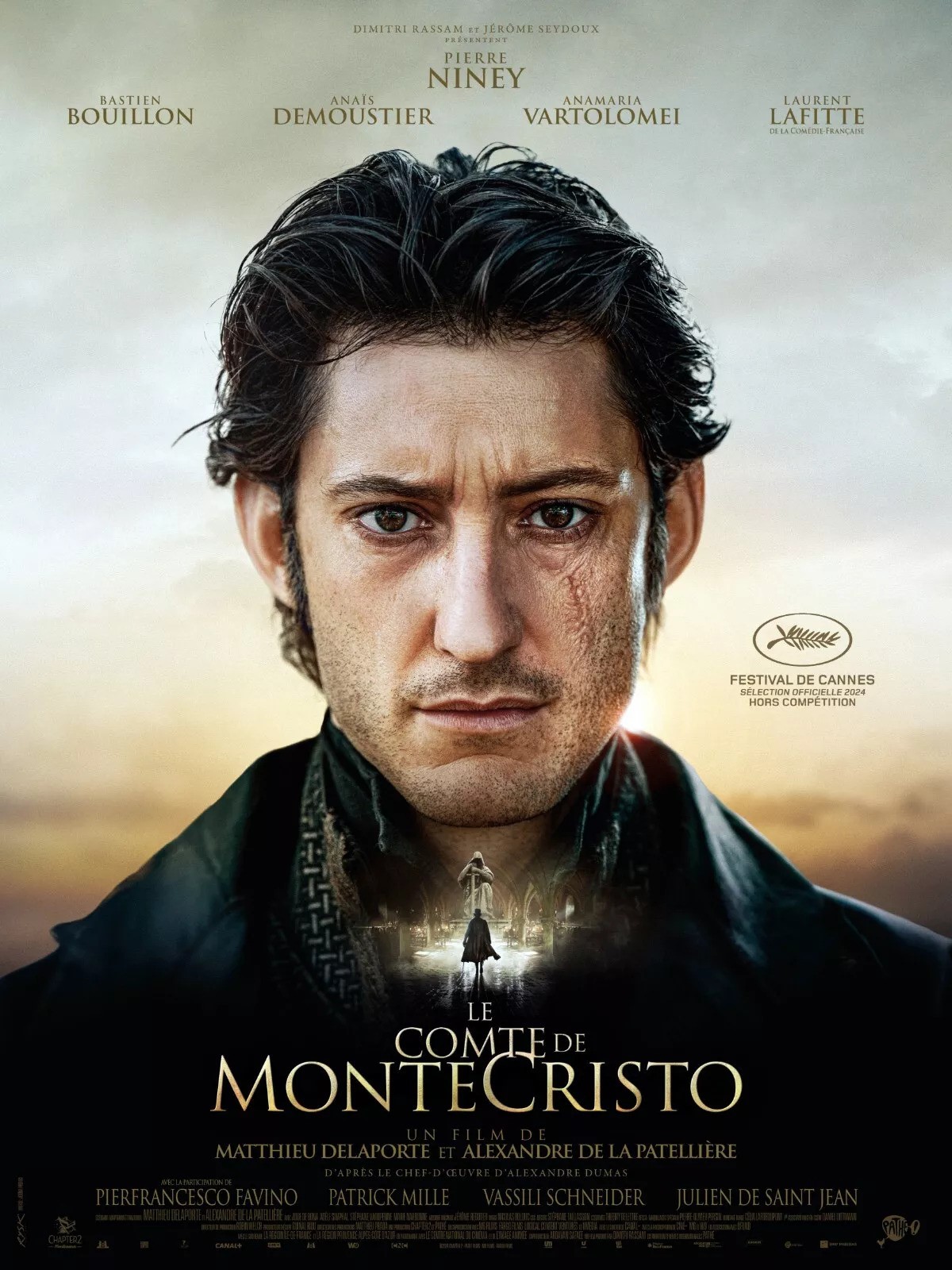
Napoleon, shipwreck, false imprisonment, baby buried alive, corruption, audacious jailbreak, the Knights Templar, hidden treasure: enough for a pulsating soap opera for sure but lifted way out of that genre by the driving revenge narrative, and the personal price paid for such unmitigated ruthlessness. I confess I’m not familiar with the Alexandre Dumas classic and I’m not sure I’ve even seen any earlier screen versions, but I did come to this expecting swashbuckling in the manner of the recent The Three Musketeers. Whether it’s the 2023 double bill, or the versions from 2011, 1993 or 1973, those movies were swordplay heavy. So I was somewhat surprised to find this was lean on the old swash and buckle.
In fact, it’s better described as The Godfather of period adventure, three hours long, where the aspiring sea captain, much in the way of the gangster Michael, transforms from idealistic to classy ruthless killer, with the idea in his head than his rampage is justified because, as with the Coppola classic, he is fighting corruption in high places. And it’s a three-act picture, coming perilously close to tragedy, for sure, and thoroughly engrossing.
Seaman Edmond Danton (Pierre Niney) saves a young woman, Angele (Adele Simphal) from drowning only to discover she is a spy for Napoleon, just entering exile. Back home, this discovery prevents him from marrying his lover Mercedes (Anais Demouster) and with the connivance of ship’s captain Danglars (Patrick Mille), love rival Count de Morcef (Bastien Bouillon) and prosecutor Gerard de Villefort (Lauren Lafitte) he is arrested on his wedding day and sent to the notorious Chateau d’If prison where everyone is in solitary. During his long confinement he befriends Abbe Faria (Pierfrancesco Favino), who turns out to have secreted a horde of treasure.
Using the clever ruse of pretending to be a corpse, Danton escapes, finds the gold, and returns to Paris as the Count of Monte Cristo to take his revenge on the three men. To that end he recruits a younger generation – Andrea (Julian De Saint Jean), bastard son of Villefort, and Turkish lass Haydee (Anamaria Vsrtolomei) whose father was betrayed by Morcef. The vengeance is all very clever stuff, ruses involving false news, stock market manipulation, and infiltration of emotion. Danton is dab hand with disguises, too, best of all his spluttering Englishman. Audience manipulation, too, reaches a high bar. Naturally, we are behind Danton in his quest for vengeance, we want to see the bullies brought to heel, and so we are sucked in to believing that, like The Godfather, any means is acceptable. And it’s only as we come to the end that Danton is brought up short by the realization of how badly he has infected the innocent with his malice.
I’ve not read the book so I’ve no idea how faithful it is to the Dumas. I’m more inclined to suspect previous versions slashed away at the story to concentrate on the incarceration and the swashbuckling. Given critical obsession with length – an odd preoccupation given that most people will happily binge on three or four episodes of a television series at one sitting – it seems that here it’s justified, each section given due space to develop, Danton shifting from elation to despair and then, supposing erroneously that revenge will return him to a rapturous state, takes most of the third act to work out that it won’t and also that, even when opportunity arises, he cannot replicate the original true love, allowing for a realistic ending.
All the acting is top-notch because the characters are so well-drawn in the first place. And the actors age. in the opening section, they all display the brio of youth. Two decades on, that has dissipated and they are more covert creatures, the prosecutor in particular has a suspicious eye. And they all face emotional reprisal, the narrative so well worked that every character has a high point. Some of the set pieces are just terrific – the telling of a ghost story at dinner, the trial.
Directors Alexandre de la Pateliere and Mathieu Delaporte are well established in this milieu, having written the screenplay for both parts of the recent The Three Musketeers. But if that was a dress rehearsal, they have certainly learned a lesson in how to ground a movie, depending more on genuine drama and character development than flashing blade and conspiracy. Some interesting camerawork, too, long tracking shots reversing back or moving in close.
I enjoyed it so much I went out and bought the book – all 1200 pages of it.
Update: it’s on the shortlist to be considered as the French entry for the Best Foreign Picture category at the Oscars.
Thoroughly absorbing.
 The Magnificent 60s