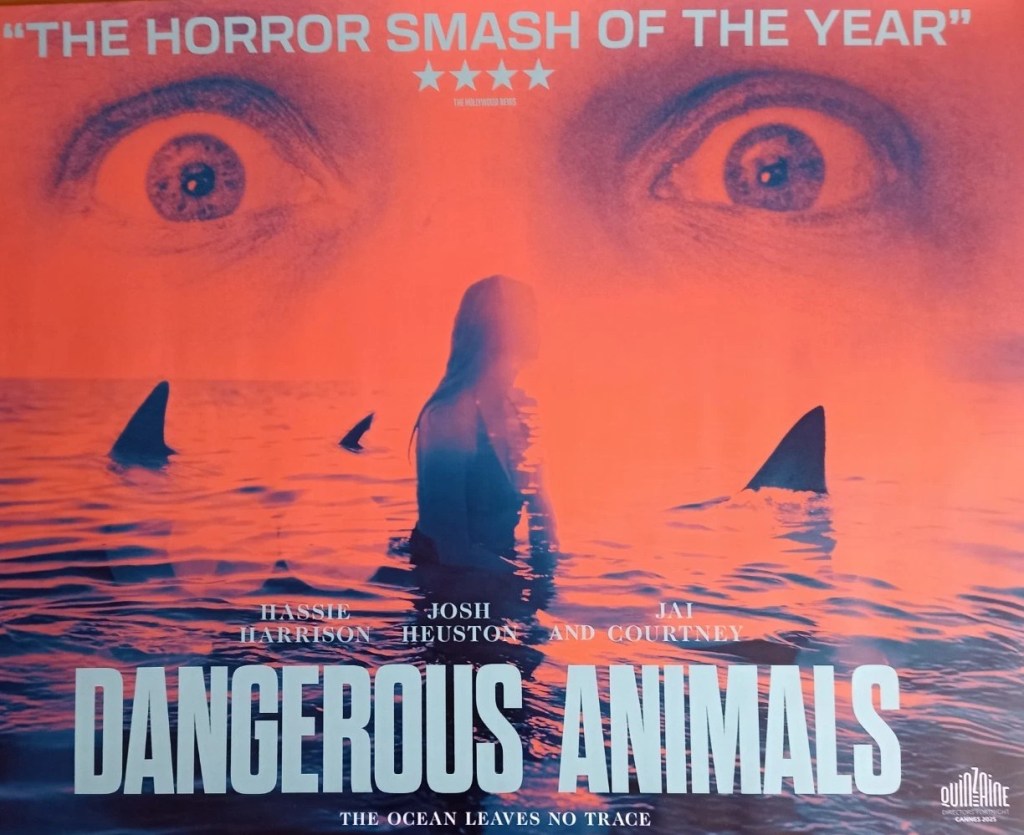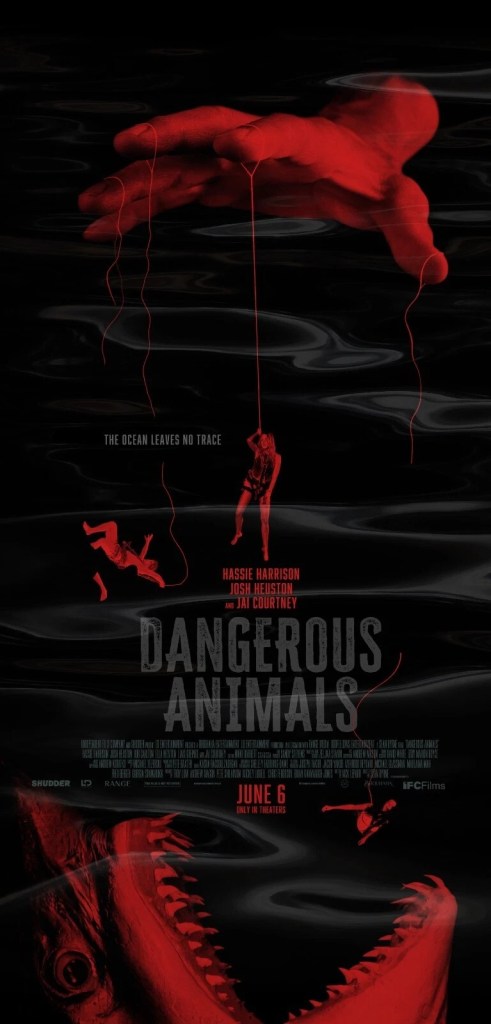
Dangerous Animals (2025) *** – Seen at the Cinema

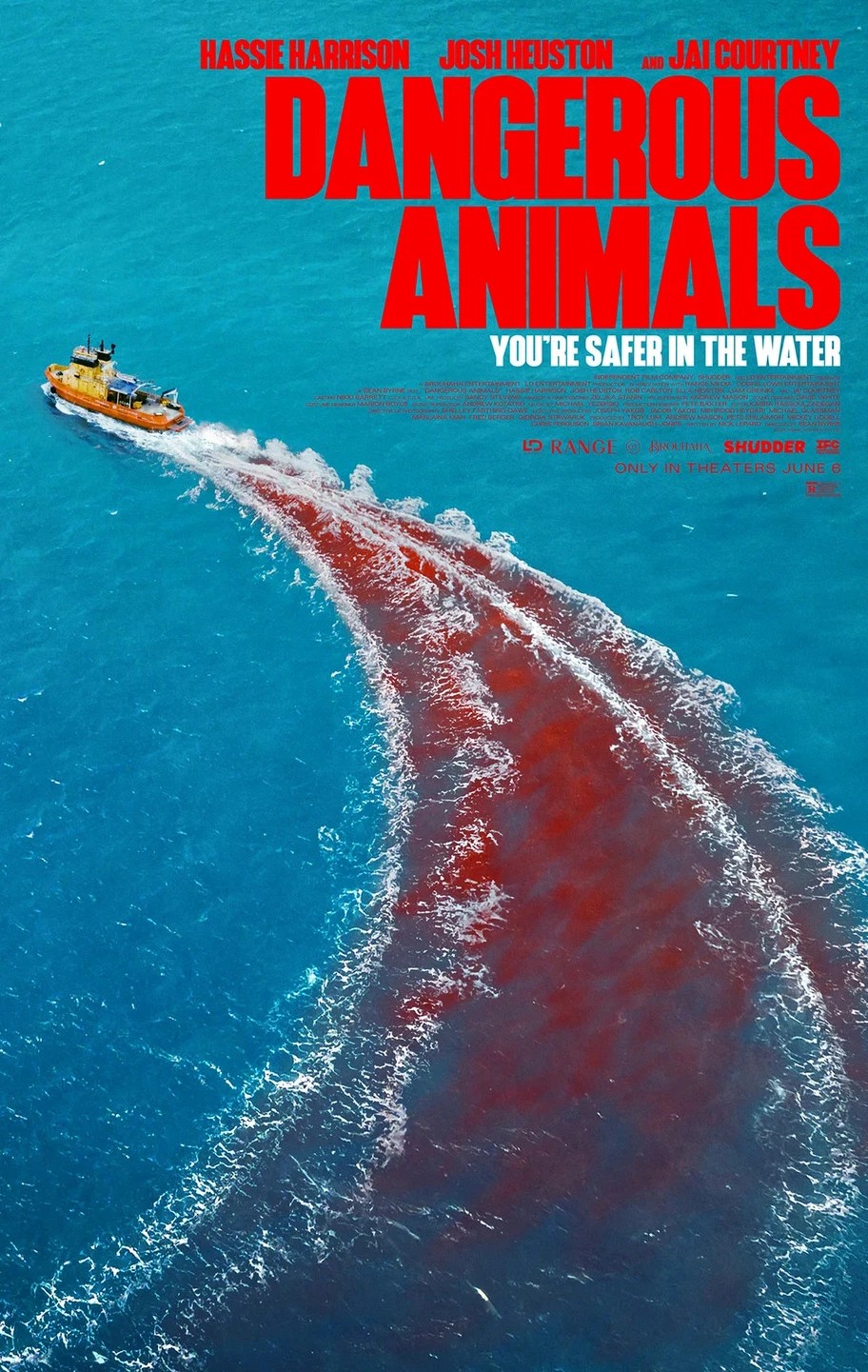
Steven Spielberg made his reputation dangling human bait to sharks and audiences lapped it up. I’m surprised it’s taken this long for a psychotic serial killer to understand the visceral thrill of watching victims die screaming as they are torn apart by sharks and churn up the sea in a froth of blood and guts. As you know I’m partial to a sharkfest and though this isn’t on the same epic scale in terms of destruction as Sharks under Paris (2024), given I was pretty fed up watching the dire Ballerina (let’s hope she’s excommunicated from the John Wick universe), I toddled off to see this without much in the way of expectation.

It’s pretty much in the Old Dark House line of horror pictures, good-looking young men and women imprisoned by a nutcase of the intelligent version of the species that recently surfaced in Heretic (2024). Aussie boat skipper Tucker (Jai Courtney) has a legitimate business taking tourists out shark-watching in a cage. And he’s got a side hustle in picking up vulnerable tourists – on gap years and the like or trying to escape the confines of the past or hiding out from consequence. He either catches his unwitting prey on land or waits till they turn up on his boat singly or in couples and not part of an organized tour from which their absence would be automatically noticed.

Heather (Ella Newton) and Greg (Liam Greinke) fall into the unannounced category. They get the shark experience but then Greg makes more intimate acquaintance with the predators after he’s knifed in the throat and tossed overboard.

Not only does Tucker like to watch he likes other victims to watch – someone dying. In full Spielberg mode he films the deaths. So he goes on the prowl for another victim, kidnapping the  more sassy Zephyr (Hassie Harrison) in the middle of the night. She’s got a good deal more fight in her than the hapless Heather and manages to find a device to unlock the handcuffs chaining her to a bed, makes a makeshift shank from a broken piece of plastic and is adept at wielding a frying pan or harpoon or any other device that comes within range.

In between delivering homilies on the wonder of the shark, Tucker indulges in his dangling, the screaming Heather chopped to ribbons while Zephyr, strapped to the best seat in the house, is unwilling witness.

Luckily for Zephyr, she has smitten Moses (Josh Heuston), a one-night stand, and he has more detection skill than the cops who are not really interested in yet another beach bum who’s gone off without telling anyone. He tracks down the boat and invites himself to the party. Turns out between them they have more than a smattering of shark lore and when Josh is lowered into the water knows that the sharks will leave him alone if he doesn’t thrash about.

But drugged and chained up the pair have little chance of escape unless the doughty Zephyr goes full tilt escapologist boogie and gnaws off her thumb off to facilitate the cuffs slipping over her hand.

Unfortunately for her this picture is so full of twists there’s very little chance of a clean getaway and even when she makes it to the shore by swimming Tucker, thanks to a dinghy with an outboard motor, is on top of her.

It’s not as gruesome as it sounds, though you will want to avert your eyes when Zephyr starts gnawing on her thumb, and director Sean Byrne (The Devil’s Candy, 2015) emulates his idol Spielberg by turning less into more, ratcheting up the tension through anticipation and some terrific footage of marauding sharks. It helps that he doesn’t have a lascivious bone in his body, there’s no sexual assault, no drooling over half-naked women, no wet t-shirt nonsense.

Hassie Harrison (Yellowstone, 2020-2024) is the latest in a bunch of feisty women who refuse to conform to the scream queen norm. Jai Courtney (The Suicide Squad, 2021) is exceptionally creepy as the learned soft-spoken psychopath. Written by Nick Leppard in his debut.

Sean Byrne knows how to turn the screws.

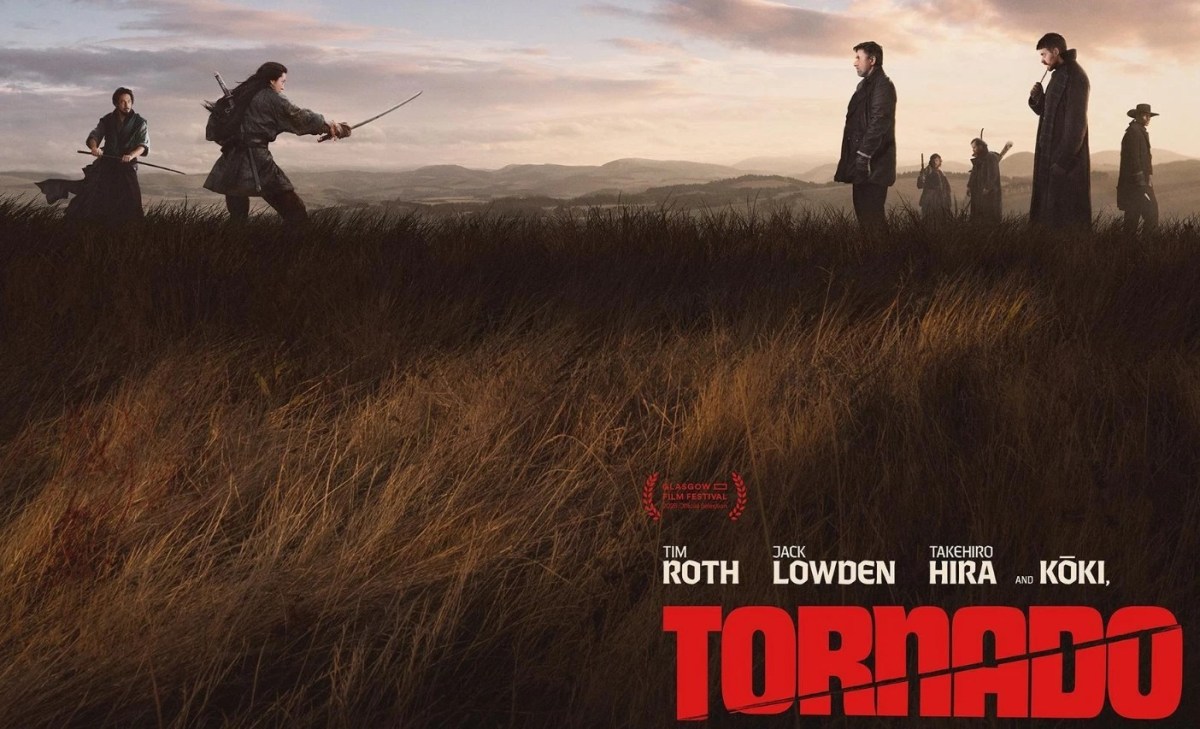
Tornado (2025) **** – Seen at the Cinema

Cult’s a strange creature. Try to cultivate it from the outset and chances are you’ll strike out – the days of Quentin Tarantino hitting a bulls-eye are long gone. So, basically, what you’re left with these days is a picture that flopped on initial release but gradually developed exceptional word-of-mouth and maybe found a welcome home in streaming or on the retrospective circuit if that still exists. But that process takes several years, and the best hope these days is that it gives the director or star a lift. In this case, the door’s been left open for a sequel.

And on paper this sounds an awful conceit. Samurai swordsmen on the loose in antique Scotland? We’re talking 1790, for goodness sake. Were they shipwrecked, enslaved? We never find out. Back story here is in short supply and that’s all to the good because tension never dissipates.

There are only a couple of tropes – a pair of mewling nepo babies suffused with entitlement is as far as that goes.

The rest is original, intriguing and directed with authority. You’ve got gangsters, puppeteers, a circus troupe, and skeletons playing the violin. Twists are in short supply – the expectation that a knife thrower might turn into a male lead is dashed, and dust settling on the top of a piano which should give away the presence of a fugitive is ignored.

The tale is one of greed. And of the greedy feeding upon the greedy. By chance, travelling samurai puppeteer Tornado (Koki) spots the theft of a thieves’ haul of gold by a young pickpocket (Nathan Malone). She helps the boy secrete the two bags of gold in the caravan of her father Fujin (Takehiro Hira). But then she tosses him out of the moving caravan with only one gold piece for his trouble.

When the thugs led by Sugarman (Tim Roth) catch up, her father, unaware of his daughter’s complicity in the theft, is killed protecting her. So the girl and the boy go on the run. There’s none of the usual bonding of thieves.

Sugarman’s son Little Sugar (Jack Lowden) knows the girl has stolen the gold and in rebellion against his father determines to have it all to himself and not above killing off a colleague who gets in his way. Sugarman is a ruthless thug, setting fire to the encampment of the circus troupe for hiding the girl, and not above knifing his son to death.

Tornado doesn’t show the slightest sign of remorse at being the reason for her father and the boy and a strongman who protected her being killed nor for being the cause of the circus troupe being rendered homeless. She’s as amoral as the rest of them. But in the end she does put them all to the sword.

So, theoretically – and this is how it’s being marketed – it’s a revenge thriller or a samurai western (which has already been done with Red Sun, 1971) and both attempts at categorization are way off the mark. It has much more in common with Tarantino, of infighting among gangsters, but it’s so splendidly done, with terrific composition and use of the widescreen that it touches the cult mother lode, in that it is indescribable, creating a world of its own, set in a lawless world where the strong dominate and the weak run for cover. And it’s also a world where you better not get wounded, because that will be cue for someone else to take advantage.

Tornado transitions from rebellious daughter – “who put you in charge” she complains to her father – moaning about being bored and can’t take the job of being a puppeteer seriously, and she’s not that good either at paying attention when her old man tries to teach her more swordfighting. And, of course, she’s to blame for the death of her father. Her instinct is to run and hide and wait till the brouhaha dies down. And it’s only when she realizes that she can’t effectively carry two heavy sacks of gold that she decides to cut and run – with the emphasis on the cutting, slicing and dicing the gang till there’s only Sugarman left and he’s, ironically, dying anyway from a wound inflicted by her father.

So not your ideal heroine. In the old days she’d have been an innocent, guiltless, only taking up the sword or gun after her father was killed by ruthless villains. It’s all the more interesting for not going down that route.

The choices director John MacLean (Slow West, 2015) doesn’t make define the picture. There’s no love interest, Little Sugar and Tornado could as easily have conspired to make off with the dough, or some narrative device could have thrown them together. But both want all the gold for themselves. The knife expert you think is being introduced to come to her rescue. But no go there either.

Tim Roth (Rob Roy, 1995) is superb as the cold-eyed gang boss and Jack Lowden (Slow Horses, 2022-2024) as his shifty son and MTA Koki makes a startling debut.

It’ll be gone from cinemas by the time you read this review but look out for it on a streaming platform and I hope it will prick your interest as much as mine.

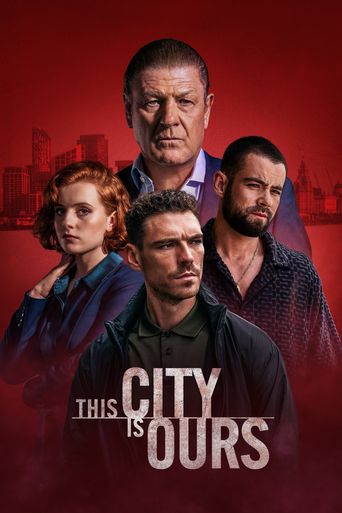
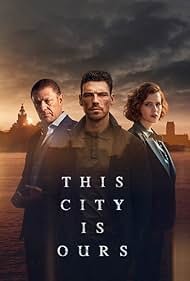
This City Is Ours (2025) *****

Knockout! Just stunning! I’m running out of superlatives for this one, the best crime series since The Wire (2002-2008). For sure, it takes a lead from The Godfather (1972) in that the core concerns family. But in a far more emotional manner than the Coppola epic where apart from a couple of scenes between Michael (Al Pacino) and his father (Marlon Brando) actual male expression of feelings is kept to an absolute minimum as though that might contaminate the pot.

Here, women, both in their relationships with husbands/fiancés, and their own naked ambition are very much to the fore. The new generation of males are vulnerable because of their desire for family, utterly exposed by love for babies and unborn babies, as opposed to old school boss Ronnie Phelan (Sean Bean) who spent little time with his son. And the fear of those on the fringes of being excluded from the “family” or those on the inside being cast out gives the narrative an iron soul.

The nail-biting climax is driven by three incidents involving the most vulnerable and therefore the most loved members of the clan. There’s betrayal, revenge and double-crossing but none of the infidelity or drug/alcohol abuse that was often a hallmark of the genre.

The tale pivots on three events. The first is of the brooding variety. Ronnie has allowed Michael Kavanagh (James Nelson-Joyce), almost an adopted son, to take the lead in crucial negotiations with Spanish drugs kingpin Ricardo (Daniel Cerqueira) much to the annoyance of his son Jamie (Jack McMullen). The second is that, in consequence, Jamie decides to hijack the next shipment. When Ronnie discovers his son is behind the plot, he decides not to follow up, and Michael realizes that blood is indeed thicker than water and that he will be squeezed out of his position in the organization. So he kills Ronnie and assumes command.

Except Jamie doesn’t take too kindly to this notion and, although generally not too bright and certainly way too impulsive for his own good (the Sonny, to keep The Godfather parallel going, of this particular gang), works out that only Michael had the motive to commit the murder which of course Michael strenuously denies. Both convince themselves the only way to take control is to rub the other out.

And then we’d be in standard gangster territory except for the other, emotionally-driven, plotlines. Jamie has a son he absolutely adores. Michael, with an unexpectedly low sperm count for a hardman, is hoping for an IVF baby with his girlfriend Hannah (Diana Onslow), a respectable businesswoman but hiding a very dark secret. Michael’s sidekick Banksy (Mike Noble) is grooming his son in the business. Ronnie’s wife Elaine (Julie Graham) treats Michael like a son and is inclined to take his side against Jamie. Rachel (Laura Aikman), wife of Jamie’s sidekick Bobby (Kevin Harvey), has ambitions way above her station of lowly book-keeper. She finds a way of finessing the fact that she physically controls the organization’s cash – and that it’s Ronnie’s wife whose name is on anything the gang owns – to exploit the divisions in the family as a means of of becoming the de facto “Godmother.”

Meanwhile, Ricardo, for good reason, distrusts Jamie and will only do deals with Michael, for whom he acts as mentor (so, if you like, Michael has two dads)  although Jamie plans to sidestep the Spanish connection and go elsewhere for drugs which would have the dual effect of leaving Michael isolated and, with Rachel controlling the purse strings, potentially millions of pounds in debt. And hovering in the wings is a crafty cop, causing problems in every sneaky way possible, and a liability Cheryl (Saoirse Monica-Jackson), stuck with keeping to the code of omerta even though she guesses Ronnie wiped out her husband.

So it’s a game of shifting loyalties, grasping after power, with uber gangsters laid emotionally low by commitments to babies and pregnant wives. There’s none of the posturing of The Godfather, no making excuses for career choice or murderous thugs who draw the line at dealing drugs or women purportedly unaware of what their husbands do for a living.

Directed with occasional elan and pace and a great nose for the cliffhanger. Terrific writing by Stephen Butchard (The Last Kingdom, 2015-2018), both in dialog and twists on character interaction, and with a marvellous sense of narrative. You never know which way it’s going to go.

But most of all bursting with outstanding talent. You won’t see a deader eye this side of Clint Eastwood than James Nelson-Joyce (A Thousand Blows, 2024-2025) in his first leading role, who’s as comfortable exploring his own emotions as planning destruction. Mother hen Julie Graham (Ridley, 2022-2024) could easily turn into Ma Barker. Hannah Onslow (Belgravia: The Next Chapter, 2024) is tormented by her secret. Laura Aikman (Archie, 2023) manipulates and schemes. Virtually the entire cast are seasoned television actors, yet they’ll never have been lucky enough to encounter such character depth before.

Get on to your local streamer/television station and harangue them to buy this from the BBC.

As I said I’ve run out of superlatives.

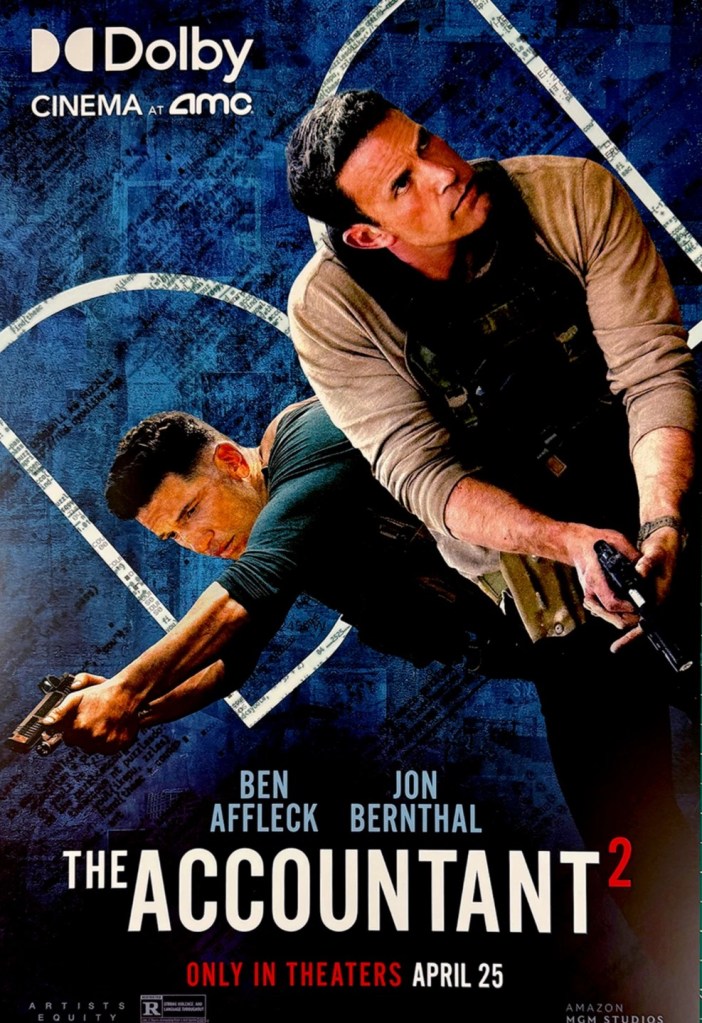
The Accountant 2 (2025) **** – Seen at the Cinema

Rebirth of the semi-feel-good action movie. Take note, Steven Soderbergh et al, boring us to death, this is how to make an intelligent adult thriller. Of course, first of all, you’d have to recruit a writer as savvy as Bill Duque (creator of the Ozark series, 2017-2022) who can make characters come alive through the inconsequential, almost the inheritor of the Quentin Tarantino mantle for the memorably off-beat, who can also build on tetchy pairings – it would be a buddy movie if the main characters weren’t brothers – and throw in a just wonderful dance sequence that will become a classic. And that’s forgetting the setting up of a school where autistic children, with a different kind of a particular set of skills, can thrive.

But we’ve also got the super-smart deduction that’s the hallmark of the superior type of detection thriller, the working through a morass of details, the jigsaw that doesn’t fit, until our hero, having waited patiently for lesser minds to become flustered, steps in and shows it as clear as day.

So we start off with mystery and keep going with it for quite a long time, right down to the climactic pay-off involving the whistling of “Pop Goes the Weasel.” Former top Government official now part-time private eye King (J.K Simmonds) is bumped off while trying to locate a family from El Salvador. Before he dies King scribbles on his wrist “Find the Accountant” sending Medina (Cynthia Addai-Robinson), the chief of an obscure treasury department, off on a wild goose chase to find Christian Woolf (Ben Affleck) who solves part of the problem thanks in part to a code-breaking computer-hacking backroom team.

Woolf calls in estranged brother Braxton (Jon Bernthal), a top-notch hitman who lives out of a suitcase, and whenever the plot slows down this pair are at it with the bitching, settling old scores, creating new reasons for discontent. Soon they are tracking down Anais (Daniella Pineda), Braxton’s equal in the assassination department, at the same time as some thugs who want to kill her.

There’s a good few alleys to go down, some of them blind, while the brothers, to the despair of the devoutly law-abiding Medina, employ illegal tactics to uncover information from drug dealers, money-launderers, sex traffickers and pimps. But part of the joy of the film is that their tactics are always unusual, you never know what’s coming next.

Balancing this out is the bitching. Braxton is sore never to get a call and at having had to look after in his early days a brother who couldn’t conceive of showing gratitude. Christian constantly identifies flaws in his brother’s character, even to the point of determining that if he ever wanted a pet, he’d be better off with a cat rather than a dog.

There’s plenty action, fisticuffs and serious weaponry, and sometimes the bad guys get what’s coming to them and sometimes it’s the good guys. Both brothers are seeking emotional commitment without the foggiest idea how to achieve it, Christian making a breakthrough when after using his obsessive study of detail is rewarded by getting a girl’s name at a line dance, Braxton pure coincidence that they pick up a stray cat.

But this is mightily finely thought-out. We are introduced to Christian as he manages to game a dating club, ending up with all the candidates lining up at his table. For Braxton, we think at the very least he’s working himself up, Taxi Driver style, to face up to a killing or maybe at least an estranged wife until we discover that he, too, is trying to game the system, in this case desperate to buy a puppy ahead of schedule.

Braxton has two other distinctively-written scenes. In the first, we think he has lined up a sex worker, and he maybe has a reputation for violent sex, and that he’s getting a mite ornery, not realizing that she, being German, doesn’t quite catch what he’s saying. Eventually, her fear is explained as Braxton leaves and walks past the people he’s killed. The cat I mentioned, they’re sharing transport with a young boy and Braxton starts moaning that the child is getting to hold the cat more than him. Your heart bleeds. In case you were worried, the brothers do reconcile, all mysteries are solved and there’s a cracking final shoot-out.

Ben Affleck (Air, 2023) benefits from being withdrawn rather than showy. Jon Bernthal (The Amateur, 2025) is all scene-stealing at the outset but soon calms down. Cynthia Addai-Robinson (People We Hate at the Wedding, 2022) has a more cliché role, and having a thing about chairs doesn’t do much to build her character. Daniella Padina (Plane, 2023) is as kick-ass as they come. Wish J.K. Simmons (Red One, 2024) got more roles.

Directed with style and restraint by Gavin O’Connor (The Way Back, 2020).

Saw this in a double bill with Sinners – that’s what going to the movies is all about.

Terrific.

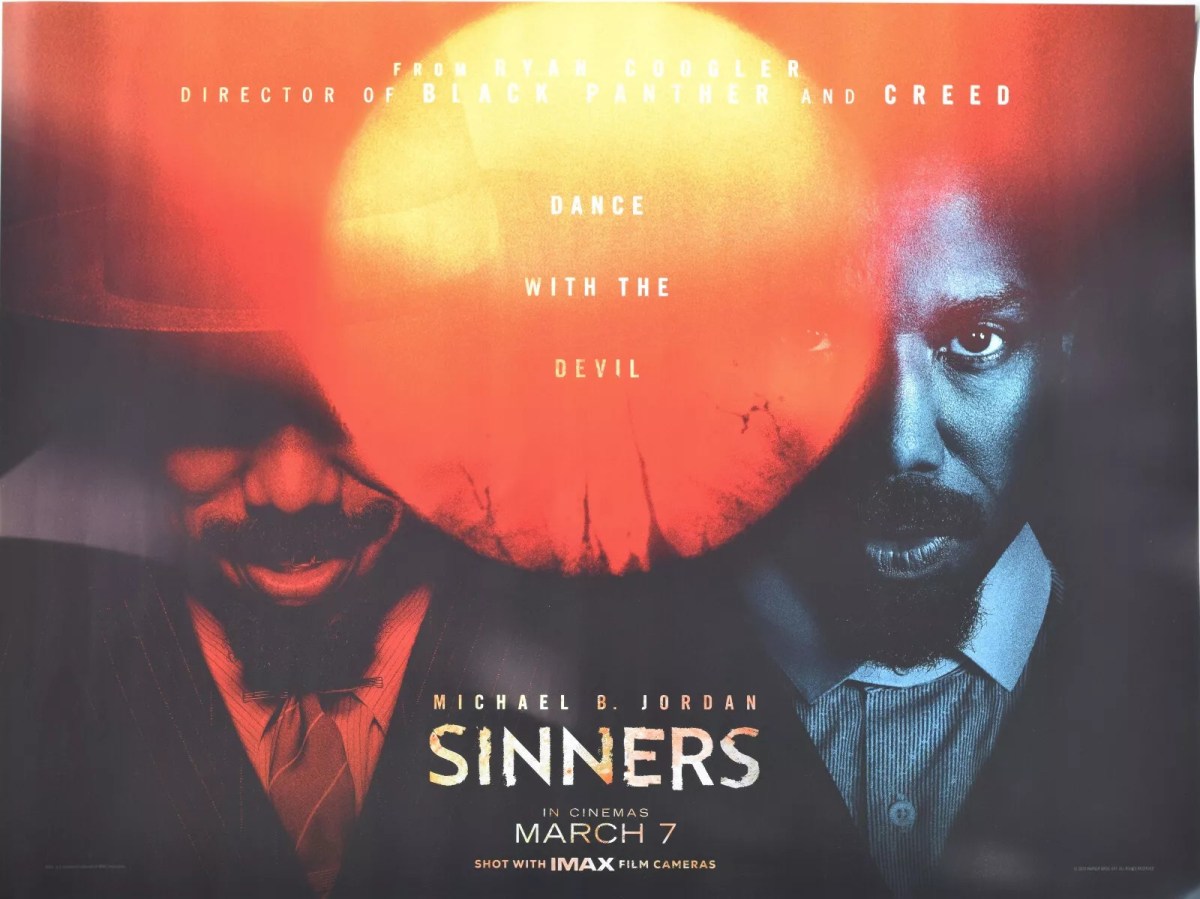
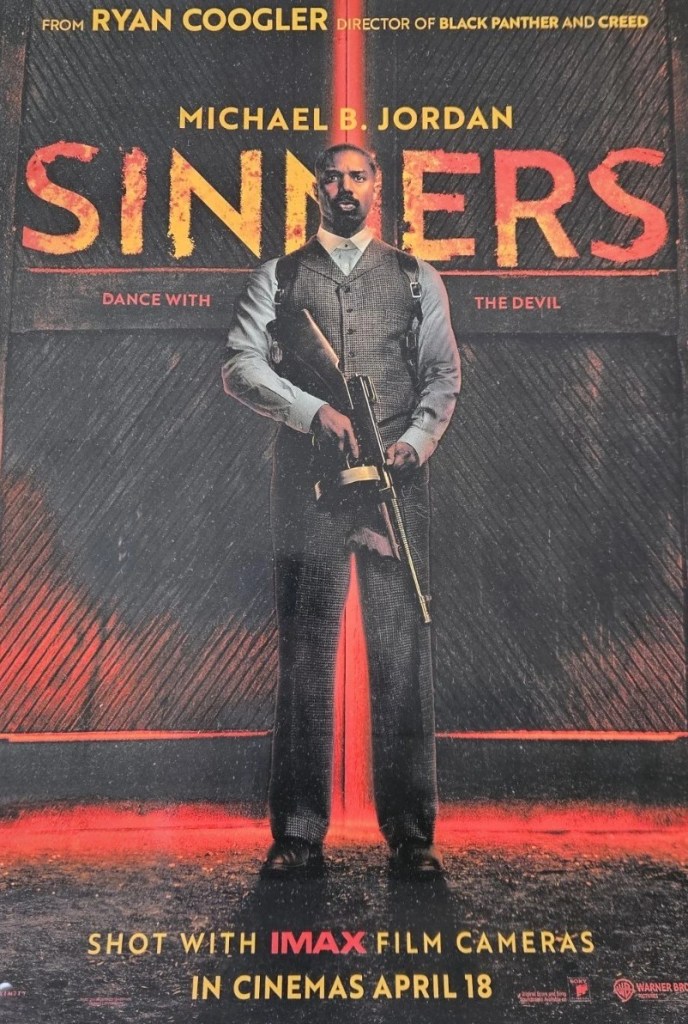
Sinners (2025) ***** – Seen (Twice) at the Cinema

A great movie is more than the sum of its parts. There’s something indefinable, something as they used to say “in the ether”, or “hits the zeitgeist” or, more aptly “hits the spot” because the area in question can never be defined, yet somehow we know it’s there. A writer from several generations past came up with “only connect.” And that’s a pretty food summation. Audiences are not really interested in movies that connect with critics – we’ve been served up too much dross too often to trust critics, Anora (2024) a recent case in point. When movies scarcely drop any percentage of revenue at the box office in the second weekend it’s not because of a ramped-up advertising budget, but because movies have hit the spot, connected with audiences, acquired that elusive word-of-mouth quality. For sure, this is going to be an Oscar contender, which probably means all the fun will be knocked, as its supporters get all preachy on us about its importance as a social document.

But a great movie comes from nowhere and sets up its own tent, creates its world, its own logic. There were gangster pictures before The Godfather (1972), westerns before The Searchers (1956) or Once Upon a Time in the West (1969) and sci fi before Avatar (2009) but what such pictures owe to their genres is derivative in a minor key. And so it here, Sinners takes the vampire movie and tosses it every which way but loose.

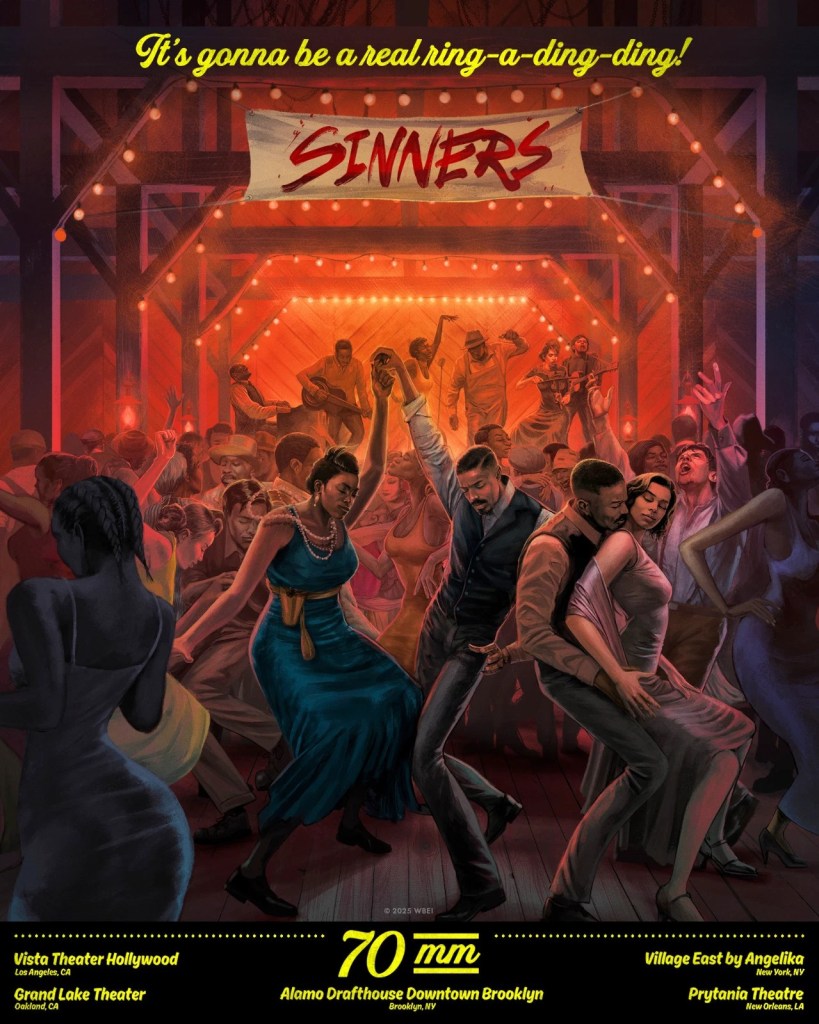
You got the blues, the most appealing vampires you’ll ever come across (and not in the svelte style of another game-changer, The Hunger, 1983), the need for community, the duping of the poor through religion, music than can summon up Heaven and Hell, raw sexuality, belonging, mothers, orphans, genius, cotton, a world where African Americans who fought for their country discovered their country didn’t want to fight for them, where the white man is going to take your money and then, for sport, kill you, and the plaintive despair of never feeling the warmth of the sun again as long as you live – which is forever. And connections – there’s myriad connections that will hit home.

In fact, you might not be aware you’re watching a vampire movie for roughly the first half. You might imagine this is more akin to The Godfather Part II (1974) with gangsters trying to go straight. First World War veterans identical twins Smoke and Stack – I have to confess right till the credits I didn’t realize these were both played by Michael B. Jordan (Creed, 2015) – descend on a small southern town intending to make an honest buck from a dance hall, convinced they have acquired the necessary business acumen. The motley bunch enrolled in this endeavor include neophyte bluesman Sammie (Miles Caton), veteran alcoholic bluesman (Delroy Lindo), singer Pearline (Jayme Lawson), storekeepers Grace (Li Jun Li) and Bo (Yao), bouncer Cornbread (Omar Miller), Smoke’s estranged wife Annie (Wunmi Musaki), who has knowledge of the occult, and Stack’s ex-girlfriend Mary (Hailee Steinfeld). Coming a-calling is Irish immigrant Remmick (Jack O’Connell) recruiting new members for his vampire flock.

The movie doesn’t take flight so much in the unwinding of intertwined lives, or with the rocking action, as with two dance sequences that transcend anything you’ve seen before in the cinema, the first conjuring up music of the past, present and future, the second a routine by the vampires. Trying to save himself from vampires, Sammie begins reciting the Lord’s Prayer only to hear the sacred words echoed by the undead. A guitar is buried in Remmick’s head. And there’s a fascinating coda, if you wait through the credits.

Michael B. Jordan is the obvious pick, striding across both characterizations with immense aplomb (the Oscars will be calling) but Miles Caton in his debut, Delroy Lindo (Point Break, 2025), Hailee Stainfield (The Marvels, 2023), and especially the seductive blood-lusting Jack O’Connell (Ferrari, 2023).

Writer-director Ryan Coogler came of age with Creed and the Black Panther duo but this takes him into the stratosphere, a genuine original talent, not just with something to say but the visual smarts to match. He could have harked on a lot more. Too many worthy pictures have turned virtue-signaling into an art form, but one boring beyond belief. Coogler is much more subtle, he slips in his points.  

But all the subtlety in the world wouldn’t count for a hill of beans if he couldn’t tell a story in way that connected big-time with the audience who wanted to tell their friends to go-see.

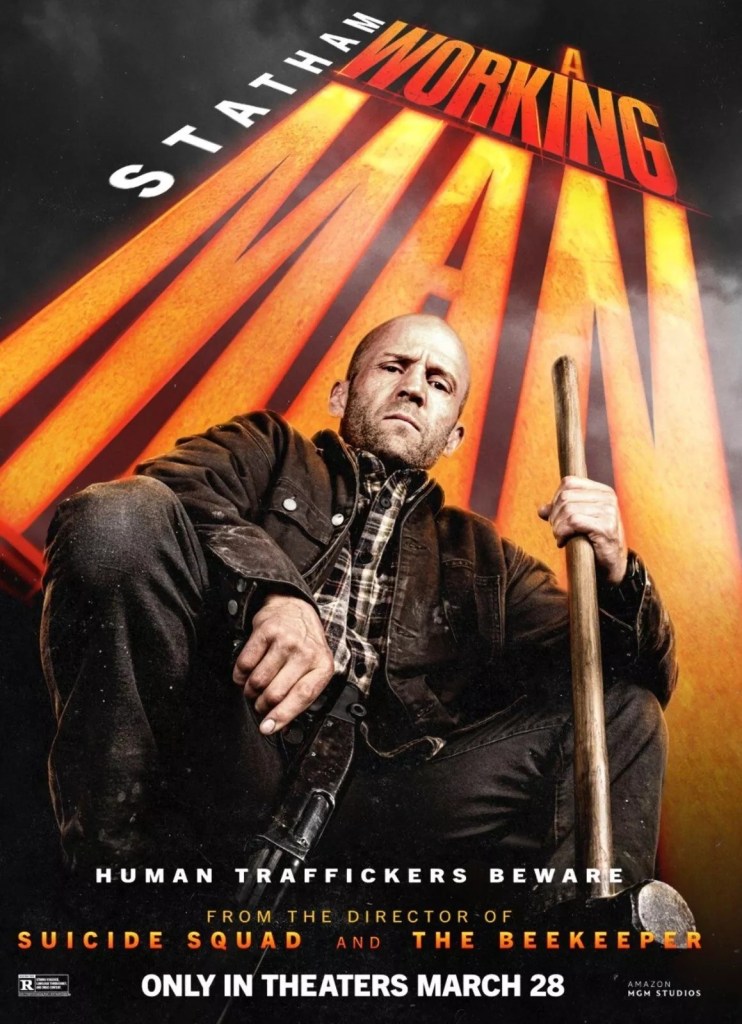
A Working Man (2025) **** – Seen at the Cinema

Audiences have been so let down by high-profile big-budget disasters like Snow White, Captain America, The Joker Folie a Deux, and critical clunkers like Anora, is it any wonder that they queue up to see a movie with a star who generally delivers. Sure, this is a meat-and-potatoes picture and it might well spell a new trend and consign high concept to the trash basket. That’s not to say our star Jason Statham hasn’t had his share of high concept – he doesn’t jump the shark but is inclined to punch it on the nose in the various The Meg iterations and his usual beating up bad guys routine was nearly snarled up in high concept politics in last year’s The Beekeeper.

I saw this at a matinee performance on Monday and the place was packed and as I left I overheard two ladies saying how much they had enjoyed it. Critics have been a bit sniffy about this because the plot is old hat. Who cares? All plots are old hat and those that aren’t are too new hat for audiences to enjoy.

There’s some attempt to repurpose the lonely hero, generally estranged from his family and down on his luck. Here Levon, an ex- (British) soldier, is suffering from PTSD, kept away from his only child by a wealth father-in-law who bankrolls teams of lawyers to ensure visitation rights are kept to a minimum. And Levon blames himself – as does the father-in-law – for being away fighting for Queen and Country when he should have been at home helping his depressed wife and stopping her committing suicide.

It’s piling it on a bit thick though to have him living in his automobile when as a boss on a construction site he must be earning enough to rent even the lowliest bug-ridden apartment, which he eventually does, since “no fixed abode” doesn’t look good on legal papers.

Anyways, we’re soon introduced to his special set of skills when he sets about some gangsters picking on one of his workers. You think the narrative’s going to involve some backlash from the guys he’s beaten up. But it takes a different route. The daughter Jenny (Arianna Rivas) of his boss Joe (Michael Pena) is kidnapped to order by a human trafficking operation headed up by Dimi (Maximilian Osinski), disgraced son of Russian Mafia head honcho Wolo (Jason Flemyng).

Posing as a drug dealer, after carrying out a ton of clever reconnaissance, Levon infiltrates the drugs outfit at a very low level and then works his way up, knocking off members of Wolo’s clan and various affiliates. Meanwhile, Jenny proves herself adept at improvising, in the violence arena, you understand – when your hands and feet are tied, remember you’ve still got your teeth.

This is the kind of film where you’re going to lose count of the number of violent deaths but all you’re interested in is Levon cutting through the wheat and chaff and getting to the top so he can save the girl. Luckily, it doesn’t try to build up a mythical gangster backstory in the manner of John Wick, but there are some interesting scenes where Wolo, initially introduced as sitting at the high table, is put in his place by someone higher up the rankings, and a great scene just at the end where Wolo, by now bereft of his sons, is told by the big boss to accept his losses and get on with the job of selling drugs and leave Levon alone, at which point he lets out the kind of wail that, had he been a bereft hero, would have had him in contention for an Oscar.

There’s no romance either to get in the way so it’s very strictly meat-and-potatoes. In an era when MCU and DC are flailing, Hollywood could do worse than resorting to a more basic kind of hero. Let’s call him, since all superheroes need titles, Workingman Man.

Directed with a zest for pace and tension by David Ayer (The Beekeeper). Interesting to see Sylvester Stallone’s name attached as co-screenwriter and a producer, so I wonder if this had been originally touted as starring him.

Does what it says on the tin.

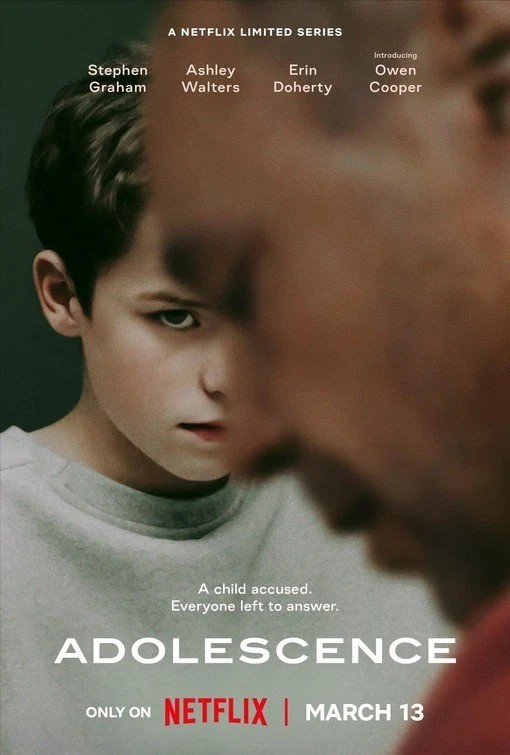
Adolescence (2025) ***

As riveted as I was by the first two episodes, I was bored rigid by the last two which consisted of waiting for simmering father Eddie (Stephen Graham) and 13-year-old son Jamie (Owen Cooper) to explode. That was no big surprise for the mouthy father had been on a short fuse from the outset, but the son, excepting of course he had knifed a female schoolmate to death, had been working hard on presenting an earnest innocent face.

While the much-vaunted one-take technical breakthrough (??) works well enough in the first two episodes it falls apart in the final two as tension completely evaporates. It was always going to be a big ask to maintain any real kind of tension in a series where we know from the start that Jamie is guilty as charged. The CCTV evidence provides all the confirmation we need, although for some reason Detective Inspector Luke Bascomb (Ashley Walters) wants to drag everything out because he lacks a motive for the murder.

Back in the Hollywood Golden Age, characters were always coming in and out of doors  – and, if you recall, one of the greatest images put on film revolved around John Wayne and a door (The Searchers, 1956, if you need a reminder) – but then someone decided we could dispense with all that and just start scenes in rooms. Movies were also keen on people walking down a street – that created ambience, atmosphere, location, whatever, and helpful if they were headed for a western shootout – and television, for budgetary reasons, has tons of sequences of conversations outside during a stroll.

The notion that cinema verite camerawork involving walking endlessly along corridors adds much to a television series beyond bragging rights is misplaced. It comes in handy during the school scenes when the backdrop is teachers barely able to contain riotous kids. It seems a bit odd to expect television audiences who prefer character and story to be asked to applaud these endless walks – and takes lasting a solid hour – just because the director has worked out a way to jump from one character to another without cutting.

Apart from the initial identifying of the murderer, it takes a heck of a long time to go anywhere else. There’s a heinous attempt to make the victim responsible for her own death, she made fun of the younger boy for daring to think he was in her league – or age group – to ask her out. The motivation for the killing appears to revolve around Jamie, in full predator glory, hoping that in taking advantage of a moment of her personal humiliation, that she will relent.

The first two episodes set a high bar in police procedural, especially when answers are not forthcoming and the kids can give two fingers – or worse – to any figure of authority. The moment where Jamie gives vent is damaged by the fact that the psychiatrist Briony (Erin Docherty) is so ineffective.

As you might have guessed, social media is to blame, but any hint of inadequate parenting the director treats like an unexploded bomb best to avoid.

There’s not much character development, the DI farts in the car, a security guard is ignored in his  attempts to spark up conversation with Briony, cop’s son Adam (Amari Bacchus) is subject to constant low-level bullying, and there’s a terrible attempt to make Eddie more empathetic by  recalling his early dating.

Stephen Graham (Boiling Point, 2023) being both co-writer (with Jack Thorne, Toxic Town, 2025) and a producer probably led to him having more scenes than necessary. Directed by Philip Barantini (Boiling Point) who should win the Oscar for choreography.

Owen Cooper, in his debut, is by far the standout.

Netflix is hoping for kudos for this but it feels like one of those European arthouse movies long on style and short on substance.

Black Bag (2025) *** – Seen at the Cinema

Explain to me how this cost anything like the reported $50 million. Unless the cost of a nightclub scene has gone through the roof. Or someone has slapped an almighty tariff on shooting in Zurich. Or such middling box office attractions as Cate Blanchett and Michael Fassbender, against the laws of marquee valuation, are pulling down salaries in the region of $10 million apiece.

Because this is nothing but a glorified chamber piece, most scenes shot indoors or in secluded locations. There’s no car chase, one minor explosion (drone-triggered), not even a pursuit on foot. Some clever marketing oik has dressed up what’s no more than a BBC TV film as an expensive espionage picture in the hope of hooking a larger audience.

It’s short, little more than 90 minutes, so that’s on the plus side. But the plot’s full of holes, you’re scarcely going to swallow Fassbender and Blanchett, faces welded to stiff upper lip,  as a hot middle-aged couple, and I wouldn’t have been at all surprised to see  Hercule Poirot or more likely Miss Marple lurch into view for the grand finale with all the potential culprits being set to rights around a dinner table.

Fassbender is so impassive at the best of times his character hardly needs to be expanded to include some OCD, and the most expressive he becomes is, wait for it, hand shaking when he pours a glass of water. The theme, wait for it, is that people who lie for a living are not to be trusted in their domestic lives. And just to polish the virtue-signalling credentials there’s still running amok in MI5/MI6/Black Ops/CIA some rogue top dog who thinks he can stop the unnamed war – presumably Ukraine – by causing a nuclear power plant meltdown in Russia.

And when Pierce Brosnan steals the show in a small supporting role you know your movie’s in trouble.

That said, there’s enough going on to keep you entertained. Top British agent George (Michael Fassbender) begins to suspect – or does he really – that his wife, also a top British agent, Kathryn (Cate Blanchett), is up to no good. So he begins to investigate. Mirror is piled upon mirror, complicated by the occasional murder, so that we are soon knee-deep in the kind of narrative where you don’t know who trust – but, equally, unfortunately, don’t much care because none of the characters is remotely attractive.

At least one them, Freddie (Tom Burke), would have been considered a security risk. So  often does he stray he would be catnip for any passing honeytrap. But you might also have asked questions about his current squeeze, analyst Clarissa (Marisa Abela), paranoid as a posse of schizophrenics, who knows exactly how to pass a polygraph test (clenching the anal sphincter one of the tricks in case you’re interested), and as likely as not to ram a carving knife into unfaithful boyfriend Freddie’s hand at the dinner table. Naturally, it doesn’t do much harm, because Freddie is back at work next day with bandaged hand and not investigated by cops over a knife wound that could hardly be covered by the old slipping the shower routing.

Then we’ve got straitlaced psychiatrist Dr Zoe Vaughan (Naomie Harris) with a penchant for erotic fiction, sex in the office (including breaking the cardinal rule of her profession, sex with a patient), and stringing along two men at once, both of whom, Freddie and Col James Stokes (Rege-Jean Page), are engaged in other affairs.

George soon realizes he’s being played as a patsy, and that his investigation has compromised another operation, and facilitated the handover of a top secret document to the Russians.

In the current dearth of movies for the over-40s, make that over-30s not yet suffocating in superheroes and multiverses, this is what passes for entertainment aimed at an adult audience. And it is short, as I said, but this is exactly the kind of low-budget movie with a decent cast that traditionally ends up on a streamer.

For once, director Steven Soderbergh (Magic Mike’s Last Dance, 2023), whose career is littered with self-indulgence, sticks to the knitting, and it’s a more than passable espionage thriller, but the kind that would be more at home on the small screen. Written by David Koepp (Indiana Jones and the Dial of Destiny, 2023).

Neither Fassbender (Next Goal Wins, 2023) nor Blanchett (Tar, 2022) do the most basic task required of a marquee name, which is to set the screen alight, and all the rest, excepting the much-in-demand Pierce Brosnan (Black Adam, 2022) – seven pictures in the last two years –  merely trundle along in their wake, saddled with scenes where they express alarm at their deepest secrets being revealed like they have drifted in to some shopworn melodrama.

For all the actual investigation that takes place you could have set this in the kind of remote spot favored by Agatha Christie and played it out in traditional Poirot/Marple fashion.

Interesting but ultimately disappointing.

And the big question remains – where did the $50 million go? And, did it exist in the first place?

The Last Showgirl (2025) **** – Seen at the Cinema

I’m assuming this fell foul of Oscar voters because it lacked a woke agenda. In fact, it’s distinctly anti-woke, the subject matter of women flaunting their bodies for dough, and a heroine who revels in it, going against the contemporary grain. And I know Demi Moore put on a more showy performance in The Substance (2024) but Pamela Anderson here demonstrates significantly more substance. Everything you’ve heard about her performance is true and you do wonder, far more than with Demi Moore, why some casting director didn’t alight on such talent which would have been ideal for a rom-com or drama as a put-upon character.

I’ve scarcely come across a more well-rounded character – and yes the script by Kate Gersten was an Oscar shut-out, too, but scripts are more than fancy-dancy lines or setting up woke agendas. There’s a just fabulous scene where ageing showgirl Shelly (Pamela Anderson) slams the door in the face of one of the young dancers coming to her for emotional support. Shelly is too wrapped up in other personal dilemmas at that point to cope. Up to now she’s been maternal to a pair of younger girls, Jodie (Kiernan Shipka) and Mary-Anne (Brenda Song), and happy to offer a shoulder to cry on.

But it’s two-way. The girls help her fix bits of her costume. Following the door-slamming episode, Jodie takes the hump and refuses to assist pre-show and Shelly come a bit unstuck.

But not only is Shelly a willing participant in male fantasy, she’s also poster girl for a female fantasy, that her body and somewhat limited talent will carry her through to old age (older age, she’s 57 now) and she can dwell on career highlights such as being feted by the media and corporations who ferried her across the world as some kind of brand ambassador.

Frankly, she’s not ready to face up to much – certainly not the end of her career, the show (Le Razzle Dazzle) is closing and her daughter Hannah (Billie Lourd) is not only challenging her perception that she was a good mother but derides her occupation.

The script is cleverly structured in a kind of Christmas Carol fashion. We’ve got before – Jodie and Mary-Anne the eager beavers with stars in their eyes. After is represented by the jaded older hard-drinking gambling addict Annette (Jamie Lee Curtis), reduced to cocktail waitress (a rather grand term for what she does) in a casino with her cleavage on show as a possible repository for tips.

Shelly has more than enough shades of character. She’s daffy, hard-nosed when the situation requires, manipulative (also when required), selfish, unselfish, fulfilled, unfulfilled, friendly, lonely. Turns out there’s still room for the exploitative show as long as striptease can be performed in post-ironic fashion, throw in some slapstick and bizarre comedy, and there’s demand for the straightforward Vegas showgirl but they need a good bit more dancing training than Shelly can muster – brutally taken apart in that scene.

Thankfully, director Gia Coppola (The Seven Faces of Jane, 2022) doesn’t go down the sentimental route, nor is she out to curry pity. You’ll sympathize with Shelly for sure, but you’ll hold back because her problems are all of her own making and you know full well that she’ll find some solution, manipulative or not, to her immediate problems.  

If you’re looking to expend a bit of sympathy your better bet is Annette. The scene where, presumably as part of her job, she has to climb on to a mini-stage in the casino and gyrate to a tune with nobody paying the blind bit of notice resonates. Sharp-tongued though she is, Annette has the self-awareness to know she will always be broke, unable to kick her gambling addiction, even if it means losing her home and sleeping in her car.

Hannah’s really the only cliché, there as a scripting prop to make Shelly reassess her life (interestingly enough Shelly finds little to fault), and make her face up to her tawdry career. Though in a scene which makes some emotional sense – acceptance of parental failings, I guess, or pride at paternal skill – that I didn’t believe the daughter applauds her mother’s dancing having previously lambasted it.

This is old-school, from the time when you could make a whole film just about a character coming to the end of their career and facing up (or not, as here) to decisions made. It could be a football coach or a teacher or a politician. Here, it just happens to be a showgirl.

This would in any case have been the best performance of Pamela Anderson’s career because, frankly, that bar was set decidedly low. Demi Moore, by comparison, could at least point to some critical acceptance for roles like Ghost (1990) and A Few Good Men (1992). I don’t buy into the idea that box office stars are hard-done-by in not being offered Oscar-bait roles because as we’ve seen only too often any star can buy their way into a good role – by that I mean cutting their salary to the bone or spending their own dough to bring a picture to fruition, it’s what the term “vanity project” was invented for.

Still, with what Pamela Anderson presents here, shorn not so much of make-up but the glossy sleekness of her previous screen persona, and presenting a more realistic characterization, you could see her fitting well into a series of more demanding roles.

Yes, for once, the reviews are correct. Well worth seeing.  

Squad 36 / Bastion 36 (2025) **

Netflix appears to be going through the gears – the wrong way. But that’s what happens when you’re so dependent on content – any content. But no different really from old Hollywood, always a bucket of stinkers in the days when studios had to each greenlight 20-25 pictures just to stay in the business.

I’d been encouraged by Toxic Town (2025) and my love of French policiers to take a chance on this one. It shouldn’t have been much of gamble. Even though French gangster/crime movies don’t travel all that well, for aficionados like me, growing up on the likes of Gabin, Belmondo and Delon (and intruder Bronson)  that doesn’t matter. Still lingering in my memory are Mesrine (2008) and 36 Quai des Orfevres (2004) with Daniel Auteil and Gerard Depardieu, for example, directed by Olivier Marchal, who helms this one.

This at least gets off to a good start, a blistering chase through a rain-sodden Paris, clever interchange of personnel in cars and on motorcycle, hounding target Mahmoud through the streets. Eventually, Antoine (Victor Belmondo) has him trapped. But in the first of a series of bizarre twists the criminal gets away. How? Well, it’s simple. It’s down to bureaucracy. Instead of putting a bullet through a guy armed with a gun, presumably a crime in itself, Mahmoud effectively reminds Antoine that he doesn’t want to be seen shooting an armed man in public.

What? Double what? Mahmoud might not be resisting arrest but he’s clearly armed and dangerous. But of course there’s another reason Mahmoud can’t be arrested. Because the cops don’t have evidence to link him to criminals – the tracking is in the hope he’ll lead them to the bad guys. However true that may be, at the moment of this confrontation Mahmoud is clearly committing a criminal act, unless he’s got a license to carry a gun in public.

Then it gets even dopier. The top cop is furious because the chase has generated complaints from the good citizens of the French capital. Ooh la la! Then Antoine gets busted because – wait for it – he put in hospital three guys who ambushed him. Guilty apparently of using excessive force. That seems a tad unhinged. Is there any way to combat an attack by three thugs without putting at least a couple of them out of action?

This might have been redeemed had Antoine capitalized on his early edginess. He’s in the illegal business himself, but only to the extent of participating in underground bare-knuckle boxing matches. At one point he takes a hell of a beating – we’re talking Clint Eastwood territory – so that should have set him up for the rest of the picture.

But instead he reverts to completely dull as six months later, having been shifted to another unit, he returns to, unofficially, investigate the deaths of two members of his original squad and the disappearance of a third, Richard (Soufiane Guerrab), who has gone loopy – possibly after reading the script – but then disappeared from a psychiatric clinic.

Antoine has various leads to follow and occasionally, in case the plot is too difficult for us to follow, we pop into the lives of the other cops involved so we know full well they are up to something dodgy. Meanwhile, as with the best cop pictures, there’s a cover-up, which may be because the top brass is implicated or because it would just harm public relations if the public were to even think (perish the thought!) that there could be corruption in the police force.

This just drags on and on. It could easily do with losing a good 30 minutes. But even then it would sag. None of the actors involved take it by the scruff, the way they used to in the good old days, not even when they are presented as an old-fashioned hard-drinking hard-smoking gang. You used to be able to rely of supporting actors to steal scenes, just for the hell of it if they were older and to put down a marker for the future if they were younger, but that doesn’t seem to have occurred to anyone here.

There’s an ironic twist at the end, the kind you used to get in the paranoia thrillers of the 1970s. Cracking start, good ending, but not very much to hook you in between.

Written and directed by ex-cop ex-actor Olivier Marchal from the book by  Michel Tourscher.

Goes through the motions without hitting the spot.

Discover WordPress

A daily selection of the best content published on WordPress, collected for you by humans who love to read.

The Atavist Magazine

by Brian Hannan

WordPress.com News

The latest news on WordPress.com and the WordPress community.