We all did it – or so I’m guessing. Head into our city center and take a long walk past all the big cinemas and stare at the posters and stills on display outside the cinema and peek inside to the far wall where was a smaller poster for what was coming next week. Of course, we could just have checked out the daily newspaper and spotted what each house was offering. But that wasn’t the same.
In Glasgow, Scotland, where I grew up, the main cinemas were conveniently situated along an L-Shaped drag of the city’s two chief shopping districts that ran for about a mile, abutted by the two main train stations, Charing Cross at one end, and the terminus of Central Station at the other. On Saturday afternoons I’d hop on a bus into town and take a stroll down my L-Shaped Street of Dreams.
Glasgow was a moviegoing mecca. It boasted the biggest cinema audiences in the whole of Britain on a per-head-of-population basis. Where Londoners might attend the cinema once every two months, Glaswegians turned up every two or three weeks. Green’s Playhouse was the biggest cinema in Britain and when the Odeon turned into a triple that was the busiest complex in Britain (a position that the Cineworld in Renfrew St held until its recent closure).
As far as this initial interest in moviegoing went, I’m talking the late 1960s/early 1970s, just at the start of multiplexing – the first of that breed appearing in 1967 and the second in 1970. And, unlike today, movies opened on a Monday for a six-day run with Sundays given over to a separate one-day double bill, usually of the exploitation/horror variety and generally an oldie. There were no split weeks in the city center movie houses. At the time of which I speak, the program changed every week. It was rare in the 1960s for a movie to be retained (held over) for a second week and even rarer for a third. Though that changed with the advent of the blockbuster in the 1970s when Love Story (1970), The Godfather (1972) and Jaws (1975) ran for months in one city center first run.
I always began my cinematic ramble in Sauchiehall St at the Charing Cross end which afforded me the opportunity, first of all, to peer into the relatively discreet windows of the Curzon Classic and take note of the risqué fare. This was by default an arthouse when the sexiest pictures available before the onset of more permissive movies all came from Europe. So, occasionally, you’d find it playing host to a genuine arty number that happened to contain whatever degree of nudity the British censor would permit. Eventually, it fessed up and became a members-only cinema where it could show whatever it wanted – though still within the strictures of the British Board of Film Censors, which meant no hard-core. Still, you were guaranteed that every movie shown was X-certificate.
The 450-seater Curzon Classic began life in 1912 as the Vitagraph before being renamed the Kings. In 1954, as the Newscine, it became the first cinema to specialize in newsreels. But that didn’t last long and, renamed Newcine, turned into a second-run house. The Classic chain, which ran a repertory outfit showing reissues, bought it in 1964. But this particular cinema strayed outside the normal Classic chain fare of older movies and tended to screen the kind of movies I mentioned.
A few hundred yards along and you came to the ABC Regal, one of the two biggest first run houses and local flagship of the ABC circuit. I learned much later on that the two most important British chains – the ABC and the Odeon – had separate exclusive deals with major Hollywood studios. So the ABC would only show pictures made by MGM, Paramount, Universal and Warner Bros while its rival ran pictures made by Twentieth Century Fox, Disney, Columbia and United Artists.
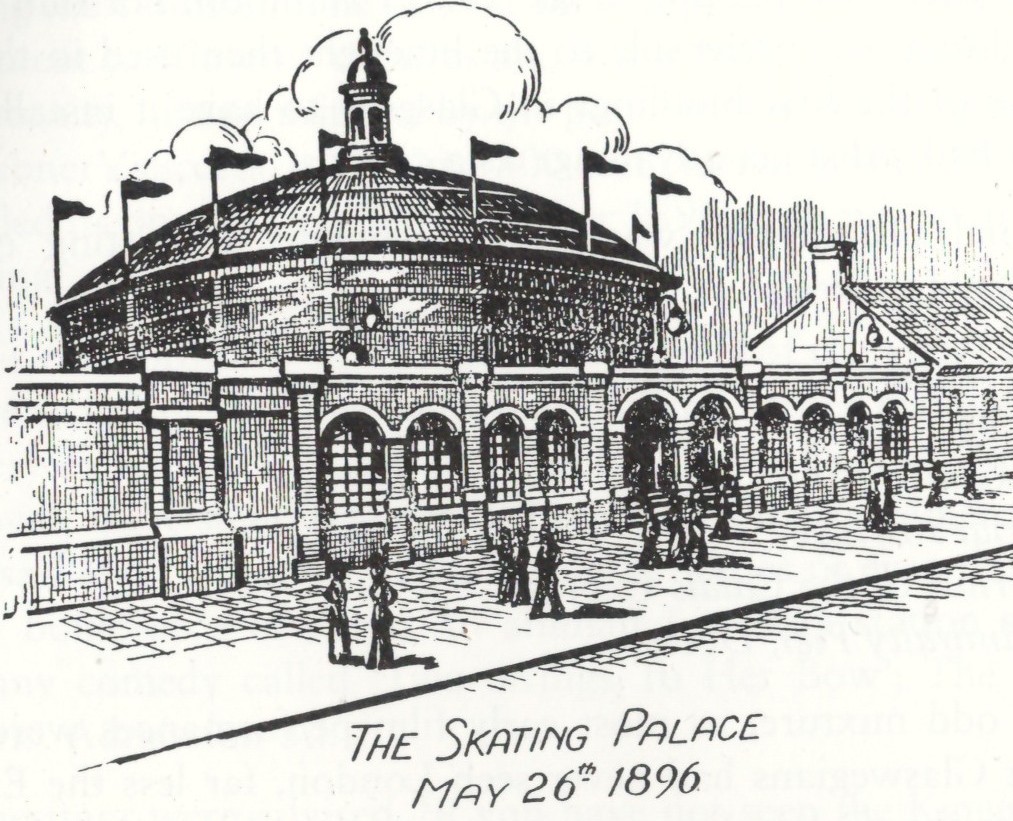
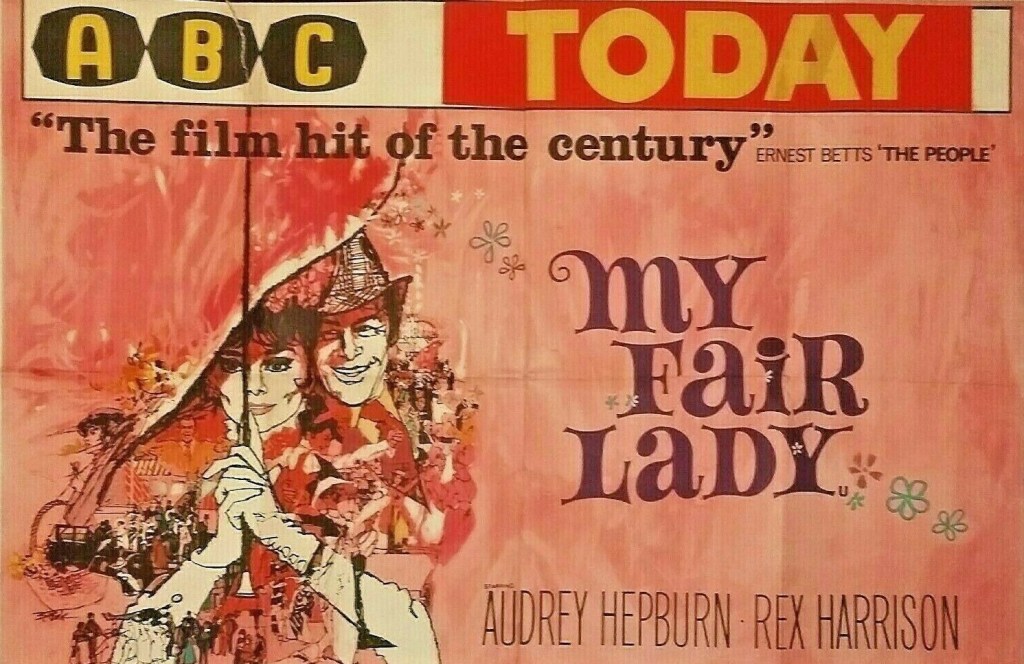
The Regal was one of the city’s first “super-cinemas,” opening on 13 November, 1929. The site had been entertainment-based since 1875 and successively had traded as the Diorama, The Panorama, the Ice Skating Palace (also showing movies from 1896) and The Hippodrome. For a quarter of a century from 1904 it hosted Hengler’s Circus and briefly was the Waldorf Palaise de Dance. The Regal had 2,359 seats. It changed its name to the ABC Regal in 1959. Occasionally, it doubled up as a roadshow house, My Fair Lady (1964) running there for several months.
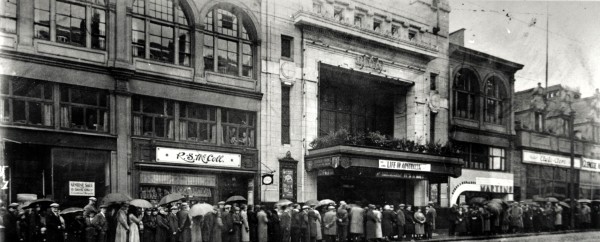
In 1967 it was split in two. The Regal was renamed the ABC 1 and its more luxurious partner, a 922-seater, the ABC 2. The former continued to change its program every week but the latter was a roadshow venue, so movies ran there at least for a month – Ryan’s Daughter (1970) held the record of lasting a full year. Some pictures which went out on general release and on a 35mm print in the USA were blown up to 70mm and road shown in Britain, and it was here and in that format I saw The Wild Bunch (1969).
When roadshow was in short supply or an earlier movie had not performed to expectations and its run was curtailed, the ABC 2 would put on reruns of previous roadshow successes – in 1968 The Great Race (1965), Battle of the Bulge (1965) and Becket (1964) all had one-week stints in continuous performance.
Having a reputation for the moviegoing habit did not ensure that films arrived any faster in Glasgow. All movies of any distinction had their first showings in Britain in London’s West End and rarely went north until both that run was complete and it had played the North London and South London circuits.
Just round the corner from the ABC, off Sauchiehall St, in Rose St, was the Cosmo (reborn as the Glasgow Film Theatre in 1974). Not only was Glasgow viewed as a vibrant city for Hollywood pictures, but it was also reckoned to be a prime target for alternative cinema. Built in 1939, the Cosmo was the first purpose-built arthouse outside of London. Owned by George Singleton the 850-seater arthouse had a quirky “Mr Cosmo” logo.
As well as a weekly change of program of largely foreign movies, the Cosmo also occasionally hosted roadshows. While not falling in with the standard 70mm format, the Cosmo maintained the separate performance element of the roadshow. In 1967 it premiered the Burton-Taylor Shakespeare extravaganza The Taming of the Shrew, which lasted 12 weeks, and the Oscar-winning A Man for All Seasons which held court for eight weeks.

Further along Sauchiehall St was the 1,000-seat La Scala, dating from 1936 and, famously, with a café on the ground floor. This was the flagship for Caledonian Associated Cinemas, a chain that had more cinemas throughout Scotland than either ABC or Odeon and therefore was in a strong position to negotiate for first-run product. First-run pictures often enjoyed a two-week engagement here. Generally, it alternated between first and second run, pictures receiving a repeat outing a week or so after finishing a run at the ABC or Odeon. Occasionally, it went roadshow, it was separate performances in 1968 for a four-week run of Doctor Zhivago after its initial roadshow outing in the city. In the early 1970s when ABC was in dispute with Paramount over its rental terms, the La Scala obtained the rights to Love Story (1970) and it ran at the cinema on continuous performance for 26 weeks.
Opposite the La Scala was – until the ABC2 came along – Glasgow’s city center roadshow kingpin, the Gaumont, the Rank/Odeon chain’s roadshow flagship, which had played host to The Sound of Music for 134 weeks. Originally it was part of the Gaumont chain before being subsumed by Rank and merged with its existing Odeon circuit. It had opened in 1910 as The Picture House with a capacity of 1,084-seats and later expanded to accommodate 1,600 patrons. It was taken over by Gaumont in 1929 but the original name was retained until 1947. It became the city’s de facto venue for roadshows after being chosen to premiere Cecil B. DeMille’s The Ten Commandments (1956) in a run lasting four months and became internationally famous when South Pacific (1958) ran there for 18 months. Occasionally, it reverted to short runs in continuous performance such as, in 1968, Sgt Ryker with Lee Marvin.
This takes me to the halfway point of my stroll along my L-Shaped Street of Dreams. Next time I’ll be taking a turn both left and right from Sauchiehall St and going both up and down Renfield St.

 The Magnificent 60s