
United Artists – one of the biggest box office hitters of the 1960s – should have emerged relatively unscathed from the financial tsunami of the end of the decade. While pictures like its The Charge of the Light Brigade (1968) certainly hit the buffers, it wasn’t in the position of having to swallow the titanic losses suffered by rivals Paramount (Darling Lili, 1968) or Twentieth Century Fox (Star!, 1968, Justine, 1969). Even though the studio’s banker, the James Bond series, suffered a downturn in the absence of Sean Connery, On Her Majesty’s Secret Service (1969) still turned a decent profit.
However, when, in 1970, UA was staring down the barrel of a $50 million loss, the cause was more commonplace. Audiences worldwide had changed. Though every studio had followed trends taking them into youth-oriented pictures after Easy Rider (1969) and into more adult realms following Oscar-winner Midnight Cowboy (1969) and indulged the whims of a new generation of directors, something just did not add up. The studio believed it had, based on previous releases, invested in a solid range of movies, that overall would contain strong appeal.
For movies released between 1969 and 1971, UA had spent $80 million. But even before one-third of this output hit the screens in 1971, the studio was already projecting a colossal loss of $50 million, even after including sales to television.
Results in 1970 proved a shock to the system. “For the first time since the present management team assumed control of the company,” reported an internal memo dated February 28, 1971, “very few pictures released through the year showed promise of recouping their negative costs. It became clear that pictures which by our own experience would have brought back their costs or better in other years, would suffer severe losses in 1970. This was true of pictures in all cost brackets, high and low.”
And “after six uninterrupted years of substantial profits,” the studio was struggling to explain this sudden downturn. The situation was even more calamitous because the movies UA had readied for 1971 release were already expected to fare badly. In the light of changes in the marketplace, most of these movies would not have been greenlit in 1970 or made on reduced budgets.
Of course, the studio did not entirely blame itself. “The thirty-five films could not have been fully and properly evaluated in 1969. The conditions revealing the need for reevaluation…did not occur until 1970.” And even then, the “ominous” signs were only obvious towards the end of the year. Adventurous and more formulaic pictures alike foundered at the global box office.
In an act of mea culpa, United Artists set out the reasons why their flops had flopped. Their output broke down into roughly three sectors – star-led product, risky projects investing in new directors, and movies that targeted critical acclaim or appealed at least initially to the arthouse brigade.
Audience rejection of movies featuring big stars was the biggest pill to swallow.
Of Hornet’s Nest (1969), the studio observed: “In the early and mid-1960s pictures with Rock Hudson as star would do global grosses justifying the cost at which this picture was made. A typical run-of-the-mill action picture of this nature used to be a sound commodity if made within this price range. Our experience with, for instance, The File of the Golden Goose (Yul Brynner, 1969) and Young Billy Young (Robert Mitchum, 1969) made it clear that the global audience for this kind of picture had shrunk considerably and that a substantial loss appeared inevitable.”
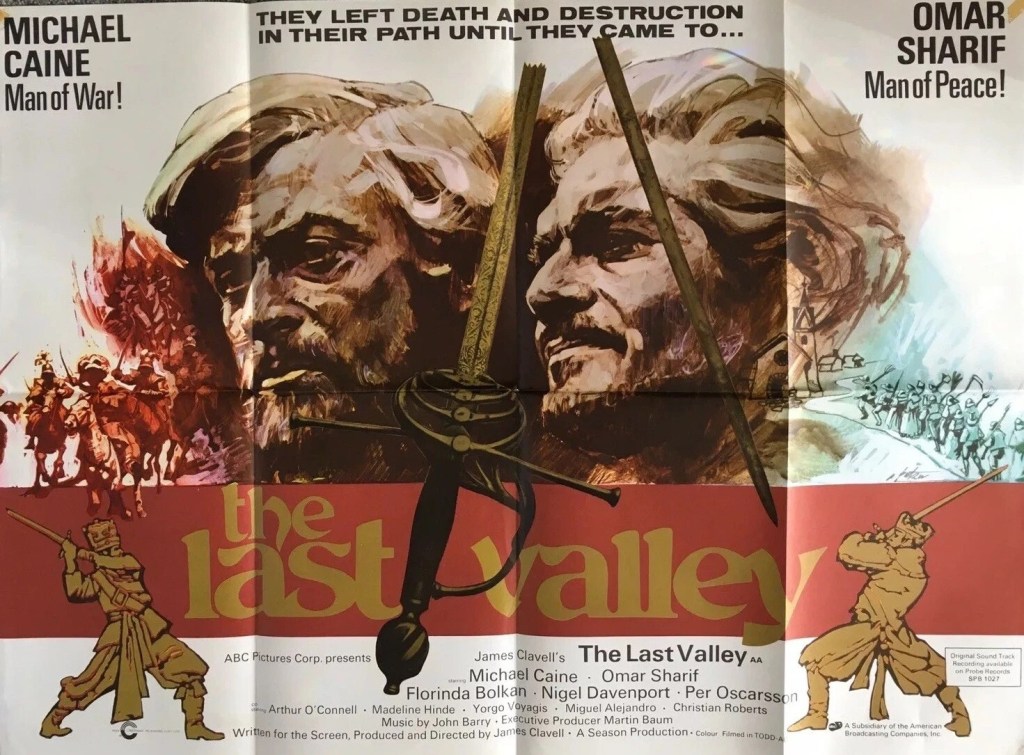
Furthermore, the studio, commenting on the poor performance of Cannon for Cordoba (George Peppard, 1970), noted that “in 1970 there was a marked change in global acceptance of western and adventure films. The results of films of other companies – for instance Mackenna’s Gold (Columbia, 1969), Murphy’s War (Paramount, 1971), The Last Valley (ABC Pictures, 1971) – as well as our own Play Dirty (1968) and Bridge at Remagen (1969), indicated the need for a substantial downward revision in assessing proper budget costs for pictures in this category, even with the so-called big name action stars.”
All had boasted top marquee names – Gregory Peck, Omar Sharif, Michael Caine, Peter O’Toole and George Segal.
Others in this vein expected to suffer in the same way included The Hawaiians (1970) headlined by Charlton Heston, Doc (1971) starring Stacy Keach and Faye Dunaway and Burt Lancaster pair Valdez Is Coming (1971) and Lawman (1971) – though in fact the last-named was saved from box office ignominy by foreign receipts.
The studio concluded: “Pictures with this kind of star are still a commodity but at half the cost.”
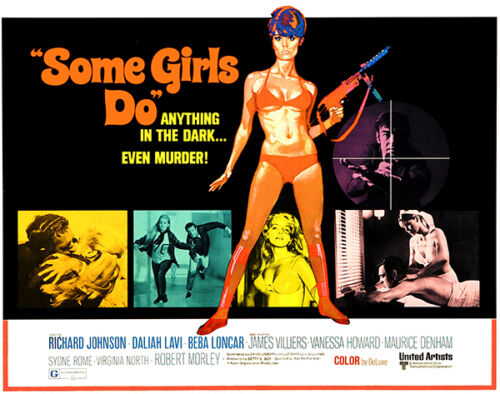
Another category, exemplified by the British-made second Bulldog Drummond outing, Some Girls Do (1969) starring Richard Johnson, was equally affected. “When this picture was programmed,” noted the studio, “many low budget action adventure thrillers had enjoyed a certain global audience – enough to warrant making pictures of this type at this cost. By the end of 1970, this market had dwindled sharply. Whether it is a surfeit of TV programs of a similar nature or a greater selectivity generally – based probably on increasing alternatives for leisure time activity – the fact is that for this type of picture it has to be made at less than half the cost or not at all.”
Included in this category were films like Crossplot (1969) starring Roger Moore, and I Start Counting (1970) featuring Jenny Agutter. However, the latter was considered as much of an artistic failure, attracting the following comment: “An attempt to do a high quality suspense thriller turned out to be an unimaginative second feature of no importance in any market.”
SOURCE: “Comments supplementing notes to Balance Sheet and Statement of Operations of United Artists Corporation for 1970,” United Artists Archive, Box 1 Folder 12 (Wisconsin Center for Theater and Film Research).

 The Magnificent 60s