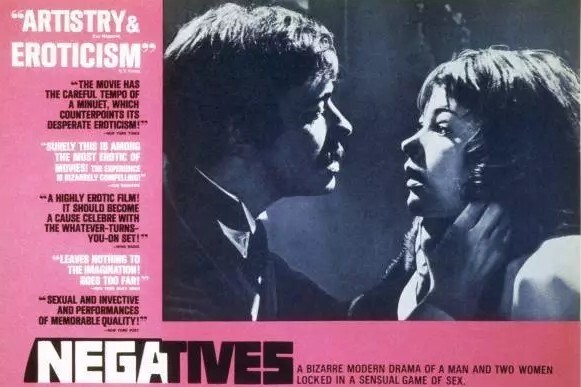
Hard to see what persuaded Hollywood major Paramount to invest in this obscure picture in the first place, although the studio wasn’t in the hole for the full amount, sharing the budget 50/50 with the British Government-financed National Film Finance Fund. Part of the explanation was that the studio had hitched its wagon to a slate of supposedly-cheaper European productions, investing in a record eight pictures. This would turn into a disaster, only If…(1968), more of a critical hit, and perhaps Monte Carlo or Bust (1969) emerging with any commercial kudos.
Oh! What a Lovely War (1969), Once Upon a Time in the West (1969), The Assassination Bureau (1969) and Where’s Jack? (1969) all bombed at the U.S. ticket wickets.
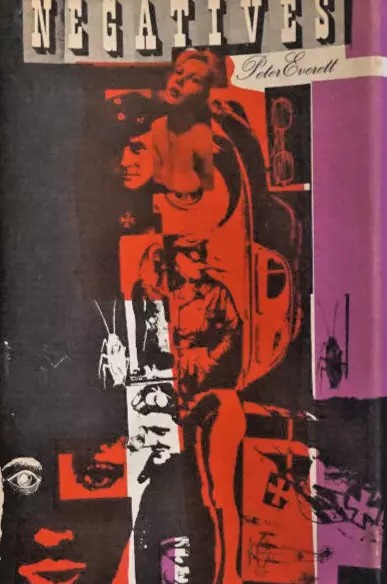
U.S. Producer Judd Bernard had finessed his profits from unexpected hit Point Blank (1967) into a series of risky arthouse-led movies including revisionist western Blue (1968), Fade In (1968) and Negatives. He was the latest in a long line of Yanks, following the likes of Cubby Broccoli and Elliott Kastner, who believed it was easier to make pictures in Britain than Hollywood.
His latest protégé Peter Medak had arrived in Britain after the Hungarian Uprising of 1956, finding work as a trainee with Associated British, moving through the stills, projection and camera departments before switching his interest to direction, working as a second unit director on The VIPs (1963), Funeral in Berlin (1966) and Fathom (1967). The screenplay had been written by Peter Everett based on his 1961 novel and Roger Lowry. Filming began in March 1968 with location work in London and studio work at Shepperton.
Shooting was uneventful. The drama only began when Paramount glimpsed the footage. The studio was already in the financial mire and would post stupendous losses the following year. Paramount refused to find the movie a release slot, as it also did with another NFFF project Two Gentlemen Sharing (1969).
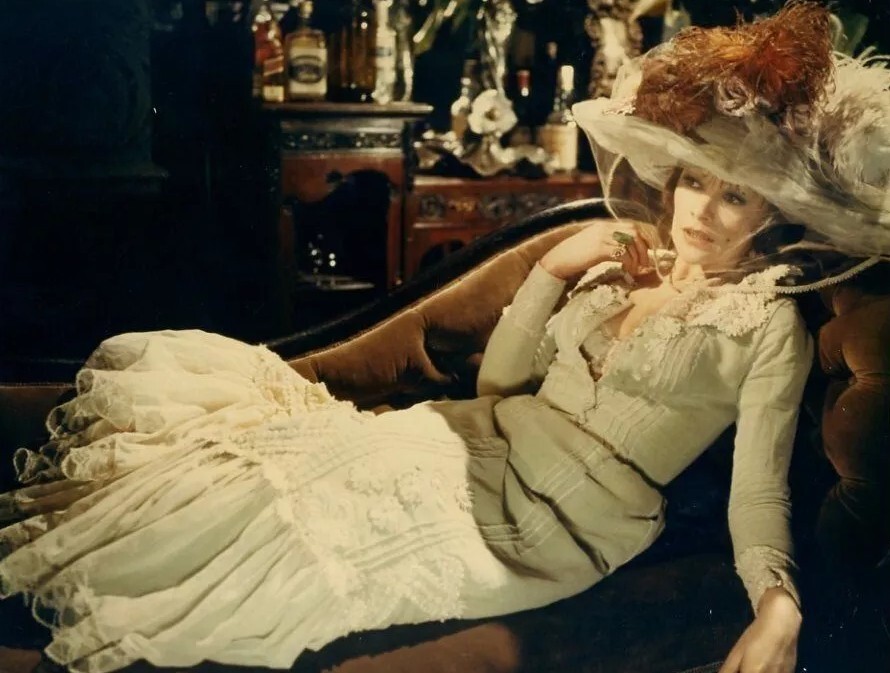
Bernard did the unthinkable and bought out the Paramount share, selling it on to U.S. arthouse operation Walter Reade which had expanded, though its Continental arm, into distribution. Although rumor has it that Reade took advantage of the unexpected box office success of Women in Love, starring Glenda Jackson in an Oscar-winning role, that wasn’t true of the American release. Negatives received its world premiere in October 1968 New York, at the Festival arthouse, more than a year before Women in Love went into initial release.
Reade was particularly gung-ho about the prospects for Negatives, taking out a full-page ad in Variety. The company took the unprecedented step of organizing previews simultaneously in three New York cinemas. The nudity produced some publicity.
Rolling the movie out across the country included a “showcase” stint in New York. While reviews were largely unfavourable, the public, perhaps intrigued by the erotic elements, were not put off. Box office was positive in the main, a “bright” $14,500 opener in New York at the Festival – plus another $185,000 from two weeks on 18 theaters in the showcase release – a “perky” $6,000 in Chicago, “wham” $10,000 in Washington DC, “beefy” $3,000 in San Francisco, “big” $4,000 in Baltimore, “boffo” $3,500 in Denver and “strong” $6,000 in Philadelphia with only Minneapolis moviegoers rejecting it out of hand. (While these grosses are relatively small, bear in mind they come from smaller-capacity arthouses.)
In the UK, the distributors did wait until the box office and Oscar glow surrounding Women in Love provided a marquee shot in the arm. But there was no London West End run. The European premiere took place in the tiny Essoldo arthouse in London in April 1970.
Anyone who struggled to make sense of the picture wouldn’t have found many answers from Bernard. A journalist seeking an explanation of the title was told, “If you find out, let me know.” In more general terms, Bernard explained: “I wouldn’t describe it as kinky but I dare say a lot of people will see it that way. To me it’s just an entertainment, a fantasy in which people love to dress up. It’s an extension of childhood where one of the most popular games was dressing up. People are going into a very open period of behavior patterns, primarily due to a tremendous youthquake. A lot of people are delving into behavior patterns and what makes people do things and it’s not as abhorrent possibly as it was fifteen years ago. Censorship is becoming less rigid with the result you can explore better. People don’t care especially about nudity in films any more – that’s the publicity man’s or the press I think.
“If you go up and down Kings Road you see people with gear-type outfits and it think it’s not just a desire to be trendy and with-it but to escape. Everybody has a desire to have a masquerade from their everyday existence, people are looking to escape. A lot of people don’t want to see their next door neighbors, they want to see a fantasy
“You could be very pompous and say it’s about three negative people or that she’s a photographer. I don’t know, but it’s a good title.”
Bernard continued to invest in British films – next up Jerzy Skolimowski’s Deep End (1970). He reunited with Glenda Jackson for The Class of Miss MacMichael (1978). By then Jackson, now a double Oscar-winner, was well on the way to becoming a national treasure. Peter Medak signed up with Peter O’Toole for Figures in a Landscape, but that went elsewhere, with another director and star, leaving Medak and O’Toole to hook up for The Ruling Class. Peter McEnery spanned commercial (The Adventures of Brigadier Gerard, 1970) and arthouse (Entertaining Mr Sloane, 1970) but both flopped and his career never recovered. Nor did the venture in arthouse do much for Diane Cilento, best remembered for a bit part in cult picture The Wicker Man (1973).
Quite whether Bernard succeeded in his gamble in taking back his picture from Paramount is hard to establish, but at least he had the courage of his convictions.
SOURCES: “Negatives Explores Youthquake,” Kine Weekly, March 23, 1968, p19; “Par’s O’Seas Film Peaks with Eight,” Variety, April 10, 1968, p3; “Judd Bernard Repurchases Negatives,” Box Office, September 9, 1968, p10; “Bernard Negatives Shuffle: Par to Reads,” Variety, September 11, 1968, p25; Advert, Variety, September 25, 1968, p25; “Reade’s Triple Sneak,” Variety, October 9, 1968, p5. Box office figures from Variety “Picture Grosses” – October 23, November 6, November 13, December 4, December 11, December 18 (all 1968), March 5 and June 4 (both 1969).

 The Magnificent 60s