United Artists didn’t know it yet but James Bond had already peaked – with Thunderball (1965). For the first time since 1962 – when admittedly the spy series had been less important financially – it was facing a year without what had become its key earner. Gone, also, was its other gem The Pink Panther, temporarily wound up after two outings.
So, the studio bet heavily on roadshows, over $21 million committed to historical epics Hawaii and Khartoum, and another $5.5 million on potential roadshow Cast a Giant Shadow. Remove these three from the budget equation and the average cost of the year’s other 21 pictures was a shade over $2 million.
as, in its own way, the support.
More went on comedy than any other genre, a surprise choice since the rest of the world rarely shared the American sense of humor. The Pink Panther had a lot to answer for. Its success prompted the studio to splash out a colossal $6.8 million on Blake Edwards’ World War Two comedy What Did You Do in the War, Daddy? and another $4.3 million on Peter Sellers vehicle After the Fox.
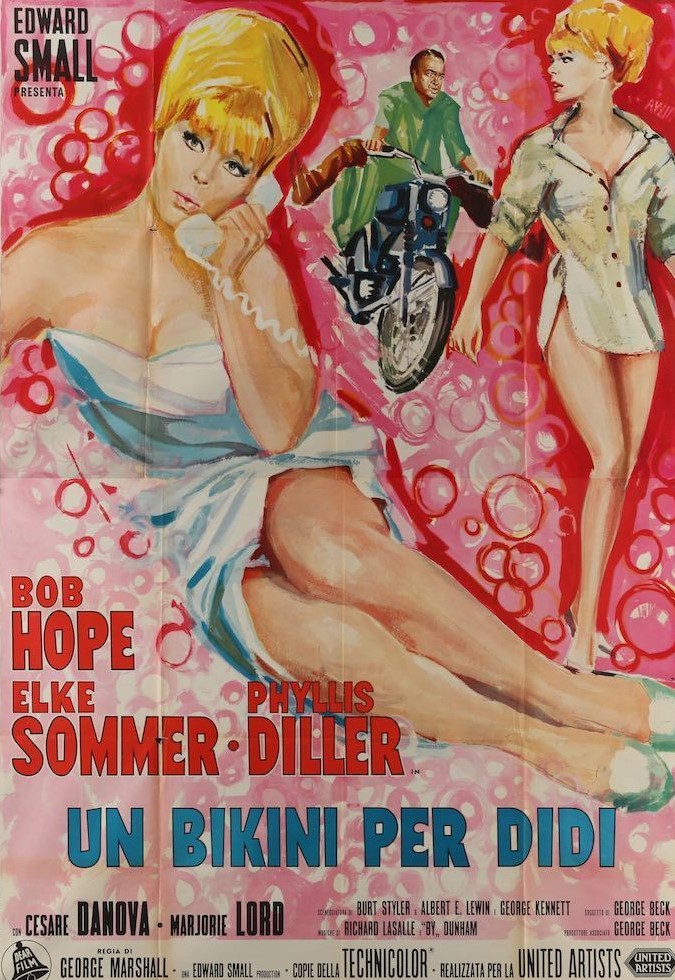
Billy Wilder (The Apartment, 1960) number The Fortune Cookie, costing $3.7 million, and reuniting the director with Jack Lemmon, seemed a safer bet. Even safer was the mere $1.4 million allocated to Bob Hope comedy, Boy, Did I Get a Wrong Number. A bigger gamble was the more satirical $3.9 million for The Russians Are Coming, The Russians Are Coming directed by Norman Jewison (The Cincinatti Kid, 1965).
The studio seemed easily seduced by male director-female star partnerships, forking out a total of $3.4 million for what to the outside eye appeared little more than arthouse fare – Jules Dassin helming wife Melina Mercouri in Mademoiselle and Tony Richardson directing lover Jeanne Moreau in 10.30pm Summer.
Outside of the arthouse, Brigitte Bardot hadn’t enjoyed a hit in the U.S. during the decade so throwing $2.2 million at Viva Maria! seemed as risky as ponying up $1.2 million for Jean-Paul Belmondo, hardly a box office quantity in America, in Up To His Ears.
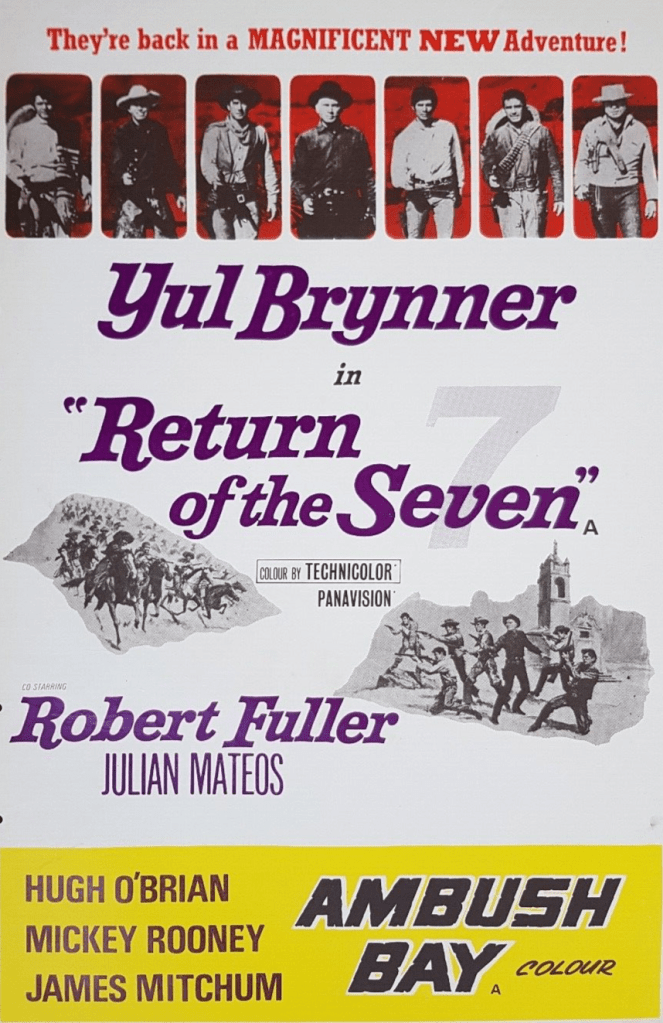
The studio went back to the well for Return of the Seven and although still starring Yul Brynner the budget was leaner than the original. James Garner and Sidney Poitier appeared a better prospect in the western stakes in Duel at Diablo.
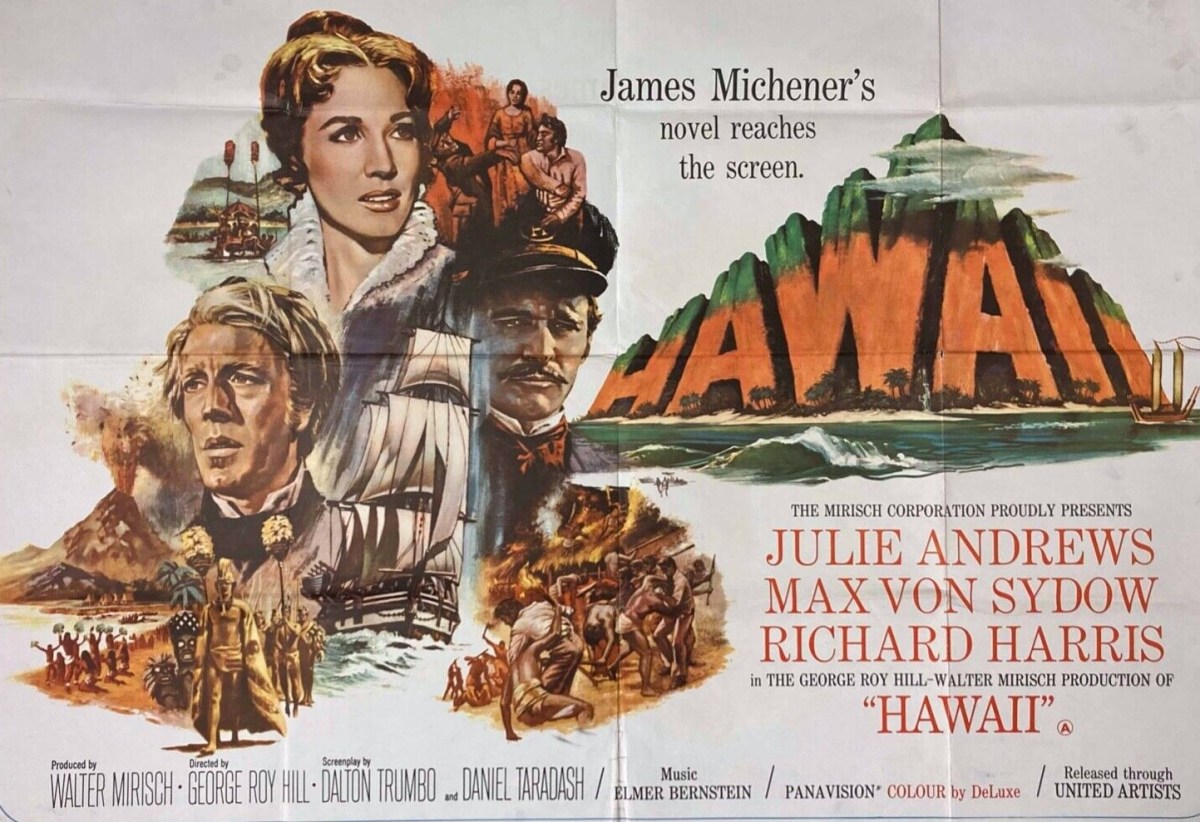
George Roy Hill’s Hawaii, headlined by Julie Andrews, Richard Harris and Max von Sydow, saved the studio’s blushes by taking home the rentals crown, despite a disastrous foreign outing, with $18 million – the domestic market accounting for $16 million of that figure.
But it wasn’t the year’s most profitable picture. That accolade went to The Russians Are Coming, The Russians Are Coming, with a fraction of the roadshow’s star wattage, just Alan Arkin and Eva Marie Saint, which marched to $11.85 million in rentals and a profit of just under $8 million. But, as feared, it didn’t tickle foreign fancies, only $2.1 million from foreign.
Hawaii, by comparison, brought in profits of $7.94 million. But questions would surely be asked as to why, with box office darling Julie Andrews attached, it failed to reach expected potential. The source book by James Michener had sold as well abroad as in the home territory. As proven by its overall annual take, UA. especially as roadshows were often more popular globally, counted on foreign producing at least 40% of the domestic tally.
Third and fourth pictures in the profits chart went to unlikely candidates. Bob Hope, with the assistance of Elke Sommer, romped home with $3.65 million in profits but, following the disturbing trend, earned only $750,000 abroad. Return of the Seven posted a $3.62 million profit, reversing the experience of the top three movies by making nearly three times as much abroad than at home, and encouraging the studio to keep going with the series. Plus, especially by the Bond criteria, it had a pitiful budget for a sequel, at $1.74 million a good notch below the year’s average.
No surprises for guessing The Fortune Cookie would fly high, fifth place, with $3.09 million in profit, but, again, proof that American humor just did not travel, foreign rentals at just 37% of domestic. It was the opposite for Louis Malle’s Brigitte Bardot-Jeanne Moreau starrer Viva Maria! – ranked sixth – an almighty flop in the United States but hot stuff elsewhere, with $2.7 million in profits.
A somewhat surprising figure, long discounted at the box office, where his returns were considered only average, took seventh spot. Frankie and Johnny, made on an even smaller budget than Return of the Seven, starring Elvis Presley notched up a glorious $2.4 million profit. And that was followed by another surprise. The teaming of Jean-Paul Belmondo and Ursula Andress in comedy adventure Up To His Ears, directed by Philippe de Broca, worked a treat in foreign markets and not at all in the U.S., but still was significantly in the black on $2.2 million.
Domestic returns were so strong for Oscar-nominated arthouse breakout A Thousand Clowns starring Jason Robards that, despite sinking like a stone elsewhere, it took ninth with $1.375 million just ahead of the far more expensive A Funny Thing Happened on the Way to the Forum, an adaptation of a Stephen Sondheim’s hit Broadway musical with Zero Mostel reprising the part he played on stage, on $1.34 million.
Missing out on the Top Ten were Melville Shavelson’s Cast a Giant Shadow, budgeted at $5.5 million, but even with an all-star cast including Frank Sinatra, Kirk Douglas and John Wayne, barely scraping into the black with $900,000 profit and Khartoum, with Charlton Heston facing off to Laurence Olivier and costing $7.4 million, that made a loss of $245,000, the former’s appeal relatively even across U.S. and foreign, the latter requiring a big take abroad.
In the cost-to-profit ratio, the unheralded Ambush Bay, a World War Two actioner with Hugh O’Brian and Mickey Rooney, delivered amazing results, especially considering it was made on a minuscule $640,000. But with a stronger response outside the U.S. it knocked up $1 million profit, better than Ralph Nelson’s higher-budgeted Duel at Diablo which managed only $873,000 and Sidney Lumet’s The Group – only $609,000.
At the other end of the scale, the out-and-out loser, despite James Coburn on the marquee, was What Did You Do in the War, Daddy? which trekked home trailing a loss of $2.75 million. 10.30pm Summer and Mademoiselle both struck out, the former $1 million in the red, the latter $983,000, both substantially reliant on foreign box office. Mademoiselle returned the third-lowest rental figure in the U.S. – just $100,000.
Peter Sellers’ box office pedigree took a hammering when Vittorio De Sica’s After the Fox co-starring Britt Ekland knocked up a loss of $432,000, again foreign audiences less taken with the humor. While satire worked for The Russians Are Coming, it crippled George Axelrod’s Lord Love A Duck starring Roddy McDowell and Tuesday Weld, ending up on a $371,000 loss.
It’s always salutary to put yourself in the position of the studio executives and try to guess ahead of release what the year’s film’s will achieve at the box office. Sometimes, the studio will breathe a sigh of relief when the pictures it bet the house on just manage to eke out a profit. And excepting foreign indifference to Hawaii, investment was pretty much borne out.
But since, as Hollywood screenwriter William Goldman so succinctly pointed out, “nobody knows anything,” I guess the head honchos would not be surprised that the little movies often did better than the big ones and possibly frankly couldn’t care less as long as overall the studio made more than it lost, which in this case translated to an overall $30 million profit.
SOURCE: “United Artists Corporation and Subsidiaries, Motion Picture Negative Costs for Pictures Released in the Year to January 3, 1967,” University of Wisconsin.

 The Magnificent 60s
Interesting figures. I miss when studios felt that characters and comedy might work internationally, rather than lowest common denominator masks and punch-ups.
LikeLiked by 1 person
I guess sometimes for the comedies they reckoned domestic would win the day and foreign might be a wee bonus. Doesn’t work the other way round either. Except in arthouses Carry Ons died the death, likewise French and Italian comedies and and Tati was strictly arthouse.
LikeLike
Interesting article. AMBUSH BAY was a hit? Never occurred to me that was even possible (Heston turned that one down…he found the script just awful). This week, I finally watched RETURN OF THE SEVEN. Very entertaining. Pleased that it made money.
LikeLike
I was as suprised as you.
LikeLike